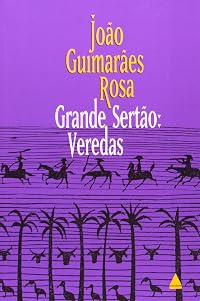
The Devil to Pay in the Backlands
by João Guimarães Rosa
On This Page
Description
Rioboaldo, an old rancher, tells a silent vistor from the city about his life as a bandit in the backlands.Tags
Recommendations




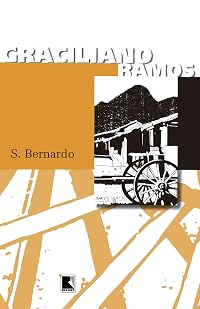
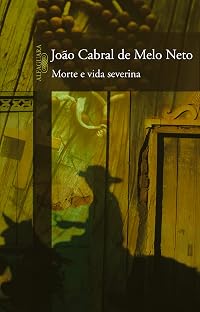
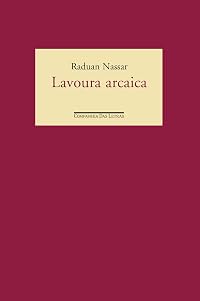
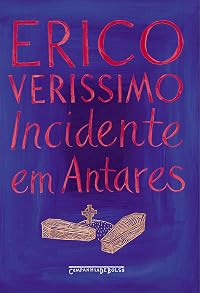

















Member Recommendations



Member Reviews
Assisti, muitos anos atrás, a versão de “Grande Sertões: Veredas” para a TV. Ao ler o romance agora, tardiamente, fiquei pensando qual terá sido o impacto para os primeiros leitores. A edição da Companhia das Letras traz vários artigos sobre a obra e cartas de Fernando Sabino recomendando enfaticamente o livro a Clarice Lispector, e sua resposta após começar a leitura. Ambos estavam lendo a obra no ano de seu lançamento, 1956. Ainda não haviam chegado ao desfecho, e estavam apaixonados.
À medida em que avançava na leitura, acompanhando a narrativa de Riobaldo e suas mutações para Tatarana e Urutu-branco, fui sendo envolvido pela dor de seu impossível amor por Diadorim. Entre as travessias desafiadoras dos sertões, show more tiroteios e os momentos de calmaria, a angústia do jagunço vai num crescendo, e me levou junto.
Não é uma leitura simples. Há inversões de frases, expressões regionais, palavras inventadas. Com o avanço, a leitura vai ganhando ritmo, o leitor começa a se habituar quase que a um novo idioma. Não é uma corrida contra o tempo. Na mesma cadência que os bandos de jagunços cruzam os sertões, vale ler com calma, saboreando cada palavra e situação.
A obra não glorifica o jagunço, mas retrata as suas razões, seus valores e seu código de honra todo próprio, em que a violência é uma constante. Em momentos de maior imersão, Guimarães Rosa leva o leitor a ter a sensação de estar sentado no meio do bando junto a um córrego, ouvindo sua conversa fiada e o relato de causos. Conhece seus hábitos de alimentação, o conhecimento da terra, o cuidado com os animais e até o preparo de chás de ervas medicinais para o tratamento das mazelas dos homens.
Há vários “contos” ao longo da narrativa. Talvez o mais significativo seja a história de Maria Mutema, que explora o tema da maldade, algo que perpassa todo o romance. E a sombra sempre presente do diabo, em que o narrador Riobaldo manifesta sua constante angústia sobre sua existência ou não. E as dúvidas sobre seus adversários - e ele próprio - terem ou não feito um pacto.
Sem dúvida, um dos livros mais emocionantes que já li. Demorei para começar, demorei para ler, mas não vou esquecer da satisfação com a leitura e das emoções que despertou. show less
À medida em que avançava na leitura, acompanhando a narrativa de Riobaldo e suas mutações para Tatarana e Urutu-branco, fui sendo envolvido pela dor de seu impossível amor por Diadorim. Entre as travessias desafiadoras dos sertões, show more tiroteios e os momentos de calmaria, a angústia do jagunço vai num crescendo, e me levou junto.
Não é uma leitura simples. Há inversões de frases, expressões regionais, palavras inventadas. Com o avanço, a leitura vai ganhando ritmo, o leitor começa a se habituar quase que a um novo idioma. Não é uma corrida contra o tempo. Na mesma cadência que os bandos de jagunços cruzam os sertões, vale ler com calma, saboreando cada palavra e situação.
A obra não glorifica o jagunço, mas retrata as suas razões, seus valores e seu código de honra todo próprio, em que a violência é uma constante. Em momentos de maior imersão, Guimarães Rosa leva o leitor a ter a sensação de estar sentado no meio do bando junto a um córrego, ouvindo sua conversa fiada e o relato de causos. Conhece seus hábitos de alimentação, o conhecimento da terra, o cuidado com os animais e até o preparo de chás de ervas medicinais para o tratamento das mazelas dos homens.
Há vários “contos” ao longo da narrativa. Talvez o mais significativo seja a história de Maria Mutema, que explora o tema da maldade, algo que perpassa todo o romance. E a sombra sempre presente do diabo, em que o narrador Riobaldo manifesta sua constante angústia sobre sua existência ou não. E as dúvidas sobre seus adversários - e ele próprio - terem ou não feito um pacto.
Sem dúvida, um dos livros mais emocionantes que já li. Demorei para começar, demorei para ler, mas não vou esquecer da satisfação com a leitura e das emoções que despertou. show less
Nonada - Travessia.
Passei o último mês tentando destrinchar a leitura de Grande Sertão: Veredas com o auxílio de uma leitura orientada de um curso de verão da USP, é tão mais interessante quando pesquisamos e discutimos um livro difícil e múltiplo desses em conjunto, foram minhas reuniões nas leituras do Fórum do Campo Lacaniano que me fizeram constatar isso e aqui cabe lindamente também.
Minha contribuição para essa discussão foi enxergar uma metafísica spinoziana nessa leitura, poderíamos encontrar alinhamento com quaisquer metafísicas, mas a de Spinoza se sobressai pelo seu panconceito, o Sertão como subjetivação, o homem-Sertão, um pannaturalismo místico.
Também encerrei o mês dedicado à Guimarães Rosa show more assistindo a versão para cinema de 1965, como diria Guimarães Rosa, tem cavalo à beça. Rá!
Eu sou a última pessoa que reclamaria de um filme ser muito curto, mas como passei o último mês lendo o livro, então tudo me soou muito corrido, muito afoito, sem a precisão de ser.
No YouTube ( https://youtu.be/ysqtc8VUtIc ) show less
Passei o último mês tentando destrinchar a leitura de Grande Sertão: Veredas com o auxílio de uma leitura orientada de um curso de verão da USP, é tão mais interessante quando pesquisamos e discutimos um livro difícil e múltiplo desses em conjunto, foram minhas reuniões nas leituras do Fórum do Campo Lacaniano que me fizeram constatar isso e aqui cabe lindamente também.
Minha contribuição para essa discussão foi enxergar uma metafísica spinoziana nessa leitura, poderíamos encontrar alinhamento com quaisquer metafísicas, mas a de Spinoza se sobressai pelo seu panconceito, o Sertão como subjetivação, o homem-Sertão, um pannaturalismo místico.
Também encerrei o mês dedicado à Guimarães Rosa show more assistindo a versão para cinema de 1965, como diria Guimarães Rosa, tem cavalo à beça. Rá!
Eu sou a última pessoa que reclamaria de um filme ser muito curto, mas como passei o último mês lendo o livro, então tudo me soou muito corrido, muito afoito, sem a precisão de ser.
No YouTube ( https://youtu.be/ysqtc8VUtIc ) show less
I have quit reading this book. I'm about half way through and I've read enough. Please understand that it isn't that I've quit for any negative reason, no, I've gotten what I needed or wanted from what I have read of it.
The story takes place in the sertão, the Brazilian backlands at the turn of the century (19th to 20th). It's a monologue told in Riobaldo's voice and that voice goes on for the 500 pages plus. It's long-winded and uses Portuguese names and name places in a way which makes the entire book challenging to read. I started reading and found it dense, difficult to read, but I had worked so hard to get my hands on a copy that I decided that I needed to put the effort in and read it. So I have, and I'm glad that I did. It's show more taken me a month to read half the book and that's where I've quit.
This is Riobaldo's musings of traveling as a jagunço, an outlaw, a fighter against government forces. He wanders, with affiliation to first one chieftain and then another. He's a man with a heart and with a sense of right and wrong and strong loyalties. It's the story of his actions, emotions about his actions, his loves, confusions, really, I guess his inner feelings about everything in life. He talks about his love for two people: Diadorim, a man who he travels through life with and whom he loves and is strongly attracted to but never acts upon his attraction; and Otacília, a girl he meets in his travels whom he has placed on a pedestal, loves romantically, and has vowed to marry. Religion, or at least God and the Devil (So-and-so, he whose name is not spoken) come up in Riobaldo's thoughts about life often, his thoughts on warring and suspecting that the devil is in the street, in the whirlwind, in the backlands.
The aspect of this book that I connect with is Riobaldo and his feelings. He is a romantic figure and a terribly lovable character. His emotions are expressed in the writing. The language is complex and there are some beautiful images, especially of the landscape and the warriors, but it is the emotional aspect that has caught me. As I said, I read half the book and it was enough, that is, I am satisfied.
I've fallen in love with Riobaldo. I guess it's the fact that he is emotional, that he expresses his thoughts and emotions. He isn't the first character that I've fallen for, but he's the most recent. What he does is give me a feeling of connection to an certain place. It's the Brazilian backlands, yes, but it's also an emotional state of being, of being in his mind, what he is, a jagunço, firmly rooted in the sertão. I appreciate who he is.
This book is virtually impossible to find. I spent a year trying to buy a used copy. I was finally able to borrow it through my library via InterLibrary Loan. If you have a copy of this book, treasure it or send it to me.
The original story was published in Portuguese as "Grande Sertão: Veredas" in 1956. It was translated into English in 1963 and reprinted in 1971. There has been a rumor that New Directions would republish it but it has not yet happened. It would be really nice if someone would once again make it available to those who are trying to find it to read (as opposed to collect). I've read somewhere that a movie has been recently proposed (2009) based on this book. And there is a summary of the story in Wikipedia: http://en.wikipedia.org/wiki/The_Devil_to_Pay_in_the_Backlands show less
The story takes place in the sertão, the Brazilian backlands at the turn of the century (19th to 20th). It's a monologue told in Riobaldo's voice and that voice goes on for the 500 pages plus. It's long-winded and uses Portuguese names and name places in a way which makes the entire book challenging to read. I started reading and found it dense, difficult to read, but I had worked so hard to get my hands on a copy that I decided that I needed to put the effort in and read it. So I have, and I'm glad that I did. It's show more taken me a month to read half the book and that's where I've quit.
This is Riobaldo's musings of traveling as a jagunço, an outlaw, a fighter against government forces. He wanders, with affiliation to first one chieftain and then another. He's a man with a heart and with a sense of right and wrong and strong loyalties. It's the story of his actions, emotions about his actions, his loves, confusions, really, I guess his inner feelings about everything in life. He talks about his love for two people: Diadorim, a man who he travels through life with and whom he loves and is strongly attracted to but never acts upon his attraction; and Otacília, a girl he meets in his travels whom he has placed on a pedestal, loves romantically, and has vowed to marry. Religion, or at least God and the Devil (So-and-so, he whose name is not spoken) come up in Riobaldo's thoughts about life often, his thoughts on warring and suspecting that the devil is in the street, in the whirlwind, in the backlands.
The aspect of this book that I connect with is Riobaldo and his feelings. He is a romantic figure and a terribly lovable character. His emotions are expressed in the writing. The language is complex and there are some beautiful images, especially of the landscape and the warriors, but it is the emotional aspect that has caught me. As I said, I read half the book and it was enough, that is, I am satisfied.
I've fallen in love with Riobaldo. I guess it's the fact that he is emotional, that he expresses his thoughts and emotions. He isn't the first character that I've fallen for, but he's the most recent. What he does is give me a feeling of connection to an certain place. It's the Brazilian backlands, yes, but it's also an emotional state of being, of being in his mind, what he is, a jagunço, firmly rooted in the sertão. I appreciate who he is.
This book is virtually impossible to find. I spent a year trying to buy a used copy. I was finally able to borrow it through my library via InterLibrary Loan. If you have a copy of this book, treasure it or send it to me.
The original story was published in Portuguese as "Grande Sertão: Veredas" in 1956. It was translated into English in 1963 and reprinted in 1971. There has been a rumor that New Directions would republish it but it has not yet happened. It would be really nice if someone would once again make it available to those who are trying to find it to read (as opposed to collect). I've read somewhere that a movie has been recently proposed (2009) based on this book. And there is a summary of the story in Wikipedia: http://en.wikipedia.org/wiki/The_Devil_to_Pay_in_the_Backlands show less
The Devil to Pay in the Backlands, the great Brazilian novel by João Guimarães Rosa, is long out of print. This book is a watershed of language and longing. It deserves to be rescued from the cult to brave the flow of the mainstream.
A new translation, by Gregory Rabassa, was supposed to be in the works(?). But a republication of the old translation will be welcome rain.
A new translation, by Gregory Rabassa, was supposed to be in the works(?). But a republication of the old translation will be welcome rain.
What Rosa does whith the language in incredible! Is like a huge poem. And the relashionship between Riobaldo and Diadorim the most poetic in all literature; quite like that in Shakespeare's sonets. A different kind of friendiship, much deeper.
"João Guimarães Rosa is sompletely the Melville-Faulkner-Rulfo-Joyce-Proust-Mann of Brazil. Only few English readers know it. A so-far proven translational impasse, Grande Sertão: Veredas, Guimarães Rosa’s seminal and single novel, was only published in English once, in 1963, and has since been out of print. My project posits that given the absence of Grande Sertão: Veredas from most any English literary discourse outside of (most often) Brazilianist circles, Grande Sertão: Veredas (or João Guimarães Rosa) is a missing book."
Nesta Obra, O Autor Utiliza Da Linguagem Própria Do Sertão Para Que Riobaldo Conte Sua História. Rosa Busca Apresentar A Vida Dos Personagens De Seu Próprio Ponto De Vista, Narrando A Vida De Jagunço Com Suas Características - O Amor, A Morte, O Sofrimento, O Ódio E A Alegria.
Members
- Recently Added By
Lists

The Guardian's 1000 Novels Everyone Must Read
1,005 works; 550 members

The 100 Best Books of All Time by Norwegian Book Club (World Library)
104 works; 23 members
20th Century Literature
1,161 works; 54 members

Favorite Long Books
330 works; 42 members

Best of World Literature
434 works; 51 members

1950s
340 works; 22 members

Canon de la narrativa universal del siglo XX
254 works; 6 members

Philip Ward's Lifetime Reading Plan
592 works; 22 members

Best Books Involving Satan
63 works; 26 members

Latin American Literature
50 works; 11 members

Hidden Classics
73 works; 15 members

LibraryThingers' 1001 Books You Must Read Before You Die
442 works; 30 members

Best Literature in Portuguese
15 works; 2 members

Must read
10 works; 1 member

SHOULD Read Books!
354 works; 9 members

The 150 Greatest Novels of All Time
150 works; 6 members

Canon de la narrativa universal del s. XX (cicutadry)
499 works; 3 members

The 10 greatest novels ever in portuguese language
10 works; 1 member

Greatest brazilian novels of 20th century
50 works; 2 members
.
396 works; 1 member
Author Information

95+ Works 3,100 Members
Some Editions
Awards and Honors
Awards
Notable Lists
Series
Belongs to Publisher Series
Work Relationships
Is contained in
Has the adaptation
Has as a reference guide/companion
Has as a study
Antônio Conselheiro e Getúlio Vargas no Grande Sertão: Veredas? - Seminário Guimarães Rosa by Luiz Rocari
O lugar de Grande Sertão: Veredas na literatura brasileira - Seminário Guimarães Rosa by Kathryn Holzermeyr Rosenfeld
Via e viagens: a elaboração de Corpo de Bail e Grande Sertão, Veredas - Cadernos de Literatura Brasileira by Ana Luiza Martins Costa
No giro da memória: Literatura e personalidade em Grande Sertão, Veredas - Cadernos de Lieratura Brasileira by Cleusa Rios Pinheiro Passos
Figurações do "mal" e do "maligno" no Grande Sertão: Veredas- Estudos avançados, 64 by Marcus V. Mazzari
Lembranças do Brasil Teoria, política, história e ficção em Grande Sertão: Veredas by Heloisa Starling
Traições e traição reticências em Grande Sertão: Veredas - Seminário Guimarães Rosa by Márcia Marques de Morais
A perfeita imperfeição - Transição e permanência em Grande Sertão: Veredas - Seminário Guimarães Rosa by Ettore Finazzi-Agrô
O homem provisório no grande sertão : um estudo de Grande Sertão : Veredas by Manuel Antônio de Castro
Traições e traição reticências em Grande Sertão: Veredas - Seminário Guimarães Rosa by Márcia Marques de Morais
Lembranças do Brasil Teoria, política, história e ficção em Grande Sertão: Veredas by Heloisa Starling
Nas trilhas do Rosa: Uma viagem pelos caminhos de Grande sertão: veredas (Portuguese Edition) by Fernando Granato
Common Knowledge
Classifications
- Genres
- Fiction and Literature, General Fiction, Romance
- DDC/MDS
- 869.3 — Literature & rhetoric Spanish Literature Literatures of Portuguese and Galician languages Portuguese fiction
- LCC
- PQ9697 .R76 — Language and Literature French, Italian, Spanish and Portuguese literatures Portuguese literature Provincial, local, colonial, etc. Brazil
- BISAC
Statistics
- Members
- 1,216
- Popularity
- 20,356
- Reviews
- 18
- Rating
- (4.48)
- Languages
- 14 — Catalan, Czech, Danish, Dutch, English, French, German, Hebrew, Italian, Norwegian (Bokmål), Spanish, Swedish, Portuguese (Portugal), Portuguese (Brazil)
- Media
- Paper, Ebook
- ISBNs
- 55
- ASINs
- 13