
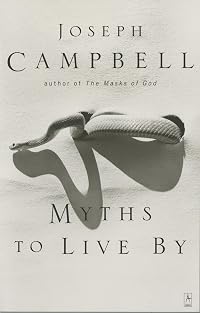
Myths to Live By
by Joseph Campbell
On This Page
Description
Joseph Campbell famously compared mythology to a kangaroo pouch for the human mind and spirit: "a womb with a view." In Myths to Live By, he examines all of the ways in which myth supports and guides us, giving our lives meaning. Love and war, science and religion, East and West, inner space and outer space - Campbell shows how the myths we live by can reconcile all of these pairs of opposites and bring a sense of the whole.Tags
Recommendations


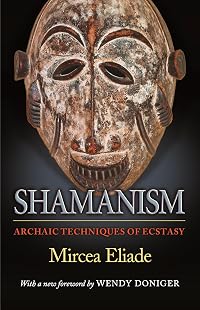
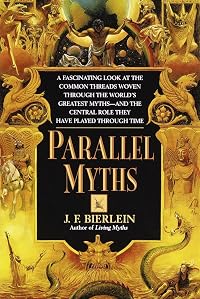
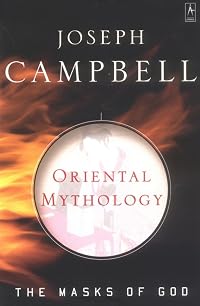
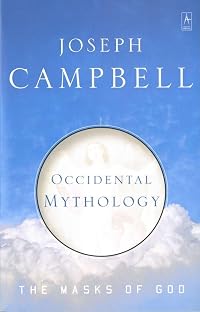





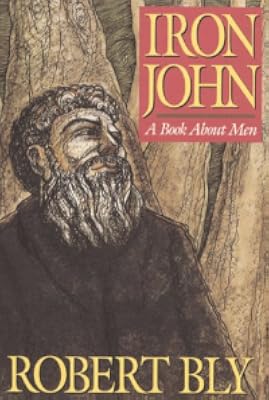


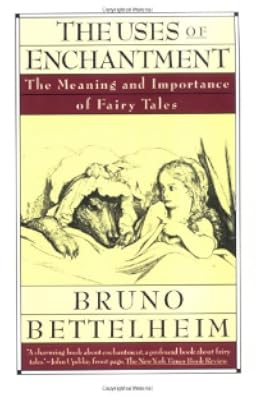

Member Recommendations

Member Reviews
I always like reading me some Campbell. This is a chronological collection of lectures delivered at The Cooper Union for the Advancement of Science and Art. It has a real Asian flavor to me, drawing on religions of the Far East such as Buddhism. I enjoyed that very much. What I like most was some ending content considering a very Jungian view in Schizophrenia-the Inward Journey [1970].
"Can we not see," remarks Dr. Laing in his commentary on the whole experience, "that this voyage is not what we need to be cured of, but that it is itself a natural way of healing our own appalling state of alienation called normality?"show more
And that is the universal formula also of the mythological hero journey, which I, in my own published work, had described
as: 1) separation, 2) initiation, and 3) return:show less
A hero ventures forth from the world of common day into a region of supernatural wonder: fabulous forces are there encountered and a decisive victory is won: the hero comes back from this mysterious adventure with the power to bestow boons on his fellow men.2
That is the pattern of the myth, and that is the pattern of these fantasies of the psyche. Now it was Dr. Perry's thesis in his paper that in certain cases the best thing is to let the schizophrenic process run its course, not to abort the psychosis...
Wow.
Well, it seems that I've had this book on my list since 2008 and only now got around to finishing it. Sadly, I think I've owned it since before even 2008. Finishing it feels like a great accomplishment, to be perfectly honest. More sadly, my lack of finishing it was not at all due to a lack of interest.
Others reviewers have complained that the book doesn't truly seem to follow any exact pattern, and I have to agree with that. Some of the lectures seem entirely unrelated, but nonetheless they are all quite interesting. Campbell, as always, is a delicious read and a wealth of information even if he does tend to repeat himself now and again.
I would recommend the book as a reference to anyone working within the mythic or the folkloric. show more It may not all read smoothly as a whole, but take any one of the essays out of there and you will have something informative and fascinating to read. show less
Well, it seems that I've had this book on my list since 2008 and only now got around to finishing it. Sadly, I think I've owned it since before even 2008. Finishing it feels like a great accomplishment, to be perfectly honest. More sadly, my lack of finishing it was not at all due to a lack of interest.
Others reviewers have complained that the book doesn't truly seem to follow any exact pattern, and I have to agree with that. Some of the lectures seem entirely unrelated, but nonetheless they are all quite interesting. Campbell, as always, is a delicious read and a wealth of information even if he does tend to repeat himself now and again.
I would recommend the book as a reference to anyone working within the mythic or the folkloric. show more It may not all read smoothly as a whole, but take any one of the essays out of there and you will have something informative and fascinating to read. show less
At the time he wrote these essays, Campbell was a professor on a campus, surrounded by young people whom he found hard to understand. For example, in his essay "The Moon Walk--the Outward Journey" he relates his own feelings of awe on viewing the Apollo moon landing and contrasts them with the reaction of a student who wrote "So What" on a photo of the moon landing posted on a campus bulletin board. In another essay "Schizophrenia--the Inward Journey" he contrasts the use of mind-altering drugs by shamans and psychotics (including the LSD induced version) as the difference between divers and non-swimmers in "the waters of the unviersal archetypes of mythology."
"Mythologies of War and Peace" addresses the underlying belief systems of show more participants in the Mideast crises. Campbell says that "killing is the precondition of all living whatsoever: life lives on life, eats life, and would not otherwise exist...it is the nations, tribes, and peoples bred to mythologies of war that have survived to communicate their life-supporting mythic lore to descendents." He suggests that "we" in the West "have been bred to one of the most brutal war mythologies of all time." He cites Deuteronomy and Isaiah and follows with excerpts from the Koran such as Sura 2, verse 216.."Fighting is prescribed for you." show less
"Mythologies of War and Peace" addresses the underlying belief systems of show more participants in the Mideast crises. Campbell says that "killing is the precondition of all living whatsoever: life lives on life, eats life, and would not otherwise exist...it is the nations, tribes, and peoples bred to mythologies of war that have survived to communicate their life-supporting mythic lore to descendents." He suggests that "we" in the West "have been bred to one of the most brutal war mythologies of all time." He cites Deuteronomy and Isaiah and follows with excerpts from the Koran such as Sura 2, verse 216.."Fighting is prescribed for you." show less
What is a properly functioning mythology and what are its functions? Can we use myths to help relieve our modern anxiety, or do they help foster it? In Myths to Live By, Joseph Campbell explores the enduring power of the universal myths that influence our lives daily and examines the myth-making process from the primitive past to the immediate present, retuning always to the source from which all mythology springs: the creative imagination.Campbell stresses that the borders dividing the Earth have been shattered; that myths and religions have always followed the certain basic archetypes and are no longer exclusive to a single people, region, or religion. He shows how we must recognize their common denominators and allow this knowledge show more to be of use in fulfilling human potential everywhere. show less
We've been bombarded with the "hero's journey" and starry-eyed explanations of modern movies with the steps intercut. However, this book still has magic for me, in affirming the heroic nature of our lives, in assuring us our path has been walked before, and in allowing ourselves to make difficult decisions. Most of all, it brought about for me that rare feeling of connectivity, of being part of this world, and impressed with it.
To understand the tales in this book would be a semester of study. I read it quickly because I don't have a semester to learn these books. In retrospect, it seemed like a stream of consciousness where each part reminds him of another myth. Just as he starts to make a conclusion, he is off into another myth. Myths of war, conflict, death, foolishness, etc.
A few statement that struck me:
"The fundamental text of the Hindu tradition is, of course, the Bhagavad Gita; and there four basic yogas described. The word yoga itself, from the Sanskrit yui, meaning 'to yoke, to link one thing to another,' refers to the act of linking the minds of the source of mind," (Page 97) He then goes on to briefly describe the four yogas.
"Many of my professor show more friends are beginning to suggest that our students today are looking not for teachers but for gurus. The Guru in the Orient accepts responsibility for his students moral life, and the students aim, reciprocally, must be to identify with the guru and become, if possible just like him." (Page 101) But the students of today do not exercise the required "perfect faith."
"I am told that in the old days a young person desiring to learn swordsmanship in Japan would be left by the master largely unattended for a long time, doing chores around the school, washing dishes, and so on; ..." (Page 119) There is a superficial resemblance to the movie Karate Kid.
"The two greates works of war mythology in the West are ... the Iliad and the Old Testament." (Page 174)
"However, as the wold well knows, the long, long history of China has been distinguished largely by the regin of merciless despots alternating with chaotic centuries of war;" (Page 192-193)
Perhaps the book is best summed up by chapter 10 near the end of the book: "Schizophrenia - the Inward Journey" show less
A few statement that struck me:
"The fundamental text of the Hindu tradition is, of course, the Bhagavad Gita; and there four basic yogas described. The word yoga itself, from the Sanskrit yui, meaning 'to yoke, to link one thing to another,' refers to the act of linking the minds of the source of mind," (Page 97) He then goes on to briefly describe the four yogas.
"Many of my professor show more friends are beginning to suggest that our students today are looking not for teachers but for gurus. The Guru in the Orient accepts responsibility for his students moral life, and the students aim, reciprocally, must be to identify with the guru and become, if possible just like him." (Page 101) But the students of today do not exercise the required "perfect faith."
"I am told that in the old days a young person desiring to learn swordsmanship in Japan would be left by the master largely unattended for a long time, doing chores around the school, washing dishes, and so on; ..." (Page 119) There is a superficial resemblance to the movie Karate Kid.
"The two greates works of war mythology in the West are ... the Iliad and the Old Testament." (Page 174)
"However, as the wold well knows, the long, long history of China has been distinguished largely by the regin of merciless despots alternating with chaotic centuries of war;" (Page 192-193)
Perhaps the book is best summed up by chapter 10 near the end of the book: "Schizophrenia - the Inward Journey" show less
I always thought of myself as a pretty smart woman, but I give. I cannot finish this book. I am getting absolutely zero from it. I thought this was going to be more approachable. I thought wrong. UNCLE.
Members
- Recently Added By
Lists

Alan Kay's Reading List
103 works; 3 members

Mythology
9 works; 2 members
Author Information

201+ Works 41,643 Members
Joseph Campbell was born in White Plains, New York on March 26, 1904. He received a B.A. in English literature in 1925 and an M.A. in Medieval literature in 1927 from Columbia University. He was awarded a Proudfit Traveling Fellowship to continue his studies at the University of Paris. After he had received and rejected an offer to teach at his show more high school alma mater, his Fellowship was renewed, and he traveled to Germany to resume his studies at the University of Munich. During the year he was housemaster of Canterbury School, he sold his first short story, Strictly Platonic, to Liberty magazine. In 1934, he accepted a position in the literature department at Sarah Lawrence College, a post he would retain until retiring in 1972. During his lifetime, he wrote more than 40 books including The Hero with a Thousand Faces, The Mythic Image, the four-volume The Masks of God, and The Power of Myth with Bill Moyers. During the 1940s and 1950s, he collaborated with Swami Nikhilananda on translations of the Upanishads and The Gospel of Sri Ramakrishna. He received several awards including National Institute of Arts and Letters Award for Contributions to Creative Literature and the 1985 National Arts Club Gold Medal of Honor in Literature. He died after a brief struggle with cancer on October 30, 1987. (Bowker Author Biography) show less
All Editions
Some Editions
Series
Belongs to Publisher Series
Common Knowledge
- Original publication date
- 1972-04-12
- First words
- I was sitting the other day at a lunch counter that I particularly enjoy, when a youngster about twelve years old, arriving with his school satchel, took the place at my left.
- Last words
- (Click to show. Warning: May contain spoilers.)It is—and will forever be, as long as our human race exists—the old, everlasting, perennial mythology, in its "subjective sense," poetically renewed in terms neither of a remembered past nor of a projected future, but of now: addressed, that is to say, not to the flattery of "peoples," but to the waking of individuals in the knowledge of themselves, not simply as egos fighting for place on the surface of this beautiful planet, but equally as centers of Mind at Large—each in his own way at one with all, and with no horizons.
- Original language
- English
- Canonical DDC/MDS
- 201.3
Classifications
- Genres
- Nonfiction, General Nonfiction, Religion & Spirituality, Philosophy
- DDC/MDS
- 201.3 — Religion The Bible & Christianity Religious mythology, general classes of religion, interreligious relations and attitudes, social theology Mythology and mythological foundations
- LCC
- BL315 .C27 — Philosophy, Psychology and Religion Religions. Mythology. Rationalism Religions. Mythology. Rationalism The myth. Comparative mythology
- BISAC
Statistics
- Members
- 2,527
- Popularity
- 7,564
- Reviews
- 13
- Rating
- (3.94)
- Languages
- 10 — Czech, Danish, English, French, Hungarian, Italian, Japanese, Slovenian, Spanish, Portuguese (Portugal)
- Media
- Paper, Audiobook, Ebook
- ISBNs
- 28
- UPCs
- 1
- ASINs
- 20