On This Page
Description
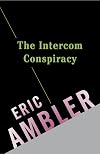
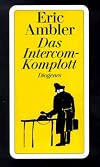
Thirty years after Eric Ambler introduced the world to his unlikely hero, the academic and novelist Charles Latimer, in A Coffin for Dimitrios, Latimer returns in The Intercom Conspiracy. Now a successful, bestselling author on the trail of a new book, Latimer steps in to help Theodore Carter, the hapless, hard-drinking editor of Intercom, a small, international political newspaper, investigate his bosses and the sources of the secrets he's publishing. It was recently purchased by two show more magnates who are, unbeknownst to the frazzled Carter, chief intelligence officers in two minor NATO countries. Not all of Intercom's readers are happy with some recent stories, which are surprisingly more truthful and a lot more dangerous than the rumors and fictions that used to fill its pages--and some of those readers will go to any length to keep their secrets safe. As Latimer and Carter get closer to the truth, they realize they're jeopardizing more than just their careers. show lessTags
Recommendations

























Member Reviews
Theodore Carter is the editor of a low circulation newsletter which is owned by an eccentric ex-US army general. Intercom publishes absurd fabricated stories with an anti-Communist narrative which are presented as genuine news, but entirely from the imagination of Carter (a bit like Fox News I suppose). When the General dies suddenly Intercom is taken over by unseen investors who require Carter to maintain the old style, but to publish additional articles which they supply. The additional items turn out to be big secrets from NATO and the Soviet Union and Carter finds himself at the centre of attention for the world's intelligence agencies.
Now I like Eric Ambler. When I pick up an Ambler I know it's going to be generally good writing show more with well-thought out plots, but with old-fashioned characters and plot settings. It's comforting stuff. The Intercom Conspiracy was however rather different with the tale told from three different angles in three very different styles. I initially found this to be a bit jarring and irritating, but as I settled in and adjusted to those styles it became more enjoyable. However, when I got to the end I was left feeling "is that it?", as things just stopped abruptly with no satisfactory denouement. In fact at the end it seemed that every aspect of the conspiracy actually didn't matter that much to any of the protagonists. If it had ended with the line "and then they all went home for tea", it wouldn't have been any less satisfying. show less
Now I like Eric Ambler. When I pick up an Ambler I know it's going to be generally good writing show more with well-thought out plots, but with old-fashioned characters and plot settings. It's comforting stuff. The Intercom Conspiracy was however rather different with the tale told from three different angles in three very different styles. I initially found this to be a bit jarring and irritating, but as I settled in and adjusted to those styles it became more enjoyable. However, when I got to the end I was left feeling "is that it?", as things just stopped abruptly with no satisfactory denouement. In fact at the end it seemed that every aspect of the conspiracy actually didn't matter that much to any of the protagonists. If it had ended with the line "and then they all went home for tea", it wouldn't have been any less satisfying. show less
While more action-oriented episodes from everyday secret services work like hunting down terrorists and foreign spies grab the headlines it is amazing how many things get done in a quiet manner - with mild twisting of few arms but in general by payoff and without armed escalations.
So when you are in the know and see the opening to finally get the life you crave then .... why not take the chance.
This was the rule two senior intelligence officers decided to follow. They decided to buy out the Swiss-based crazy-conspiracy-theory Intercom circular letter (following the death of its owner, retired US general) and use it to force Russians or Americans to buy them out just to keep them quiet. Because problem with conspiracies is if you push show more too much everybody will say "AHA! So that was true" and if you do not do anything then the other side might control the narrative and water will get so muddled it wont serve anyone's purpose.
Swiss, country very serious about its neutrality is the best ground for this sort of operation. So everything is put in motion and now it is wait time - who will offer the biggest sum.
Caught in the middle of this ... endeavor (?) ... is Intercom's technical editor (and de-facto writer) Mr Carter. Working as an editor and following the strict rules given to him by the new owner, Carter will find himself in the cross-hairs of various clandestine services who are getting more and more interested in Intercom circular letter [as its content becomes more involved and no longer on-the-edge-crazy-conspiracy-talk]. Of course as time passes by, Carter finds himself ever so often on the short end of the stick and becomes regular guest in local hospitals [after meetings with secret agents].
Told in the form of a incomplete manuscript/book, one initially authored and written by Charles Latimer (recurring character from novel The Mask of Dimitrios), writer of detective novels interested in the Intercom affair after the media frenzy, and finalized by above-mentioned Mr Carter, this is very interesting and gripping story. It is very modern novel and where it not for mention of cables and telegrams story itself could be taking place today.
Ambler manages to draw very vivid picture of people caught between the secret services worried with what gets openly published and not sure who is actually the opposition (and thus following simple premise - consider guilty under further notice).
End of the story is what I might say realistic. It might not be to everyone's liking but it is very rare occurrence that people caught up in the dark cloak-and-dagger world live to tell their tale.
Very interesting novel, brings back memories of Umberto Eco's Numero zero and the movie Conspiracy Theory.
Highly recommended to all fans of thriller and spy stories. show less
So when you are in the know and see the opening to finally get the life you crave then .... why not take the chance.
This was the rule two senior intelligence officers decided to follow. They decided to buy out the Swiss-based crazy-conspiracy-theory Intercom circular letter (following the death of its owner, retired US general) and use it to force Russians or Americans to buy them out just to keep them quiet. Because problem with conspiracies is if you push show more too much everybody will say "AHA! So that was true" and if you do not do anything then the other side might control the narrative and water will get so muddled it wont serve anyone's purpose.
Swiss, country very serious about its neutrality is the best ground for this sort of operation. So everything is put in motion and now it is wait time - who will offer the biggest sum.
Caught in the middle of this ... endeavor (?) ... is Intercom's technical editor (and de-facto writer) Mr Carter. Working as an editor and following the strict rules given to him by the new owner, Carter will find himself in the cross-hairs of various clandestine services who are getting more and more interested in Intercom circular letter [as its content becomes more involved and no longer on-the-edge-crazy-conspiracy-talk]. Of course as time passes by, Carter finds himself ever so often on the short end of the stick and becomes regular guest in local hospitals [after meetings with secret agents].
Told in the form of a incomplete manuscript/book, one initially authored and written by Charles Latimer (recurring character from novel The Mask of Dimitrios), writer of detective novels interested in the Intercom affair after the media frenzy, and finalized by above-mentioned Mr Carter, this is very interesting and gripping story. It is very modern novel and where it not for mention of cables and telegrams story itself could be taking place today.
Ambler manages to draw very vivid picture of people caught between the secret services worried with what gets openly published and not sure who is actually the opposition (and thus following simple premise - consider guilty under further notice).
End of the story is what I might say realistic. It might not be to everyone's liking but it is very rare occurrence that people caught up in the dark cloak-and-dagger world live to tell their tale.
Very interesting novel, brings back memories of Umberto Eco's Numero zero and the movie Conspiracy Theory.
Highly recommended to all fans of thriller and spy stories. show less
A not altogether successful attempt by Eric Ambler to engage in a sort of modernist form. Multiple perspectives, differing mediums of reporting, and an unsure authorial voice are the result. It's still an interesting read, but once again I think Ambler was influenced by developments in feature filmmaking. This story seems to combine the surface imagery and technique of cinema verite with a final ambiguity that is frustrating--intentionally so. The Charles Latimer that has returned in 1969 is drastically different from the befuddled but well centered detailer of the narrative that was Latimer in 1939 in A Coffin for Dimitrios.
This book is indicative of its age, the late 1960s, even as Charles Latimer has himself aged into an old man. The show more moral certainties of the interwar years of the 1930s no longer exist. Cold War hijinks can be murderous. And they can yield comic results, even as they do result in killing and destruction. show less
This book is indicative of its age, the late 1960s, even as Charles Latimer has himself aged into an old man. The show more moral certainties of the interwar years of the 1930s no longer exist. Cold War hijinks can be murderous. And they can yield comic results, even as they do result in killing and destruction. show less
I am unable to make my mind about whether I liked this book or not. It certainly held me in its grip, more due to the multi-perspective narrative that was confusing than to the pace of the story. I may sound dumb, but I could not understand what the Intercom Conspiracy was about for quite a long way into the novel. Even now, after finishing it, I have a very hazy understanding. But, I can say that I did not dislike this book. The characterisation is engaging, especially the character of Theodore Carter. And the multiple mediums of narration used in this book are quite unique, at least for me. The way the author has described the people and the events is very amusing. So, considering the positives and negatives, I can safely say that I show more enjoyed reading it - all the while cursing the author for the confusing narrative. show less
For me this had a slow start as I had some difficulty getting interested in the plot and more so, the characters. Once Theodore Carter ran into difficulties with the KGB and the CIA, the story picked up some steam. Carter was the editor of a monthly magazine financed by rich man who saw conspiracy theories in every government action. With his passing, Carter continued to be editor of the newsletter which was now financed by a mystery man. The articles he now was order to publish made him a target of the Intelligence Agencies.
A complicated plot.
A complicated plot.
Ratings
Members
- Recently Added By
Author Information

68+ Works 10,345 Members
Eric Ambler was born in London on June 28, 1909. Ambler toured in the late 1920s as a music-hall comedian and wrote plays, following in the footsteps of his parents, who were entertainers. After studying engineering at London University from 1924 to 1927, he took an apprenticeship in engineering at the Edison Swan Electric Company. When the show more company became part of Associated Electrical Industries, he worked in its advertising department and wrote avant-garde plays in his spare time. By 1937 he was the director of a London ad agency. He later resigned and moved to Paris where he dedicated himself to writing. In 1936, his first novel, The Dark Frontier, appeared and followed by another five by 1940, as well as working as script consultant for Alexander Korda. During World War II he joined first the artillery and was then later posted to a combat photographic unit. He served in Italy as assistant director of army cinematography and during this period, wrote and produced nearly one hundred training and propaganda films. After the war Ambler was screenwriter for the Rank organization and starting from 1951 he published a number of novels with Charles Rodda under the pseudonym Eliot Reed. Several of his novels were made into films, including A Coffin for Dimitrios in 1944, Journey into Fear in 1942, and Topkapi in 1964. Ambler also wrote screenplays, including those for The Cruel Sea in 1953 and The Guns of Navarone in 1961. In the 1960s he moved to Hollywood and was responsible for the TV shows Checkmate and The Most Deadly Game. Ambler received the Gold Dagger in 1959 for Passage of Arms, in 1967 for Dirty Story and in 1972 for The Levanter. He also received the Diamond Dagger in 1986 plus an Edgar in 1964 for The Light of Day and was nominated Grand Master in 1975. Ambler was named an Officer of the Order of the British Empire in 1981, and received other literary awards in France and Sweden. He died in London in October 1998. Ambler published 23 novels total, 19 under his own name and four in collaboration Eric Amber died in London on October 22, 1998, at the age of 89. (Bowker Author Biography) show less
Some Editions
Awards and Honors
Series

Belongs to Publisher Series
detebe (75/10)
Common Knowledge
- Canonical title
- The Intercom Conspiracy
- Original title
- The Intercom Conspiracy
- Alternate titles
- The Quiet Conspiracy
- Original publication date
- 1969
- People/Characters
- Charles Latimer
- First words*
- Also, liebe Nicole, und jetzt den Brief an Latimer.
- Last words*
- (Click to show. Warning: May contain spoilers.)Ehrgeizig schon, aber kein bisschen arrogant.
- Original language*
- Englisch
*Some information comes from Common Knowledge in other languages. Click "Edit" for more information.
Classifications
Statistics
- Members
- 235
- Popularity
- 136,215
- Reviews
- 5
- Rating
- (3.54)
- Languages
- 9 — Danish, Dutch, English, French, German, Greek, Italian, Spanish, Swedish
- Media
- Paper, Audiobook, Ebook
- ISBNs
- 23
- ASINs
- 21