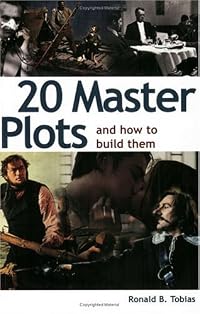
20 Master Plots
by Ronald Tobias
On This Page
Description
Give your story a solid foundation--a plot that engages readers from start to finish! The best stories linger in the hearts and minds of readers for decades. These tales gain their power through plots that connect with the audience on both an emotional and intellectual level. Inside Ronald B. Tobias details these 20 time-tested plots. Each is discussed and analyzed, illustrating how a successful plot integrates all the elements of a story. Tobias then shows you how to use these plots show more effectively in your own work. Tobias then goes to the next level, showing you how to choose and develop plot in fiction. He shows you how to craft plot for any subject matter, so that you develop your work evenly and effectively. As a result, your fiction will be more cohesive and convincing, making your story unforgettable for readers everywhere. "Plot isn't an accessory that conveniently organizes your material according to some ritualistic magic. You don't just plug in plot like a household appliance and expect it to do its job. Plot is organic. It takes hold of the writer and the work from the beginning." --Ronald Tobias show lessTags
Recommendations

Member Reviews
Published in 1993. The politics and world-view is dated, and the overt homophobia and ingrained Judeo-Christian moral sensibility are a little surprising. Likewise, the race and class issues are rampant, but the determined use of female and male pronouns in his examples is both welcome and sort of adorable in that "awww, early 90s! Look at you being inclusive!" way.
The plot examples from literature and film are very good. The world has changed a fair bit in 19 years, however, so the way he describes relationship dynamics reads as overly simplistic to me.
I do wish he'd addressed multiple plot. Yes, there needs to be a main plot, but subplots are essential for a story to have depth and wrangling them successfully can be difficult. I show more suppose that was beyond the scope of this book, sadly. show less
The plot examples from literature and film are very good. The world has changed a fair bit in 19 years, however, so the way he describes relationship dynamics reads as overly simplistic to me.
I do wish he'd addressed multiple plot. Yes, there needs to be a main plot, but subplots are essential for a story to have depth and wrangling them successfully can be difficult. I show more suppose that was beyond the scope of this book, sadly. show less
'20 Master Plots: And How to Build Them' is a well thought out idea that falls a little short in it's delivery, but in the end saves itself through originality.
The first chapter, titled 'Invisible Fiction', sets the mood for what's to come. The author expresses his opinions on plots and the many forms, how they all originate from a top three to be broken down into a 'top 20' for easier following. Chapter two, ' The Lowest Common Plot Denominators', discusses building tension through opposition, the three sections of a story (beginning, middle, and end), and other crucial things a plot requires to stay alive. Chapter 3, 'The Strong Force', is short in length, basically informing the reader what a 'character driven plot is' versus a 'plot show more driven' one.
Chapter four, 'Deep Structure', focuses on themes and moral arguments, while chapter five, 'Triangles', is an interesting, unique way to see characters and how they interact with each other.
After this, we finally begin the '20 plots', each divided by chapter. Each goes through all three 'acts' of the plot (again: beginning, middle, end), ending with a checklist to recap all that has been learned.
The wrap up chapter, 'Parting Shots', reminds you that the book is not a guide etched in stone and that rules are made to be broken. It's also stated that many times a plot is a mixture of two or more basic '20 Master Plots'.
At 232 pages, this book covers quite a bit. I was enthused as the sections, and recognized many of the 'patterns', but was left wanting in other areas. The information was useful, but if you read it straight through, many of the plot types repeat the same thing and it becomes redundant and dull. Also, some held examples of other novels and stories to illustrate what the author meant. I loved this; it enabled me to get a firmer grasp on things. Unfortunitely many of the plots don't have as many examples, or none at all, and I missed it when they did.
Wrapping up, this is a great resource guide for writers. If you have trouble with plotting, pick this up for a reasonable price. Heck, even if you don't, still pick it up for there are things out there you may not know about yet. On the downside it wasn't the most interesting thing to read, was a bit redundant, other times not being consistent enough. show less
The first chapter, titled 'Invisible Fiction', sets the mood for what's to come. The author expresses his opinions on plots and the many forms, how they all originate from a top three to be broken down into a 'top 20' for easier following. Chapter two, ' The Lowest Common Plot Denominators', discusses building tension through opposition, the three sections of a story (beginning, middle, and end), and other crucial things a plot requires to stay alive. Chapter 3, 'The Strong Force', is short in length, basically informing the reader what a 'character driven plot is' versus a 'plot show more driven' one.
Chapter four, 'Deep Structure', focuses on themes and moral arguments, while chapter five, 'Triangles', is an interesting, unique way to see characters and how they interact with each other.
After this, we finally begin the '20 plots', each divided by chapter. Each goes through all three 'acts' of the plot (again: beginning, middle, end), ending with a checklist to recap all that has been learned.
The wrap up chapter, 'Parting Shots', reminds you that the book is not a guide etched in stone and that rules are made to be broken. It's also stated that many times a plot is a mixture of two or more basic '20 Master Plots'.
At 232 pages, this book covers quite a bit. I was enthused as the sections, and recognized many of the 'patterns', but was left wanting in other areas. The information was useful, but if you read it straight through, many of the plot types repeat the same thing and it becomes redundant and dull. Also, some held examples of other novels and stories to illustrate what the author meant. I loved this; it enabled me to get a firmer grasp on things. Unfortunitely many of the plots don't have as many examples, or none at all, and I missed it when they did.
Wrapping up, this is a great resource guide for writers. If you have trouble with plotting, pick this up for a reasonable price. Heck, even if you don't, still pick it up for there are things out there you may not know about yet. On the downside it wasn't the most interesting thing to read, was a bit redundant, other times not being consistent enough. show less
This well written and interesting book would be useful to any writer regardless of where they are in their current project. If you are just starting to let the new ideas percolate you could find the structure of a plot to suit your fancy. If you are finished or have substantial work in progress you can use Tobias’ work to check the structure you have created. I noticed a weakness in manuscript and was able to plug the hole thanks to this book. The examples, taken from literature and film, make the text enjoyable reading even if you are not a writer.
This book categorizes fiction plots into twenty categories, then systematically goes through to discuss each of them.
Each plot is divided into three parts, the author discusses each part and uses well-known examples from literature to help characterize them. They are easy to understand and to follow and provide a basic outline for any basic fiction plot.
My only complaint would be that the analysis is overly broad, but that’s what the author promised. I enjoyed the book and will probably use it for reference in the future.
Each plot is divided into three parts, the author discusses each part and uses well-known examples from literature to help characterize them. They are easy to understand and to follow and provide a basic outline for any basic fiction plot.
My only complaint would be that the analysis is overly broad, but that’s what the author promised. I enjoyed the book and will probably use it for reference in the future.
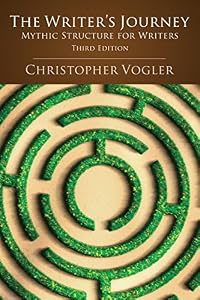
Hugely disappointing. One of the worst books on writing that I have read (or not read really, as I was unable to trudge through the whole thing). The numerous grammatical errors in this book are distracting enough to undermine the credibility of the book as a book about writing. The so-called master plots are not really plots at all, but broad story types. The "how to build them" part is just not really there. For a more solid plot-centric book about writing, I recommend Christopher Vogler's Writer's Journey, which is based on the work of Joseph Campbell.
What is the difference between a plot and a story? What is the importance of developing a plot? What are the main characteristics of a quest? What do you have to be attentive to if you write the story of an underdog? These are interesting questions for a young writer, indeed for any reader. The book is fairly simple, full of examples and interesting to read. It is also deceptively simple. It is easy to think "I knew that" and much more difficult to practice it. Each chapter has a checklist that should help a student to write a better essay. There are lots of examples from classic literature. Of course one may consult many more complex and authoritative books, but I like this one because it really makes you think about your own project.
I found this book to be very useful in helping me choose a plot for a story I'm working on. I have a longish story I'm planning to expand into a novel, but I wasn't sure exactly what kind of plot it would have. Reading through the examples here helped me clarify my ideas. The introduction was very interesting, too, going over types of plots, their uses and evolution. It even delves into the ramifications of the number of characters you have. I suspect it will make a good reference for future projects, as well.
Members
- Recently Added By
Lists

My Favorite Books
26 works; 1 member
Author Information

7+ Works 1,111 Members
Ronald B. Tobias is a professor of science and natural history filmmaking in the School of Film and Photography at Montana State University. He was a producer for the Discovery Channel for fifteen years and has produced, written, and directed more than thirty natural history films, many of which have appeared on the Discovery Channel and Animal show more Planet. show less
Some Editions
Common Knowledge
- Canonical title
- 20 Master Plots
- Alternate titles
- Twenty Master Plots and How to Build Them
- Original publication date
- 1993-09-15
Classifications
Statistics
- Members
- 902
- Popularity
- 29,676
- Reviews
- 11
- Rating
- (3.51)
- Languages
- English, German, Spanish
- Media
- Paper, Audiobook, Ebook
- ISBNs
- 12
- UPCs
- 2
- ASINs
- 6