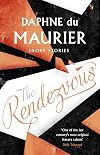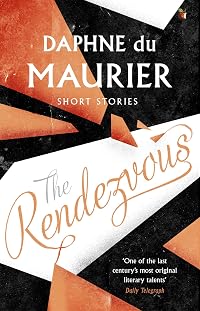
The Rendezvous and Other Stories
by Daphne du Maurier
On This Page
Description
A magician, a virtuoso. She can conjure up tragedy, horror, tension, suspense, the ridiculous, the vain, the romantic - Good Housekeeping 'Mary Farren went into the gun room one morning about half-past eleven, took her husband's revolver and loaded it, then shot herself. The butler heard the sound of the gun from the pantry...' The fourteen haunting stories in this collection span the whole of Daphne du Maurier's writing career and explore every human emotion: an apparently happily married show more woman commits suicide; a steamer in wartime is rescued by a mysterious sailing-ship; a dull husband breaks loose in a surprising fashion; a con woman plays her game once too often; and a famous novelist looks for romance, only to meet with bitter disappointent. Each meticulously observed tale shows du Maurier's mastery of the genre. show lessTags
Recommendations
























Member Recommendations

Member Reviews
The blurb tells us that the "fourteen haunting stories collected here span the whole of Daphne du Maurier's writing career", when in fact Minette Walters in the Introduction to this selection of short stories informs us that all but several were written before 1931, when du Maurier published her first novel, and the rest between 1937 and 1947, when she was in her thirties, so all of them can be considered to be written fairly on in her career.
I have to admit that I didn't get on with the stories at all: all but one have at its heart weak or unlikeable characters (sometimes both), and to me they felt on the whole contrived, predictable, and often lacking in tension, atmosphere and genuine surprises, with only occasionally a well-aimed show more stab at small-mindedness, pettiness, hypocrisy, class snobbery and prejudice; these stabs are the more effective because they are understated, and not spelled out in capital letters as are some of the climaxes. (I guess this is where her relative inexperience is most noticeable, as if she didn't trust herself to spell out the conclusion clearly enough or the reader to draw the obvious parallels.) The stories I liked the most were "The Escort", which is more mature and atmospheric than the others and a complete thematic departure (told in the first person, with a nautical theme during war time) from the rest of the collection, along with "Split Second", which is atmospheric and intriguing and held my interest, with the protagonist's emotional turmoil portrayed very effectively, even though it was to a degree predictable and not entirely convincing.
Minette Walters praises the collection because in her opinion they already show immense maturity for someone so young; I don't agree. In the Introduction, Daphne du Maurier is quoted as saying that the early ones (i.e. short stories) especially showed something of her development as a writer; as this they may be of interest, but I think I prefer her later work. show less
I have to admit that I didn't get on with the stories at all: all but one have at its heart weak or unlikeable characters (sometimes both), and to me they felt on the whole contrived, predictable, and often lacking in tension, atmosphere and genuine surprises, with only occasionally a well-aimed show more stab at small-mindedness, pettiness, hypocrisy, class snobbery and prejudice; these stabs are the more effective because they are understated, and not spelled out in capital letters as are some of the climaxes. (I guess this is where her relative inexperience is most noticeable, as if she didn't trust herself to spell out the conclusion clearly enough or the reader to draw the obvious parallels.) The stories I liked the most were "The Escort", which is more mature and atmospheric than the others and a complete thematic departure (told in the first person, with a nautical theme during war time) from the rest of the collection, along with "Split Second", which is atmospheric and intriguing and held my interest, with the protagonist's emotional turmoil portrayed very effectively, even though it was to a degree predictable and not entirely convincing.
Minette Walters praises the collection because in her opinion they already show immense maturity for someone so young; I don't agree. In the Introduction, Daphne du Maurier is quoted as saying that the early ones (i.e. short stories) especially showed something of her development as a writer; as this they may be of interest, but I think I prefer her later work. show less
A series of short and not so short stories that are a very wide range. There is mystery in here, at times of a detective type, at others of a supernatural type. They all have a twist in there somewhere. Those I enjoyed the most were the first, a detective is set out to discover why a young pregnant wife suddenly commits suicide, and one where a ship in the North Sea in WW2 encounters a submarine and an escort. All the stories are worth reading, and while some are better than others, there are no real clunkers in the collection.
I listened to this, read by Edward da Souza, who has a very pleasant reading voice. Heartily recommended!
I listened to this, read by Edward da Souza, who has a very pleasant reading voice. Heartily recommended!
The Rendezvous and Other Stories is a collection of short stories written by Daphne du Maurier. Some of them are among the earliest examples of her writing and most of them, as you would expect if you've ever read any of du Maurier's work before, are slightly disturbing and unsettling. She takes some quite ordinary situations and ordinary, flawed people, and adds undertones of suspense and drama.
Many of the stories are just 10-20 pages long - perfect if you don't have a lot of time, although in most cases I would have preferred them to be longer and more developed. My favourite story from the collection was No Motive, in which a private detective investigates an apparently motiveless suicide. I felt it could easily have been expanded show more into a full length detective novel, though it worked well as a short story too. The other one that really stood out for me was Split Second, in which a woman goes out for a walk one afternoon and returns home to find strangers living in her house. This story had a touch of the supernatural about it, as did Escort, which describes a ship leaving port during World War II and being rescued from a submarine attack by a mysterious sailing ship.
I liked the three stories I've just mentioned, as well as The Closing Door and La Sainte-Vierge, but there were too many of the others that I just didn't enjoy very much. However, it was still interesting to read them and see how good Daphne du Maurier's writing was even in the early stages of her career. show less
Many of the stories are just 10-20 pages long - perfect if you don't have a lot of time, although in most cases I would have preferred them to be longer and more developed. My favourite story from the collection was No Motive, in which a private detective investigates an apparently motiveless suicide. I felt it could easily have been expanded show more into a full length detective novel, though it worked well as a short story too. The other one that really stood out for me was Split Second, in which a woman goes out for a walk one afternoon and returns home to find strangers living in her house. This story had a touch of the supernatural about it, as did Escort, which describes a ship leaving port during World War II and being rescued from a submarine attack by a mysterious sailing ship.
I liked the three stories I've just mentioned, as well as The Closing Door and La Sainte-Vierge, but there were too many of the others that I just didn't enjoy very much. However, it was still interesting to read them and see how good Daphne du Maurier's writing was even in the early stages of her career. show less
http://leavesandpages.wordpress.com/2013/06/19/review-the-rendezvous-and-other-s...
In the Preface, the author briefly explains her inspirations, and mentions that these stories show her development as a writer. I think a nice addition to this collection would have been dates of writing or of original publication; this would have added much to my own enjoyment as a long-time Daphne du Maurier reader.
*****
Some excellent, some not so much in this 1980 collection of short stories from throughout the author’s long career. All are very well written; the “less excellent” ones are described as such only in comparison to this author’s absolutely brilliant “best”.
No Motive ~ Why would a sweet-natured, happily married, expectant mother show more fatally shoot herself ten minutes after cheerfully ordering new garden furniture? One of the longer stories in this collection, and nicely plotted out.
Panic ~ A casual love affair goes terribly wrong. Fabulously atmospheric, but ultimately slight. The dénouement comes as no surprise.
The Supreme Artist ~ An aging actor gives a most superb performance off stage, and comes abruptly to an intimation of his own mortality.
Adieu Sagesse ~ Two men from the opposite ends of the social spectrum plot their escape from tedious lives. Loved this one; the right people “win”.
Fairy Tale ~ A slight and unlikely snippet of a story of a ne’er-do-well husband and his adoring wife. “Fairy tale”, indeed!
The Rendezvous ~ I expected much from the title story of this collection. A successful author who has spent his life in observation finally arranges an “experience” for himself, only to be disappointed at every turn. In general, well done. But I wanted something just a little bit more.
La Sainte-Vierge ~ Innocence and corruption. A snippet of a story, but very evocative of both.
Leading Lady ~ Cherchez la femme… Another theatrical setting. Daphne used her eyes and ears well when about the backstage world.
Escort ~ A maritime ghost story set in World War II. It’s been done before, but this attempt is reasonably decent. Nice detail on board the ghost ship.
The Lover ~ A damning portrait of a rather vicious “lady’s man”. Didn’t really go anywhere as a story.
The Closing Door ~ A young man faces up to a dire diagnosis. His lover unknowingly twists the knife. No shortage of symbolic situation in this one; I suspect it is one of the earlier efforts of the author.
Indiscretion ~ Be careful what you say and who you say it to. Three lives are changed by a single sentence. A mite too contrived for my full enjoyment.
Angels and Archangels ~ Religion and hypocrisy. The hypocrites win. A bitter little tale.
Split Second ~ This story is the definite high point of the book. A middle-aged woman goes out for a walk, and comes away from a brush with death to a very different world. Or does she? Brutally pathetic, and perfectly written. show less
In the Preface, the author briefly explains her inspirations, and mentions that these stories show her development as a writer. I think a nice addition to this collection would have been dates of writing or of original publication; this would have added much to my own enjoyment as a long-time Daphne du Maurier reader.
*****
Some excellent, some not so much in this 1980 collection of short stories from throughout the author’s long career. All are very well written; the “less excellent” ones are described as such only in comparison to this author’s absolutely brilliant “best”.
No Motive ~ Why would a sweet-natured, happily married, expectant mother show more fatally shoot herself ten minutes after cheerfully ordering new garden furniture? One of the longer stories in this collection, and nicely plotted out.
Panic ~ A casual love affair goes terribly wrong. Fabulously atmospheric, but ultimately slight. The dénouement comes as no surprise.
The Supreme Artist ~ An aging actor gives a most superb performance off stage, and comes abruptly to an intimation of his own mortality.
Adieu Sagesse ~ Two men from the opposite ends of the social spectrum plot their escape from tedious lives. Loved this one; the right people “win”.
Fairy Tale ~ A slight and unlikely snippet of a story of a ne’er-do-well husband and his adoring wife. “Fairy tale”, indeed!
The Rendezvous ~ I expected much from the title story of this collection. A successful author who has spent his life in observation finally arranges an “experience” for himself, only to be disappointed at every turn. In general, well done. But I wanted something just a little bit more.
La Sainte-Vierge ~ Innocence and corruption. A snippet of a story, but very evocative of both.
Leading Lady ~ Cherchez la femme… Another theatrical setting. Daphne used her eyes and ears well when about the backstage world.
Escort ~ A maritime ghost story set in World War II. It’s been done before, but this attempt is reasonably decent. Nice detail on board the ghost ship.
The Lover ~ A damning portrait of a rather vicious “lady’s man”. Didn’t really go anywhere as a story.
The Closing Door ~ A young man faces up to a dire diagnosis. His lover unknowingly twists the knife. No shortage of symbolic situation in this one; I suspect it is one of the earlier efforts of the author.
Indiscretion ~ Be careful what you say and who you say it to. Three lives are changed by a single sentence. A mite too contrived for my full enjoyment.
Angels and Archangels ~ Religion and hypocrisy. The hypocrites win. A bitter little tale.
Split Second ~ This story is the definite high point of the book. A middle-aged woman goes out for a walk, and comes away from a brush with death to a very different world. Or does she? Brutally pathetic, and perfectly written. show less
Since finishing this collection last night, I've changed my mind - 3, not 2 stars.
Du Maurier's short stories are - for the most part of this collection at least - just not as engaging and atmospheric as her novels.
I think it's mostly because there is such a difference in quality between the stories, maybe partly because they are ranging from early works to some later ones.
I loved the first and the last story ("No Motive" and "Split Second") and enjoyed "Panic" and "Adieu Sagesse", but the rest of the stories didn't appeal to me and some just were a bit bland.
Du Maurier's short stories are - for the most part of this collection at least - just not as engaging and atmospheric as her novels.
I think it's mostly because there is such a difference in quality between the stories, maybe partly because they are ranging from early works to some later ones.
I loved the first and the last story ("No Motive" and "Split Second") and enjoyed "Panic" and "Adieu Sagesse", but the rest of the stories didn't appeal to me and some just were a bit bland.
Includes The Rendezvous, Adieu Sagesse and Fairy Tale, three I picked because they are so different. She has a way of finding the ordinary cruelties and shortcomings of ordinary people and hinging her uncomfortable and disturbing stories on these imperfections.
And with this finished, so is Project Daphne...
This was a great collection to round out this adventure. The last story makes me think Daphne was very aware of what her mental faculties would be for the next decade.
This was a great collection to round out this adventure. The last story makes me think Daphne was very aware of what her mental faculties would be for the next decade.
Members
- Recently Added By
Author Information

204+ Works 57,515 Members
Daphne Du Maurier was born in London on May 13, 1907 and educated in Paris. In 1932, she married Lieutenant-General Sir Frederick Browning. She began writing short stories of mystery and suspense for magazines in 1928, a collection of which appeared as The Apple Tree in 1952. Her first novel, The Loving Spirit, was published in 1931. Her tightly show more woven, highly suspenseful plots and her strong characters make her stories perfect for adaptation to film or television. Among her many novels that were made into successful films are Jamaica Inn (1936), Rebecca (1938), Frenchman's Creek (1941), Hungry Hill (1943), My Cousin Rachel (1952), and The Scapegoat (1957). Her short story, The Birds (1953), was brought to the screen by director Alfred Hitchcock in a treatment that has become a classic horror-suspense film. She died on April 19, 1989 at the age of 81. (Bowker Author Biography) show less
Series
Belongs to Publisher Series
Knaur Taschenbuch (824)
Virago Modern Classics (519)
Work Relationships
Contains
Common Knowledge
- Canonical title
- The Rendezvous and Other Stories
- Original publication date
- 1980
- First words
- Mary Farren went into the gun room one morning about half-past eleven, took her husband's revolver and loaded it, then shot herself. (No Motive)
One of the reasons I'm such a fan of Daphne du Maurier is that her stories are never comfortable. (Introduction)
The last chapter in my book of memoirs, Growing Pains, is entitled 'Apprenticeship'; the sub-title of the book itself, The Shaping of a Writer. (Preface) - Quotations
- The glory of St Swithin's was no more. The famous church in Mayfair, whose incense-laden atmosphere had caused strong hunting peers to weep with emotion, and whose soulful organ and sweet-voiced choir-boys against a backgroun... (show all)d of glittering candles had brought the gayest revue actress to her knees, was now given up to a sordid crowd of slum-dwellers from Whitechapel who did not even know the meaning of genuflexion.
(Angels and Archangels, pp. 211–12) - Last words*
- (Click to show. Warning: May contain spoilers.)Der Apfelbaum: Er sank tiefer, immer tiefer in den Schnee ein, und als seine Lippen auf einen kalten und feuchten Zweig trafen, da war es wie die Berührung einer zögernden schüchternen Hand, die sich im Dunkel nach ihm ausstreckte.
(Click to show. Warning: May contain spoilers.)Das Rendezvous: Robert Scrivener versorgte sein Taschentuch, stand auf und schob sich durch die Menge in die feuchten Strassen von Genf. Sein Mass war voll.
(Click to show. Warning: May contain spoilers.)Der Weiher: Die verborgene Welt, wie die Kreise auf dem Weiher, der nun so bald ausgefüllt und umfriedet werden sollte, war für immer unerreichbar geworden.
(Click to show. Warning: May contain spoilers.)Die Gemse: "Als Andenken für Jesus."
(Click to show. Warning: May contain spoilers.)Der erste Frühlingstag: Wir werden so glücklich sein, du und ich, glücklich - glücklich!" - Original language
- English UK
*Some information comes from Common Knowledge in other languages. Click "Edit" for more information.
Classifications
Statistics
- Members
- 276
- Popularity
- 116,894
- Reviews
- 11
- Rating
- (3.86)
- Languages
- 6 — Czech, English, German, Italian, Spanish, Swedish
- Media
- Paper, Audiobook, Ebook
- ISBNs
- 22
- ASINs
- 7