How It Ended: New and Collected Stories
by Jay McInerney
On This Page
Description
Jay McInerney's characters include a young woman holed up in a remote cabin while her married boyfriend campaigns for the highest of all offices, a family celebrating the holidays while mired in loss year after year, a couple whose experiments in sexuality cross every line imaginable, an actor visiting his wife in rehab, a doctor treating a variety of convicts and his own criminal past, and a young socialite who is called home to nurse her mother, as well as Russell and Corinne Calloway, who show more featured in Jay's novels Brightness Falls and The Good Life. show lessTags
Recommendations

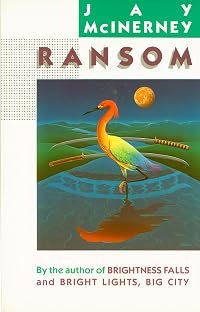


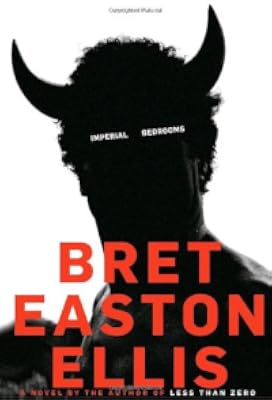
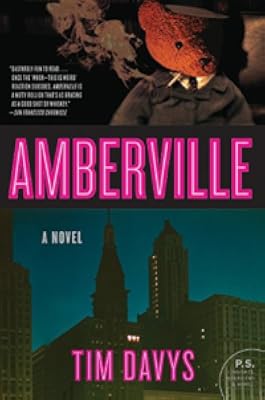
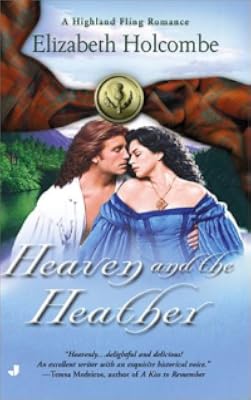
Member Recommendations
Member Reviews
In the 80's Jay McInerney and Brett Easton Ellis were being touted as the Hemingway and Fitzgerald of a new generation. I don't know if anybody had in mind which was supposed to be Hemingway and which Fitzgerald, but in, How It Ended, McInerney's book of new and collected short stories, I think McInerney makes a bid for Fitzgerald's mantle.
The most obvious similarity is he treads the same ground stories with husbands and wives talking. True, Hemingway also used husbands and wives as subject matter (as well as couples that aren't officially united,) but McInerney stories seem to have been influenced by Fitzgerald, you can feel that influence in stories such as "Putting Daisy Down," "Sleeping With Pigs," "Summary Judgment."
McInerney's show more stories aren't all what they seem to be, for example in "I Love You, Honey" there's a lot of subtext going on, and what the characters are telling each other isn't as important as what they aren`t telling each other. The subtext in the stories may be redemption, even when the characters aren't aware of it or even asking for it. I noticed this while reading "Con Dr." about a doctor with a drug problem who does redeem his career and his life but with unexpected consequences.
Other sources for the stories are writers and the writers life. McInerney shows all aspects of writers from gilded college boys wanting to be writers in "The Waiter," or to the drugged out rock band lyricist, now more a drug dealer than a word purveyor in "The Queen and I."
McInerney isn't a pyrotechnical writer, he doesn't use gimmicks to pull you into his stories with flashy wordplay or bizarre scenarios, most of his starting points are a world we know well, or aren't unfamiliar with. McInerney is a mature writer who has the confidence of his craft and talent and lets his stories unfold in front of the reader. He has the ability to take what at first seems a random comment or observation and make it deftly reflect the unspoken truths behind the situation the characters find themselves in. A lot of the stories are from a male point of view but a standout story that I found amazing was "The Story of My Life" which is told from the point of view of a girl in her 20's and her concerns. At first she seems a vague and vapid person but as the McInerney unravels the story through her phone calls to lovers, friends, and family, you see there is so much more, so much so that you think of her as a person and not a character in a story.
I don't keep bringing up Hemingway or Fitzgerald as a direct story to story comparison of the legendary authors to McInerney, but to illustrate that the quality of work demonstrated in How It Ended is on the level of those legendary authors. If he is the new Fitzgerald or Hemingway or just Jay McInerney, it makes me wish I'd paid a little more attention to McInerney's writing in the past few years. show less
The most obvious similarity is he treads the same ground stories with husbands and wives talking. True, Hemingway also used husbands and wives as subject matter (as well as couples that aren't officially united,) but McInerney stories seem to have been influenced by Fitzgerald, you can feel that influence in stories such as "Putting Daisy Down," "Sleeping With Pigs," "Summary Judgment."
McInerney's show more stories aren't all what they seem to be, for example in "I Love You, Honey" there's a lot of subtext going on, and what the characters are telling each other isn't as important as what they aren`t telling each other. The subtext in the stories may be redemption, even when the characters aren't aware of it or even asking for it. I noticed this while reading "Con Dr." about a doctor with a drug problem who does redeem his career and his life but with unexpected consequences.
Other sources for the stories are writers and the writers life. McInerney shows all aspects of writers from gilded college boys wanting to be writers in "The Waiter," or to the drugged out rock band lyricist, now more a drug dealer than a word purveyor in "The Queen and I."
McInerney isn't a pyrotechnical writer, he doesn't use gimmicks to pull you into his stories with flashy wordplay or bizarre scenarios, most of his starting points are a world we know well, or aren't unfamiliar with. McInerney is a mature writer who has the confidence of his craft and talent and lets his stories unfold in front of the reader. He has the ability to take what at first seems a random comment or observation and make it deftly reflect the unspoken truths behind the situation the characters find themselves in. A lot of the stories are from a male point of view but a standout story that I found amazing was "The Story of My Life" which is told from the point of view of a girl in her 20's and her concerns. At first she seems a vague and vapid person but as the McInerney unravels the story through her phone calls to lovers, friends, and family, you see there is so much more, so much so that you think of her as a person and not a character in a story.
I don't keep bringing up Hemingway or Fitzgerald as a direct story to story comparison of the legendary authors to McInerney, but to illustrate that the quality of work demonstrated in How It Ended is on the level of those legendary authors. If he is the new Fitzgerald or Hemingway or just Jay McInerney, it makes me wish I'd paid a little more attention to McInerney's writing in the past few years. show less
OK, so here's one of my guilty literary pleasures. I absolutely love me some Jay McInerney. I adore the guy and his writing, and have for quite some time. But here's the thing about me and McInerney: as much as I hate to admit it, I've come to the conclusion that I can only take him in smallish doses, and How It Ended: New and Collected Stories confirms that theory. This is not a collection of stories that is meant to be read straight through, as I did over the New Years weekend. (Especially over such a weekend made for debauchery such as New Years.)
By page 110 or so of this collection of stories, I felt like I needed to check myself into the likes of the Betty Ford Clinic because I was feeling in needed of a detox. The coke! The show more parties! The beautiful people! The affairs! New York! It's all here, and it's the stuff that Jay McInerney's stories are made of (and why I love him so).
Escaping into a McInerney book is like spending an evening in the company of that friend of yours who is living la vida loca - you know, the one who goes to all the great concerts and all the cool parties, the One Who Has A Life while you're in your PJs by 7 p.m. It's fun, in a way, to live vicariously through such people, which again, is why these stories are good but just not read back to back.
The characters in these stories are, for the most part, gorgeous and rich and incredibly lonely and sad. They're adulterers. They're living in the aftermath of the 80s and 9/11. Several make re-appearances from their starring roles in other McInerney novels (notably, Russell and Corrine Calloway from Brightness Falls and Alison from Story of My Life).
How It Ended is comprised of 26 stories. In my opinion, among the best are:
"The Madonna of Turkey Season" about a family struggling to celebrate the holidays each year after the passing of their mother;
"Sleeping with Pigs", a brilliant story about a woman's fetish for sleeping with a pig and how that is connected with her grieving her deceased brother;
"My Public Service," about an idealistic staffer on a political campaign who quickly becomes jaded;
"The Queen and I," about the enduring spirit of friendship over family;
"Con Doctor," about a doctor in a prison who can't come to terms with his own past;
"I Love You, Honey," about the lengths one will go for revenge and possessiveness, and
"Getting in Touch with Lonnie," where a celebrity gets a surprise when visiting his wife in a rehab clinic. show less
By page 110 or so of this collection of stories, I felt like I needed to check myself into the likes of the Betty Ford Clinic because I was feeling in needed of a detox. The coke! The show more parties! The beautiful people! The affairs! New York! It's all here, and it's the stuff that Jay McInerney's stories are made of (and why I love him so).
Escaping into a McInerney book is like spending an evening in the company of that friend of yours who is living la vida loca - you know, the one who goes to all the great concerts and all the cool parties, the One Who Has A Life while you're in your PJs by 7 p.m. It's fun, in a way, to live vicariously through such people, which again, is why these stories are good but just not read back to back.
The characters in these stories are, for the most part, gorgeous and rich and incredibly lonely and sad. They're adulterers. They're living in the aftermath of the 80s and 9/11. Several make re-appearances from their starring roles in other McInerney novels (notably, Russell and Corrine Calloway from Brightness Falls and Alison from Story of My Life).
How It Ended is comprised of 26 stories. In my opinion, among the best are:
"The Madonna of Turkey Season" about a family struggling to celebrate the holidays each year after the passing of their mother;
"Sleeping with Pigs", a brilliant story about a woman's fetish for sleeping with a pig and how that is connected with her grieving her deceased brother;
"My Public Service," about an idealistic staffer on a political campaign who quickly becomes jaded;
"The Queen and I," about the enduring spirit of friendship over family;
"Con Doctor," about a doctor in a prison who can't come to terms with his own past;
"I Love You, Honey," about the lengths one will go for revenge and possessiveness, and
"Getting in Touch with Lonnie," where a celebrity gets a surprise when visiting his wife in a rehab clinic. show less
For a quarter-century now, Jay McInerney has been telling fundamentally the same story: Innocent newcomer to the neon jungle gains the world -- or at least a book contract, a bespoke suit and a gorgeous girlfriend -- only to lose his soul. "How It Ended" presents a dozen amusing but ultimately self-indulgent variations on that theme. The short story is perhaps not the best display case for McInerney's gifts. His characters need narrative time for their world-weary carapaces to crack, revealing hidden depths and vulnerabilities; in the shorter format, their sardonic defense mechanisms come across as shallow and bitchy. (From the WASHINGTON POST, July 8, 2009)
A terrific collection of short stories by a real master of the form. It's a bit of a history lesson/writing lesson - you get to see the stories that would later become [b:Bright Lights Big City|86147|Bright Lights, Big City|Jay McInerney|http://photo.goodreads.com/books/1223018233s/86147.jpg|144128] and [b:Story Of My Life|821611|The Story of My Life (Bantam Classic)|Helen Keller|http://photo.goodreads.com/books/1178681160s/821611.jpg|1602613] - but it's also just a lesson in the form. His preface talks about the form of short stories and he just nails it, even with the stories that are more dead weight that interesting.
There are only a few of those dead weight stories, you'll be happy to know, and most of them are absolutely brilliant. show more I'm not sure I can recall another short story collection where I felt entirely satisfied at the end of each story.
Plus, did you know that Alison Poole = Rielle Hunter? I KNOW, right?!
Anyway, an excellent collection for an early autumn weekend. I ramble on more about it, at some length, at Raging Biblioholism: http://wp.me/pGVzJ-h7 show less
There are only a few of those dead weight stories, you'll be happy to know, and most of them are absolutely brilliant. show more I'm not sure I can recall another short story collection where I felt entirely satisfied at the end of each story.
Plus, did you know that Alison Poole = Rielle Hunter? I KNOW, right?!
Anyway, an excellent collection for an early autumn weekend. I ramble on more about it, at some length, at Raging Biblioholism: http://wp.me/pGVzJ-h7 show less
I have lost count of the number of times I have purchased The New Yorker in airports with the idea that, this time, I will enjoy it. And time after time I face disappointment. Similarly, I keep trying to read The Best American Short Stories and, time after time, I am bitterly disappointed. What I find in these stories (stories I have begun calling, in a derogatory manner, “New Yorker” stories) Is a tail that covers a person’s life or a year in a person’s life or a month in a person’s life or a week in a person’s life or a day in a person’s life or some snatch of time in a person’s life and, at the end of these stories, the author uses a line or a paragraph or a page to be profound. And, at the end of these stories, I sit show more back and say, “So what?” Nothing has happened, nothing has changed, nothing makes me care. The authors are skilled. But there is nothing more there than a slice of life about which I just can’t care.
This is a collection of those stories. That McInerney has writing skills is not the question. Can he make me care about anyone he writes about or care about the stories being told? That is the question. Can he make me care that I spent the time to read these stories? That he can do – I care that I used up my time.
I will not go into the stories – even to point out what didn’t or (very rarely) did work. I look through the table of contents and can barely remember them. I can only say what I have said before. I read them, and there is little else to be said
These are stories that are obviously to the taste of others, just as The New Yorker and Best American Short Stories are to the tastes of others; others who seem to have a great degree of clout and who must have more refined tastes than I.
But I will not pick up another New Yorker, I will not pick up another Best American Short Stories, and I will not pick up anything else written by Jay McInerney. show less
This is a collection of those stories. That McInerney has writing skills is not the question. Can he make me care about anyone he writes about or care about the stories being told? That is the question. Can he make me care that I spent the time to read these stories? That he can do – I care that I used up my time.
I will not go into the stories – even to point out what didn’t or (very rarely) did work. I look through the table of contents and can barely remember them. I can only say what I have said before. I read them, and there is little else to be said
These are stories that are obviously to the taste of others, just as The New Yorker and Best American Short Stories are to the tastes of others; others who seem to have a great degree of clout and who must have more refined tastes than I.
But I will not pick up another New Yorker, I will not pick up another Best American Short Stories, and I will not pick up anything else written by Jay McInerney. show less
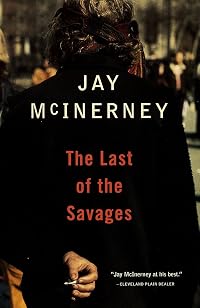
Jay McInerney is a genius of entertainment. His stories have the present time as background; As a conseguences you can read portraits of 80's, 90's and the new millennium, like this one.His style changes and evolves with time and you can easily relate to the charachters. For personal reasons I loved this one, 3d after "Bright lights" and "Last of Sauvages". He can be fun and introspective, sad and easy goin, light and somehow cultural all wrapped within the measure of a pocket book. Excellent entertainment as I said but forces you to think too, sometimes to remember.
Salvatore Gagliarde
Salvatore Gagliarde
This is my first exposure to Jay McInerney, and I was pleasantly surprised at the variety in this collection of stories. So often collected stories tend to be the same thing over and over, but McInerney did a great job with presenting relationship stories without all of them sounding the same. There was plenty of sex, drugs and funky behavior. I was surprised at how well he used women's POV.
Ray Porter's narration is amazing!! He actually has more than one voice for women! And his men sounded different without using accents. I will definitely be looking for more of his work.
Ray Porter's narration is amazing!! He actually has more than one voice for women! And his men sounded different without using accents. I will definitely be looking for more of his work.
Members
- Recently Added By
Author Information

41+ Works 8,328 Members
Jay McInerney was born in 1955 in Hartford, Conn. and earned his B.A from Williams College in 1976. He did postgraduate study at Syracuse University, and was a Princeton in Asia fellow in 1977. McInerney's career includes stints as a newspaper reporter, a textbook editor, and a fact checker for the New Yorker magazine. His writing has appeared in show more a variety of periodicals including Paris Review, Vogue, and Atlantic Monthly. His books include "Model Behavior," "The Last of the Savages," and "Bright Lights, Big City." (Bowker Author Biography) Jay McInerney is the author of "Bright Lights, Big City," "Ransom," "Story of My Life," "Brightness Falls," "The Last of the Savages," & "Model Behavior." He is a contributing writer for "House & Garden" & "The New Yorker," & lives near Nashville, Tennessee. (Publisher Provided) show less
Awards and Honors
Common Knowledge
- Canonical title
- How It Ended: New and Collected Stories
- Original publication date
- 2000
- People/Characters
- Russell Calloway; Corrine Calloway
- Important places
- USA; New York, USA; New York, New York, USA
- Important events
- September 11 Attacks (2001-09-11)
- First words
- The first time it happened, Liam blamed the terrorists.
- Quotations
- He assumed that his wife, like all the other sentient residents of the city, was traumatized by the events of that September Day.
Deciding that this was no world into which to bring another child was a perfectly ratio... (show all)nal response, though he knew many people who'd had the exact opposite response.
This, too, was understandable: affirming life in the face of so much death.
He didn't really begin to suspect until much later that her motives might have more complex, less cosmic and more personal, than he had imagined. - Last words
- (Click to show. Warning: May contain spoilers.)"Of course you'll live with me. With us---your wife and son. What else would you do? You know I love you, honey."
Classifications
Statistics
- Members
- 392
- Popularity
- 79,915
- Reviews
- 7
- Rating
- (3.51)
- Languages
- 5 — Chinese, Dutch, English, French, Italian
- Media
- Paper, Audiobook, Ebook
- ISBNs
- 25
- ASINs
- 5