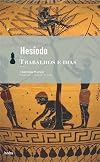
Works and Days
by Hesiod
On This Page
Description
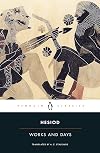
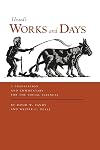
This new, annotated translation of Hesiod's Works and Days is a collaboration between David W. Tandy, a classicist, and Walter Neale, an economist and economic historian. Hesiod was an ancient Greek poet whose Works and Days discusses agricultural practices and society in general. Classicists and ancient historians have turned to Works and Days for its insights on Greek mythology and religion. The poem also sheds light on economic history and ancient agriculture, and is a good resource for show more social scientists interested in these areas. This translation emphasizes the activities and problems of a practicing agriculturist as well as the larger, changing political and economic institutions of the early archaic period.The authors provide a clear, accurate translation along with notes aimed at a broad audience. The introductory essay discusses the changing economic, political and trading world of the eighth and seventh centuries B.C.E., while the notes present the range and possible meanings of important Greek terms and references in the poem and highlight areas of ambiguity in our understanding of Works and Days. show lessTags
Recommendations


















Member Reviews
I’ve managed to avoid reading these great Greek classics until now. And it was merely one of those books, listing “books that you should read” that got me started. And, I must say, I am quite enjoying my dabbling into these classic works. I never realised until now that Hesiod was roughly contemporary with Homer.....about 700 BC. About 250 years before the classical period in Athens with Socrates Plato and Aristotle.
The original of “Works and Days” was written in verse. Hesiod was a poet. So I looked for a translation, such as the current one, that had attempted to emulate the verse. Of course, this is nigh on impossible ....apart from the fact that the Greeks of the time had notions and concepts that are totally foreign to show more us today. Still, I have no regrets. I’ve also just read another version of the same poem which doesn’t try and keep to verse and my conclusion is that they are so close that it doesn’t really matter. I’m sure there will be many points where scholars and translators will argue and disagree. But for me one version was as good as the other.
I kind of liked “Works and Days” much more than “The Theogony”. The latter purports to be a revelation of how the world and the gods came to be. And I found it rather tedious. A bit like reading Deuteronomy. (Still this book was not about the Theogony...though there are endless references to the gods in the work. I certainly reminded me in parts of Polonius’s instructions to his teenage son whom he was sending off to college in England.....”Neither borrower nor lender be” etc. Lots of really practical advice there....including how many boards to have in stock before building a cart. Plus the best season for putting to sea in a trading ship.
One thing struck me throughout and that was the casual attitude to slavery. Clearly slaves were allotted the drudge work and it was accepted that even a very modest household would have several slaves. But there was no thought nor mention in all this advice about “how to live the good life” of human rights for slaves. Slaves are mentioned in the same breath as oxen and mules.......Unyoke the mules and let the slaves ease their knees. It really seems to be a blank spot in the morality of the time. I wonder why? ....what was it in the cosmology that relegated salves (and maybe women) to inferior roles.
I’ve captured some of the author/translators comments and some of the actual verse in the passages below. Partly because the passage caught my fancy and partly to help me remember it.
What did I think overall? Yes, I liked it. Four stars from me.
Introduction
As Samuel Butler says in his delightfully quirky yet insightful work on “Homer, The Authoress of the Odyssey”, ‘Men of science, so far as I have observed them, are apt in their fear of jumping to a conclusion to forget that there is such a thing as jumping away from one.’
In the eighth century, Greece was emerging from a time of cultural eclipse traditionally known as the Greek Dark Ages, the era between the thirteenth and ninth centuries BCE, during which writing mysteriously vanishes.
Linear-B disappears, almost overnight, with the collapse of the palatial system and its attendant red tape. Then, after centuries in Greece with no writing at all, suddenly, in the mid-eighth century, inscriptions in an entirely different method of writing Greek appear. The onset and spread of this new system is likewise swift, from no evidence of it in the ninth century to scribbles in the last third of the eighth century
The Greek alphabet seems to appear rather suddenly and almost fully formed.....The great and deceptively simple innovation of the Greek alphabet was the addition of vowels, in which the spoken language abounds.....On the other hand, with the complex syllabary script of the Mycenaeans, Linear-B, you still had to guess at the vowels or even the number of syllables......The alphabet, with its precise articulation of words into syllables, turned out to be ideal for the recording of metrical poetry.
The Theogony unfolds the origins of the cosmos (‘ in the beginning was Chaos’) as well as the family trees of the gods, while in Works and Days the poet refreshingly takes his own trials and tribulations for a subject, and depicts the workaday world as his audience knew it,
Works and Days as we have it is a scant 828 lines, to the Iliad’s whopping 15,693.....An apocryphal story related by Pausanias says that Hesiod was expelled from a competition in Delphi because he hadn’t learned how to accompany himself (on the Lyre). .....That his authority is as an official Prize-Winning Poet perfectly suits the poem’s themes of judgements and justice.
Perhaps Hesiod’s mention of it seems to us off-hand, but a tripod is nothing to sneeze at. In the Iliad, for instance, in Book 22.164, we are informed that the appropriate prize for the horse or prestigious chariot race at a funeral games was a bronze tripod or a woman.
Herodotus says that it is Homer and Hesiod who first ascribe to the gods their various attributes.
Works and Days is roiled with anxiety about conflict between siblings......It turns out Strife’s a twin, a double birth–There are, not one, but two Strifes on the earth....The following is from the actual "Works and Days" poem of Hesiod:
A man who gets to know them both admits One’s blessed, one’s cursed–the two are opposites. One brings forth discord, nurtures evil war:
the other, Shady Night Gave birth to first. This Strife, high-seated Zeus Set in earth’s roots–for this one has a use: She spurs a man who otherwise would shirk, Shiftless and lazy, to put his hands to work
Perses, take this to heart, lest Strife, whose quirk Is mischief-making, draw your mind from work;
let’s settle this fair and square–Straight judgements are from Zeus and past compare. Already we’ve divvied up our lots, but you Keep laying hold of more than is your due,
To Zeus’s plan, the Cripple7 right away Modelled a modest maiden out of clay;
Then Hermes Argus-killer set in her heart Lies and wheedling words, a knack for deceit.
The design of Zeus deep-thunderer complete,
Gave her a voice. ‘Pandora’ he would name her,
But woman grappled off the jar’s huge lid, 9 Scattering its contents as she did, Unleashing sorry troubles on Mankind.
Would I be better dead or not yet born?–For this age is an Iron Age indeed–Suffering never ceases for our breed: By day, men toil; night worries them with care, And the gods will give them troubles hard to bear;
So Perses, you be heedful of what’s right; Don’t nurture Arrogance–she’s a disaster For lowly mortals; she will overmaster Even noble men and crush them with her load
Once they encounter troubles. The better road Is the one bypassing Arrogance to wend To Justice; Justice triumphs in the end.
Judges, you gift-gluttons, beware: Drop crooked verdicts, speak them fair and square. He harms himself who harms another man; The plotter is the worst hurt by the plan.
Far-seeing Zeus will grant prosperity To him who speaks up for the truth, but he Who bears false witness and lies under oath, Injures past healing law and good name both, And his descendants live under a cloud; The sons of one true to his word are proud.
The strait and narrow path the gods have set To Virtue is steep and long, and paved with sweat.
It’s work that prospers men, and makes them rich In heads of livestock, and it’s working which Endears you to the immortals. There’s no shame In working, but in shirking, much to blame.
Invite a friend but not a foe to feast–
Invite the man close by not last nor least;
If something bad should happen on your farm, Neighbours arrive half-dressed at the alarm; Kinsmen, belted.
Deposit even small amounts, but do It often, and you’ll find that they accrue.
He wards off sun-scorched famine who can add To what he has.
But if it’s wealth you long for in your chest, Then do this: work on work and never rest.
When Atlas’ daughters rise, the Pleiades, Start harvesting, plough at their setting. These Are hidden forty days and forty nights.
I’d urge you heed: Think how to clear debts and not starve. You’ll need A woman and an ox to start a life:
A ploughing ox; bondswoman, not a wife, One who can follow oxen, and prepare
The household’s needs and management with care,
Cut three feet for a mortar; three cubits’ good For pestles; for an axle, a seven-foot Length (eight for a mallet-head to boot). That’s how things are well-fitted, part to part:
Equip your household with two ploughs, take care To have a single-piece one, and a spare Well joined.
Elm poles are sturdiest Or laurel, oak for stocks, while holm is best For trees.
Be mindful when you hear the clanging cry Of the crane migrating through the cloudy sky, 30 450 She brings the sign for ploughing and the start Of winter rains
When first the opportunity to plough Shows itself to mortals, that means now: Jump to it, both you and your slaves together,
In winter, pass the blacksmith’s forge, don’t stop Where men gather and chat in his warm shop.
The dope Who’s idle and awaits an empty hope, Gripes in his soul, lacking a livelihood. 500 But as provider, Hope is not much good, Not to a man who lacks his daily bread
But loiters at the forge all day instead.
When winter weather Has come, stitch skins of firstling kids together37 With thongs of ox sinew, so you can drape Your shoulders with a rain-resistant cape.
Now rouse your slaves and whet Your scythes. Shun shady spots and lying in Till dawn at harvest, when sun withers the skin. No time to waste now, get your crop inside. Rise early, so the harvest will provide.
And when mighty Orion starts to shine, Urge slaves to thresh Demeter’s holy corn On a threshing floor that’s airy and well worn.
And gather hay and straw inside So your oxen and your mules are well supplied. Then let slaves ease their knees, unyoke your team.
when the Pleiades, Fleeing Orion, sink in cloudy seas, That’s when all kinds of wind blasts rage. Don’t keep Your ship any longer on the wine-dark deep,
But work the earth,
Till sailing season comes, just wait. Then drag your swift ship seawards. Range the freight In its hold, get ready for the profit you’ll Bring home–just like our father
The time is ripe for sailing the fifty days Past solstice, summer in its closing phase, Season of toil. You will not shipwreck then, Nor will the sea extinguish all your men,
Of all that I proclaim to you: do not Load hollow ships with your whole livelihood. 690 Keep most aside, a lesser portion’s good.
It’s terrible to meet a watery fate–
Above all, choose a bride From nearby, having searched on every side, Lest your marriage make your neighbours’ mirth.
Don’t get a name for many guests, or none, Don’t keep low company, nor be the one
To wrangle with high.
Make sure you do not stand Facing the sun when you piss. Do not forget: Go before sunrise, or after the sun has set,
Talk’s evil–light and easily raised up, then Hard to bear, hard to put down again; For once on many tongues, Rumour’s abroad, Nor wholly dies; she too is a kind of god.
Few know the twenty-first is best at dawn And worsens as the evening comes on.
These days are gifts to those who dwell on earth–The rest, haphazard, with no special worth,
Fateless. One praises one day, one, another; show less
The original of “Works and Days” was written in verse. Hesiod was a poet. So I looked for a translation, such as the current one, that had attempted to emulate the verse. Of course, this is nigh on impossible ....apart from the fact that the Greeks of the time had notions and concepts that are totally foreign to show more us today. Still, I have no regrets. I’ve also just read another version of the same poem which doesn’t try and keep to verse and my conclusion is that they are so close that it doesn’t really matter. I’m sure there will be many points where scholars and translators will argue and disagree. But for me one version was as good as the other.
I kind of liked “Works and Days” much more than “The Theogony”. The latter purports to be a revelation of how the world and the gods came to be. And I found it rather tedious. A bit like reading Deuteronomy. (Still this book was not about the Theogony...though there are endless references to the gods in the work. I certainly reminded me in parts of Polonius’s instructions to his teenage son whom he was sending off to college in England.....”Neither borrower nor lender be” etc. Lots of really practical advice there....including how many boards to have in stock before building a cart. Plus the best season for putting to sea in a trading ship.
One thing struck me throughout and that was the casual attitude to slavery. Clearly slaves were allotted the drudge work and it was accepted that even a very modest household would have several slaves. But there was no thought nor mention in all this advice about “how to live the good life” of human rights for slaves. Slaves are mentioned in the same breath as oxen and mules.......Unyoke the mules and let the slaves ease their knees. It really seems to be a blank spot in the morality of the time. I wonder why? ....what was it in the cosmology that relegated salves (and maybe women) to inferior roles.
I’ve captured some of the author/translators comments and some of the actual verse in the passages below. Partly because the passage caught my fancy and partly to help me remember it.
What did I think overall? Yes, I liked it. Four stars from me.
Introduction
As Samuel Butler says in his delightfully quirky yet insightful work on “Homer, The Authoress of the Odyssey”, ‘Men of science, so far as I have observed them, are apt in their fear of jumping to a conclusion to forget that there is such a thing as jumping away from one.’
In the eighth century, Greece was emerging from a time of cultural eclipse traditionally known as the Greek Dark Ages, the era between the thirteenth and ninth centuries BCE, during which writing mysteriously vanishes.
Linear-B disappears, almost overnight, with the collapse of the palatial system and its attendant red tape. Then, after centuries in Greece with no writing at all, suddenly, in the mid-eighth century, inscriptions in an entirely different method of writing Greek appear. The onset and spread of this new system is likewise swift, from no evidence of it in the ninth century to scribbles in the last third of the eighth century
The Greek alphabet seems to appear rather suddenly and almost fully formed.....The great and deceptively simple innovation of the Greek alphabet was the addition of vowels, in which the spoken language abounds.....On the other hand, with the complex syllabary script of the Mycenaeans, Linear-B, you still had to guess at the vowels or even the number of syllables......The alphabet, with its precise articulation of words into syllables, turned out to be ideal for the recording of metrical poetry.
The Theogony unfolds the origins of the cosmos (‘ in the beginning was Chaos’) as well as the family trees of the gods, while in Works and Days the poet refreshingly takes his own trials and tribulations for a subject, and depicts the workaday world as his audience knew it,
Works and Days as we have it is a scant 828 lines, to the Iliad’s whopping 15,693.....An apocryphal story related by Pausanias says that Hesiod was expelled from a competition in Delphi because he hadn’t learned how to accompany himself (on the Lyre). .....That his authority is as an official Prize-Winning Poet perfectly suits the poem’s themes of judgements and justice.
Perhaps Hesiod’s mention of it seems to us off-hand, but a tripod is nothing to sneeze at. In the Iliad, for instance, in Book 22.164, we are informed that the appropriate prize for the horse or prestigious chariot race at a funeral games was a bronze tripod or a woman.
Herodotus says that it is Homer and Hesiod who first ascribe to the gods their various attributes.
Works and Days is roiled with anxiety about conflict between siblings......It turns out Strife’s a twin, a double birth–There are, not one, but two Strifes on the earth....The following is from the actual "Works and Days" poem of Hesiod:
A man who gets to know them both admits One’s blessed, one’s cursed–the two are opposites. One brings forth discord, nurtures evil war:
the other, Shady Night Gave birth to first. This Strife, high-seated Zeus Set in earth’s roots–for this one has a use: She spurs a man who otherwise would shirk, Shiftless and lazy, to put his hands to work
Perses, take this to heart, lest Strife, whose quirk Is mischief-making, draw your mind from work;
let’s settle this fair and square–Straight judgements are from Zeus and past compare. Already we’ve divvied up our lots, but you Keep laying hold of more than is your due,
To Zeus’s plan, the Cripple7 right away Modelled a modest maiden out of clay;
Then Hermes Argus-killer set in her heart Lies and wheedling words, a knack for deceit.
The design of Zeus deep-thunderer complete,
Gave her a voice. ‘Pandora’ he would name her,
But woman grappled off the jar’s huge lid, 9 Scattering its contents as she did, Unleashing sorry troubles on Mankind.
Would I be better dead or not yet born?–For this age is an Iron Age indeed–Suffering never ceases for our breed: By day, men toil; night worries them with care, And the gods will give them troubles hard to bear;
So Perses, you be heedful of what’s right; Don’t nurture Arrogance–she’s a disaster For lowly mortals; she will overmaster Even noble men and crush them with her load
Once they encounter troubles. The better road Is the one bypassing Arrogance to wend To Justice; Justice triumphs in the end.
Judges, you gift-gluttons, beware: Drop crooked verdicts, speak them fair and square. He harms himself who harms another man; The plotter is the worst hurt by the plan.
Far-seeing Zeus will grant prosperity To him who speaks up for the truth, but he Who bears false witness and lies under oath, Injures past healing law and good name both, And his descendants live under a cloud; The sons of one true to his word are proud.
The strait and narrow path the gods have set To Virtue is steep and long, and paved with sweat.
It’s work that prospers men, and makes them rich In heads of livestock, and it’s working which Endears you to the immortals. There’s no shame In working, but in shirking, much to blame.
Invite a friend but not a foe to feast–
Invite the man close by not last nor least;
If something bad should happen on your farm, Neighbours arrive half-dressed at the alarm; Kinsmen, belted.
Deposit even small amounts, but do It often, and you’ll find that they accrue.
He wards off sun-scorched famine who can add To what he has.
But if it’s wealth you long for in your chest, Then do this: work on work and never rest.
When Atlas’ daughters rise, the Pleiades, Start harvesting, plough at their setting. These Are hidden forty days and forty nights.
I’d urge you heed: Think how to clear debts and not starve. You’ll need A woman and an ox to start a life:
A ploughing ox; bondswoman, not a wife, One who can follow oxen, and prepare
The household’s needs and management with care,
Cut three feet for a mortar; three cubits’ good For pestles; for an axle, a seven-foot Length (eight for a mallet-head to boot). That’s how things are well-fitted, part to part:
Equip your household with two ploughs, take care To have a single-piece one, and a spare Well joined.
Elm poles are sturdiest Or laurel, oak for stocks, while holm is best For trees.
Be mindful when you hear the clanging cry Of the crane migrating through the cloudy sky, 30 450 She brings the sign for ploughing and the start Of winter rains
When first the opportunity to plough Shows itself to mortals, that means now: Jump to it, both you and your slaves together,
In winter, pass the blacksmith’s forge, don’t stop Where men gather and chat in his warm shop.
The dope Who’s idle and awaits an empty hope, Gripes in his soul, lacking a livelihood. 500 But as provider, Hope is not much good, Not to a man who lacks his daily bread
But loiters at the forge all day instead.
When winter weather Has come, stitch skins of firstling kids together37 With thongs of ox sinew, so you can drape Your shoulders with a rain-resistant cape.
Now rouse your slaves and whet Your scythes. Shun shady spots and lying in Till dawn at harvest, when sun withers the skin. No time to waste now, get your crop inside. Rise early, so the harvest will provide.
And when mighty Orion starts to shine, Urge slaves to thresh Demeter’s holy corn On a threshing floor that’s airy and well worn.
And gather hay and straw inside So your oxen and your mules are well supplied. Then let slaves ease their knees, unyoke your team.
when the Pleiades, Fleeing Orion, sink in cloudy seas, That’s when all kinds of wind blasts rage. Don’t keep Your ship any longer on the wine-dark deep,
But work the earth,
Till sailing season comes, just wait. Then drag your swift ship seawards. Range the freight In its hold, get ready for the profit you’ll Bring home–just like our father
The time is ripe for sailing the fifty days Past solstice, summer in its closing phase, Season of toil. You will not shipwreck then, Nor will the sea extinguish all your men,
Of all that I proclaim to you: do not Load hollow ships with your whole livelihood. 690 Keep most aside, a lesser portion’s good.
It’s terrible to meet a watery fate–
Above all, choose a bride From nearby, having searched on every side, Lest your marriage make your neighbours’ mirth.
Don’t get a name for many guests, or none, Don’t keep low company, nor be the one
To wrangle with high.
Make sure you do not stand Facing the sun when you piss. Do not forget: Go before sunrise, or after the sun has set,
Talk’s evil–light and easily raised up, then Hard to bear, hard to put down again; For once on many tongues, Rumour’s abroad, Nor wholly dies; she too is a kind of god.
Few know the twenty-first is best at dawn And worsens as the evening comes on.
These days are gifts to those who dwell on earth–The rest, haphazard, with no special worth,
Fateless. One praises one day, one, another; show less
A sequência da Teogonia.
No livro Hesiodo aborda uma contenta sobre a herança com o irmão Perses e dignifica à justiça e o trabalho duro como chave da prosperidade e da virtude ao contrário da preguiça onde os homens se preocupam com seus próprios prazeres e desejos
O livro traz também o mito de Pandora, como a primeira mulher criada por Zeus, com participação de Hefesto e Atenas em retalhação aos homens devido ao roubo do fogo e da sabedoria por Prometeu. Pandora, com aparência de um bem, é presenteada a Epimeteu, irmão de Prometeu, e traz uma ânfora (caixa) com “presente” de todos os deuses, que era, na verdade, os males dos mortais.
Hesíodo descreve a mitologia grega em que as idades do homem evoluem da Idade de show more Ouro para a Idade de Prata, depois para a Idade de Bronze e, finalmente, para a Era de Ferro. Destaque da importância do fogo para o domínio da humanidade sobre a natureza e a civilização. Com o fogo houve a separação do humano e do bestial e os seres humanos conquistaram conhecimentos e habilidades de construir ferramentas e utensílios.
A partir de Pandora inicia a era do ferro, última e mais sombria era, caracterizada pela guerra, violência, desconfiança e escassez, tempos de incessantes misérias e angústias.
Hesíodo associa a Era de Ferro com a necessidade de trabalho árduo e enfatiza a importância de se aproximar dos deuses por meio de uma ética de trabalho sólida e honesta. show less
No livro Hesiodo aborda uma contenta sobre a herança com o irmão Perses e dignifica à justiça e o trabalho duro como chave da prosperidade e da virtude ao contrário da preguiça onde os homens se preocupam com seus próprios prazeres e desejos
O livro traz também o mito de Pandora, como a primeira mulher criada por Zeus, com participação de Hefesto e Atenas em retalhação aos homens devido ao roubo do fogo e da sabedoria por Prometeu. Pandora, com aparência de um bem, é presenteada a Epimeteu, irmão de Prometeu, e traz uma ânfora (caixa) com “presente” de todos os deuses, que era, na verdade, os males dos mortais.
Hesíodo descreve a mitologia grega em que as idades do homem evoluem da Idade de show more Ouro para a Idade de Prata, depois para a Idade de Bronze e, finalmente, para a Era de Ferro. Destaque da importância do fogo para o domínio da humanidade sobre a natureza e a civilização. Com o fogo houve a separação do humano e do bestial e os seres humanos conquistaram conhecimentos e habilidades de construir ferramentas e utensílios.
A partir de Pandora inicia a era do ferro, última e mais sombria era, caracterizada pela guerra, violência, desconfiança e escassez, tempos de incessantes misérias e angústias.
Hesíodo associa a Era de Ferro com a necessidade de trabalho árduo e enfatiza a importância de se aproximar dos deuses por meio de uma ética de trabalho sólida e honesta. show less
"2012-10-26 12:00:00"
Si la Teogonía es el poema de los dioses, los Trabajos y Días es el de los hombres. El tema de conexión entre ambos es la justicia de Zeus. El contenido de sus poco más de 800 versos es también variado, pero menos que en la Teogonía: aparecen mitos referidos a la raza humana (las edades, Prometeo y Pandora), se introduce la primera fábula de la literatura occidental (el halcón y el ruiseñor), y encontramos catálogos, con tono personal y didáctico. Al contemplar la realidad humana, la concepción de Zeus como garante de la justicia plantea al poeta la responsabilidad de la existencia del mundo; surgen así los tres mitos que explican que el origen del mal radica en la propia naturaleza humana.
Apr 12, 2018Spanish
Ratings
Members
- Recently Added By
Lists

GreatBooks Worldview Academy Lists
133 works; 4 members

Works cited in Palimpsest: A History of the Written Word by Matthew Battles
79 works; 2 members

Western Canon
206 works; 2 members

Greatest Books, allegedly
484 works; 9 members

Classical Conversations Challenge IV Exposition
8 works; 1 member

Books Read in 2010
631 works; 11 members
Author Information

The poet Hesiod tells us that his father gave up sea-trading and moved from Ascra to Boeotia, that as he himself tended sheep on Mount Helicon the Muses commanded him to sing of the gods, and that he won a tripod for a funeral song at Chalcis. The poems credited to him with certainty are: the Theogony, an attempt to bring order into the otherwise show more chaotic material of Greek mythology through genealogies and anecdotes about the gods; and The Works and Days, a wise sermon addressed to his brother Perses as a result of a dispute over their dead father's estate. This latter work presents the injustice of the world with mythological examples and memorable images, and concludes with a collection of folk wisdom. Uncertain attributions are the Shield of Heracles and the Catalogue of Women. Hesiod is a didactic and individualistic poet who is often compared and contrasted with Homer, as both are representative of early epic style. "Hesiod is earth-bound and dun colored; indeed part of his purpose is to discredit the brilliance and the ideals of heroism glorified in the homeric tradition. But Hesiod, too, is poetry, though of a different order. . . " (Moses Hadas, N.Y. Times). (Bowker Author Biography) show less
Some Editions
Awards and Honors
Series
Belongs to Publisher Series
Work Relationships
Is contained in
Common Knowledge
- Canonical title
- Works and days; Works and Days
- Original title
- Ἔργα καὶ Ἡμέραι
- Disambiguation notice
- Works and Days in Ancient Greek.
Classifications
- Genres
- Poetry, Fiction and Literature
- DDC/MDS
- 881.01 — Literature & rhetoric Classical & modern Greek literatures Classical Greek poetry Different categories of Greek classical poetry Philosophy and Theory
- LCC
- PA4010 .E5 .O7 — Language and Literature Greek language and literature. Latin language and literature Greek literature Individual authors
- BISAC
Statistics
- Members
- 451
- Popularity
- 68,062
- Reviews
- 4
- Rating
- (3.59)
- Languages
- 14 — Dutch, English, Finnish, French, German, Greek (Ancient), Italian, Japanese, Multiple languages, Portuguese (Portugal), Russian, Serbian, Spanish, Swedish
- Media
- Paper, Audiobook, Ebook
- ISBNs
- 39
- ASINs
- 9