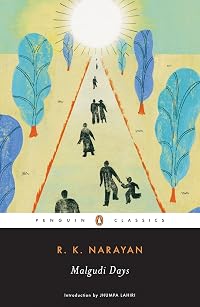
Malgudi Days
by R. K. Narayan
On This Page
Description
Four gems, with new introductions, mark acclaimed Indian writer R. K. Narayanas centennial Introducing this collection of stories, R. K. Narayan describes how in India athe writer has only to look out of the window to pick up a character and thereby a story.a Powerful, magical portraits of all kinds of people, and comprising stories written over almost forty years, "Malgudi Days" presents Narayanas imaginary city in full color, revealing the essence of India and of human experience.Tags
Recommendations

















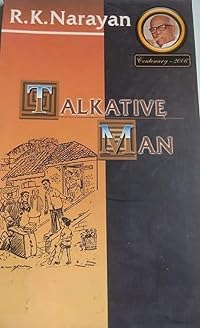
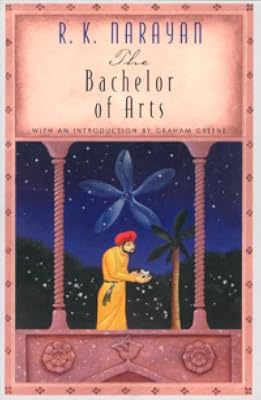



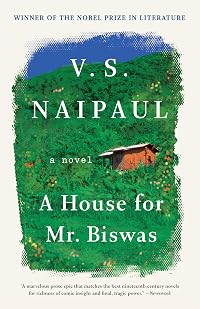
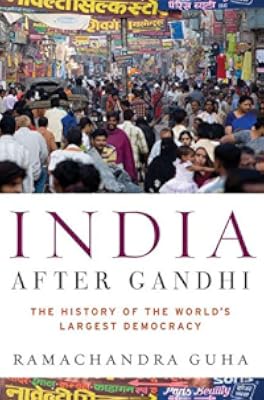








Member Recommendations


bibliobibuli Both heartwarming and charming.
Member Reviews
I really should have read Malgudi Days a long time ago – I’m not sure why I never got around to it. R. K. Narayan is one of India’s most famous writers, and this is a collection of his short stories, set in and around the fictional south Indian town of Malgudi. Most of the stories are slice-of-life, set from the perspective of a variety of people, from poor beggars and food vendors to schoolboys to rich nonagenarians. Some of them are touching, some are humourous, some are ironic, and some just are. They work really well together to describe the various kinds of people that make up a small town in India.
R. K. Narayan’s style of writing is really simple and unpretentious, but every word he writes conveys so much. His characters show more are all really approachable, and they might even seem simple, but it is my opinion that it’s really hard to do simplicity well, and no one is better at it than Narayan.
Pretty much all of the stories are about a single minor incident that occurs in the protagonist’s life, and how they react to it. A retired security guard receives a letter in the mail and is driven almost insane by the thought of what it might contain. An old gardener has to say goodbye to the house he has worked in for decades. A man takes temporary responsibility for a lost child and dreams about the family he might have had.
One of the most amazing things about Narayan’s writing is how much sympathy he can arouse for almost any character in a couple of paragraphs. His stories are often about very different people, often flawed or annoying, but they’re inevitably lovable, no matter what stupid decisions they make. I often get unreasonably frustrated with characters that have lapses of judgement, so this is truly a remarkable feat.
Originally posted on my blog. show less
R. K. Narayan’s style of writing is really simple and unpretentious, but every word he writes conveys so much. His characters show more are all really approachable, and they might even seem simple, but it is my opinion that it’s really hard to do simplicity well, and no one is better at it than Narayan.
Pretty much all of the stories are about a single minor incident that occurs in the protagonist’s life, and how they react to it. A retired security guard receives a letter in the mail and is driven almost insane by the thought of what it might contain. An old gardener has to say goodbye to the house he has worked in for decades. A man takes temporary responsibility for a lost child and dreams about the family he might have had.
One of the most amazing things about Narayan’s writing is how much sympathy he can arouse for almost any character in a couple of paragraphs. His stories are often about very different people, often flawed or annoying, but they’re inevitably lovable, no matter what stupid decisions they make. I often get unreasonably frustrated with characters that have lapses of judgement, so this is truly a remarkable feat.
Originally posted on my blog. show less
Malgudi Days, written by R.K Narayan, chronicles the lives of people in the fictional town of Malgudi. The stories, which share the lives of everyone from entrepreneurs to beggars, all take place in and near this Indian village. Thus the heart and the soul of that village is on display and we find it is a place where most people are haunted by illiteracy and unemployment. Yet despite the ubiquity of the poor many of the stories come across with humorous good-natured episodes of their lives. Among the stories the reader meets an astrologer, a gatekeeper, and a young man yearning to pass the examinations. There are also animals including a forlorn dog who befriends a blind man and a ferocious tiger (perhaps a hint of Narayan's short show more novel, A Tiger for Malgudi). Above all there is a pervasive irony that reminded me of other short story stylists from O'Henry to Chekhov and Gogol. More often a character's dreams or expectations do not lead to the results he desires. This keeps the reader guessing as to what the next story will show in the lives of people who become endlessly fascinating, if only for the reason that you have met them before in your own town. In his introduction R. K. Narayan observes that "I can detect Malgudi characters even in New York: for instance, West Twenty-third Street . . possesses every element of Malgudi, with its landmarks and humanity remaining unchanged--"(p 2).
Following publication of this collection, the stories in this book were made into both serials and cinema. Through these tales the author, R.K Narayan, captures the readers' heart with his journey through the village of Malgudi and its' not so unfamiliar denizens. show less
Following publication of this collection, the stories in this book were made into both serials and cinema. Through these tales the author, R.K Narayan, captures the readers' heart with his journey through the village of Malgudi and its' not so unfamiliar denizens. show less
I love the simple, humourous, and loving portrayal of characters in a South Indian village; but as Narayan says, the stories are universal
Perhaps the less acquainted one is with India the more impressed one might be by these stories. I can't otherwise explain their popularity. I don't mean that unkindly, they are a wonderful insight into the real India, of town and villages. And yes, they are universal tales of adversity, triumph and despair set on the human scale. Stories of the good and the morally ambiguous that resonate with the reader. But my strongest impression of Narayan here is that he tries too hard to search out the pathos and the moral fable. You can see what he is aiming at. These should be tales of the slightest events that touch a person momentarily, but send ripples out that disturb (and mark their real significance to) the universe - visible to those that show more make the effort to see, or feel. So that the reader steps forward toward the story and becomes part of the process of telling and listening. But the deftness I'm looking for isn't there, for the most part. Too often these stories seem to shout at the reader. The events and characters are blunt, but that's expected. In short stories, and moral fables, the characters and events are in many ways ciphers - they carry the story and the idea along. My grievance is with the fabric of the stories, the warp and weft. Essentially it's the lack of elaboration, the tone of the story-teller, that I miss in these stories. That said, there are some gems here. And they nearly all relate to stories of cats and dogs. How do I rate this book then? Well, sort the wheat from the chaff, and treasure the gems. show less
This was a lovely experience. These stories made me think and were so vivid in my mind. Every character was complex and complicated, I was unsure if I should love or dislike them. I loved how Narayan can create characters and an atmosphere with so few pages. My favorite stories were The Snake-Song, Forty-five a Month, The Axe, A Willing Slave, Leela's Friend, Naga, Cat Within, God and the Cobbler, and Hungry Child.
This was amazing! Reminded me of Chekov, Maupassant. At first I read the stories slowly over a long period of time but then about a third of the way through I just couldn't put it down anymore. I am so sad I never heard of this author before my father gave me this book; I feel as though I led my life in dullness and ignorance.
A collection of 32 subtly ironic stories à la Guy de Maupassant. The fictional town Malgudi is the functional setting, but what stands out are Narayan's honest characterisations. The cast includes tradesmen, craftsmen, entertainers, students, doctors, rich and poor, young and old. There's something here for everyone.
Interestingly, the inhabitants of this town drink coffee instead of chai (Indian tea).
Interestingly, the inhabitants of this town drink coffee instead of chai (Indian tea).
Members
- Recently Added By
Lists

All Things India
95 works; 21 members
Author Information

100+ Works 10,394 Members
R. K. Narayan was born Rasipuram Krishnaswami Narayanaswami in Madras, India on October 10, 1906. He graduated from Maharaja College of Mysore with a B.A. degree in 1930. He attempted to teach for a bit but then switched to writing full time. His first book, Swami and Friends, was published in Britain in 1935. During his lifetime, he wrote more show more than 30 novels and hundreds of short stories. His other novels included The Bachelor of Arts, The Dark Room, The English Teacher, The Guide, The Financial Expert, The Man Eater of Malgudi, The Vendor of Sweets, and The World of Nagaraj. He was one of the first Indians to write in English and gain international recognition. He received numerous awards including the Padma Bhushan, India's highest prize. He died on May 13, 2001 at the age of 94. (Bowker Author Biography) show less
Some Editions
Awards and Honors
Notable Lists
Work Relationships
Is contained in
Has as a student's study guide
Common Knowledge
- Canonical title
- Malgudi Days
- Original publication date
- 1943
- People/Characters
- Swami Nathan; Rajam; Mani; Sankar; Samuel "The Pea"; Somu
- Important places
- Malgudi
Classifications
Statistics
- Members
- 1,152
- Popularity
- 21,807
- Reviews
- 19
- Rating
- (4.17)
- Languages
- 5 — English, Hindi, Malayalam, Marathi, Turkish
- Media
- Paper, Ebook
- ISBNs
- 17
- ASINs
- 5