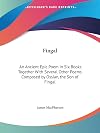
The poems of Ossian
by James Macpherson
On This Page
Description
Ossian is a collection of epic poems that bring out the figure of the hero, Fingal, which name comes from Scots Gaelic Fionnghall, meaning 'White Stranger'. The poems where originally written in Gaelic and translated by James MacPherson into English, although there is a long lasting debate about the authenticity of the poems, since some historians believe MacPherson wrote them himself, whilst Irish historians hold that Ossian has its roots in Irish myths, not Scottish. Despite the debate, show more The Poems of Ossian achieved international success and have been compared with Homer's Iliad, inspiring many later writers such as Walter Scott and Goethe. show lessTags
Recommendations















Member Reviews
Among the 2 or 3 best works of fantasy I've ever read. Even if it was a literary hoax, the writing is stunningly evocative, yet very terse.
The authenticity of Macpherson’s collection was already controversially judged, when it came, translated in several European languages, to the continent. The author was said having written the poems himself instead collecting and translating them from ancient Gaelic sources. Nevertheless, the work was highly appreciated in the German Romanticism and had immense influence to writers as Ludwig Tieck or Clemens von Brentano.
"These peices have been, and will I think during my life continue to be to me, the source of daily and exalted pleasures. The tender, and the sublime emotions of the mind were never before so finely wrought up by human hand. I am not ashamed to own that I think this rude bard of the North the greatest Poet that has ever existed. Merely for the pleasure of reading his works I am become desirous of learning the language in which he sung and of possessing his songs in their original form." — Thomas Jefferson to Charles McPherson, February 25, 1773 [PTJ 1:96-97]
Review by Samuel Johnson from Bosswell's LOJ.
"These peices have been, and will I think during my life continue to be to me, the source of daily and exalted pleasures. The tender, and the sublime emotions of the mind were never before so finely wrought up by human hand. I am not ashamed to own that I think this rude bard of the North the greatest Poet that has ever existed. Merely for the pleasure of reading his works I am become desirous of learning the language in which he sung and of possessing his songs in their original form." — Thomas Jefferson to Charles McPherson, February 25, 1773 [PTJ 1:96-97]
"These peices have been, and will I think during my life continue to be to me, the source of daily and exalted pleasures. The tender, and the sublime emotions of the mind were never before so finely wrought up by human hand. I am not ashamed to own that I think this rude bard of the North the greatest Poet that has ever existed. Merely for the pleasure of reading his works I am become desirous of learning the language in which he sung and of possessing his songs in their original form." — Thomas Jefferson to Charles McPherson, February 25, 1773 [PTJ 1:96-97]
"These peices have been, and will I think during my life continue to be to me, the source of daily and exalted pleasures. The tender, and the sublime emotions of the mind were never before so finely wrought up by human hand. I am not ashamed to own that I think this rude bard of the North the greatest Poet that has ever existed. Merely for the pleasure of reading his works I am become desirous of learning the language in which he sung and of possessing his songs in their original form." — Thomas Jefferson to Charles McPherson, February 25, 1773 [PTJ 1:96-97]
Members
- Recently Added By
Lists

Lovecraft's 'Supernatural Horror in Literature' Reading List
216 works; 8 members

Fakes, Forgeries, and Fictitious Authors
112 works; 4 members

Book Titles Mentioned In Newberry Medal And Honor Books
884 works; 3 members
Author Information

44+ Works 332 Members
Some Editions
Common Knowledge
- Original publication date
- 1762
Classifications
Statistics
- Members
- 171
- Popularity
- 192,246
- Reviews
- 9
- Rating
- (3.90)
- Languages
- 5 — English, French, German, Scottish Gaelic, Italian
- Media
- Paper, Ebook
- ISBNs
- 20
- ASINs
- 14