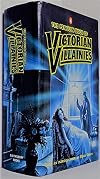
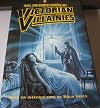
Victorian Villainies
by Graham Greene (Editor)  , Hugh Greene (Editor)
On This Page
Tags
Recommendations

















Member Reviews
Four classic Victorian detective stories selected by Graham and Hugh Greene.
"The Great Tontine" by Hawley Smart
"The Rome Express" by Major Arthur Griffiths
"In the Fog" by Richard Harding Davis
"The Beetle" by Richard Marsh
The last two were the best.
"The Great Tontine" got a bit boring after the first 100 pages, so I skipped to the end to see what happened.
"The Rome Express" was a murder mystery set in the sleeping compartment of a train (shades of "Murder on The Orient Express") and featured a rather unpleasant English army officer sneering at the French police, which I found irritating.
"In the Fog" was set in a gentleman's club, with five of the members comparing notes over the dinner table about a murder that happened during the show more previous night's pea-souper.
"The Beetle" was a scary tale of mysterious Arabs, hypnotism, and scarabs. show less
"The Great Tontine" by Hawley Smart
"The Rome Express" by Major Arthur Griffiths
"In the Fog" by Richard Harding Davis
"The Beetle" by Richard Marsh
The last two were the best.
"The Great Tontine" got a bit boring after the first 100 pages, so I skipped to the end to see what happened.
"The Rome Express" was a murder mystery set in the sleeping compartment of a train (shades of "Murder on The Orient Express") and featured a rather unpleasant English army officer sneering at the French police, which I found irritating.
"In the Fog" was set in a gentleman's club, with five of the members comparing notes over the dinner table about a murder that happened during the show more previous night's pea-souper.
"The Beetle" was a scary tale of mysterious Arabs, hypnotism, and scarabs. show less
Mostly worth it for the last two titles by Marsh and Davis
Ratings
Members
- Recently Added By
Author Information

Born in 1904, Graham Greene was the son of a headmaster and the fourth of six children. Preferring to stay home and read rather than endure the teasing at school that was a by-product of his father's occupation, Greene attempted suicide several times and eventually dropped out of school at the age of 15. His parents sent him to an analyst in show more London who recommended he try writing as therapy. He completed his first novel by the time he graduated from college in 1925. Greene wrote both entertainments and serious novels. Catholicism was a recurring theme in his work, notable examples being The Power and the Glory (1940) and The End of the Affair (1951). Popular suspense novels include: The Heart of the Matter, Our Man in Havana and The Quiet American. Greene was also a world traveler and he used his experiences as the basis for many books. One popular example, Journey Without Maps (1936), was based on a trip through the jungles of Liberia. Greene also wrote and adapted screenplays, including that of the 1949 film, The Third Man, which starred Orson Welles. He died in Vevey, Switzerland in 1991. (Bowker Author Biography) show less
Graham Greene has a Legacy Library. Legacy libraries are the personal libraries of famous readers, entered by LibraryThing members from the Legacy Libraries group.

All Editions
Work Relationships
Common Knowledge
- Canonical title
- Victorian Villainies
Classifications
- Genres
- Fiction and Literature, Mystery, Horror
- DDC/MDS
- 823.087208 — Literature & rhetoric English & Old English literatures English fiction By type Genre fiction Adventure fiction Mystery fiction Mystery anthologies
- LCC
- PR1309 .D4 .V5 — Language and Literature English English Literature Collections of English literature
- BISAC
Statistics
- Members
- 99
- Popularity
- 325,723
- Reviews
- 2
- Rating
- (3.36)
- Languages
- English
- Media
- Paper
- ISBNs
- 3
- ASINs
- 2