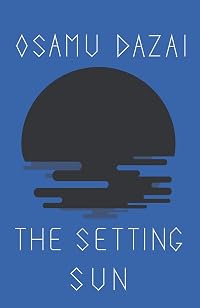
The Setting Sun
by Osamu Dazai
On This Page
Description
"Dazai's best novel […] focusing on a woman forced to deal with the consequences of heedless, Dazai-like behavior" -The New York Times A completely new translation of one of Osamu Dazai's best-loved novels, by award-winning translator, Juliet Winters Carpenter. The Setting Sun tells the story of Kazuko, a strong-willed young woman from an aristocratic family that has fallen into poverty since the war. The book follows Kazuko's journey as she and her family struggle to adapt to the harsh show more new conditions of a Japan destroyed by American fire-bombings. In addition to having to move from the city to the countryside, where she has to work in the fields to support her family, she has to deal with a divorce, her mother's illness, and the return of her drug-addicted brother from the army. An inspiring portrait of one woman's determination to survive in a society in the grip of a social and moral crisis, this classic work will appeal to those with an interest in modern Japanese literature as well as to those familiar with Osamu Dazai from the popular manga and anime series Bungo Stray Dogs, where he is the lead character. show lessTags
Recommendations

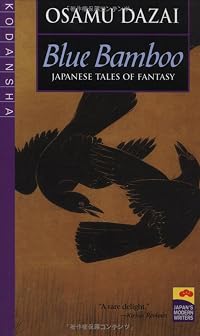
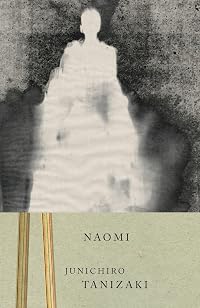
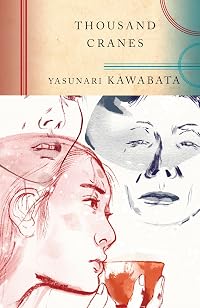
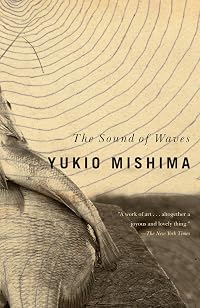


Member Recommendations
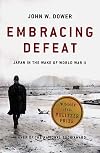
roulette.russe Embracing Defeat is a great book about the change of mentalities that took place in postwar Japan.
Member Reviews
Given its themes of endings, decline, decadence, and life-weariness, and its post-war setting, Dazai's novel cannot fail to be sad. Terminal illness, omens of death, addiction, emotional cruelty and suicide feature prominently, and Dazai died by suicide the year after its initial 1947 publication. But...
Despite her brother's dismissal of the old order as failed, and the new generation as dying on the vine, there is a scintilla of hope in Kazuko's rejection of social mores, and her determination to bear new life on her own terms. I think the atmosphere of this book will linger with me for a while. 4.25⭐
Despite her brother's dismissal of the old order as failed, and the new generation as dying on the vine, there is a scintilla of hope in Kazuko's rejection of social mores, and her determination to bear new life on her own terms. I think the atmosphere of this book will linger with me for a while. 4.25⭐
I’m not very fond of Kazuko. She’s a brilliantly written character but my dislike of her comes from a moral stand point. She falls for a (quite disgusting) married man, and relentlessly pursues him, before begging him to let her bare his children. Despite attempting to rebel and be a revolutionary, she’s still clinging to the patriarchal role of women in her era, of keeping house and bearing children. I honestly disliked almost all the characters in this novel. Naoji was selfish and cynical, trying so hard to break free of his nobility that he committed suicide, and her mother, while being one of the most interesting of the family, was overly superstitious and submissive. Reading this book has taught me as a writer that it’s show more okay for the protagonist to not be a good person. Moral ambiguity is a large part of realism and makes the characters interesting. show less
Not my cup of tea at ALL but very well-written and moving. About the decay (I choose that specifically in lieu of “decline”) of the “aristocracy” in post-WWII Japan, told through the lens of a single family, focusing on a sister and daughter and her relationship to her brother and her mother. A bit too…symbolic…for me (not sure that’s the word) and not the kind of book I usually enjoy but this was too good to ignore. I have another of his and will definitely read it now, but it will take me a little time to work up to it.
Osamu Dazai: The Setting Sun
Osamu Dazai was a tortured personality. Born in 1909, he attempted suicide twice before he was twenty. In 1930, he entered the Department of French Literature at Tokyo University; he did not speak a word of French and boasted later that he never attended a single lecture in five years. He spent his time on literary and left-wing activities. He began publishing stories but his most important literary activity came after the war. The Setting Sun was his first novel, published in 1947. Dazai was known for a dissolute lifestyle, overwork, insomnia, and heavy drinking; tuberculosis, which he contracted before the war, reasserted itself. In June, 1948 he committed suicide by drowning just before his 39th birthday. show more It was a double suicide with a woman for whom he had abandoned his wife and child.
In his introduction to the Tuttle version of the book that I have, the translator Donald Keene, described Dazai as, "one of the great chroniclers of Japanese life". The book was popular for, "the depth of its understanding of the Japanese...and reveals aspects of the Japanese nation as a whole." Dazai published in 1947; his novel is set in a period of massive social, cultural, economic change in Japan but part of its enduring appeal may well be the sense of disconnect, discontinuity, discrimination and desperation that many feel in our fast-paced, rapidly evolving technological societies. A principal character says, at the end of the novel: "Victims. Victims of a transitional period of morality. That is what we both certainly are." This sense of uncontrolled change and transition is not limited to any one society or period of time.
This is less of a novel, in terms of plot or character development, than it is a biting look at a changing, uncontrolled, unforeseeable world powered by personal angst of a high degree. It also highly autobiographical in its philosophies and approaches to life and society. Keene remarks on the "deviant behaviour" of some of the characters and there is quite a list: drug addiction, alcoholism, sexual promiscuity, adultery, divorce, familial dysfunction, hedonism, solipsism, sophistry, anarchism, suicide...all mixed in with poverty, social change, and the struggles of social and economic classes. Everything was changing with no real sense of what the direction might be and many in society must have felt adrift. The irony is that this framework pretty much describes many of the blockbuster novels popular today everywhere, but in Japan in the mid-1940s this was shocking behaviour and lifestyle.
This not a happy book. In fact there is not a contented person in it. The only person not marked by some sense of tortured self is the Mother, but she symbolizes the old ethos of society and fades away to death. The dissolute son, Naoji (Dazai?) summarizes his outlook on life: "Philosophy? Lies. Principles? Lies. Ideals? Lies. Order? Lies. Sincerity? Lies. Truth? Purity? All lies." There is talk of social and economic revolution from Kazuko, Naoji's sister, who wrestles with her own demons. Reading Rosa Luxemburg, Kazuko (Dazai?) is struck by the "sheer courage the author demonstrated in tearing apart without hesitation all manner of conventional ideas....Destruction is tragic and piteous and beautiful. The dream of destroying, building anew, perfecting."
A number of things struck me in reading this book. Dazai's style of writing is short and succinct; he punches out opinions and aphorisms in this first-person narrative style where we also hear other voices through diaries.
I find the references to Christianity interesting. As far as I can see, Dazai himself was not Christian, and given his general outlook on life as enunciated, for example, by Naoji, I doubt that Dazai found any comfort in structured religion. Dazai was a committed Marxist in his youth and I could see that influencing his view of religion, particularly as he seems to introduce Christian concepts only to ridicule them or to draw inappropriate metaphors. It is interesting that Dazai made the family Christian (Kazuko refers to studying the Bible in Sunday school classes) but this does not guide their lives. Mother, speaking of the illness that followed her forced move, with Kazuko, from a mansion in Tokyo to a small villa deep in the countryside, says: "God killed me, and only after He had made me into someone entirely different from the person I had been, did he call me back to life." Kazuko muses that "a resurrection like Jesus'" is likely not possible for ordinary human beings. At the end of the novel Kazuko, who has become pregnant in a one-night stand with a dissolute writer whom she pursued for just this purpose, muses: "Even if Mary gives birth to a child who is not her husband's, if she has a shining pride, they become a holy mother and child." I think a committed Christian might find this blasphemous.
Dazai makes a number of references to Western writers and philosophers including DH Lawrence, Nietzche, Checkov, Marx, Karl Kautsky, Lenin, Rosa Luxemburg, Lord Byron, Turgenev, Hugo, Dumas, Musset, Daudet; all writers with a 'smell of revolution" in their works. Daudet is interesting because one of his best-known books is In the Land of Pain, which details his very painful experience with treatments and operations to try to manage the degeneration of spinal nerves resulting from syphilis. It is tempting to see the story of Daudet's physical pain as a parallel for the social, moral 'pain' that Dazai explores, but this is likely just gross speculation. In the Land of Pain was written in 1930; I have no idea whether it was available in Japanese--we know Dazai could not have read it in French!
It is not a major aspect of the novel, but there is the mother/son theme that appears often in Japanese literature, in the love/anguish relationship between Mother and Naoji. It is certainly not as pronounced as in The Doctor's Wife, but Dazai does see the concomitant effects on other family members, in this case, Kazuko.
Two arresting images serve as bookends to the novel. On the first page, there is a short reference to "the cherry tree in full bloom". Cherry blossoms are revered and widely celebrated in Japan for their beauty and, in their short life spans, as allegories for the ephemeral nature of life. On almost the last page of the book, Kazuko says: "The revolution must be taking place somewhere, but the old morality persists unchanged in the world around us and lives athwart our way. However much the waves on the surface of the sea may rage, the water at the bottom, far from experiencing a revolution, lies motionless, awake but feigning sleep." Thus, beauty may exist and may give pleasure, but it will be short-lived. The blossoms will reproduce every year, but in essence they never change; they are celebrated today exactly as they were a thousand years ago. Real, profound change, as in the water at the bottom, is difficult if not impossible to achieve, but we keep bobbing on the surface.
At first I did not care for this book. I'm still not sure I would recommend it to a friend, But its appeal grows on me as I think about it. Dazai wrote about a very specific time and place, but I think much of the dissatisfaction, uncertainty, and anger that he expressed have a much broader relevance. show less
Osamu Dazai was a tortured personality. Born in 1909, he attempted suicide twice before he was twenty. In 1930, he entered the Department of French Literature at Tokyo University; he did not speak a word of French and boasted later that he never attended a single lecture in five years. He spent his time on literary and left-wing activities. He began publishing stories but his most important literary activity came after the war. The Setting Sun was his first novel, published in 1947. Dazai was known for a dissolute lifestyle, overwork, insomnia, and heavy drinking; tuberculosis, which he contracted before the war, reasserted itself. In June, 1948 he committed suicide by drowning just before his 39th birthday. show more It was a double suicide with a woman for whom he had abandoned his wife and child.
In his introduction to the Tuttle version of the book that I have, the translator Donald Keene, described Dazai as, "one of the great chroniclers of Japanese life". The book was popular for, "the depth of its understanding of the Japanese...and reveals aspects of the Japanese nation as a whole." Dazai published in 1947; his novel is set in a period of massive social, cultural, economic change in Japan but part of its enduring appeal may well be the sense of disconnect, discontinuity, discrimination and desperation that many feel in our fast-paced, rapidly evolving technological societies. A principal character says, at the end of the novel: "Victims. Victims of a transitional period of morality. That is what we both certainly are." This sense of uncontrolled change and transition is not limited to any one society or period of time.
This is less of a novel, in terms of plot or character development, than it is a biting look at a changing, uncontrolled, unforeseeable world powered by personal angst of a high degree. It also highly autobiographical in its philosophies and approaches to life and society. Keene remarks on the "deviant behaviour" of some of the characters and there is quite a list: drug addiction, alcoholism, sexual promiscuity, adultery, divorce, familial dysfunction, hedonism, solipsism, sophistry, anarchism, suicide...all mixed in with poverty, social change, and the struggles of social and economic classes. Everything was changing with no real sense of what the direction might be and many in society must have felt adrift. The irony is that this framework pretty much describes many of the blockbuster novels popular today everywhere, but in Japan in the mid-1940s this was shocking behaviour and lifestyle.
This not a happy book. In fact there is not a contented person in it. The only person not marked by some sense of tortured self is the Mother, but she symbolizes the old ethos of society and fades away to death. The dissolute son, Naoji (Dazai?) summarizes his outlook on life: "Philosophy? Lies. Principles? Lies. Ideals? Lies. Order? Lies. Sincerity? Lies. Truth? Purity? All lies." There is talk of social and economic revolution from Kazuko, Naoji's sister, who wrestles with her own demons. Reading Rosa Luxemburg, Kazuko (Dazai?) is struck by the "sheer courage the author demonstrated in tearing apart without hesitation all manner of conventional ideas....Destruction is tragic and piteous and beautiful. The dream of destroying, building anew, perfecting."
A number of things struck me in reading this book. Dazai's style of writing is short and succinct; he punches out opinions and aphorisms in this first-person narrative style where we also hear other voices through diaries.
I find the references to Christianity interesting. As far as I can see, Dazai himself was not Christian, and given his general outlook on life as enunciated, for example, by Naoji, I doubt that Dazai found any comfort in structured religion. Dazai was a committed Marxist in his youth and I could see that influencing his view of religion, particularly as he seems to introduce Christian concepts only to ridicule them or to draw inappropriate metaphors. It is interesting that Dazai made the family Christian (Kazuko refers to studying the Bible in Sunday school classes) but this does not guide their lives. Mother, speaking of the illness that followed her forced move, with Kazuko, from a mansion in Tokyo to a small villa deep in the countryside, says: "God killed me, and only after He had made me into someone entirely different from the person I had been, did he call me back to life." Kazuko muses that "a resurrection like Jesus'" is likely not possible for ordinary human beings. At the end of the novel Kazuko, who has become pregnant in a one-night stand with a dissolute writer whom she pursued for just this purpose, muses: "Even if Mary gives birth to a child who is not her husband's, if she has a shining pride, they become a holy mother and child." I think a committed Christian might find this blasphemous.
Dazai makes a number of references to Western writers and philosophers including DH Lawrence, Nietzche, Checkov, Marx, Karl Kautsky, Lenin, Rosa Luxemburg, Lord Byron, Turgenev, Hugo, Dumas, Musset, Daudet; all writers with a 'smell of revolution" in their works. Daudet is interesting because one of his best-known books is In the Land of Pain, which details his very painful experience with treatments and operations to try to manage the degeneration of spinal nerves resulting from syphilis. It is tempting to see the story of Daudet's physical pain as a parallel for the social, moral 'pain' that Dazai explores, but this is likely just gross speculation. In the Land of Pain was written in 1930; I have no idea whether it was available in Japanese--we know Dazai could not have read it in French!
It is not a major aspect of the novel, but there is the mother/son theme that appears often in Japanese literature, in the love/anguish relationship between Mother and Naoji. It is certainly not as pronounced as in The Doctor's Wife, but Dazai does see the concomitant effects on other family members, in this case, Kazuko.
Two arresting images serve as bookends to the novel. On the first page, there is a short reference to "the cherry tree in full bloom". Cherry blossoms are revered and widely celebrated in Japan for their beauty and, in their short life spans, as allegories for the ephemeral nature of life. On almost the last page of the book, Kazuko says: "The revolution must be taking place somewhere, but the old morality persists unchanged in the world around us and lives athwart our way. However much the waves on the surface of the sea may rage, the water at the bottom, far from experiencing a revolution, lies motionless, awake but feigning sleep." Thus, beauty may exist and may give pleasure, but it will be short-lived. The blossoms will reproduce every year, but in essence they never change; they are celebrated today exactly as they were a thousand years ago. Real, profound change, as in the water at the bottom, is difficult if not impossible to achieve, but we keep bobbing on the surface.
At first I did not care for this book. I'm still not sure I would recommend it to a friend, But its appeal grows on me as I think about it. Dazai wrote about a very specific time and place, but I think much of the dissatisfaction, uncertainty, and anger that he expressed have a much broader relevance. show less
One of my sempai at my dōjō took a class in Japanese literature a few years ago and Osamu Dazai's The Setting Sun was the book that stuck with her the most. I know of Dazai from reading John Nathan's biography of Yukio Mishima since he is mentioned several times in that book, but I know very little about him and his work beyond that. The Setting Sun, first published in Japan in 1947, was one of his last novels to be finished before his death by suicide in 1948. Like much of his work, The Setting Sun incorporates autobiographical elements into the story. Dazai was a very popular author in Japan, particularly during the postwar period, and quite a few of his books have been translated into English. In fact, I believe The Setting Sun, show more translated by Donald Keene, was Dazai's first novel to be made available in English.
Kazuko is a young woman from a minor aristocratic family, although that means less now after the war. Married once but now divorced she lives with her mother. After her father's death the two move to a house in Izu, no longer able to afford living in Tokyo. With their money gone and little support available to them from surviving family members, the two women resort to selling off their clothing and belongings. Kazuko's troubles continue when her brother, thought to have died during the war, returns home. As glad as she is to see him alive, Naoji is a relapsed opium addict and a strain on the family's dwindling finances. Kazuko is steadily losing her sense of self and place in society. However, she knows she is the only person who can change her own fate and she is prepared to take those steps.
I liked Kazuko as a protagonist. I definitely didn't agree with all of the decisions that she made, and she occasionally annoyed me, but she was an authentic character. Her fondness of and frustration with her mother and brother is obvious, but she truly does care about her family. Kazuko both admires and reveres her mother, realizing that she will never be able to achieve the same level of distinction that comes so effortlessly to her mother. Naoji's relationship with her sister is understandably strained, but at the same time she still seems willing to do anything for him. This is certainly not to say that Kazuko is entirely unselfish--she is quite capable of acting in complete disregard for other people, whether intentionally or unintentionally.
The Setting Sun is a short novel, well under two hundred pages, but Dazai is still able to create quite an emotional impact. The book is written from Kazuko's perspective, but much of it is made up of journal entries and letters rather than being a straight narrative. Dazai also has a propensity to use flashback sequences which can be effective but also confusing if the reader isn't paying attention. There is also a significant amount of symbolism involved but it is not impenetrable. Overall, The Setting Sun is a rather melancholy and pessimistic story. Kazuko is having to deal with the literal and figurative death of both the Japanese aristocracy and her family while struggling to claim her life as her own in a society still in transition. I found The Setting Sun to be an engaging novel and will probably seek out more of Dazai's works to read.
Experiments in Manga show less
Kazuko is a young woman from a minor aristocratic family, although that means less now after the war. Married once but now divorced she lives with her mother. After her father's death the two move to a house in Izu, no longer able to afford living in Tokyo. With their money gone and little support available to them from surviving family members, the two women resort to selling off their clothing and belongings. Kazuko's troubles continue when her brother, thought to have died during the war, returns home. As glad as she is to see him alive, Naoji is a relapsed opium addict and a strain on the family's dwindling finances. Kazuko is steadily losing her sense of self and place in society. However, she knows she is the only person who can change her own fate and she is prepared to take those steps.
I liked Kazuko as a protagonist. I definitely didn't agree with all of the decisions that she made, and she occasionally annoyed me, but she was an authentic character. Her fondness of and frustration with her mother and brother is obvious, but she truly does care about her family. Kazuko both admires and reveres her mother, realizing that she will never be able to achieve the same level of distinction that comes so effortlessly to her mother. Naoji's relationship with her sister is understandably strained, but at the same time she still seems willing to do anything for him. This is certainly not to say that Kazuko is entirely unselfish--she is quite capable of acting in complete disregard for other people, whether intentionally or unintentionally.
The Setting Sun is a short novel, well under two hundred pages, but Dazai is still able to create quite an emotional impact. The book is written from Kazuko's perspective, but much of it is made up of journal entries and letters rather than being a straight narrative. Dazai also has a propensity to use flashback sequences which can be effective but also confusing if the reader isn't paying attention. There is also a significant amount of symbolism involved but it is not impenetrable. Overall, The Setting Sun is a rather melancholy and pessimistic story. Kazuko is having to deal with the literal and figurative death of both the Japanese aristocracy and her family while struggling to claim her life as her own in a society still in transition. I found The Setting Sun to be an engaging novel and will probably seek out more of Dazai's works to read.
Experiments in Manga show less
Very interesting read. Although because of my own faults, I had been confused at times but the writing and description had been very intricate. The characters were well put together and I had felt for them all, especially Naoji. The book has a lot to do with loneliness and suffering ubt there are some sweet moments in it, like the interactions with Kazuko and her mother. Very depressing yet a thrilling read.
This story takes place in Japan shortly after its surrender in WWII and was published in 1947. It is narrated by a young woman named Kazuku, 30 years old and divorced. She lives with her mother in a small country cottage after being forced to sell their large home in Tokyo. They are part of the aristocratic class that has collapsed with the fall of the Emperor. An uncle has liquidated their former wealth to pay off debts and now they are in the process of selling off jewelry, furniture and clothes to survive. Before Kazuku can get a job her mother becomes ill and needs constant care. Her brother, Naoji, returns after being presumed dead and becomes a drain on their finances. He has drug and alcohol problems and cannot adjust to the show more changes in Society. As her mother gets sicker and her brother suicidal, Kazuku begins to fantasize about a dissolute married writer whom she feels she loves and wants to have a child by, this will be her salvation. Reviewers say this was heralded as a true chronicle of the Japanese spirit at the time; a society in upheaval with growing Western influences. It was depressing. The background on the author portrayed a man in a similar mind set; who had tried suicide 5 times in his life and committed it finally in 1948 at the age of 39. Very sad. show less
Members
- Recently Added By
Lists

Japanese Literature
230 works; 40 members

Favorite Books by Mid-List Authors
25 works; 8 members

Books Read in 2025
4,091 works; 97 members
Author Information

142+ Works 7,834 Members
Born into a near-aristocratic family whose declining world he depicts in The Setting Sun (1947), Dazai had the means to become an accomplished dilettante and rake. Around 1933 he began to think seriously about writing, but his life was complicated by drug addiction, a string of affairs, and two attempts at suicide. The end of the war brought a show more change in Dazai, and he produced his finest works, even though his own life was ending because of alcoholism and tuberculosis. The darkness of his works reveals his tortured existence, which he ended by suicide. (Bowker Author Biography) show less
Some Editions
Series
Belongs to Publisher Series
Work Relationships
Is contained in
Common Knowledge
- Canonical title
- The Setting Sun
- Original title
- 斜陽
- Alternate titles
- Shayou; Shayō
- Original publication date
- 1947-12-15
- People/Characters
- Kazuko; Kazuko's mother; Naoji; Uncle Wada; Okimi; Osaki (show all 9); Mr. Nakai; Mrs. Nishiyama; Uehara Jirō
- Important places
- Izu peninsula, Japan; Tokyo, Japan; Tachikawa, Tokyo, Japan
- Important events
- World War II; Post World War II (Japan)
- First words
- Mother uttered a faint cry.
- Last words
- (Click to show. Warning: May contain spoilers.)Think this the one offense of a deserted woman who is being forgotten, and please, I beg you, grant it.
To M.C. My Comedian. - Original language
- Japanese
- Canonical DDC/MDS
- 895.6344
Classifications
- Genres
- General Fiction, Fiction and Literature
- DDC/MDS
- 895.6344 — Literature & rhetoric Literatures of other languages Literatures of East and Southeast Asia Japanese Japanese fiction Meiji/Taishō periods 1868–1945 1912–1945
- LCC
- PL825 .A8 .S42 — Language and Literature Languages and literatures of Eastern Asia, Africa, Oceania Languages of Eastern Asia, Africa, Oceania Japanese language and literature Japanese literature Individual authors and works
- BISAC
Statistics
- Members
- 1,387
- Popularity
- 17,071
- Reviews
- 21
- Rating
- (3.82)
- Languages
- 13 — Chinese, Czech, Dutch, English, Finnish, French, German, Hungarian, Italian, Japanese, Polish, Spanish, Turkish
- Media
- Paper, Audiobook, Ebook
- ISBNs
- 36
- ASINs
- 15