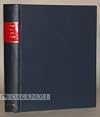
A Catalogue of Crime
by Jacques Barzun, Wendell Hertig Taylor
On This Page
Description
"This work includes over 5,000 mystery titles briefly noted, each in about one paragraph. Alphabetically arranged by author and title, each entry has a short comment offering a description of the work." --From online review.Tags
Recommendations


















Member Reviews
This is the most beat-up book in my library. In fact, I have opened & closed this book so many times that one of the middle signatures fell out and got lost (pp. 417-438). I had to photocopy the missing pages from the public library and stick them back in. I always consult it whenever I've read a mystery, to check my opinion against Barzun & Taylor's thumbnail review. And we disagree, often. What they seem to like best is narrative thrust and cumulative suspense. And that's not always what I read mysteries for. One very odd thing: They have an inventory of the 100 "classics of crime" (actually two sets of 50 each, one pre-1950, one post-1950 until 1975.) These are all designated by a star in the catalog. Yet, in reading the little show more critical precis for many of these "classics", it's hard to understand why they were singled out. Just an example -- [Death and Letters] by Elizabeth Daly. Here's the entire critique: "This is a well-organized and appropriately atmospheric novel about a woman kept under drugs and restraint in a big Hudson River family mansion. Gamadge {the detective} does a good job of work, and there are no embarassing episodes of spiritualism or bibliomania to spoil a standard plot". Hardly a candidate for one of the 100 best of all time, would you think? show less
Regarding “A Catalog of Crime”, 1st edition (1971); I think there is a later edition:
There is a very thoughtful introduction that starts with:
“What is critical survey of some 7,500 works provides is the kind of repertory that French call a catalgoue raisonne – a list with reasons. Some of the reasons are negative: “Don’t bother!” This injunction may save the time and money of readers who, after perusing these remarks and sampling few entries, will know where our standard are and decide to follow them for their own pleasure. “
Part I deals with novels of detection, crime, mystery, and espionage. In this section:
An author is introduced
“Innes, Michael (pseud.of John Innes Mackintosh Steward, b. 1906)
“b. Edinburgh; educ. show more Oriel, Oxf. Professor of English at Univ. of Adelaide till 1954. Tutor at Christ Church, Oxf., since 1948. Has written on character and motive in Shakespeare and and contributes to The New Statesman, …. Began his career in detective fiction in 1936 with “Seven Suspects” and achieved fame with Hamlet Revenge! The next few were too wild for these readers (see The Spider Strikes, 1939), but about 1950 Innes sobered down and produced a good proportion of first-rate stories. He has also written a dozen novels without detection and an excellent little book on Kipling.”
Then, for Innes, the are 19 one paragraph commentaries on a section of his mysteries, followed by a list of 7 other mysteries.
Example:
“One-Man Show (In Eng.: A Private View
“It begins with a stunning description of a lecture by Mervyn Twist, the art critic, to a group of people in the gallery where the show opening takes place. The account of the facial expressions of the listeners is a marvel, and the ensuing events live up to this flourish of virtuosity. Paintings are stolen from the duke of Horton’s mansion (where the murder of “Hamlet, Revenge!” occurred). The object of the chase, the murder, and the missing girl are all well conceived and cleverly combined, and at the end the character of the duke and the melee in which he takes part are excellently done: Innes’ undoubted masterpiece.“
Part II deals with short stories, c0olelctions anthologies, magazine, parodies and plays.
Part III: Studies and Histories of the Genre, Lives of Writer, and the Literature of Edwin Drood
Part IV: True Crime
Part V: The literature of Sherlock Holmes
Part VI: Ghost Stories, Studies and Reports of the Supernatural, Psychical Research, and E. S. P.
Each part starts with “Gems from the Literature”, for example:
“Do I believe in ghosts?” I have seen too many to believe in them in them.
--Samuel Taylor Coleridge
Jacques Barzun is a well-known critic and together with Taylor were award a special Edgar award for this book. show less
There is a very thoughtful introduction that starts with:
“What is critical survey of some 7,500 works provides is the kind of repertory that French call a catalgoue raisonne – a list with reasons. Some of the reasons are negative: “Don’t bother!” This injunction may save the time and money of readers who, after perusing these remarks and sampling few entries, will know where our standard are and decide to follow them for their own pleasure. “
Part I deals with novels of detection, crime, mystery, and espionage. In this section:
An author is introduced
“Innes, Michael (pseud.of John Innes Mackintosh Steward, b. 1906)
“b. Edinburgh; educ. show more Oriel, Oxf. Professor of English at Univ. of Adelaide till 1954. Tutor at Christ Church, Oxf., since 1948. Has written on character and motive in Shakespeare and and contributes to The New Statesman, …. Began his career in detective fiction in 1936 with “Seven Suspects” and achieved fame with Hamlet Revenge! The next few were too wild for these readers (see The Spider Strikes, 1939), but about 1950 Innes sobered down and produced a good proportion of first-rate stories. He has also written a dozen novels without detection and an excellent little book on Kipling.”
Then, for Innes, the are 19 one paragraph commentaries on a section of his mysteries, followed by a list of 7 other mysteries.
Example:
“One-Man Show (In Eng.: A Private View
“It begins with a stunning description of a lecture by Mervyn Twist, the art critic, to a group of people in the gallery where the show opening takes place. The account of the facial expressions of the listeners is a marvel, and the ensuing events live up to this flourish of virtuosity. Paintings are stolen from the duke of Horton’s mansion (where the murder of “Hamlet, Revenge!” occurred). The object of the chase, the murder, and the missing girl are all well conceived and cleverly combined, and at the end the character of the duke and the melee in which he takes part are excellently done: Innes’ undoubted masterpiece.“
Part II deals with short stories, c0olelctions anthologies, magazine, parodies and plays.
Part III: Studies and Histories of the Genre, Lives of Writer, and the Literature of Edwin Drood
Part IV: True Crime
Part V: The literature of Sherlock Holmes
Part VI: Ghost Stories, Studies and Reports of the Supernatural, Psychical Research, and E. S. P.
Each part starts with “Gems from the Literature”, for example:
“Do I believe in ghosts?” I have seen too many to believe in them in them.
--Samuel Taylor Coleridge
Jacques Barzun is a well-known critic and together with Taylor were award a special Edgar award for this book. show less
critical bibliography of crime fiction
Ex-lib. JCC
Ratings
Members
- Recently Added By
Lists

Best books about books
209 works; 106 members

Books mentioned in Julian Symons’ Bloody Murder
438 works; 6 members
Author Information

74+ Works 9,614 Members
Jacques Barzun was born in Créteil, France on November 30, 1907. He came to the United States in 1920 and graduated magna cum laude from Columbia University in 1927. Following graduation, he joined Columbia's faculty as an instructor while continuing his studies in graduate school there, receiving a master's degree in 1928 and a doctorate in show more French history in 1932. He became a full professor in 1945, was dean of graduate faculties from 1955 to 1958, and dean of faculties from 1958 to 1967. He retired from Columbia University in 1975. He was a historian and cultural critic. The core of his work was the importance of studying history to understand the present and a fundamental respect for intellect. Although he wrote on subjects as diverse as detective fiction and baseball, he was especially known for his many books on music, nineteenth-century romanticism and education. His works include Darwin, Marx and Wagner: Critique of a Heritage; Romanticism and the Modern Ego; The House of Intellect; Race: A Study in Superstition; Simple and Direct: A Rhetoric for Writers; A Stroll with William James; The Culture We Deserve; and From Dawn to Decadence. He died on October 25, 2012 at the age of 104. (Bowker Author Biography) show less
2+ Works 154 Members
Common Knowledge
- Canonical title
- A Catalogue of Crime
Classifications
- Genres
- Nonfiction, General Nonfiction
- DDC/MDS
- 016.80883 — Computer science, information & general works Bibliographies (books containing lists of books) Bibliographies of works on specific subjects Literature By Topic
- LCC
- Z5917 .D5 .B37 — Bibliography, Library Science and Information Resources Subject bibliography
Statistics
- Members
- 143
- Popularity
- 228,116
- Reviews
- 4
- Rating
- (4.71)
- Languages
- English
- Media
- Paper
- ISBNs
- 3
- ASINs
- 3