On This Page
Description
When orphaned, eleven-year-old Pollyanna comes to live with austere and wealthy Aunt Polly, her philosophy of gladness brings happiness to her aunt and other unhappy members of the community.Tags
Recommendations
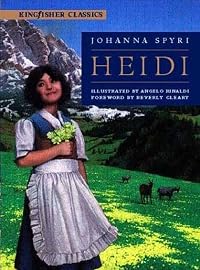
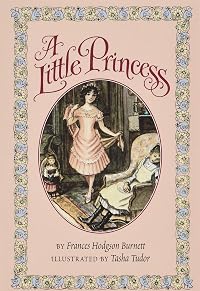
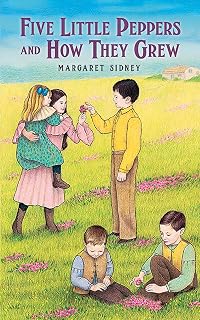
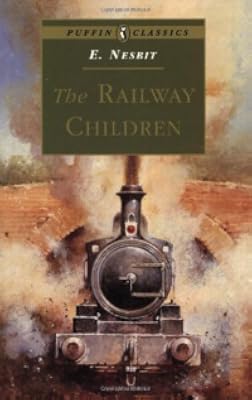







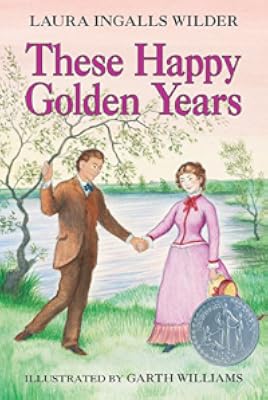
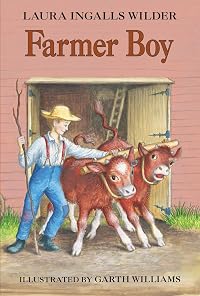
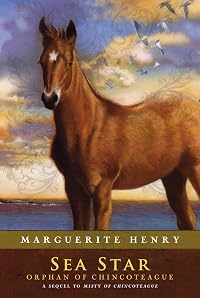
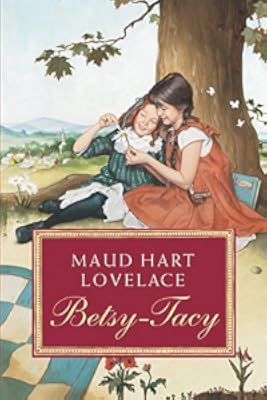
Member Recommendations
by anonymous user
02
by anonymous user
02
by anonymous user
Member Reviews
In fairness, Pollyanna was published in 1913 when cheery orphans were all the rage. It’s easy to see how some might scowl at this most cock-eyed of all optimists, 11-year-old Pollyanna Whittier, with her ridiculous Glad Game and previous life of poverty that depended on the Ladies’ Aid to keep her dressed and supplied. I’m sure that author Eleanor Porter thought of her classic children’s novel as “an improving book.”
But what if we instead imagine Pollyanna as a sly, manipulative (if still good-hearted) girl who knows just what to say to get back at her hard-hearted, snobbish Aunt Polly Harrington? Recasting punishments as benevolences really put Aunt Polly on the back foot. What point is banishing a child to the kitchen to show more dine on bread and milk with hired girl Nancy as a punishment, for instance, when Pollyanna makes it plain that she enjoys the company of the lower classes and prefers dining in the kitchen to silent, tedious dinners in the dining room with taciturn Aunt Polly? Or if she works on wealthy John Pendleton knowing that someday his riches can help someone in need? Once we look at the book in that light, it really turns into a fun romp. Nothing like dealing with “improving” through satire and wiles.
Even without that outlook, Pollyanna is much less saccharine than I would have expected. I’m optimistic and cheery by nature, so it might just be me. At the same time, Porter frequently points the hypocrisy of so-called Christians who, even at the turn of the 20th century, cared more about appearances and their own comfort than about what Jesus would want. That’s why I’m interested in reading the sequel, Pollyanna Grows Up. show less
But what if we instead imagine Pollyanna as a sly, manipulative (if still good-hearted) girl who knows just what to say to get back at her hard-hearted, snobbish Aunt Polly Harrington? Recasting punishments as benevolences really put Aunt Polly on the back foot. What point is banishing a child to the kitchen to show more dine on bread and milk with hired girl Nancy as a punishment, for instance, when Pollyanna makes it plain that she enjoys the company of the lower classes and prefers dining in the kitchen to silent, tedious dinners in the dining room with taciturn Aunt Polly? Or if she works on wealthy John Pendleton knowing that someday his riches can help someone in need? Once we look at the book in that light, it really turns into a fun romp. Nothing like dealing with “improving” through satire and wiles.
Even without that outlook, Pollyanna is much less saccharine than I would have expected. I’m optimistic and cheery by nature, so it might just be me. At the same time, Porter frequently points the hypocrisy of so-called Christians who, even at the turn of the 20th century, cared more about appearances and their own comfort than about what Jesus would want. That’s why I’m interested in reading the sequel, Pollyanna Grows Up. show less
Have you ever read a book you loved in childhood, but the details had grown fuzzy to time, and discovered what may be a linchpin of your worldview?
I have just had that experience with Pollyanna. To be fair, my optimism and silver-lining searches weren't so much part of how i approached the world as a young adult, but it was always a sign that my mental health medication was working: i couldn't help but find something to be glad about, even when times were dire. I suppose, too, it's about hope and perseverance. And it's so much easier to appreciate little things now that I'm so sick and disabled: the pleasure of a good meal, the sound of birds calling, the way sunlight falls through the trees. Like Pollyanna, I discovered the joy of show more prisms in my sickroom, and the ephemeral flames of rainbows cast about.
As a child, I didn't understand why the people of the town always cried when they learned of Pollyanna's game. I didn't understand the digs at the Ladies' Aiders who were more concerned with being seen as doing good than with actually helping the needy in the community. It's a wonder that the tearful folks didn't make the connection with her story and their town's poor.
I can't but compare Pollyanna's Glad Game to the advice Cousin Helen gives Katy in What Katy Did when, like Pollyanna, that girl became paralyzed in an accident. Both have a lot more meaning and relevance to my life now that I'm disabled and bed-tethered, whereas maybe they seemed a bit flippant or minimizing of disability before. Of course, both were written and first popular in times when disabled people were hidden away, before curb cuts and motorized wheelchairs. But when viewed in that context, and acknowledging that there is grief of what is lost when one becomes disabled—the stories and the advice are comforting and helpful. show less
I have just had that experience with Pollyanna. To be fair, my optimism and silver-lining searches weren't so much part of how i approached the world as a young adult, but it was always a sign that my mental health medication was working: i couldn't help but find something to be glad about, even when times were dire. I suppose, too, it's about hope and perseverance. And it's so much easier to appreciate little things now that I'm so sick and disabled: the pleasure of a good meal, the sound of birds calling, the way sunlight falls through the trees. Like Pollyanna, I discovered the joy of show more prisms in my sickroom, and the ephemeral flames of rainbows cast about.
As a child, I didn't understand why the people of the town always cried when they learned of Pollyanna's game. I didn't understand the digs at the Ladies' Aiders who were more concerned with being seen as doing good than with actually helping the needy in the community. It's a wonder that the tearful folks didn't make the connection with her story and their town's poor.
I can't but compare Pollyanna's Glad Game to the advice Cousin Helen gives Katy in What Katy Did when, like Pollyanna, that girl became paralyzed in an accident. Both have a lot more meaning and relevance to my life now that I'm disabled and bed-tethered, whereas maybe they seemed a bit flippant or minimizing of disability before. Of course, both were written and first popular in times when disabled people were hidden away, before curb cuts and motorized wheelchairs. But when viewed in that context, and acknowledging that there is grief of what is lost when one becomes disabled—the stories and the advice are comforting and helpful. show less
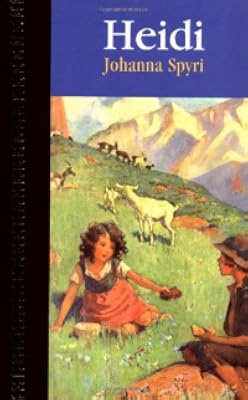
The name Pollyanna has become synonymous with an overly-cheerful person, but the original story isn't nearly as irksome as the name's co notations suggest. I was completely charmed by this book. A few years ago I read Heidi and the main character came across as saccharine sweet and far too optimistic. So despite growing up with two separate film versions of Pollyanna (including the famous Hayley Mills version) I was worried that this one would be all sugar and no substance. It wasn't that way at all!
Pollyanna's joy is sincere and she's been through a hard life already at the tender age of 12. She moves in with her strict aunt after becoming an orphan. Her minister father taught her to find something to be glad about even in the most show more dire circumstance. Her "glad game" is not pretentious, it's just her way of dealing with life and it's her earnestness that sells the spirit of the book.
Every person she meets is touched by her unbridled enthusiasm. What a beautiful way to live your life. No matter what their circumstances, each person who crossed her path found that their world was a little brighter because of her presence. How many of us can say that?
BOTTOM LINE: A sweet gem that I can't wait to share with my own daughter one day. We could all learn a little something from Pollyanna.
“What men and women need is encouragement. Their natural resisting powers should be strengthened, not weakened ... Instead of always harping on a man's faults, tell him of his virtues. Try to pull him out of his rut ... Hold up to him his better self, his real self that can dare and do and win out! ... People radiate what is in their minds and in their hearts.” show less
Pollyanna's joy is sincere and she's been through a hard life already at the tender age of 12. She moves in with her strict aunt after becoming an orphan. Her minister father taught her to find something to be glad about even in the most show more dire circumstance. Her "glad game" is not pretentious, it's just her way of dealing with life and it's her earnestness that sells the spirit of the book.
Every person she meets is touched by her unbridled enthusiasm. What a beautiful way to live your life. No matter what their circumstances, each person who crossed her path found that their world was a little brighter because of her presence. How many of us can say that?
BOTTOM LINE: A sweet gem that I can't wait to share with my own daughter one day. We could all learn a little something from Pollyanna.
“What men and women need is encouragement. Their natural resisting powers should be strengthened, not weakened ... Instead of always harping on a man's faults, tell him of his virtues. Try to pull him out of his rut ... Hold up to him his better self, his real self that can dare and do and win out! ... People radiate what is in their minds and in their hearts.” show less
Originally published in 1913, this tale of a young orphan girl who comes to live with her aunt in a small Vermont town, transforming everyone she meets with her "glad game," is one of those classic stories featuring a hero or heroine whose name has become a byword for a particular quality or idea. Just as we speak of someone who refuses to act maturely as having a "Peter Pan complex," or describe a rags-to-riches transformation as a "Cinderella story," so too do we refer to someone with a tendency toward optimism as a "Pollyanna." Before we had an entire industry of self-help gurus advising us of the power of positive thinking, we had Eleanor H. Porter's Pollyanna, which follows the story of the eponymous Pollyanna Whittier, and her show more "overwhelming, unquenchable gladness for everything that has ever happened or is going to happen."
Arriving in Beldingsville, Vermont from the western prairie, where her missionary father has just recently died, Pollyanna eagerly anticipates living with her Aunt Polly Harrington, for whom she is (partially) named. Although her reception is far from ideal - stern Aunt Polly looks upon her young niece as a duty, rather than a joyful addition to her well-to-do household - she perseveres in looking on the bright side of matters, viewing punishments as rewards, and laughing off many of the cold rebuffs she receives. Finding friendship elsewhere, Pollyanna teaches everyone in town, from the Harrington housemaid, Nancy, to reclusive neighbor John Pendleton, how to play the "game" - in which the player looks for something to be glad about in every occurrence in their lives - taught to her by her father as a young girl. When Pollyanna is struck by an automobile, and loses the use of her legs, the "glad girl" suddenly finds that she can no longer play the game, and that it is she who needs a little cheering up.
Chosen as our February selection over in The L.M. Montgomery Book Club to which I belong, where we sometimes like to read book that are "in the spirit" of L.M. Montgomery, Pollyanna is one of those classics of which I have long been aware, but which I have never happened to pick up. Being familiar with the general story, I have always associated it in my mind with the kind of orphan narrative to be found in books like Anne of Green Gables, or Rebecca of Sunnybrook Farm. I'm very glad it was chosen by the club, as this has given me the push I needed to finally read it, thereby confirming my impression of it as being akin to L.M. Montgomery and Kate Douglas Wiggin's work. That said, although I found it readable enough (I got through most of it in one sitting), it wasn't quite as appealing as I'd expected it to be, and I thought that the charm sometimes wore a little thin. I appreciate the message of trying to find the good around us, but discovered that Pollyanna was just a little too positive for my taste - so positive that I started to become irritated with her. There was a point, midway through the book, when I felt that if I had to read one more scene involving Pollyanna laughing off something nasty, I would tear my hair out!
I vacillated quite a bit between a two and three star rating with this one, trying to balance my irritation with the heroine, and my overall engagement in the story. I can't deny that I enjoyed reading Pollyanna, despite my irritation, so I rounded up. Of course, I'm not sure I enjoyed it enough to hunt down the sequels any time soon. show less
Arriving in Beldingsville, Vermont from the western prairie, where her missionary father has just recently died, Pollyanna eagerly anticipates living with her Aunt Polly Harrington, for whom she is (partially) named. Although her reception is far from ideal - stern Aunt Polly looks upon her young niece as a duty, rather than a joyful addition to her well-to-do household - she perseveres in looking on the bright side of matters, viewing punishments as rewards, and laughing off many of the cold rebuffs she receives. Finding friendship elsewhere, Pollyanna teaches everyone in town, from the Harrington housemaid, Nancy, to reclusive neighbor John Pendleton, how to play the "game" - in which the player looks for something to be glad about in every occurrence in their lives - taught to her by her father as a young girl. When Pollyanna is struck by an automobile, and loses the use of her legs, the "glad girl" suddenly finds that she can no longer play the game, and that it is she who needs a little cheering up.
Chosen as our February selection over in The L.M. Montgomery Book Club to which I belong, where we sometimes like to read book that are "in the spirit" of L.M. Montgomery, Pollyanna is one of those classics of which I have long been aware, but which I have never happened to pick up. Being familiar with the general story, I have always associated it in my mind with the kind of orphan narrative to be found in books like Anne of Green Gables, or Rebecca of Sunnybrook Farm. I'm very glad it was chosen by the club, as this has given me the push I needed to finally read it, thereby confirming my impression of it as being akin to L.M. Montgomery and Kate Douglas Wiggin's work. That said, although I found it readable enough (I got through most of it in one sitting), it wasn't quite as appealing as I'd expected it to be, and I thought that the charm sometimes wore a little thin. I appreciate the message of trying to find the good around us, but discovered that Pollyanna was just a little too positive for my taste - so positive that I started to become irritated with her. There was a point, midway through the book, when I felt that if I had to read one more scene involving Pollyanna laughing off something nasty, I would tear my hair out!
I vacillated quite a bit between a two and three star rating with this one, trying to balance my irritation with the heroine, and my overall engagement in the story. I can't deny that I enjoyed reading Pollyanna, despite my irritation, so I rounded up. Of course, I'm not sure I enjoyed it enough to hunt down the sequels any time soon. show less
I've read Pollyanna several times, but this was my first time listening to an audio version. Aside from finding Nancy's habitual repetition of phrases more annoying to hear than read, I liked it fine.
Pollyanna may seem too perfect by today's standards, but for when the book was originally written, she wasn't. That she would climb down a tree, bang doors, and wander about the village on her own made her close to what we used to call a 'tomboy,' so please keep that in mind if you're not familiar with early 20th century children's literature. (I grew up on old books as well as new.)
It's also not fair to judge John Pendleton by what we know about child abusers today. It's clear, from the dialogue, that Mr. Pendleton has no interest in using show more Pollyanna as a substitute for her late mother. If Jenny had married John, Pollyanna would have been his daughter. He wants only to give her a [good] father's love and receive a daughter's love from her.
Pollyanna and her 'glad game' are still good things to learn about. It is all too easy to see only the dark side of life. Pollyanna doesn't just look for things to be glad about. If something is wrong, she strives to make it better -- and she doesn't give up if she doesn't succeed the first time.
Aunt Polly may consider herself a good woman who knows her duty, but we readers know better. For a woman who calls herself a Christian, she lacks the true spirit. How she treats Pollyanna in the beginning is proof of that. I love the way she learns about how much true good her young niece has been doing about town. Polly is rich, but Pollyanna has done more for the locals with her smiles, words, cheerful personality, and sincere interest in their welfare in the months since she came there to live than Aunt Polly has done in her entire life.
I agree that it's too bad that Pollyanna's name has become an insult. I think if more persons knew what she's really like, the name would be a compliment. show less
Pollyanna may seem too perfect by today's standards, but for when the book was originally written, she wasn't. That she would climb down a tree, bang doors, and wander about the village on her own made her close to what we used to call a 'tomboy,' so please keep that in mind if you're not familiar with early 20th century children's literature. (I grew up on old books as well as new.)
It's also not fair to judge John Pendleton by what we know about child abusers today. It's clear, from the dialogue, that Mr. Pendleton has no interest in using show more Pollyanna as a substitute for her late mother. If Jenny had married John, Pollyanna would have been his daughter. He wants only to give her a [good] father's love and receive a daughter's love from her.
Pollyanna and her 'glad game' are still good things to learn about. It is all too easy to see only the dark side of life. Pollyanna doesn't just look for things to be glad about. If something is wrong, she strives to make it better -- and she doesn't give up if she doesn't succeed the first time.
Aunt Polly may consider herself a good woman who knows her duty, but we readers know better. For a woman who calls herself a Christian, she lacks the true spirit. How she treats Pollyanna in the beginning is proof of that. I love the way she learns about how much true good her young niece has been doing about town. Polly is rich, but Pollyanna has done more for the locals with her smiles, words, cheerful personality, and sincere interest in their welfare in the months since she came there to live than Aunt Polly has done in her entire life.
I agree that it's too bad that Pollyanna's name has become an insult. I think if more persons knew what she's really like, the name would be a compliment. show less
This was a surprisingly good book. Pollyanna is not an insipid character. Rather, she is a strong, young woman who makes a game of finding silver linings in gray clouds. But more importantly, by her irrepressibly, she brings a town full of repressed, early 20th-century Yankees, into people who begin to find themselves able to "count their blessings" (as my grandmother might say it). Pollyanna has a glad game. When something happens, she ponders what is it about that happening for which one can be glad? Sort of along the line, "I'm glad I had my accident, because it enabled two estranged lovers to reconnect". Well, it sounds a bit silly and saccharin, but Pollyanna has a way of making it more sensible.
Referring to someone as a Pollyanna show more has become, in our cynical society, a rather pejorative term. We now think of Pollyannas as being mindlessly cheerful and insipid. But if people could reconnect with the original Pollyanna, perhaps they'd see that being upbeat doesn't necessarily require one to be insipid.
The only real problem I had with this book, a cognitive one on my part, is that Pollyanna was continually referred to as being a "little girl". Well, she was 11. Even as late as the 1950s, girls of 11 were only removed by a year or two from the age at which their parents could marry them off in some states (like New Hampshire, for example). It's weird how our perceptions change. show less
Referring to someone as a Pollyanna show more has become, in our cynical society, a rather pejorative term. We now think of Pollyannas as being mindlessly cheerful and insipid. But if people could reconnect with the original Pollyanna, perhaps they'd see that being upbeat doesn't necessarily require one to be insipid.
The only real problem I had with this book, a cognitive one on my part, is that Pollyanna was continually referred to as being a "little girl". Well, she was 11. Even as late as the 1950s, girls of 11 were only removed by a year or two from the age at which their parents could marry them off in some states (like New Hampshire, for example). It's weird how our perceptions change. show less
There was a time in my young life that I probably knew Disney's version of Pollyanna line-for-line. I-kid-you-not. As the granddaughter of much older grandparents, Pollyanna is universally-grandparent approved. It was watched frequently at their house, along with Shirley Temple and Little House on the Prairie.
While I will always cherish the Disney movie and my memories surrounding it, the book tried my patience at times. In the movie, Pollyanna is more of a tomboy and sneaks away from her aunt for a good cause. In the book, she is annoying goody-goody. She is the perfect, unrealistic, angel child. I don't care if your parents were missionaries, you're going to get in trouble sometimes! She is like the anti-Anne of Green Gables and show more Rebecca of Sunnybrook Farm. Pollyanna would totally tattle-tell on them.
I probably could have got passed the perfectness if the story hadn't taken a creepy turn. In the movie, the creepy old man who lives alone in the woods adopts Jimmy Bean. And notice, there's never a scene where Pollyanna is alone with the old man. Well, in the book, the creepy old man wants to adopt Pollyanna. Why, you ask? Because the creepy old man was madly in love with Pollyanna's mother and now he wants to raise Pollyanna. But Pollyanna has Aunt Polly, right, her relative? Creepy old man doesn't care.
Maybe in 1913 it was sweet that your mom's old recluse boyfriend wants to adopt you...in 2013 it was just creepy, I couldn't get over it. show less
While I will always cherish the Disney movie and my memories surrounding it, the book tried my patience at times. In the movie, Pollyanna is more of a tomboy and sneaks away from her aunt for a good cause. In the book, she is annoying goody-goody. She is the perfect, unrealistic, angel child. I don't care if your parents were missionaries, you're going to get in trouble sometimes! She is like the anti-Anne of Green Gables and show more Rebecca of Sunnybrook Farm. Pollyanna would totally tattle-tell on them.
I probably could have got passed the perfectness if the story hadn't taken a creepy turn. In the movie, the creepy old man who lives alone in the woods adopts Jimmy Bean. And notice, there's never a scene where Pollyanna is alone with the old man. Well, in the book, the creepy old man wants to adopt Pollyanna. Why, you ask? Because the creepy old man was madly in love with Pollyanna's mother and now he wants to raise Pollyanna. But Pollyanna has Aunt Polly, right, her relative? Creepy old man doesn't care.
Maybe in 1913 it was sweet that your mom's old recluse boyfriend wants to adopt you...in 2013 it was just creepy, I couldn't get over it. show less
Members
- Recently Added By
Lists

Favorite Childhood Books
1,651 works; 519 members

Childhood Favorites
427 works; 24 members

Works That Inspired Disney Movies
119 works; 13 members

Books About Girls
219 works; 17 members

100 Best Books by American Women During the Past 100 Years, 1833-1933
27 works; 5 members
Ambleside Books
459 works; 18 members

Fiction with Women's Names in the Title
378 works; 15 members

Bibliography for How to be a Heroine
148 works; 12 members

Satori Smiles Children's Book List
262 works; 7 members

CCE 1000 Good Books List
1,033 works; 12 members

Novels featuring Orphans
76 works; 10 members

Books Mentioned in The Wedding Planner's Daughter series
107 works; 2 members

1970s
657 works; 23 members

EGBERTINA'S List of childhood books worthy of merit or unspeakable delight
155 works; 7 members

Ambleside Online Year 4
46 works; 1 member

Bibliography for Among Others
159 works; 15 members

𓐩hought Daughter ♱♰✟✞✝︎☨†˚₊‧꒰ა ♱ ໒꒱ ‧
38 works; 1 member

The Plague and I's bookshelf in the sanatorium
16 works; 1 member

Leituras Solitárias - 2025
1 work; 1 member

Publisher's Weekly Bestsellers Part I - 1895-1939
399 works; 8 members

Top Five Books of 2025
954 works; 303 members

Books Read in 2026
2,116 works; 70 members
Children's Literature 1900 - 1950 in order
413 works; 8 members

Books Read in 2019
4,052 works; 110 members

Before Austen Comes Aesop
318 works; 9 members

Top Five Books of 2022
736 works; 272 members
EGBERTINA's List of Newbery books that I hated or found unnecessary
58 works; 3 members

Books Read in 2022
5,226 works; 115 members

Comedy of Manners
73 works; 1 member

Books whose titles coined words
4 works; 1 member

Books available on Open Library
171 works; 4 members
The League of Extraordinary Gentlemen
87 works; 4 members
Works Referenced in The League of Extraordinary Gentlemen
122 works; 6 members

Books Set in Vermont
24 works; 4 members

Books That Changed Me
158 works; 47 members
Author Information

50+ Works 9,423 Members
Author Eleanor H. Porter was born in Littleton, New Hampshire on December 19, 1868. Before becoming a writer, she trained as a singer at the New England Conservatory of Music in Boston. She wrote numerous short stories, children's literature, and adult novels including Miss Billy; Miss Billy's Decision; Miss Billy - Married; Pollyanna; Pollyanna show more Grows Up; Just David; Dawn; and Little Pardner. She died on May 21, 1920. (Bowker Author Biography) show less
Some Editions
Awards and Honors
Series

Belongs to Publisher Series
Corticelli [Mursia] (163)
Puffin Story Books (398)
Work Relationships
Is contained in
Is retold in
Has the adaptation
Is abridged in
Common Knowledge
- Canonical title
- Pollyanna
- Original title
- Pollyanna; Polyanna and the game
- Original publication date
- 1913
- People/Characters
- Pollyanna; Aunt Polly; John Pendleton; Nancy; Old Tom; Dr Chilton
- Important places*
- Beldingsville, Vermont, USA; Vermont, USA; USA
- Related movies
- Pollyanna (1920 | IMDb); Pollyanna (1960 | IMDb); Polly (1989 | IMDb); Pollyanna (2003 | IMDb); Pollyanna (1973 | IMDb)
- Dedication
- To My Cousin Belle
- First words
- Miss Polly Harrington entered her kitchen a little hurriedly this June morning.
- Last words
- (Click to show. Warning: May contain spoilers.)"With heaps of love to everybody, "POLLYANNA."
- Original language
- English
- Disambiguation notice
- This is Pollyanna the *book* (and book-on-tape). This is *not* the movie. Please do not combine the two!
ISBN 1557486603 is a Barbour publication of Pollyanna.
ISBN 0060882166 is a Harper Festival Charming Class... (show all)ics publication of Pollyanna.
*Some information comes from Common Knowledge in other languages. Click "Edit" for more information.
Classifications
- Genres
- Children's Books, Fiction and Literature
- DDC/MDS
- 813.52 — Literature & rhetoric American literature in English American fiction in English 1900-1999 1900-1945
- LCC
- PZ7 .P83 .P — Language and Literature Fiction and juvenile belles lettres Fiction and juvenile belles lettres Juvenile belles lettres
- BISAC
Statistics
- Members
- 5,868
- Popularity
- 2,227
- Reviews
- 79
- Rating
- (3.83)
- Languages
- 22 — Czech, English, Estonian, Finnish, French, German, Greek, Hebrew, Hungarian, Italian, Japanese, Latvian, Lithuanian, Norwegian (Bokmål), Norwegian, Polish, Romanian, Russian, Spanish, Swedish, Turkish, Portuguese (Portugal)
- Media
- Paper, Audiobook, Ebook
- ISBNs
- 385
- UPCs
- 4
- ASINs
- 130