On This Page
Description
Times were tough for tomboys in nineteenth-century America. In an era during which the prescribed notions of proper behavior for women and girls were much stricter than they are today, the rough-and-tumble types who couldn't get enough of team sports and the great outdoors were often shunned. This fun and engaging juvenile novel is a great introduction to the period for young readers and adults alike..
Tags
Recommendations



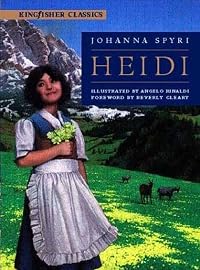
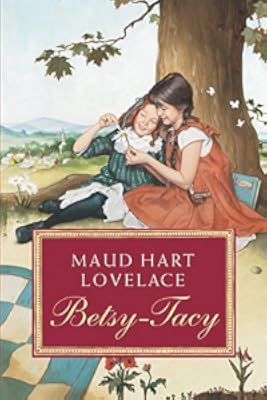
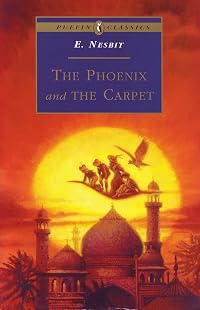
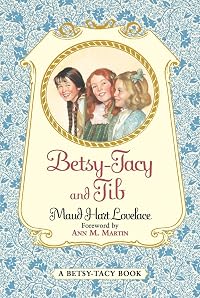


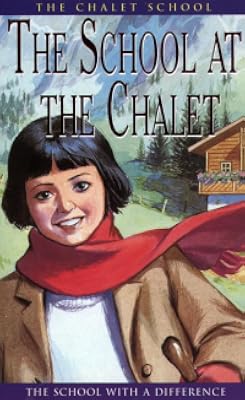
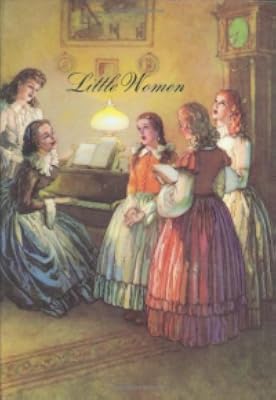
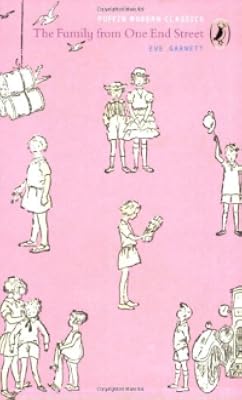
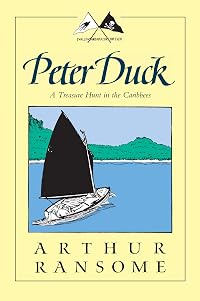





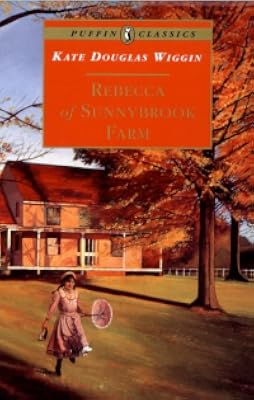
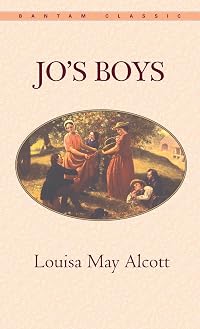
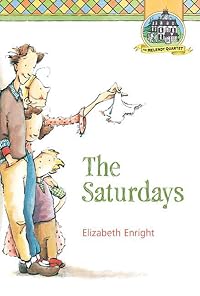
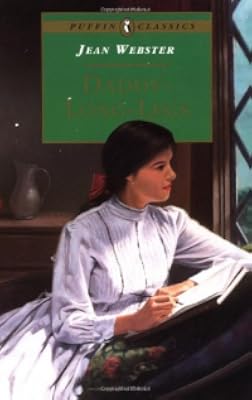



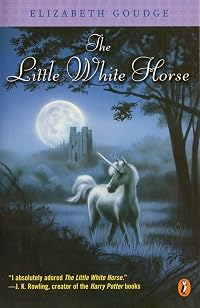
Member Recommendations

MarieSeltenrych A wonderful work of literary prose that I can still remember, over 50 years after reading it. It gives the reader a glimpse into a different world that inspired my imagination and even my life.
Member Reviews
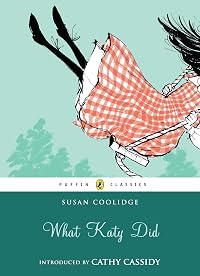
Twelve-year-old Katy Carr and her younger siblings—Clover, Elsie, Dorry, Johnnie (AKA Joanna) and Phil—were a rambunctious lot, playing many imaginative games together with neighbor Cecy Hall. Their father, the local doctor in their small Ohio town of Burnet, was often away, but liked them to be active and happy, so despite the worrying of their fussy Aunt Izzie, who cared for them, they usually had a marvelous time. After the visit of their Cousin Helen, an invalid whose happy and loving nature inspired devotion in all of the Carr siblings, Katy vowed to be just like this relative, little dreaming that all-too-soon she would be. An act of disobedience and a fall from a swing left Katy terribly injured, confined to her bed with a show more back injury. So began a period of attendance at what Cousin Helen called The School of Pain, where Katy learned patience, self-control, discipline, and kindness to others, eventually becoming the very center of the Carr household...
Originally published in 1872, What Katy Did is the first of five novels about the Carr children, and has remained in print to this day. Although considered a classic here in the states, for some reason it has been more popular in the UK through the years, than it has been here. It's a book I've long been aware of, and have always meant to read. In my mind it belongs in that same class of vintage girls' classics as Little Women, Rebecca of Sunnybrook Farm and Anne of Green Gables. On the whole I enjoyed the book, appreciating the early chapters depicting the Carr children and their games and fun, as well as the later ones showing Katy's adjustment to her new reality. The trope involving the angelic invalid who becomes the heart of the home was already familiar to me, and while there are aspects of it that are dated, did not offend me as it seems to have done some other reviewers. The idea of the School of Pain might well strike some readers as somehow absurd, but I think it remains true that our response to suffering (of whatever kind) will often dictate our subsequent experience, and is at least partially in our hands. All this being said, while I didn't despise the book as some seem to have done, I also didn't love it as much as I expected to do. This is my kind of book, and I really thought I would take it more to heart. I expected to enter more fully into Katy's feelings and experiences, but sometimes felt myself at an odd remove from her. Perhaps because of the way the story is told, with the narrator looking back from the distance of many years and from the outside, it felt somehow removed? In any case, despite the fact that it is not destined to become a favorite, it was enjoyable, and I hope to read the sequels shortly. Recommended to readers who enjoy vintage girls' stories. show less
Originally published in 1872, What Katy Did is the first of five novels about the Carr children, and has remained in print to this day. Although considered a classic here in the states, for some reason it has been more popular in the UK through the years, than it has been here. It's a book I've long been aware of, and have always meant to read. In my mind it belongs in that same class of vintage girls' classics as Little Women, Rebecca of Sunnybrook Farm and Anne of Green Gables. On the whole I enjoyed the book, appreciating the early chapters depicting the Carr children and their games and fun, as well as the later ones showing Katy's adjustment to her new reality. The trope involving the angelic invalid who becomes the heart of the home was already familiar to me, and while there are aspects of it that are dated, did not offend me as it seems to have done some other reviewers. The idea of the School of Pain might well strike some readers as somehow absurd, but I think it remains true that our response to suffering (of whatever kind) will often dictate our subsequent experience, and is at least partially in our hands. All this being said, while I didn't despise the book as some seem to have done, I also didn't love it as much as I expected to do. This is my kind of book, and I really thought I would take it more to heart. I expected to enter more fully into Katy's feelings and experiences, but sometimes felt myself at an odd remove from her. Perhaps because of the way the story is told, with the narrator looking back from the distance of many years and from the outside, it felt somehow removed? In any case, despite the fact that it is not destined to become a favorite, it was enjoyable, and I hope to read the sequels shortly. Recommended to readers who enjoy vintage girls' stories. show less
It's... very moralistic. In a 19th-century, Christian fashion. HOWEVER, I still love it. It's such a ridiculous story and the bit about the School of Pain made me want to vomit (in fact, it reminded me of a stupendous article that appeared in Lupus UK about how chronic illness is really a "beautiful beast within" which is actually the most offensively stupid thing I have ever had the misfortune to see in my entire life, including that film where Jack Black is a luchador) but otherwise there is something so wonderfully compelling in the Katy character that will never make me able to hate this book despite me disagreeing with this whole moral construct. I don't actually think Katy is a less interesting character after she "grows up". show more There's nothing wrong with learning to be patient with others and to love your neighbour and try to see the best even in the worst situations. It just shouldn't be presented as a requirement of personhood. Anyway, compared to all the other turn-of-the-century sentimental crap that came out of American children's literature (Little Women, Anne of Green Gables, Pollyanna... VOMIT) this is a lot better, and I remember enjoying the sequels too! Good to read on a tiring journey. show less
I read this many years ago, but I still remember it fondly. It's a wonderful old classic like Anne of Green Gables, but it is shocking how underrated this book is. It's one of these books filled with the adventures (and misadventures) of a spirited girl named Katy Carr, though her siblings also play a part in this book (albeit smaller)
One can only wonder how Katy would have fared today after her accident. With today's medical technology, she probably would have been on her feet a LOT more quickly - and I could say the same for Helen. I felt bad for Helen, and felt that she should NOT have given up her fiance due to her own accident. Helen is a wonderful and warm person who deserved her own happiness and just to give it up to make her show more fiance not feel obligated to 'take care' of her,
I did not like that. If the same happened to her fiance, I doubt he would have made the same sacrifice she did and expect her to take care of him (as was the lot of so many women back then and even now) I get this book was written in a different time with double standards for men and women, although that double standard still exists today and it sucks and that's why I took a star away from this book.
What happened to Katy was hard for her, but her long recuperation has taught her many lessons, and she actually becomes a better person in the end for the lessons that the 'School of Life' has taught her. This is overall a good book, if you liked 'Anne of Green Gables' or 'A Tree Grows in Brooklyn', you should like this book. show less
One can only wonder how Katy would have fared today after her accident. With today's medical technology, she probably would have been on her feet a LOT more quickly - and I could say the same for Helen. I felt bad for Helen, and felt that she should NOT have given up her fiance due to her own accident. Helen is a wonderful and warm person who deserved her own happiness and just to give it up to make her show more fiance not feel obligated to 'take care' of her,
I did not like that. If the same happened to her fiance, I doubt he would have made the same sacrifice she did and expect her to take care of him (as was the lot of so many women back then and even now) I get this book was written in a different time with double standards for men and women, although that double standard still exists today and it sucks and that's why I took a star away from this book.
What happened to Katy was hard for her, but her long recuperation has taught her many lessons, and she actually becomes a better person in the end for the lessons that the 'School of Life' has taught her. This is overall a good book, if you liked 'Anne of Green Gables' or 'A Tree Grows in Brooklyn', you should like this book. show less
It's... very moralistic. In a 19th-century, Christian fashion. HOWEVER, I still love it. It's such a ridiculous story and the bit about the School of Pain made me want to vomit (in fact, it reminded me of a stupendous article that appeared in Lupus UK about how chronic illness is really a "beautiful beast within" which is actually the most offensively stupid thing I have ever had the misfortune to see in my entire life, including that film where Jack Black is a luchador) but otherwise there is something so wonderfully compelling in the Katy character that will never make me able to hate this book despite me disagreeing with this whole moral construct. I don't actually think Katy is a less interesting character after she "grows up". show more There's nothing wrong with learning to be patient with others and to love your neighbour and try to see the best even in the worst situations. It just shouldn't be presented as a requirement of personhood. Anyway, compared to all the other turn-of-the-century sentimental crap that came out of American children's literature (Little Women, Anne of Green Gables, Pollyanna... VOMIT) this is a lot better, and I remember enjoying the sequels too! Good to read on a tiring journey. show less
It's... very moralistic. In a 19th-century, Christian fashion. HOWEVER, I still love it. It's such a ridiculous story and the bit about the School of Pain made me want to vomit (in fact, it reminded me of a stupendous article that appeared in Lupus UK about how chronic illness is really a "beautiful beast within" which is actually the most offensively stupid thing I have ever had the misfortune to see in my entire life, including that film where Jack Black is a luchador) but otherwise there is something so wonderfully compelling in the Katy character that will never make me able to hate this book despite me disagreeing with this whole moral construct. I don't actually think Katy is a less interesting character after she "grows up". show more There's nothing wrong with learning to be patient with others and to love your neighbour and try to see the best even in the worst situations. It just shouldn't be presented as a requirement of personhood. Anyway, compared to all the other turn-of-the-century sentimental crap that came out of American children's literature (Little Women, Anne of Green Gables, Pollyanna... VOMIT) this is a lot better, and I remember enjoying the sequels too! Good to read on a tiring journey. show less
Ummm... I think this is one of those books that hasn't aged brilliantly. Mainly in ideas of what constitutes 'good' behaviour. Katy is a girl of 11 or 12, she is the eldest of six siblings. Her mother is dead and her father mostly absent due to his work, so they are raised by their aunt. The aunt is a bully and the father neglectful, but these facts are glossed over. Katy, who is shown to be kind-hearted, generous and imaginative is somehow supposed to be naughty because she is occasionally impatient (again, she is a child) and therefore we're supposed to watch her learn a moral lesson. At one point her aunt is angry and ashamed because Katy visits an invalid and is kind to her, but snobbery and class divide make this somehow a bad act show more or something. Anyway, the first half of the book is a bunch of childish adventures where the children go on picnics or read each other stories. Not fascinating stuff, but harmlessly amusing. Then Katy has an accident and becomes disabled. I would be interested to know what disabled and chronically ill readers make of this book. On the one hand, it is disabled representation and through cousin Helen we are shown how a disabled person is not someone to pity, however on the other hand, cousin Helen specifically teaches Katy that she should make herself pretty etc for others so they don't find spending time with her a chore and Katy learns to finally be that good little girl she apparently wasn't before (even though she clearly was already a lovely person) because illness is some kind of trial sent by God or something. I don't know. The thing is, yes, Katy becomes a mother to the other children and matures and is more responsible etc, but she also grows up from 12 to 16 and loses a guardian so regardless of her disability, she would have matured anyway and would probably have become more responsible. Who the hell is judging a little girl for being a little impetuous and careless sometimes! Why shouldn't she be allowed to express that she is in pain sometimes? I went into this dreading the moral nonsense, and although it was a little more interesting than expected, I did not find I agreed with it. show less
I know I read and re-read this as a kid and after reading Katy by Jacqueline Wilson I can see some of the problematic aspects to it. But also there are aspects that are period details, yes there were injuries that could happen to a back that are now treated with physio and injections (and I'm currently going through some of that myself, incidentally) but the best treatment of the time was rest and this is what Katy endures when she badly injures her spine after a stupid accident that is down to being a bit headstrong, which is, of course, disapproved of in this period. I had forgotten the neighbour with the counterfeiting husband that Katy befriends, but overall this is a story that in context is interesting. And I did enjoy the update show more I do think kids need to read stories from different periods to learn how life was and is different for different people in different places and times. The mild anti-Irish and anti-black sentiment is a discussion that would be useful for people too. Paternalism is another discussion that didn't come up in the afterwords though it was implied when Katy did some of the "good deeds". Cousin Helen does veer into preachy occasionally.
Interesting, worth re-reading but the enjoyment was somewhat spoilt by adult views. Though I did empathise with Katy and her getting lost in reading when I was younger, I still remember the resonance. show less
Interesting, worth re-reading but the enjoyment was somewhat spoilt by adult views. Though I did empathise with Katy and her getting lost in reading when I was younger, I still remember the resonance. show less
Members
- Recently Added By
Lists

Favorite Childhood Books
1,651 works; 519 members
1001 Children's Books You Must Read Before You Grow Up
774 works; 101 members

Elevenses
316 works; 88 members

Childhood Favorites
427 works; 24 members

Fiction with Women's Names in the Title
378 works; 15 members

Books About Girls
219 works; 17 members

Bibliography for How to be a Heroine
148 works; 12 members

Favourite Virago Modern Classics
183 works; 38 members

Books Read in 2021
5,361 works; 113 members

Fiction (Mostly) in Selective Bibliography of American Literature 1775-1900
431 works; 3 members

Works Referenced in The League of Extraordinary Gentlemen
122 works; 6 members

Books read in 2015
213 works; 5 members

Allie's 2015 Reading List
33 works; 1 member

Bibliography for Among Others
159 works; 15 members

Books Read in 2015
3,299 works; 129 members

CCE 1000 Good Books List
1,033 works; 12 members

Before Austen Comes Aesop
318 works; 9 members
Author Information

53+ Works 5,455 Members
Susan Coolidge - pseudonym of Sarah Chauncy Woolsey (1845-1905) - was born in Cleveland, Ohio and spent much of her childhood in Connecticut. After serving as a nurse in the Civil War, she took up writing. By chance, her editor was also the editor for Louisa M. Alcott - famous for her Little Women books - and it is thought that he suggested Susan show more Coolidge try the same kind of story. Five books about Katy Carr and her family resulted. show less
Some Editions
Awards and Honors
Series

Belongs to Publisher Series
Dean's Classics (2)
Virago Modern Classics (685)
Work Relationships
Is contained in
Is retold in
Has the adaptation
Is abridged in
Inspired
Common Knowledge
- Canonical title
- What Katy Did
- Original title
- What Katy Did
- Original publication date
- 1872
- People/Characters
- Katy Carr; Cousin Helen; Clover Carr; Cecy Hall; Elsie Carr; Dorry Carr (show all 8); Johnnie Carr; Phil Carr
- Related movies
- What Katy Did (1999 | IMDb); What Katy Did (1952 | IMDb)
- First words
- Katy's name was Katy Carr.
I was sitting in the meadows one day, not long ago, at a place where therre was a small brook. - Last words
- (Click to show. Warning: May contain spoilers.)And with that morrow, when she came out of her pretty room and took her place once more as manager of the household, her grown-up life may be said to have begun.
(Click to show. Warning: May contain spoilers.)But although she said she didn't deserve it, I think that Katy did! - Original language
- English
Classifications
- Genres
- Children's Books, Fiction and Literature, Kids
- DDC/MDS
- 813.4 — Literature & rhetoric American literature in English American fiction in English Later 19th Century 1861-1900
- LCC
- PZ7 .W887 .W — Language and Literature Fiction and juvenile belles lettres Fiction and juvenile belles lettres Juvenile belles lettres
- BISAC
Statistics
- Members
- 2,437
- Popularity
- 8,035
- Reviews
- 37
- Rating
- (3.59)
- Languages
- 7 — Dutch, English, Finnish, Norwegian (Bokmål), Norwegian, Spanish, Swedish
- Media
- Paper, Audiobook, Ebook
- ISBNs
- 189
- UPCs
- 1
- ASINs
- 71