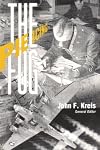
Piercing the Fog: Intelligence and Army Air Forces Operations in World War II
by John F. Kreis
On This Page
Description
From the foreword: WHEN JAPAN ATTACKED PEARL HARBOR on December 7, 1941, and Germany and Italy joined Japan four days later in declaring war against the United States, intelligence essential for the Army Air Forces to conduct effective warfare in the European and Pacific theaters did not exist. Piercing the Fog tells the intriguing story of how airmen built intelligence organizations to collect and process information about the enemy and to produce and disseminate intelligence to show more decisionmakers and warfighters in the bloody, horrific crucible of war. Because the problems confronting and confounding air intelligence officers, planners, and operators fifty years ago still resonate, Piercing the Fog is particularly valuable for intelligence officers, planners, and operators today and for anyone concerned with acquiring and exploiting intelligence for successful air warfare. More than organizational history, this book reveals the indispensable and necessarily secret role intelligence plays in effectively waging war. It examines how World War II was a watershed period for Air Force Intelligence and for the acquisition and use of signals intelligence, photo reconnaissance intelligence, human resources intelligence, and scientific and technical intelligence. Piercing the Fog discusses the development of new sources and methods of intelligence collection; requirements for intelligence at the strategic, operational, and tactical levels of warfare; intelligence to support missions for air superiority, interdiction, strategic bombardment, and air defense; the sharing of intelligence in a coalition and joint service environment; the acquisition of intelligence to assess bomb damage on a target-by-target basis and to measure progress in achieving campaign and war objecti ves; and the ability of military leaders to understand the intentions and capabilities of the enemy and to appreciate the pressures on intelligence officers to sometimes tell commanders what they think the commanders want to hear instead of what the intelligence discloses. The complex problems associated with intelligence to support strategic bombardment in the 1940s will strike some readers as uncannily prescient to global Air Force operations in the 1990s.," Illustrated. show lessTags
Recommendations






















Members
- Recently Added By
Author Information
2 Works 63 Members
Common Knowledge
- Important events
- World War II (1939 | 1945)
Classifications
Statistics
- Members
- 37
- Popularity
- 777,091
- Languages
- English
- Media
- Paper
- ISBNs
- 7