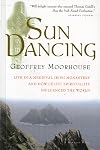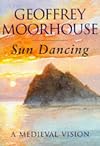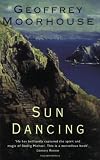
Sun Dancing
by Geoffrey Moorhouse
On This Page
Description
A fictionalized history of fourth-century Irish monks describes their spirituality and their influence on other areas of the world.Tags
Recommendations























Member Reviews
Like many introverts, I’ve always thought a secluded, monkish lifestyle would be preferable to the loud people-stew in which public school immersed me. When I was learning world history in school, I admired the monks in the scriptoriums. I’ve seen Ireland in films that assure me the mainland and its islands are stunning. Few of these landscapes compare to the sheer rock faces sweeping out of the North Atlantic Ocean on Skellig Michael.
Moorhouse examines the medieval monastery on this remote rock in an uncommon format. Since we know little to nothing about the individuals who lived and worshiped there for hundreds of years, Moorhouse uses his research to develop seven stories. The first is set in 588 (or thereabouts), when the first show more monks landed on the island. They continue throughout the centuries, ending in 1222 when he estimates the inhabitants abandoned the island permanently. His stories are surreal. The strangeness of their outlook only matched the hardships the monks faced. To a person in the 21st century, they seem pretty odd.
In the second half of the book, Moorhouse explains the research he used to create the stories in short essays. He bases everything on his findings about Viking raids, monastery practices, and Irish culture at the time. The result is a fascinating mosaic that helps readers immerse themselves in the time and the place. As a result, he convinced me that my years of romanticizing this life were misguided.
While it’s not your typical history book, I would highly recommend Sun Dancing to anyone interested in the history of Ireland, Celtic Christianity, or Medieval history. show less
Moorhouse examines the medieval monastery on this remote rock in an uncommon format. Since we know little to nothing about the individuals who lived and worshiped there for hundreds of years, Moorhouse uses his research to develop seven stories. The first is set in 588 (or thereabouts), when the first show more monks landed on the island. They continue throughout the centuries, ending in 1222 when he estimates the inhabitants abandoned the island permanently. His stories are surreal. The strangeness of their outlook only matched the hardships the monks faced. To a person in the 21st century, they seem pretty odd.
In the second half of the book, Moorhouse explains the research he used to create the stories in short essays. He bases everything on his findings about Viking raids, monastery practices, and Irish culture at the time. The result is a fascinating mosaic that helps readers immerse themselves in the time and the place. As a result, he convinced me that my years of romanticizing this life were misguided.
While it’s not your typical history book, I would highly recommend Sun Dancing to anyone interested in the history of Ireland, Celtic Christianity, or Medieval history. show less
A worthwhile book on a subject that hasn't reached (or had not yet reached) a general appreciation. Moorhouse tells us the story of Irish monasticism by taking the extreme example of the anchorites who chose to worship and glorify God on the bitterly harsh conditions of Skellig Michael, a rugged island off the Kerry Coast.
Because the historical detail of the monastery's existence is sparse, Moorhouse, in the first part, imagines and reconstructs a competent account of what is recorded about the life of the community, which endured (and this is indeed the right word) from the Sixth until the Thirteenth Centuries.
The second part looks at the evidence for and about traditional Irish monasticism. This review gives space to the unique Irish show more form of Christianity which found no difficulties in absorbing original Celtic mythology with the new religion and so the adoption of such ideas as exile, worship of nature and tribal affiliation were second nature.
Moorhouse makes the point that outside influences slowly eroded the unique character of hermetic monastic life. Firstly, the raiding Vikings, but more effectively, the Church at Rome began reforming and codifying monastic structures throughout the Christian world. It was these less rigorous regimes, as well as the supersession of the bishopric over the abbey that would bring about a reappraisal of what was meant by dedicating one's life to Christ.
Three cheers for Geoffrey Moorhouse - the world is a better place for his brilliant writing.
(I hadn't realised that Moorhouse had lived a while in New Zealand. He was a newspaper man for the Grey River Argus, a provincial paper that closed in 1966.) show less
Because the historical detail of the monastery's existence is sparse, Moorhouse, in the first part, imagines and reconstructs a competent account of what is recorded about the life of the community, which endured (and this is indeed the right word) from the Sixth until the Thirteenth Centuries.
The second part looks at the evidence for and about traditional Irish monasticism. This review gives space to the unique Irish show more form of Christianity which found no difficulties in absorbing original Celtic mythology with the new religion and so the adoption of such ideas as exile, worship of nature and tribal affiliation were second nature.
Moorhouse makes the point that outside influences slowly eroded the unique character of hermetic monastic life. Firstly, the raiding Vikings, but more effectively, the Church at Rome began reforming and codifying monastic structures throughout the Christian world. It was these less rigorous regimes, as well as the supersession of the bishopric over the abbey that would bring about a reappraisal of what was meant by dedicating one's life to Christ.
Three cheers for Geoffrey Moorhouse - the world is a better place for his brilliant writing.
(I hadn't realised that Moorhouse had lived a while in New Zealand. He was a newspaper man for the Grey River Argus, a provincial paper that closed in 1966.) show less
A complex book offering an insight into the life of the Christian monks of medieval Ireland, with their extreme, almost psychotic asceticism and their eclectic spirituality. The book is divided into two parts. The first is a sequence of fictional stories about the monastic community on the Skellig, a remote and inhospitable rock off the south west coast of Ireland, from its foundation during the age of Columba by a wandering group of monks who let their craft drift to it on the waves, through successive physical and spiritual trials (including the depredations of the Vikings), until it is reluctantly abandoned after about 600 years of tenacious occupation. The second part is a series of extended historical footnotes giving the show more background to the stories, including details of the Egyptian origins and European developments of monasticism, the invention by the Celtic church of alternatives to literal martyrdom, of Irish church organization, its calendar, psalter, and even the distinctive Gallican creed used by the Irish church before uniformity was imposed from Rome, partly through the agency of the Normans. It gives a very realistic glimpse into a perplexing Christian tradition which could wring beautiful spiritual insight out of almost absurd self-punishment. I am glad that the renewed interest in Celtic spirituality has revived the tradition of near-pantheistic attention to the divine in the natural world, without reviving also the traditions of deliberate starvation, flagellation, and reciting the psalter from memory while kneeling with outstretched arms.
MB 30-viii-2013 show less
MB 30-viii-2013 show less
I purchased this book as a college student in 2009 and only read the first part for class. I put it aside to someday read later.
I read this over the last couple weeks and enjoyed it, for the most part. The first half is a fictional imagining of life at the monastery over the centuries. The second half gives the evidence he found for his imaginings. The second half got overwhelming after awhile and some of the explanations didn't actually answer or clarify what it was supposed to be addressing.
I think photos or drawings would have helped me imagine the setting a little better. I did Google quite a bit and that helped, but it would have been nice to have some descriptive images to go with stories like the shockingly daring building feats show more described in the part two chapter on the Culdees. show less
I read this over the last couple weeks and enjoyed it, for the most part. The first half is a fictional imagining of life at the monastery over the centuries. The second half gives the evidence he found for his imaginings. The second half got overwhelming after awhile and some of the explanations didn't actually answer or clarify what it was supposed to be addressing.
I think photos or drawings would have helped me imagine the setting a little better. I did Google quite a bit and that helped, but it would have been nice to have some descriptive images to go with stories like the shockingly daring building feats show more described in the part two chapter on the Culdees. show less
Fierce deprivation and hardship in search of purification and illumination.
This book gives a beautiful history of the Skelling Island and the monks that lived there.
Ratings
Members
- Recently Added By
Author Information

27+ Works 1,869 Members
Awards and Honors
Awards
Notable Lists
Common Knowledge
- Canonical title
- Sun Dancing
- Original title
- Sun dancing
- Original publication date
- 1997
- Important places
- Ireland; Skellig Michael, County Kerry, Ireland
- Dedication
- To my Irish friends, on both sides of the water. May peace be upon us all
- First words
- The men at the oars moved as though they had all the time in the world at their disposal.
- Last words
- (Click to show. Warning: May contain spoilers.)And where, then, did the monks grow their vegetables?
Classifications
Statistics
- Members
- 368
- Popularity
- 85,531
- Reviews
- 6
- Rating
- (3.84)
- Languages
- English, French
- Media
- Paper
- ISBNs
- 5
- ASINs
- 3