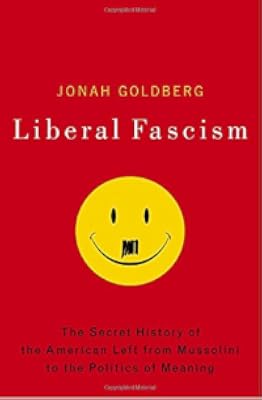
Liberal Fascism
by Jonah Goldberg
On This Page
Description
A startling new perspective on the theories and practices that define fascist politics. Replacing myths with research, journalist Goldberg reminds us that the original fascists were really on the left. The Nazis were ardent socialists (hence the term "National socialism"). They believed in free health care and guaranteed jobs. They confiscated inherited wealth and spent vast sums on public education. The Nazis declared war on smoking, supported abortion, euthanasia, and gun control. They show more loathed the free market, provided generous pensions for the elderly, and campus speech codes were all the rage. These striking parallels don't mean that today's liberals are genocidal maniacs, yet it is hard to deny that modern progressivism and classical fascism shared the same intellectual roots. These assertions may sound strange to modern ears, but that is because we have forgotten what fascism is. In this angry, funny, smart, contentious book, Jonah Goldberg turns our preconceptions inside out.--From publisher description. show lessTags
Recommendations

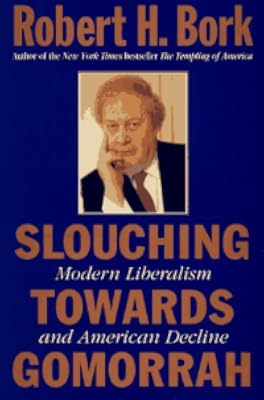






Member Recommendations
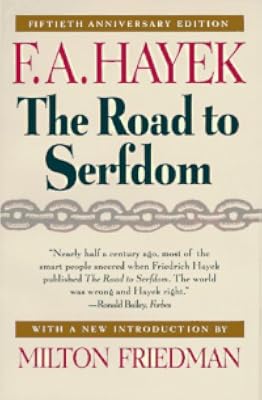
gjn Both books describe the increasing power the american gathered over the 20th century and that his power increase is in deep contrast with the founding fathers ideas and the american constitution. Both are very interesting reads.
12
elenchus Gross & Goldberg each provides a critique of liberalism for its parallels to fascism with a new presentation, Gross predating Goldberg by a few decades. I have not read either book in full (rather, know them from secondary reading of each) but anticipate it will be instructive to read both and compare their treatment of similar material from different perspectives.
Member Reviews
Preaching to the choir, alas. Author Jonah Goldberg is a National Review contributor and Liberal Fascism reads like a greatly elaborated version of a National Review article: erudite, extensively researched and documented, and never read by the people who should. Goldberg falls all over himself apologizing; he doesn’t really think Woodrow Wilson, Franklin Roosevelt, and Barack Obama are Fascists, just that their programs have some things in common with Fascist programs. He’s rather handicapped here because the John the Baptist of Fascism, Benito Mussolini, didn’t really have any programs – Mussolini said “Our program is to govern”. This has historically allowed Leftists to define Fascism as “anything we disagree with”. show more Lots of Fascist/NSDAP goals and accomplishments – guaranteed employment, abolition of interest, confiscation of war profits, nationalization of trusts, profit sharing, old-age pensions (all these come from the NSDAP party platform) – would be counted as “progressive” if they had come from any other political entity. In fact, as Goldberg points out, they were counted as progressive at various times by Lincoln Steffens, H.G. Wells, and George Bernard Shaw and others with impeccable leftist credentials.
Goldberg’s deconstruction of Woodrow Wilson is particularly enlightening and should be required reading for anybody who thinks George W. Bush was “the worst president ever”. The Wilson administration was responsible for the Espionage Act and Sedition Act, which allowed it to arrest anyone who criticized WWI. The Postmaster General was empowered to prohibit mailing any “seditious” publication (and did so for over 75), and the War Resources Board interdicted supplies of newsprint to any critical newspaper.
There are a lot of eyebrow raising quotes here. Cole Porter: “You’re the top, You’re the Great Houdini; You’re the top, You are Mussolini!” (original version). Woodrow Wilson: “I am an advocate of peace but there are some splendid things that come to a nation through the discipline of war”. Clarence Darrow (speaking of Wilson and WWI): “Any man who refuses to back the President in this crisis is worse than a traitor.” Walter Lippmann (speaking to FDR): “The situation is critical, Franklin. You may have no alternative but to assume dictatorial powers”. Völkischer Beobachter (about FDR): “A man of irreproachable, extremely responsible character and immovable will.” Mussolini: “Roosevelt is moving, acting, giving orders independently of the decisions or wishes of the Senate or Congress.” (They meant that as a compliment).
This just skims the surface of a 400+ page book. Every quote and claim is documented. The problem is nobody who needs to is going to pay any attention to this. This isn’t Goldberg’s fault; it’s just the way things are. You can explain all you want that Hitler was a Socialist, and what “Nazi” is short for, but all it invokes in the typical liberal is cognitive dissonance.
I have some gripes. From time to time Goldberg blames various liberal excesses on “Darwinism”, as if that were a political philosophy (what he actually means is “Social Darwinism”). And Goldberg goes a little overboard when he comments on McCarthyism: “…under McCarthyism a few Hollywood writers who’d supported Stalin and then lied about it lost their jobs in the 1950s.” – the problem being that they shouldn’t have been forced to lie about it in the first place. But on the whole, recommended. show less
Goldberg’s deconstruction of Woodrow Wilson is particularly enlightening and should be required reading for anybody who thinks George W. Bush was “the worst president ever”. The Wilson administration was responsible for the Espionage Act and Sedition Act, which allowed it to arrest anyone who criticized WWI. The Postmaster General was empowered to prohibit mailing any “seditious” publication (and did so for over 75), and the War Resources Board interdicted supplies of newsprint to any critical newspaper.
There are a lot of eyebrow raising quotes here. Cole Porter: “You’re the top, You’re the Great Houdini; You’re the top, You are Mussolini!” (original version). Woodrow Wilson: “I am an advocate of peace but there are some splendid things that come to a nation through the discipline of war”. Clarence Darrow (speaking of Wilson and WWI): “Any man who refuses to back the President in this crisis is worse than a traitor.” Walter Lippmann (speaking to FDR): “The situation is critical, Franklin. You may have no alternative but to assume dictatorial powers”. Völkischer Beobachter (about FDR): “A man of irreproachable, extremely responsible character and immovable will.” Mussolini: “Roosevelt is moving, acting, giving orders independently of the decisions or wishes of the Senate or Congress.” (They meant that as a compliment).
This just skims the surface of a 400+ page book. Every quote and claim is documented. The problem is nobody who needs to is going to pay any attention to this. This isn’t Goldberg’s fault; it’s just the way things are. You can explain all you want that Hitler was a Socialist, and what “Nazi” is short for, but all it invokes in the typical liberal is cognitive dissonance.
I have some gripes. From time to time Goldberg blames various liberal excesses on “Darwinism”, as if that were a political philosophy (what he actually means is “Social Darwinism”). And Goldberg goes a little overboard when he comments on McCarthyism: “…under McCarthyism a few Hollywood writers who’d supported Stalin and then lied about it lost their jobs in the 1950s.” – the problem being that they shouldn’t have been forced to lie about it in the first place. But on the whole, recommended. show less
Still haven't finished it (nor added to shelf the other books I'm reading instead), but I have read more than I read when I first reviewed it. This summary still goes: Seems to be an update and American perspective of the classic "The Road to Serfdom" by F.A. Hayek. Goldberg discusses the Progressive movement of 100 years ago, how it influenced modern liberalism and how much it admired Mussolini. ("Well, at least he made the trains run on time," was a great Progressivist cop out.) Goldberg like Hayek recognizes that a political spectrum that runs all the way from Communism to Fascism is like an alphabet that goes all the way from A to B.
My additional take: Goldberg recognizes that the chief difference between fascism and communism is, show more respectively, nationalism and internationalism. Beyond that, both promote socialist, centralized economic policies. Both can use coercive tactics to suppress dissent. He is on firm ground in pointing to the fascist tendencies of the early progressives and their heirs. Theodore Roosevelt embraced these tendencies but more so after he had already been president. T. Woodrow Wilson is probably rightly defined by Goldberg as the most fascistic president in U.S. history. As Goldberg points out to those who would say "It can't happen here," it already happened. He is also right to point out that the New Deal of FDR had its dark, fascistic side. This is one of the most interesting sections of the book. (Compare Vardis Fisher's autobiographical novel "Orphans in Gethsemane," which gives a first-hand account of the WPA by someone who was inside and found it oppressive.)
That JFK had a tendency toward fascism is a little more of a stretch, although I think there was that nationalistic, centralized tendency in his policies, which came out in various ways, especially in his rhetoric. He wasn't consistently fascistic, though, crushing the U.S. steel industry on the one hand and lowering taxes on the other. But certainly he was strongly nationalist if mildly socialist.
When Goldberg portrays sixties radicals as facists, however, he seems to be missing his own point. The most radical and violent of these people--Weathermen, Black Panthers, etc.--don't have to be compared to fascists because they were already communists; compare them to the Bolsheviks battling their opponents in the streets of St. Petersburg--that's how they saw themselves. The reason this makes a real difference is that these leftist radicals departed from the NATIONALIST fascism of their supposed predecessors. Wilson and maybe even FDR would have called out the troops and shot them long before Kent State. The sixties radical movement was not monolithic. There were various trends within it, including an instinctive individualist rebellion, but to the extent that they were socialists, most '60s rads got their socialism from their parents who had been '30s communists or other varieties of internationalist socialists. So Goldberg is straining his own conceit to make '60s internationalist socialists fit with earlier fascists. Not to say that the Kennedy/Johnson era did not lead to a climate in which socialist/communist radicals felt empowered and in which they could ally themselves with the Great Society as a platform for further radicalism, but they departed from nationalism, which you can't do and properly still be called a fascist.
Goldberg can always defend George Bush against charges of fascism by saying, at least he is not as bad as Woodrow Wilson. (One might as well say, at least he isn't as bad as Genghis Khan.) This is not for lack of trying on President Bush's part, however.
We live in an era in which even Wilson would be hard pressed to make everyone submit to his vision of nationalism. Each of us now tends to march to the beat of his own drummer, or failing that, we gravitate toward one of various drum-masters available in our fractious society. The president can't tell everyone what to think in the age of the Internet. He has too many competitors.
I would recommend reading this book in combination with "The Cult of the Presidency" by Gene Healy and "Nixonland" by Rick Perlstein, because they are dealing with some of the same material but spinning it according to different agendas. show less
My additional take: Goldberg recognizes that the chief difference between fascism and communism is, show more respectively, nationalism and internationalism. Beyond that, both promote socialist, centralized economic policies. Both can use coercive tactics to suppress dissent. He is on firm ground in pointing to the fascist tendencies of the early progressives and their heirs. Theodore Roosevelt embraced these tendencies but more so after he had already been president. T. Woodrow Wilson is probably rightly defined by Goldberg as the most fascistic president in U.S. history. As Goldberg points out to those who would say "It can't happen here," it already happened. He is also right to point out that the New Deal of FDR had its dark, fascistic side. This is one of the most interesting sections of the book. (Compare Vardis Fisher's autobiographical novel "Orphans in Gethsemane," which gives a first-hand account of the WPA by someone who was inside and found it oppressive.)
That JFK had a tendency toward fascism is a little more of a stretch, although I think there was that nationalistic, centralized tendency in his policies, which came out in various ways, especially in his rhetoric. He wasn't consistently fascistic, though, crushing the U.S. steel industry on the one hand and lowering taxes on the other. But certainly he was strongly nationalist if mildly socialist.
When Goldberg portrays sixties radicals as facists, however, he seems to be missing his own point. The most radical and violent of these people--Weathermen, Black Panthers, etc.--don't have to be compared to fascists because they were already communists; compare them to the Bolsheviks battling their opponents in the streets of St. Petersburg--that's how they saw themselves. The reason this makes a real difference is that these leftist radicals departed from the NATIONALIST fascism of their supposed predecessors. Wilson and maybe even FDR would have called out the troops and shot them long before Kent State. The sixties radical movement was not monolithic. There were various trends within it, including an instinctive individualist rebellion, but to the extent that they were socialists, most '60s rads got their socialism from their parents who had been '30s communists or other varieties of internationalist socialists. So Goldberg is straining his own conceit to make '60s internationalist socialists fit with earlier fascists. Not to say that the Kennedy/Johnson era did not lead to a climate in which socialist/communist radicals felt empowered and in which they could ally themselves with the Great Society as a platform for further radicalism, but they departed from nationalism, which you can't do and properly still be called a fascist.
Goldberg can always defend George Bush against charges of fascism by saying, at least he is not as bad as Woodrow Wilson. (One might as well say, at least he isn't as bad as Genghis Khan.) This is not for lack of trying on President Bush's part, however.
We live in an era in which even Wilson would be hard pressed to make everyone submit to his vision of nationalism. Each of us now tends to march to the beat of his own drummer, or failing that, we gravitate toward one of various drum-masters available in our fractious society. The president can't tell everyone what to think in the age of the Internet. He has too many competitors.
I would recommend reading this book in combination with "The Cult of the Presidency" by Gene Healy and "Nixonland" by Rick Perlstein, because they are dealing with some of the same material but spinning it according to different agendas. show less
This is an insightful but ultimately flawed polemic from a traditional American conservative who identifies, with some justification, the 'fascistic' tendencies within American progressivism.
Unfortunately, he over-eggs his pudding, is highly selective in his evidence and he clearly does not understand the European philosophical tradition very well.
The book is not going to be of enormous use outside America except in one respect - his criticisms of the third way progressive mentality do hold up surprisingly well in the context of the Blair phenomenon and its European cognates.
The flaws are a shame because some of what he says is important and needs to be said more often - that various forms of statism (which he rather stupidly insists show more on lumping under the fascist label) have many things in common and that these are bad and stupid things.
One of the things they certainly have in common is a methodology of acquiring power within a democracy and maintaining it. Many of those methods are deeply dishonest and corrupting.
I am persuaded, for example, by Goldberg that Woodrow Wilson was a fascist 'avant la lettre' not merely because of the brutal techniques used under war socialism but because his ideology was one that cohered with the fascist moment in Europe. Indeed, it has to be said that the early Mussolini comes out of a comparison with Wilson rather well.
Similarly, the circle of academics, old war socialists and progressives around FDR (whose New Deal looks less impressive with each passing decade) seem to have had some disturbingly authoritarian and corporatist characteristics well in tune with what was happening in Europe.
Goldberg reminds us that the inclusion of the labour unions in the New Deal coalition meant a major step back for the black population through their exclusion and that it was policies designed to keep prices high for farmers that helped throw many blacks off the land and into the ghettos.
We fast forward to the 1960s and to Goldberg's real 'bete noire', the baby boomer liberals - with his special 'bete' being Hillary Clinton who he clearly loathes (we have Harriet Harman!). He is surprisingly kind to Bill as if sub-consciously commiserating with him.
Again, his insights are good if his choice of evidence increasingly selective as he nears the election for which he was writing (2008).
He is right that the hard left of the student movement showed distinctively proto-fascist, indeed proto-Nazi, traits, that identity politics is dysfunctional and brutal, that the Big Society has not achieved its purposes and has neutered innovation in the working population and that much of the Americal liberalism that emerged out of that era shared with progressivism and with some forms of fascism the fervour of a religious awakening.
His most powerful insight is that the difference between the progressive-fascist moment in the first half of the century and the liberal-progressive moment in the second half was one almost of gender orientation.
True fascism was highly masculinised (as a live white male, I cannot but see in irrational moments its aesthetic attractions) but the baby boomer liberalism that emerged as neo-progressivism in the age of Clinton and Blair was deeply feminised - not just feminist but matriarchal in its desire to create a all-encompassing nurturing state.
His marker for this is a common conservative complaint - the intrusion of public aspiration (whether for a strong nation or that 'no child should be left behind') into private and family life. That intrusion is at the heart of the phenomenon that puzzles feminists - the conservative female who still turns out to vote for Mitt Romney. Without soft liberal males, feminism would not stand a chance in the modern world.
Again, he has a point. A form of matriarchal fascism of a nurturing kind on the Left does seem to have displaced a patriarchal fascism of a forceful kind on the Right yet with many remaining similarities in form and function.
Here, in the UK, the last Labour Government had an uncanny ability to fail to help the most seriously disadvantaged (we think of the care homes scandals) in its efforts to 'help' the general run of the population, a community which probably did not need much more than some increased income and better schools and hospitals.
The social engineering aspects of fascism and progressivism do seem very similar and, prior to the later love of war and racism, there is sometimes more (in terms of respect for actual human autonomy and private liberty) to be said for early Mussolini than late Blair.
From this stimulating perspective, the book is worth reading as a series of 'detournements', reversals of accepted history that are mostly but not always entirely plausible.
Unfortunately the weaknesses of this polemic overwhelm its insights and stimulating analyses. As polemic, it is so partisan as to caricature itself after a while - it eschews context for effect and repeats some points like a sledgehammer required to crack the complacency of some angry right-wing nuts and get them to engage.
We have to pass over much of this in silence but the total and often accurate critique of American (and by implication British) progressivism is ruined by Goldberg's refusal to be detached in that criticism.
Instead, while criticising the Left for creating a new secular religion (a fair criticism), he seems desperately to want us to see Christianity as some kind of noble victim or higher cause lost to the 'nice Nazis'.
This is laughable but is typical of the American transcendentalist (or is it human) mind-set that needs to believe in some nonsense or other by its very nature. He is, of course, writing before the hideous appearance of Christian politics at its most rampant under the aegis of the Tea Party (a direction in which our UKIP threatens to go if Farage loses his ranting grip and the conservatives fail to connect with the wider population).
Seen in that light the book looks at best naive and at worst as villainously manipulative as its opponent. American cultural politics mystify the rest of the world as so much sound and fury that seems incapable of dealing with fundamental economic, welfare and security problems. Our concern in the UK is with infection from either camp so American lack of self-knowledge becomes our problem quite quickly.
Goldberg, despite his thesis being laid out with insightful anecdotes, collapses into a puddle of ideology. One leaves this book deeply saddened that this great country is divided between two broad sets of partisan fool, neither of which really seems to understand the difference between private belief and public order (though Goldberg nudges in this direction before he loses himself in partisan position-taking). show less
Unfortunately, he over-eggs his pudding, is highly selective in his evidence and he clearly does not understand the European philosophical tradition very well.
The book is not going to be of enormous use outside America except in one respect - his criticisms of the third way progressive mentality do hold up surprisingly well in the context of the Blair phenomenon and its European cognates.
The flaws are a shame because some of what he says is important and needs to be said more often - that various forms of statism (which he rather stupidly insists show more on lumping under the fascist label) have many things in common and that these are bad and stupid things.
One of the things they certainly have in common is a methodology of acquiring power within a democracy and maintaining it. Many of those methods are deeply dishonest and corrupting.
I am persuaded, for example, by Goldberg that Woodrow Wilson was a fascist 'avant la lettre' not merely because of the brutal techniques used under war socialism but because his ideology was one that cohered with the fascist moment in Europe. Indeed, it has to be said that the early Mussolini comes out of a comparison with Wilson rather well.
Similarly, the circle of academics, old war socialists and progressives around FDR (whose New Deal looks less impressive with each passing decade) seem to have had some disturbingly authoritarian and corporatist characteristics well in tune with what was happening in Europe.
Goldberg reminds us that the inclusion of the labour unions in the New Deal coalition meant a major step back for the black population through their exclusion and that it was policies designed to keep prices high for farmers that helped throw many blacks off the land and into the ghettos.
We fast forward to the 1960s and to Goldberg's real 'bete noire', the baby boomer liberals - with his special 'bete' being Hillary Clinton who he clearly loathes (we have Harriet Harman!). He is surprisingly kind to Bill as if sub-consciously commiserating with him.
Again, his insights are good if his choice of evidence increasingly selective as he nears the election for which he was writing (2008).
He is right that the hard left of the student movement showed distinctively proto-fascist, indeed proto-Nazi, traits, that identity politics is dysfunctional and brutal, that the Big Society has not achieved its purposes and has neutered innovation in the working population and that much of the Americal liberalism that emerged out of that era shared with progressivism and with some forms of fascism the fervour of a religious awakening.
His most powerful insight is that the difference between the progressive-fascist moment in the first half of the century and the liberal-progressive moment in the second half was one almost of gender orientation.
True fascism was highly masculinised (as a live white male, I cannot but see in irrational moments its aesthetic attractions) but the baby boomer liberalism that emerged as neo-progressivism in the age of Clinton and Blair was deeply feminised - not just feminist but matriarchal in its desire to create a all-encompassing nurturing state.
His marker for this is a common conservative complaint - the intrusion of public aspiration (whether for a strong nation or that 'no child should be left behind') into private and family life. That intrusion is at the heart of the phenomenon that puzzles feminists - the conservative female who still turns out to vote for Mitt Romney. Without soft liberal males, feminism would not stand a chance in the modern world.
Again, he has a point. A form of matriarchal fascism of a nurturing kind on the Left does seem to have displaced a patriarchal fascism of a forceful kind on the Right yet with many remaining similarities in form and function.
Here, in the UK, the last Labour Government had an uncanny ability to fail to help the most seriously disadvantaged (we think of the care homes scandals) in its efforts to 'help' the general run of the population, a community which probably did not need much more than some increased income and better schools and hospitals.
The social engineering aspects of fascism and progressivism do seem very similar and, prior to the later love of war and racism, there is sometimes more (in terms of respect for actual human autonomy and private liberty) to be said for early Mussolini than late Blair.
From this stimulating perspective, the book is worth reading as a series of 'detournements', reversals of accepted history that are mostly but not always entirely plausible.
Unfortunately the weaknesses of this polemic overwhelm its insights and stimulating analyses. As polemic, it is so partisan as to caricature itself after a while - it eschews context for effect and repeats some points like a sledgehammer required to crack the complacency of some angry right-wing nuts and get them to engage.
We have to pass over much of this in silence but the total and often accurate critique of American (and by implication British) progressivism is ruined by Goldberg's refusal to be detached in that criticism.
Instead, while criticising the Left for creating a new secular religion (a fair criticism), he seems desperately to want us to see Christianity as some kind of noble victim or higher cause lost to the 'nice Nazis'.
This is laughable but is typical of the American transcendentalist (or is it human) mind-set that needs to believe in some nonsense or other by its very nature. He is, of course, writing before the hideous appearance of Christian politics at its most rampant under the aegis of the Tea Party (a direction in which our UKIP threatens to go if Farage loses his ranting grip and the conservatives fail to connect with the wider population).
Seen in that light the book looks at best naive and at worst as villainously manipulative as its opponent. American cultural politics mystify the rest of the world as so much sound and fury that seems incapable of dealing with fundamental economic, welfare and security problems. Our concern in the UK is with infection from either camp so American lack of self-knowledge becomes our problem quite quickly.
Goldberg, despite his thesis being laid out with insightful anecdotes, collapses into a puddle of ideology. One leaves this book deeply saddened that this great country is divided between two broad sets of partisan fool, neither of which really seems to understand the difference between private belief and public order (though Goldberg nudges in this direction before he loses himself in partisan position-taking). show less
Jonah Goldberg's book "Liberal Fascism" is long overdue. This should be evident to anyone who rejects the party line of the reigning collectivist orthodoxy in America. Such a person will have had the experience of being labeled a "reactionary" or an "ultra-conservative" and of being informed that his opinions, if taken a bit further, would make him a fascist.
This charge, as inevitable as death and taxes in a debate with a hard-core Leftist, leaves its victim stunned and confused, like the proverbial deer in the headlights. "But, wait..." stammers the besieged advocate of free markets and limited government. He replays in his mind the famous film clips of Hitler addressing the Nazi mass rallies, and thinks, such a thing could not be show more further from my heart. Yet he fails to utter a satisfactory rejoinder to his accusers.
Along comes Goldberg and unravels the myth of the "conservative fascist," one of the pre-eminent Big Lies of the post-War era. Not content to debunk it, he turns the tables, offering conclusive evidence that the contemporary American "liberal" (as opposed to the classic liberal of yesteryear) subscribes to an ideology that is a patchwork of the twentieth century's anti-democratic experiments: statism, collectivism, racialism, and nihilism--in a word, fascism. Today, it is a "feel-good" fascism; fascism with a caring face. But it is the same road to serfdom (to borrow Hayek's phrase), and it leads to a place where freedom, liberty, and the human spirit have been eliminated.
The book takes us on a journey through the ideological swamps of the American Left, featuring such highlights as pre-WWI Progressivism; Woodrow Wilson; the New Deal; the radicals of the 1960s; the Clintons; and Al Gore. In each case, Goldberg shows us the uncanny resemblance between the icons of the Left and the ideology and/or methods of the self-declared fascists--be they German, Italian, or some other variety.
We learn how Mussolini and the Nazis were first and foremost socialists, pure creations of the Left. Goldberg presents reams of testimony to highlight this seldom-discussed fact. For example:
"The Nazi ideologist--and Hitler rival--Gregor Strasser put it quite succinctly: 'We are socialists. We are enemies, deadly enemies, of today's capitalist economic system with its exploitation of the economically weak, its unfair wage system, its immoral way of judging the worth of human beings in terms of their wealth and their money, instead of their responsibility and their performance, and we are determined to destroy this system whatever happens!'"
Likewise, the original Nazi Party platform of 1920 was nothing if not a description of a Leftist nirvana. Explains Goldberg:
"The most striking thing about the platform was its concerted appeal to socialistic and populist economics, including providing a livelihood for citizens; abolition of income from interest; the total confiscation of war profits; the nationalization of trusts; shared profits with labor; expanded old-age pensions; 'communalization of department stores'; the execution of 'usurers' regardless of race; and the outlawing of child labor."
The similarities between the Nazi belief system and much of our own political correctness is chilling. Hitler and his cohorts were super-environmentalists, obsessed with animal rights and organic food. They had a well-developed cult of Mother Earth, which fed into their fantasies of a pagan, pre-Christian Germanic race. They waged fanatical anti-smoking campaigns, part of an overall focus on public health and care for the body. Sound familiar?
Mussolini and his followers were cut from the same Leftist cloth. We read that Mussolini's
"reputation as a radical grew slowly and steadily until 1911. He became the editor of La lotta di classe (Class War), which served as the megaphone of the extremist wing of the Italian Socialist Party...in a speech in Forli he called on the Italian people to declare a general strike, block the streets, and blow up the trains...He emerged from prison as a socialist star. At his welcoming banquet a leading socialist, Olindo Vernocchi, declared: 'From today you, Benito, are not only the representative of the Romagna Socialists but the Duce of all revolutionary socialists in Italy.' ... Mussolini joined the formal leadership of the party and four months later took over the editorship of its national newspaper, Avanti!, one of the most plum posts in all of European radicalism."
Mussolini enjoyed an immense popularity among the Leftist intelligentsia in Europe and the U.S. (and in many other sectors, as well). His long list of admirers included the New York Times, Lincoln Steffens, Columbia University, the Saturday Evening Post, and Sigmund Freud. How could they all support one of the world's premiere fascist dictators?
"The answer resides in the fact that Fascism was born of a 'fascist moment' in Western civilization, when a coalition of intellectuals going by various labels--progressive, communist, socialist, and so forth--believed the era of liberal democracy was drawing to a close. It was time for man to lay aside the anachronisms of natural law, traditional religion, constitutional liberty, capitalism...This was in every significant way a project of the left as we understand the term today, a fact understood by Mussolini, his admirers, and his detractors."
Another misconception that Goldberg deconstructs (if I may borrow a term invented by the Nazis), is that fascism is a derivative, or extreme version, of capitalism. Related to this is the myth that Hitler was catapulted into power by "big business," just as the big, bad corporations of today allegedly salivate at the thought of enslaving the masses and putting dissidents into concentration camps. This fabrication was as preposterous then as it is today. Fascism is virulently anti-capitalist, and the contemporary large corporation in America tends, if anything, to be aligned with the Left.
"If big business is so right-wing, why do huge banks fund liberal and left-wing charities, activists, and advocacy groups, then brag about it in commercials and publicity campaigns? How to explain that there's virtually no major issue in the culture wars--from abortion to gay marriage to affirmative action--where big business has played a major role on the American right while there are dozens of examples of corporations supporting the liberal side? Indeed, the myth of the right-wing corporation allows the media to tighten liberalism's grip on both corporations and the culture."
Today we face what Goldberg calls a "liberal fascist kulturkampf." Our own fascistic Left seeks to overturn the classic liberal democratic society. We are confronted by many of the same sentiments that propelled the Nazis to power: disenchantment with Western culture; the morbid fascination with race; the hatred of Judeo-Christian morality; the expectation that the realm of politics provide "meaning"; worship of the environment; attraction to paganism; and a puritanical spirit that is manifest in the obsession with public health.
The parallels do not end there. "The white male," says Goldberg,
"is the Jew of liberal fascism. The 'key to solving the social problems of our age is to abolish the white race,' writes the whiteness studies scholar and historian Noel Ignatiev. Whiteness studies is a cutting-edge academic discipline sweeping American higher education. Some thirty universities have WS departments, but many more schools teach the essentials of whiteness studies in other courses...The journal Race Traitor (ironically, a Nazi term) is dedicated 'to serve as an intellectual center for those seeking to abolish the white race'."
"Liberal Fascism" is an excellent work, but unfortunately it suffers from two defects. The first is an exaggeration of the fascistic tendencies of certain American leaders. In the case of Hillary Clinton, the argument is airtight. But when it comes to President Lyndon Johnson, I do not believe that the evidence presented supports Goldberg's assertion that the Great Society was "LBJ's fascist utopia."
The second defect is the organization and flow of the book, which is a bit erratic. In a few spots, the subject matter jumps back and forth chronologically and substantively, causing one to lose the thread of the argument.
Despite these shortcomings, Liberal Fascism is a devastating, meticulously documented indictment of the American Left: its methods, its ideology, and the myths it has manufactured to disguise its true nature and intentions. The book is a call to action for all concerned with the systematic destruction of our culture, perpetrated using the tools of feel-good totalitarianism. show less
This charge, as inevitable as death and taxes in a debate with a hard-core Leftist, leaves its victim stunned and confused, like the proverbial deer in the headlights. "But, wait..." stammers the besieged advocate of free markets and limited government. He replays in his mind the famous film clips of Hitler addressing the Nazi mass rallies, and thinks, such a thing could not be show more further from my heart. Yet he fails to utter a satisfactory rejoinder to his accusers.
Along comes Goldberg and unravels the myth of the "conservative fascist," one of the pre-eminent Big Lies of the post-War era. Not content to debunk it, he turns the tables, offering conclusive evidence that the contemporary American "liberal" (as opposed to the classic liberal of yesteryear) subscribes to an ideology that is a patchwork of the twentieth century's anti-democratic experiments: statism, collectivism, racialism, and nihilism--in a word, fascism. Today, it is a "feel-good" fascism; fascism with a caring face. But it is the same road to serfdom (to borrow Hayek's phrase), and it leads to a place where freedom, liberty, and the human spirit have been eliminated.
The book takes us on a journey through the ideological swamps of the American Left, featuring such highlights as pre-WWI Progressivism; Woodrow Wilson; the New Deal; the radicals of the 1960s; the Clintons; and Al Gore. In each case, Goldberg shows us the uncanny resemblance between the icons of the Left and the ideology and/or methods of the self-declared fascists--be they German, Italian, or some other variety.
We learn how Mussolini and the Nazis were first and foremost socialists, pure creations of the Left. Goldberg presents reams of testimony to highlight this seldom-discussed fact. For example:
"The Nazi ideologist--and Hitler rival--Gregor Strasser put it quite succinctly: 'We are socialists. We are enemies, deadly enemies, of today's capitalist economic system with its exploitation of the economically weak, its unfair wage system, its immoral way of judging the worth of human beings in terms of their wealth and their money, instead of their responsibility and their performance, and we are determined to destroy this system whatever happens!'"
Likewise, the original Nazi Party platform of 1920 was nothing if not a description of a Leftist nirvana. Explains Goldberg:
"The most striking thing about the platform was its concerted appeal to socialistic and populist economics, including providing a livelihood for citizens; abolition of income from interest; the total confiscation of war profits; the nationalization of trusts; shared profits with labor; expanded old-age pensions; 'communalization of department stores'; the execution of 'usurers' regardless of race; and the outlawing of child labor."
The similarities between the Nazi belief system and much of our own political correctness is chilling. Hitler and his cohorts were super-environmentalists, obsessed with animal rights and organic food. They had a well-developed cult of Mother Earth, which fed into their fantasies of a pagan, pre-Christian Germanic race. They waged fanatical anti-smoking campaigns, part of an overall focus on public health and care for the body. Sound familiar?
Mussolini and his followers were cut from the same Leftist cloth. We read that Mussolini's
"reputation as a radical grew slowly and steadily until 1911. He became the editor of La lotta di classe (Class War), which served as the megaphone of the extremist wing of the Italian Socialist Party...in a speech in Forli he called on the Italian people to declare a general strike, block the streets, and blow up the trains...He emerged from prison as a socialist star. At his welcoming banquet a leading socialist, Olindo Vernocchi, declared: 'From today you, Benito, are not only the representative of the Romagna Socialists but the Duce of all revolutionary socialists in Italy.' ... Mussolini joined the formal leadership of the party and four months later took over the editorship of its national newspaper, Avanti!, one of the most plum posts in all of European radicalism."
Mussolini enjoyed an immense popularity among the Leftist intelligentsia in Europe and the U.S. (and in many other sectors, as well). His long list of admirers included the New York Times, Lincoln Steffens, Columbia University, the Saturday Evening Post, and Sigmund Freud. How could they all support one of the world's premiere fascist dictators?
"The answer resides in the fact that Fascism was born of a 'fascist moment' in Western civilization, when a coalition of intellectuals going by various labels--progressive, communist, socialist, and so forth--believed the era of liberal democracy was drawing to a close. It was time for man to lay aside the anachronisms of natural law, traditional religion, constitutional liberty, capitalism...This was in every significant way a project of the left as we understand the term today, a fact understood by Mussolini, his admirers, and his detractors."
Another misconception that Goldberg deconstructs (if I may borrow a term invented by the Nazis), is that fascism is a derivative, or extreme version, of capitalism. Related to this is the myth that Hitler was catapulted into power by "big business," just as the big, bad corporations of today allegedly salivate at the thought of enslaving the masses and putting dissidents into concentration camps. This fabrication was as preposterous then as it is today. Fascism is virulently anti-capitalist, and the contemporary large corporation in America tends, if anything, to be aligned with the Left.
"If big business is so right-wing, why do huge banks fund liberal and left-wing charities, activists, and advocacy groups, then brag about it in commercials and publicity campaigns? How to explain that there's virtually no major issue in the culture wars--from abortion to gay marriage to affirmative action--where big business has played a major role on the American right while there are dozens of examples of corporations supporting the liberal side? Indeed, the myth of the right-wing corporation allows the media to tighten liberalism's grip on both corporations and the culture."
Today we face what Goldberg calls a "liberal fascist kulturkampf." Our own fascistic Left seeks to overturn the classic liberal democratic society. We are confronted by many of the same sentiments that propelled the Nazis to power: disenchantment with Western culture; the morbid fascination with race; the hatred of Judeo-Christian morality; the expectation that the realm of politics provide "meaning"; worship of the environment; attraction to paganism; and a puritanical spirit that is manifest in the obsession with public health.
The parallels do not end there. "The white male," says Goldberg,
"is the Jew of liberal fascism. The 'key to solving the social problems of our age is to abolish the white race,' writes the whiteness studies scholar and historian Noel Ignatiev. Whiteness studies is a cutting-edge academic discipline sweeping American higher education. Some thirty universities have WS departments, but many more schools teach the essentials of whiteness studies in other courses...The journal Race Traitor (ironically, a Nazi term) is dedicated 'to serve as an intellectual center for those seeking to abolish the white race'."
"Liberal Fascism" is an excellent work, but unfortunately it suffers from two defects. The first is an exaggeration of the fascistic tendencies of certain American leaders. In the case of Hillary Clinton, the argument is airtight. But when it comes to President Lyndon Johnson, I do not believe that the evidence presented supports Goldberg's assertion that the Great Society was "LBJ's fascist utopia."
The second defect is the organization and flow of the book, which is a bit erratic. In a few spots, the subject matter jumps back and forth chronologically and substantively, causing one to lose the thread of the argument.
Despite these shortcomings, Liberal Fascism is a devastating, meticulously documented indictment of the American Left: its methods, its ideology, and the myths it has manufactured to disguise its true nature and intentions. The book is a call to action for all concerned with the systematic destruction of our culture, perpetrated using the tools of feel-good totalitarianism. show less
This has been a long time coming, i.e. an accessible-but-soundly-researched, readable, up-to-date account of how communism and fascism are socialism's equally monstrous fraternal twins, and how both inhabit the opposite end of the political/philosophical spectrum from true conservatism.
Liberal Fascism meets this criterion beautifully, and also does an excellent job illustrating how the mindset and mores of fascism creep into politics and culture, over and over, from the late 19th century up to this very day.
I recommend this book to both conservatives (who will find it a breath of fresh air) and liberals (who are going to be hearing some unpleasant things their teachers and college profs have long swept under the moldy rug of historical show more revisionism.
The only flaw here is stylistic: Goldberg is so obviously anticipating waves of obloquy (which he certainly received upon publication) that if anything he over-sources and documents his points. The book exceeds a bit what might have been its most effective length. show less
Liberal Fascism meets this criterion beautifully, and also does an excellent job illustrating how the mindset and mores of fascism creep into politics and culture, over and over, from the late 19th century up to this very day.
I recommend this book to both conservatives (who will find it a breath of fresh air) and liberals (who are going to be hearing some unpleasant things their teachers and college profs have long swept under the moldy rug of historical show more revisionism.
The only flaw here is stylistic: Goldberg is so obviously anticipating waves of obloquy (which he certainly received upon publication) that if anything he over-sources and documents his points. The book exceeds a bit what might have been its most effective length. show less
Goldberg presents a fascinating yet reasonably detailed presentation of his idea that fascism and liberalism sprung from the same intellectual soil. Fascism is therefore rightly identified as a problem of the left, not the right. The book is fairly easy to read though it does become tedious at times as the author strives to pound home his point with an overwhelming amount of evidence. In the end, I think that he is very successful in demonstrating the historical connections of the past as well as the philosophical connections of the present.
In the beginning, fascism was not a discredited and abominable idea. It was quite frankly a more muscular version of the liberalism so common in America during the early 1900s. American authors and show more politicians openly admired the philosophy and those who practiced it, including Mussolini and Hitler. President Wilson in fact instituted fascism during World War 1 and was disappointed when the American people did not want to keep it beyond the end of the war. President Roosevelt picked up his mantle and practiced it once again. The world and fascism had changed significantly by 1945 however. It was now associated strongly with Hitlerism which made it unacceptable. Liberalism realized this and began the process of trying to connect fascism with conservatism even though they shared only the slightest thread of nationalism/patriotism. As Goldberg demonstrates, conservatism stands for everything against fascism. Though a definition of fascism is almost impossible to finalize, it must include the expansion of government, the prioritization of the corporate over the individual, and the ultimate rule of the state. Philosophically, these are very close to the goals of liberalism and completely at odds with conservatism.
Goldberg makes his point well. Unfortunately, he will probably not receive the answer he deserves from liberalism. show less
In the beginning, fascism was not a discredited and abominable idea. It was quite frankly a more muscular version of the liberalism so common in America during the early 1900s. American authors and show more politicians openly admired the philosophy and those who practiced it, including Mussolini and Hitler. President Wilson in fact instituted fascism during World War 1 and was disappointed when the American people did not want to keep it beyond the end of the war. President Roosevelt picked up his mantle and practiced it once again. The world and fascism had changed significantly by 1945 however. It was now associated strongly with Hitlerism which made it unacceptable. Liberalism realized this and began the process of trying to connect fascism with conservatism even though they shared only the slightest thread of nationalism/patriotism. As Goldberg demonstrates, conservatism stands for everything against fascism. Though a definition of fascism is almost impossible to finalize, it must include the expansion of government, the prioritization of the corporate over the individual, and the ultimate rule of the state. Philosophically, these are very close to the goals of liberalism and completely at odds with conservatism.
Goldberg makes his point well. Unfortunately, he will probably not receive the answer he deserves from liberalism. show less
Goldberg claims this is not an academic book yet the tone is reasoned and scholarly and not at all what I expected from his more strident although reasonable appearances on Fox News. He has an interesting thesis which has been strengthened by the machinations of the Obama regime. Liberal fascism is alive and well and appears in a straight line from the insidious progressivism of Wilson and Teddy Roosevelt through FDR, LBJ, and infects the country today in Obama.
The afterword on Obama is particularly appropriate given his analysis which was written during Obama's ascent into sainthood. The central thesis of the book is that the Progressive element in American politics is our smiley-face benevolent home-grown fascism that has as its roots show more the fascist totalitarianism of Europe.
Goldberg takes his title from H.G. Wells, the eminent liberal essayist and science fiction writer who coined the term "liberal fascism," or as he also called it, "enlightened Nazism." Modern, big-government liberalism has come home. The Progressives were the first generation of Americans to criticize the United States Constitution, especially for its limits on government's scope and ambition. They rejected the American Founders' classical or natural rights liberalism, offering instead a vision of the modern state as a kind of god with almost limitless power to achieve "social justice." In America, the origins of modern liberalism lie at the end of the 19th century, when Wilson, Theodore Roosevelt, John Dewey, Herbert Croly, and a host of others argued that the Constitution was outdated, that it was incompetent to deal with contemporary economic and social ills, and that, if applied at all, it ought to be applied as a "living" document. Like their European counterparts, American Progressives championed der Staat over the individual, seeking to redistribute wealth and use the national government to superintend the economy and society. This agenda was at odds with the founders' natural rights principles and the Constitution's limited government. Scholars such as James Ceaser, John Marini, and Ronald J. Pestritto have been calling attention to the progressive origins of modern liberalism for the past 20 years. Goldberg's focus may help free right-wingers who are obvious to the problem of conservative statism, e.g., Bush's "compassionate conservatism."
Cf. A Patriot's History of the United States: From Columbus's Great Discovery, Larry Schweikart, http://www.librarything.com/work/58447/summary/57946093 show less
The afterword on Obama is particularly appropriate given his analysis which was written during Obama's ascent into sainthood. The central thesis of the book is that the Progressive element in American politics is our smiley-face benevolent home-grown fascism that has as its roots show more the fascist totalitarianism of Europe.
Goldberg takes his title from H.G. Wells, the eminent liberal essayist and science fiction writer who coined the term "liberal fascism," or as he also called it, "enlightened Nazism." Modern, big-government liberalism has come home. The Progressives were the first generation of Americans to criticize the United States Constitution, especially for its limits on government's scope and ambition. They rejected the American Founders' classical or natural rights liberalism, offering instead a vision of the modern state as a kind of god with almost limitless power to achieve "social justice." In America, the origins of modern liberalism lie at the end of the 19th century, when Wilson, Theodore Roosevelt, John Dewey, Herbert Croly, and a host of others argued that the Constitution was outdated, that it was incompetent to deal with contemporary economic and social ills, and that, if applied at all, it ought to be applied as a "living" document. Like their European counterparts, American Progressives championed der Staat over the individual, seeking to redistribute wealth and use the national government to superintend the economy and society. This agenda was at odds with the founders' natural rights principles and the Constitution's limited government. Scholars such as James Ceaser, John Marini, and Ronald J. Pestritto have been calling attention to the progressive origins of modern liberalism for the past 20 years. Goldberg's focus may help free right-wingers who are obvious to the problem of conservative statism, e.g., Bush's "compassionate conservatism."
Cf. A Patriot's History of the United States: From Columbus's Great Discovery, Larry Schweikart, http://www.librarything.com/work/58447/summary/57946093 show less
Members
- Recently Added By
Published Reviews
ThingScore 92
It is undeniable that the best way to have avoided complicity in the horrors of the last century would have been to have adopted the politics of Jonah Goldberg. Much can be said against moderate conservatives, but it has to be admitted that their wariness of grand designs and their willingness to place limits on the over-mighty state give them a clean record others cannot share. Few of show more Goldberg's contemporaries will grant him the same courtesy. . . .
Behind the insults and the self-righteousness is the assumption that politics runs on a continuum from far left to far right; that if David Cameron were to keep moving rightwards, he would end up a Nazi. Goldberg sets out to knock down this false paradigm and show that much of what Americans call liberalism, and we call leftism, has its origins in fascism.
I say "knock down", but that is too mild a phrase. Liberal Fascism is not a clean blow to the jaw, but a multiple rocket launcher of a book that targets just about every liberal American hero and ideal. The title comes from HG Wells, the most strenuous intellectual advocate of totalitarianism on the early-20th-century British left. "I am asking for a Liberal Fascisti," he told the Oxford Union in 1932, "for enlightened Nazis. The world is sick of parliamentary democracy. . . ."
Liberal Fascism is a bracing and stylish examination of political history. That it is being published at a time when Goldberg's free market has failed and big government and charismatic presidents are on their way back in no way invalidates his work. Hard times test intellectuals and, for all its occasional false notes, Goldberg's case survives. show less
Behind the insults and the self-righteousness is the assumption that politics runs on a continuum from far left to far right; that if David Cameron were to keep moving rightwards, he would end up a Nazi. Goldberg sets out to knock down this false paradigm and show that much of what Americans call liberalism, and we call leftism, has its origins in fascism.
I say "knock down", but that is too mild a phrase. Liberal Fascism is not a clean blow to the jaw, but a multiple rocket launcher of a book that targets just about every liberal American hero and ideal. The title comes from HG Wells, the most strenuous intellectual advocate of totalitarianism on the early-20th-century British left. "I am asking for a Liberal Fascisti," he told the Oxford Union in 1932, "for enlightened Nazis. The world is sick of parliamentary democracy. . . ."
Liberal Fascism is a bracing and stylish examination of political history. That it is being published at a time when Goldberg's free market has failed and big government and charismatic presidents are on their way back in no way invalidates his work. Hard times test intellectuals and, for all its occasional false notes, Goldberg's case survives. show less
added by TomVeal
The Progressives were the first generation of Americans to criticize the United States Constitution, especially for its limits on government's scope and ambition. They rejected the American Founders' classical or natural rights liberalism, offering instead a vision of the modern state as a kind of god with almost limitless power to achieve "social justice." When modern liberals like Senator show more Clinton call themselves progressives, therefore, they are telling the truth, even if their audiences don't fully understand the implications.
How gratifying it is then to have Jonah Goldberg's new book . . . to pursue these half-forgotten, if not exactly secret, implications. Although liberals throw around the term "fascist" to abuse conservatives (just as they do "racist"), Goldberg . . . persuasively shows that today's progressives are fascism's true descendents, embracing the statism at the heart of the 20th-century's most notorious outlaw regimes. . . .
Goldberg's Afterword is so good, in fact, that one hopes for a book on the problem of conservative statism from this excellent writer. In order to defeat liberal fascism, American conservatives will need to awaken their own ranks from the progressive spell. With his new book, Jonah Goldberg has renewed for them, and for all friends of constitutional government, a vital argument for the political battles ahead. show less
How gratifying it is then to have Jonah Goldberg's new book . . . to pursue these half-forgotten, if not exactly secret, implications. Although liberals throw around the term "fascist" to abuse conservatives (just as they do "racist"), Goldberg . . . persuasively shows that today's progressives are fascism's true descendents, embracing the statism at the heart of the 20th-century's most notorious outlaw regimes. . . .
Goldberg's Afterword is so good, in fact, that one hopes for a book on the problem of conservative statism from this excellent writer. In order to defeat liberal fascism, American conservatives will need to awaken their own ranks from the progressive spell. With his new book, Jonah Goldberg has renewed for them, and for all friends of constitutional government, a vital argument for the political battles ahead. show less
added by TomVeal
Goldberg goes beyond this conventional wisdom, however, to construct a much more ambitious theory of fascism as a kind of über-ideology. His broad thesis is that the decades from the early 1900s to the 1950s were “the fascist moment.” Across the advanced world, intellectuals lost faith in limited government, free market ideas, political democracy, diverse and competing social and cultural show more institutions, and all the higgledy-piggledy messiness of a free society. Groups as different as “progressives” in America, Fabians in Britain, Bismarckians in Germany, and the Futurists in Italy all sought to replace laissez-faire with state control and regulation. . . .
[W]hen H. G. Wells coined the term “liberal fascism” in a 1932 speech that called on his audience to replace the “dilatory indecisiveness” of democracy with bodies that would “end as the sustaining organizations of a reconstituted mankind,” he was not limiting his aims at all. No time limit or lack of ambition there even if in the service of liberal ideas.
Herein lies the significance of Goldberg’s long list of current liberal attitudes—mocked by some reviewers—that mimic past fascist ideas. From the young Hillary Clinton’s attempt to collectivize children under the banner of rights through the authoritarianism of political correctness and “sensitivity training” to the post-religious “politics of meaning,” modern statist liberalism exhibits an itch to regulate the lives—and increasingly the minds—of others that seems both boundless and boundlessly self-confident. If Goldberg exagerrates he exagerates something real. show less
[W]hen H. G. Wells coined the term “liberal fascism” in a 1932 speech that called on his audience to replace the “dilatory indecisiveness” of democracy with bodies that would “end as the sustaining organizations of a reconstituted mankind,” he was not limiting his aims at all. No time limit or lack of ambition there even if in the service of liberal ideas.
Herein lies the significance of Goldberg’s long list of current liberal attitudes—mocked by some reviewers—that mimic past fascist ideas. From the young Hillary Clinton’s attempt to collectivize children under the banner of rights through the authoritarianism of political correctness and “sensitivity training” to the post-religious “politics of meaning,” modern statist liberalism exhibits an itch to regulate the lives—and increasingly the minds—of others that seems both boundless and boundlessly self-confident. If Goldberg exagerrates he exagerates something real. show less
added by TomVeal
Lists

Red Books
30 works; 1 member

If Books Could Kill Podcast
52 works; 1 member
Author Information

6+ Works 1,914 Members
Jonah Goldberg is the Editor-in-Chief of The Dispatch. He holds the Cliff Asness Chair in Applied Liberty at the American Enterprise Institute, and is a fellow at the National Review Institute. He is a Los Angeles Times columnist and member of the "Fox News All-Stars," and he appears regularly on NPR's Morning Edition.
Some Editions
Awards and Honors
Distinctions
Common Knowledge
- Canonical title
- Liberal Fascism
- Alternate titles
- Liberal Fascism: The Secret History of the American Left, From Mussolini to the Politics of Change
- Original publication date
- 2007
- People/Characters
- Benito Mussolini; Georges Sorel; Adolf Hitler
- Blurbers
- Murray, Charles; Gingrich, Newt; Pryce-Jones, David; Bailey, Ronald; Wolfe, Tom
Classifications
- Genres
- Politics and Government, Nonfiction, General Nonfiction, History, Philosophy
- DDC/MDS
- 320.533 — Society, government, & culture Political science Types of Government Political ideologies Radicalism, collectivism, fascism Fascism
- LCC
- JC481 .G55 — Political Science Political theory Political theory. The state. Theories of the state Forms of the state
- BISAC
Statistics
- Members
- 1,334
- Popularity
- 17,977
- Reviews
- 29
- Rating
- (3.86)
- Languages
- 5 — English, Polish, Portuguese, Romanian, Turkish
- Media
- Paper, Audiobook, Ebook
- ISBNs
- 12
- UPCs
- 1
- ASINs
- 8