On This Page
Description
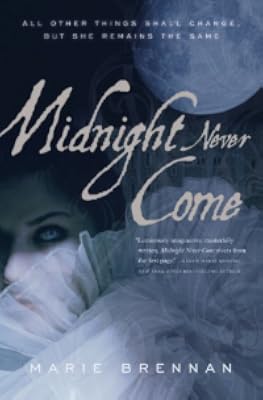
In the thirty years since Elizabeth I ascended her throne, fae and mortal politics have become inextricably entwined, in secret alliances and ruthless betrayals whose existence is suspected only by a few. Two courtiers, both struggling for royal favor, are about to uncover the secrets that lie behind these two thrones. And a faerie lady's courage and loyalty are about to be tested.Tags
Recommendations







Member Recommendations



Member Reviews
Summary: During the reign of Elizabeth I, England was flourishing, and Elizabeth's court was a center of power and influence. But underneath London, there was another court, equally powerful. Invidiana, faerie queen of the Onyx Court, rules with a power just as ruthless as that of her mortal counterpart, and the politics of the two realms are intertwined to a degree known only by a very few in either the human or fairy realms. In the mortal world, Deven, a young courtier eager to gain a place in Elizabeth's court and thus secure his position, begins to uncover dark secrets and hints of threats against Elizabeth's power. In the fairy court, Lune has fallen from favor after making a unfavorable bargain with the water fae, and is now show more caught between the queen and her ambitious and deadly lieutenant. Lune must keep her true identity hidden from Deven, even as he unknowingly stumbles closer to the truth, but in the end it will take both of them working together if they are to save both of their realms from disaster.
Review: On the surface, I should have loved this book. Elizabethan England! Fairies! Hidden secrets! Glamours and intrigues and spies and double-agents and a cameo by John Dee! Marie Brennan's lovely writing, which I'd only previously encountered in short story form, but which I really enjoyed! But something about it never quite clicked for me, so even though I should have loved it, it took me a very long time to get through this book, and it wound up being not quite as good as I would have hoped.
While I felt like the book kept me at arms' length from the characters and the story for most of its length, particularly in the beginning, it did definitely pick up steam once we found out more about what the issue was and got more of the history and the backstory and the actual conflict, with the result that I was much more absorbed in the back half of the book than I was in the front half. It's a clever idea that Brennan's playing with, and it ultimately did wind up delivering the thing that I want from my historical fantasy: a feeling of resonance and power and plausibility. I know the history (well enough, anyways); what I want is for authors to weave a fantasy world around and through that history that leaves me feeling like "yes, that could be true." Elizabeth I's reign was pretty phenomenal in a lot of aspects, so sure, maybe there *was* a bargain with the fae at the heart of it. And by the end of this book, I was there; Brennan pulls from a lot of British Isles mythology, and winds up with exactly the kind of resonance and authenticity that I wanted.
However, the set up to get to that point took a looooong time (or maybe it just seemed that way because of how slowly I was reading - kind of a chicken-and-the-egg thing: was it a general lack of interest in reading that made this book seem so slow, or was the slowness of the book sapping my interest in reading it?) So, while this book had a lot of good elements, it took me a long time to get to them, and this book never really got into my brain or into my heart the way a lasting favorite would. 3.5 out of 5 stars.
Recommendation: I liked this one but didn't love it, but if books about the Faerie Court or Tudor-era England (or both!) are your thing, then I think it'd be worth a try. show less
Review: On the surface, I should have loved this book. Elizabethan England! Fairies! Hidden secrets! Glamours and intrigues and spies and double-agents and a cameo by John Dee! Marie Brennan's lovely writing, which I'd only previously encountered in short story form, but which I really enjoyed! But something about it never quite clicked for me, so even though I should have loved it, it took me a very long time to get through this book, and it wound up being not quite as good as I would have hoped.
While I felt like the book kept me at arms' length from the characters and the story for most of its length, particularly in the beginning, it did definitely pick up steam once we found out more about what the issue was and got more of the history and the backstory and the actual conflict, with the result that I was much more absorbed in the back half of the book than I was in the front half. It's a clever idea that Brennan's playing with, and it ultimately did wind up delivering the thing that I want from my historical fantasy: a feeling of resonance and power and plausibility. I know the history (well enough, anyways); what I want is for authors to weave a fantasy world around and through that history that leaves me feeling like "yes, that could be true." Elizabeth I's reign was pretty phenomenal in a lot of aspects, so sure, maybe there *was* a bargain with the fae at the heart of it. And by the end of this book, I was there; Brennan pulls from a lot of British Isles mythology, and winds up with exactly the kind of resonance and authenticity that I wanted.
However, the set up to get to that point took a looooong time (or maybe it just seemed that way because of how slowly I was reading - kind of a chicken-and-the-egg thing: was it a general lack of interest in reading that made this book seem so slow, or was the slowness of the book sapping my interest in reading it?) So, while this book had a lot of good elements, it took me a long time to get to them, and this book never really got into my brain or into my heart the way a lasting favorite would. 3.5 out of 5 stars.
Recommendation: I liked this one but didn't love it, but if books about the Faerie Court or Tudor-era England (or both!) are your thing, then I think it'd be worth a try. show less
This book was a little slow to get started but I'm so glad I kept reading. It was really neat to see how the author took many different threads and tied them all together in the end. Very well written and lots of political intrigue.
Originally posted on The Emerald City Book Review (emeraldcitybookreview.blogspot.com)
This is a tale of two courtiers in Elizabethan England. One is on his way up, newly appointed to the Gentlemen Pensioners, elite bodyguard to the Queen herself. The other has recently fallen from high favor, and is fighting for her life in the cutthroat atmosphere that pervades the royal court.
But there's a twist: the sovereigns they serve are not the same. A shadow court exists below the streets of London, a court of Faerie known to few mortals. Is Elizabeth one of them? What does she know of Invidiana, the dark and hidden counterpart to her bright and shining reign above?
When two courtiers, one mortal and one of Faerie, find their paths intertwining show more in unexpected ways, they know that nothing can ever be the same again. They must risk everything to find the answers.
Marie Brennan's lush and lovely tale will draw you in at once and not let you go until long after midnight, if you're anything like me. There is no shortage of historical fiction about the Elizabethan period, including a goodly amount of fantasy -- and small wonder, given the truly fantastic personalities, events, and literature that era produced, let alone the clothing styles. Midnight Never Come is a worthy addition to the list, spinning something compellingly original out of the threads of history, folklore, and tradition. Historical personages, legendary figures, and Brennan's own inventions mingle seamlessly, each of the large and varied cast of characters depicted with conviction and strength.
Most of all, her two protagonists will captivate you with the details of their lives in court: real or imagined, it matters not. You won't want to stop reading until you find out what happens to them, how it happens, and whether (let's face it) they have a future together. Can the ancient alchemical formula "As above, so below," become a reality and not a mockery?
This is surely an entertainment, not an educational or philosophical tome, yet such deeper questions do rest at its foundations. Along with Brennan's fluent, elegant writing, this is one of the greatest pleasures to be found in reading this novel. In the halls of fantasy fiction, long may she reign. show less
This is a tale of two courtiers in Elizabethan England. One is on his way up, newly appointed to the Gentlemen Pensioners, elite bodyguard to the Queen herself. The other has recently fallen from high favor, and is fighting for her life in the cutthroat atmosphere that pervades the royal court.
But there's a twist: the sovereigns they serve are not the same. A shadow court exists below the streets of London, a court of Faerie known to few mortals. Is Elizabeth one of them? What does she know of Invidiana, the dark and hidden counterpart to her bright and shining reign above?
When two courtiers, one mortal and one of Faerie, find their paths intertwining show more in unexpected ways, they know that nothing can ever be the same again. They must risk everything to find the answers.
Marie Brennan's lush and lovely tale will draw you in at once and not let you go until long after midnight, if you're anything like me. There is no shortage of historical fiction about the Elizabethan period, including a goodly amount of fantasy -- and small wonder, given the truly fantastic personalities, events, and literature that era produced, let alone the clothing styles. Midnight Never Come is a worthy addition to the list, spinning something compellingly original out of the threads of history, folklore, and tradition. Historical personages, legendary figures, and Brennan's own inventions mingle seamlessly, each of the large and varied cast of characters depicted with conviction and strength.
Most of all, her two protagonists will captivate you with the details of their lives in court: real or imagined, it matters not. You won't want to stop reading until you find out what happens to them, how it happens, and whether (let's face it) they have a future together. Can the ancient alchemical formula "As above, so below," become a reality and not a mockery?
This is surely an entertainment, not an educational or philosophical tome, yet such deeper questions do rest at its foundations. Along with Brennan's fluent, elegant writing, this is one of the greatest pleasures to be found in reading this novel. In the halls of fantasy fiction, long may she reign. show less
In late 16th-century England, the astute and powerful Queen Elizabeth seemingly has total sovereignty over her country. Her courtiers jostle for her royal favor, including young newcomer Michael Deven, who hopes to gain favor through Elizabeth’s royal spymaster, Sir Francis Walsingham. He and the rest of the court have no idea that beneath the streets of London there is another court, over which the beautiful and ruthless fairy queen Invidiana presides. In the shadowy Onyx Court, Lune has fallen out of favor with her queen and is sent to the mortal realm to gather political information. Together, Michael and Lune eventually discover the chilling secret behind Invidiana’s power and concoct a dangerous plan to take her down.
Despite show more seeing many positive reviews of this book in the communities, I was a little apprehensive about it. Luckily, my fears were groundless: I found it impressively researched and incredibly entertaining. Although there are (obviously) some fantasy elements, Brennan sets the book firmly in the actual England of Elizabeth’s day, and I was very excited to read about real-life personages like Walsingham and John Dee. The plot moves along nicely and is definitely exciting enough to hold the reader’s attention, with plenty of political intrigue and a dash of literary allusion thrown in. The romantic angle is well done too, with (in my opinion) just the right amount of tension and restraint. I think fans of historical fiction and fantasy would definitely enjoy this book. show less
Despite show more seeing many positive reviews of this book in the communities, I was a little apprehensive about it. Luckily, my fears were groundless: I found it impressively researched and incredibly entertaining. Although there are (obviously) some fantasy elements, Brennan sets the book firmly in the actual England of Elizabeth’s day, and I was very excited to read about real-life personages like Walsingham and John Dee. The plot moves along nicely and is definitely exciting enough to hold the reader’s attention, with plenty of political intrigue and a dash of literary allusion thrown in. The romantic angle is well done too, with (in my opinion) just the right amount of tension and restraint. I think fans of historical fiction and fantasy would definitely enjoy this book. show less
The central conceit in Midnight Never Come is that Elizabeth I was not the only Queen to rule in England during that time. There was a second, shadow kingdom, one below the city of London. One ruled by a faerie queen. The two kingdoms are not independent of one another; their histories have been interwoven since a fae calling herself Invidiana approached Princess Elizabeth, imprisoned in the Tower of London by her sister Mary and awaiting execution, and made the startling offer: Elizabeth's life and freedom for an alliance. "As I will raise you to your throne, you will raise me to mine," Invidiana promises. "And when we both achieve power, perhaps we will be of use to each other again."
Was this a pact with the devil or the key to show more survival for both England and the Onyx Court? Three decades later, the two kingdoms have become entwined in ways Elizabeth could never have foreseen, from the storm that stopped the Spanish Armada (with magical help) to the execution of Mary Queen of Scots (which maintained the balance of power between the various faerie realms).
Now comes to court a young man, Michael Deven, full of idealism and ambition, anxious to find a patron and make his fortune. He is not the only one to seek favor at court; Lune, a fae courtier once trusted by Queen Invidiana but now marginalized, seeks to regain her former position. Sir Francis Walsingham, Elizabeth's master of spies, suspects a conspiracy, but has not yet begun to suspect schemes that transcend merely human politics. One plot twist follow another, with such skillful blending of historical and fantastical that at times I found myself wondering which was the real series of events. show less
Was this a pact with the devil or the key to show more survival for both England and the Onyx Court? Three decades later, the two kingdoms have become entwined in ways Elizabeth could never have foreseen, from the storm that stopped the Spanish Armada (with magical help) to the execution of Mary Queen of Scots (which maintained the balance of power between the various faerie realms).
Now comes to court a young man, Michael Deven, full of idealism and ambition, anxious to find a patron and make his fortune. He is not the only one to seek favor at court; Lune, a fae courtier once trusted by Queen Invidiana but now marginalized, seeks to regain her former position. Sir Francis Walsingham, Elizabeth's master of spies, suspects a conspiracy, but has not yet begun to suspect schemes that transcend merely human politics. One plot twist follow another, with such skillful blending of historical and fantastical that at times I found myself wondering which was the real series of events. show less
I'm new to writing reviews, but "Midnight Never Come" certainly inspires me to write one. It's not often that a book intertwines historical figures and fantastic personages with such elegance. Oddly, the author manages to make both the mortal and immortal characters come to life with what I can only call a startling realism. Considering that more than half the major characters are mythical by nature, that's quite an accomplishment.
These are not the poetically spoken dewdrop fairies of "A Midsummer Night's Dream", although they do rise from the same folk tradition. (It's helpful that the author is proficient in both folklore and history.) Somehow, without sacrificing the poetry or sense of magic, the author makes her inhuman characters show more quite easy to relate to. For "great shadows", they're remarkably three-dimensional. Then too, the author has a gift for deftly blurring the lines between what's natural and what's not; there are very earthy fairies, and an unearthly human wandering their halls with mad forays into prophecy. Playing with the concept of just what it means to be human - or not - makes for vivid characterizations.
The plot is every bit as intricate - which does, admittedly, make it a bit tricky to follow in places. We shift between the story as told by different characters, and the focus shifts from events past to events present, sometimes without warning. Fortunately, it's easy to become immersed enough in the story that one picks up the trail each time the plot doubles back in a new direction, until it all comes around quite nicely with the ending. show less
These are not the poetically spoken dewdrop fairies of "A Midsummer Night's Dream", although they do rise from the same folk tradition. (It's helpful that the author is proficient in both folklore and history.) Somehow, without sacrificing the poetry or sense of magic, the author makes her inhuman characters show more quite easy to relate to. For "great shadows", they're remarkably three-dimensional. Then too, the author has a gift for deftly blurring the lines between what's natural and what's not; there are very earthy fairies, and an unearthly human wandering their halls with mad forays into prophecy. Playing with the concept of just what it means to be human - or not - makes for vivid characterizations.
The plot is every bit as intricate - which does, admittedly, make it a bit tricky to follow in places. We shift between the story as told by different characters, and the focus shifts from events past to events present, sometimes without warning. Fortunately, it's easy to become immersed enough in the story that one picks up the trail each time the plot doubles back in a new direction, until it all comes around quite nicely with the ending. show less
From a slow and somewhat tottering start (for me), this finished strongly. The second half of the book really gets some momentum and complexity going, weaving together all the stuff that was laid on in the first half (I just really wish Ms Brennan had found a better, tighter, snappier way to deliver us that first half). I remain uncertain about aspects of the way it's laid out - the "memory" sections, in particular, are baffling in their placement, which is almost always after you've found out in prose recollection the scenes depicted - but it all came together in a very satisfying way.
I am not especially learned in the area of Elizabethan history, but I have read a good deal about alchemy and John Dee, and I was extremely pleased with show more the rendition of him and Edward Kelley in this book, and that prompts me to suspect that it's pretty well historically pieced together throughout. And the faerie court is everything beautiful and cruel and whimsical and menacing and it's pretty much damn perfect. I was even pleased with the path of the romantic storyline.
Not to mention that this basically shits all over Mark Chadbourn's The Sword of Albion, containing all the subtlety, intricacy, emotional depth and ambiguity I (loudly) lamented the lack of in that book. And if Ms Brennan's prose doesn't quite resonate with me, it's still eminently serviceable and very graceful. show less
I am not especially learned in the area of Elizabethan history, but I have read a good deal about alchemy and John Dee, and I was extremely pleased with show more the rendition of him and Edward Kelley in this book, and that prompts me to suspect that it's pretty well historically pieced together throughout. And the faerie court is everything beautiful and cruel and whimsical and menacing and it's pretty much damn perfect. I was even pleased with the path of the romantic storyline.
Not to mention that this basically shits all over Mark Chadbourn's The Sword of Albion, containing all the subtlety, intricacy, emotional depth and ambiguity I (loudly) lamented the lack of in that book. And if Ms Brennan's prose doesn't quite resonate with me, it's still eminently serviceable and very graceful. show less
Members
- Recently Added By
Lists

Faerie Mythology
87 works; 13 members

Books Read in 2016
4,666 works; 199 members
Author Information

98+ Works 11,547 Members

Marie Brennan is a LibraryThing Author, an author who lists their personal library on LibraryThing.
Some Editions
Series

Belongs to Publisher Series
Work Relationships
Is contained in
Common Knowledge
- Canonical title
- Midnight Never Come
- Original title
- Midnight Never Come
- Original publication date
- 2008-06-09
- People/Characters
- Michael Deven; Invidiana; Lune; Sir Francis Walsingham; Francis Merriman; Rosamund Goodemeade (show all 8); Gertrude Goodemeade; Elizabeth I, Queen of England
- Important places
- London, England, UK; England, UK; Onyx Hall
- Dedication*
- Dieses Buch ist zwei Gruppen von Leuten gewidmet.
- First words
- Fitful drafts of chill air blew in through the cruciform windows of the Bell Tower, and the fire did little to combat them.
- Last words
- (Click to show. Warning: May contain spoilers.)Gazing into the fire, Elizabeth of England sank into dreams of her glorious past, an old woman, wrinkled and ill, but in her mind's eye, now and forever the radiant Virgin Queen.
*Some information comes from Common Knowledge in other languages. Click "Edit" for more information.
Classifications
Statistics
- Members
- 799
- Popularity
- 34,752
- Reviews
- 32
- Rating
- (3.69)
- Languages
- English, French, German
- Media
- Paper, Audiobook, Ebook
- ISBNs
- 14
- ASINs
- 6