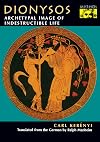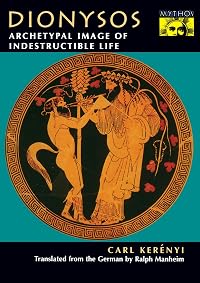
Dionysos: Archetypal Image of Indestructible Life
by Carl Kerenyi
On This Page
Description
"No other god of the Greeks is as widely present in the monuments and nature of Greece and Italy, in the sensuous tradition of antiquity, as Dionysos. In myth and image, in visionary experience and ritual representation, the Greeks possessed a complete expression of indestructible life, the essence of Dionysos. In this work the noted mythologist and historian of religion Carl Kerenyi presents an historical account of the religion of Dionysos from its beginnings in the Minoan culture down to show more its transition to a cosmic and cosmopolitan religion of late antiquity under the Roman Empire." "From the wealth of Greek literary, epigraphic, and monumental traditions, Kerenyi constructs a picture of Dionysian worship, always underlining the constitutive element of myth. Included in this study are the secret cult scenes of the women's mysteries both within and beyond Attica, the mystic sacrificial rite at Delphi, and the great public Dionysian festivals at Athens. The way in which the Athenian people received and assimilated tragedy in its immanent connection with Dionysos is seen as the greatest miracle in all cultural history. Tragedy and New Comedy are seen as high spiritual forms of the Dionysian religion, and the Dionysian element itself is seen as a chapter in the religious history of Europe."--Jacket. show lessTags
Recommendations











Member Reviews
No other god of the Greeks is as widely present in the monuments and nature of Greece and Italy, in the sensuous tradition of antiquity, as Dionysos. In myth and image, in visionary experience and ritual representation, the Greeks possessed a complete expression of indestructible life, the essence of Dionysos. In this work, the noted mythologist and historian of religion Carl Kerényi presents a historical account of the religion of Dionysos from its beginnings in the Minoan culture down to its transition to a cosmic and cosmopolitan religion of late antiquity under the Roman Empire. From the wealth of Greek literary, epigraphic, and monumental traditions, Kerényi constructs a picture of Dionysian worship, always underlining the show more constitutive element of myth.
Included in this study are the secret cult scenes of the women's mysteries both within and beyond Attica, the mystic sacrificial rite at Delphi, and the great public Dionysian festivals at Athens. The way in which the Athenian people received and assimilated tragedy in its immanent connection with Dionysos is seen as the greatest miracle in all cultural history. Tragedy and New Comedy are seen as high spiritual forms of the Dionysian religion, and the Dionysian element itself is seen as a chapter in the religious history of Europe. Source: Publisher
Series: Archetypal images in Greek religion, Vol. 5; Bollingen Series, 65-2. show less
Included in this study are the secret cult scenes of the women's mysteries both within and beyond Attica, the mystic sacrificial rite at Delphi, and the great public Dionysian festivals at Athens. The way in which the Athenian people received and assimilated tragedy in its immanent connection with Dionysos is seen as the greatest miracle in all cultural history. Tragedy and New Comedy are seen as high spiritual forms of the Dionysian religion, and the Dionysian element itself is seen as a chapter in the religious history of Europe. Source: Publisher
Series: Archetypal images in Greek religion, Vol. 5; Bollingen Series, 65-2. show less
DIONISIOS RAÍZ DE LA VIDA INDESTRUCTIBLE
DIONISIOS :RAIZ DE VIDA INDESTRUCTIBLE
Edición de Magda Kerényi
Ningún otro dios de los griegos se encuentra tan presente como Dionisios en los monumentos y la naturaleza de Grecia e Italia, en la tradición sensible que se ha conservado de la antigüedad. Puede hablarse de una omnipresencia del elemento dionisiaco. De las dos creaciones singulares y características de la arquitectura griega que aún persisten en gran número, es decir, el templo y el teatro, este último pertenecía por completo al dios.
De las plantas cultivadas en el ámbito de la antigüedad, la vid es la más proliferante: también ella era sagrada para Dionisios y testimoniaba su presencia. Pero, ¿qué es lo dionisiaco? show more Karl Kerényi, destacado estudioso de la mitología y la religión de la Grecia clásica, profundiza en esta cuestión hasta sus orígenes más arcaicos, localizando al dios en el entorno originario de la cultura minoica.
Lo que descubre, más allá de su omnipresencia en las tradiciones culturales relacionadas con el teatro, la fiesta y el vino, es el elemento silencioso de lo vegetativo, imagen primigenia de la vida indestructible.
La obra que el lector tiene en sus manos ofrece un fascinante recorrido por los elementos más antiguos del culto dionisiaco, su evolución posterior en Grecia y su asimilación espiritual por Plotino, San Agustín y otros autores.
Marcar FundacionRosacruz | Jan 3, 2018 | edit | show less
DIONISIOS :RAIZ DE VIDA INDESTRUCTIBLE
Edición de Magda Kerényi
Ningún otro dios de los griegos se encuentra tan presente como Dionisios en los monumentos y la naturaleza de Grecia e Italia, en la tradición sensible que se ha conservado de la antigüedad. Puede hablarse de una omnipresencia del elemento dionisiaco. De las dos creaciones singulares y características de la arquitectura griega que aún persisten en gran número, es decir, el templo y el teatro, este último pertenecía por completo al dios.
De las plantas cultivadas en el ámbito de la antigüedad, la vid es la más proliferante: también ella era sagrada para Dionisios y testimoniaba su presencia. Pero, ¿qué es lo dionisiaco? show more Karl Kerényi, destacado estudioso de la mitología y la religión de la Grecia clásica, profundiza en esta cuestión hasta sus orígenes más arcaicos, localizando al dios en el entorno originario de la cultura minoica.
Lo que descubre, más allá de su omnipresencia en las tradiciones culturales relacionadas con el teatro, la fiesta y el vino, es el elemento silencioso de lo vegetativo, imagen primigenia de la vida indestructible.
La obra que el lector tiene en sus manos ofrece un fascinante recorrido por los elementos más antiguos del culto dionisiaco, su evolución posterior en Grecia y su asimilación espiritual por Plotino, San Agustín y otros autores.
Marcar FundacionRosacruz | Jan 3, 2018 | edit | show less
Mar 6, 2018 (Edited)Spanish
Ratings
Members
- Recently Added By
Author Information

122+ Works 2,910 Members
Those interested in Jungian psychology and ancient religions should look carefully at the work of Karoly (or Karl) Kerenyi. Kerenyi was a friend of, and coauthor with, Carl Jung, a cofounder of the Jung Institute in Zurich, and a regular participant in the Eranos conferences in Ascona, Switzerland. His work is not, however, Jungian in the show more strictest sense of the word. Trained as a classical philologist, Kerenyi attempted to transcend the limits of historical study and to reveal the "theological" or contemporary significance of ancient myths. In doing so, he relied not solely on literary and archaeological documentation but also invoked a relationship of sympathy between the scholar and the evidence. Among an incredible number of publications, Kerenyi pursued this agenda in a series of volumes devoted to the mythologies of individual Greek gods and goddesses. Throughout, his writing is accessible to the general reader. (Bowker Author Biography) show less
Awards and Honors
Awards
Notable Lists
Series
Belongs to Publisher Series
Bollingen Series (65.02)
Common Knowledge
- Canonical title*
- Дионис. Прообраз неиссякаемой жизни
- Original title
- Dionysos: Urbild des unzerstörbaren Lebens
- Original publication date
- 1976
*Some information comes from Common Knowledge in other languages. Click "Edit" for more information.
Classifications
- Genres
- Nonfiction, Religion & Spirituality, History, General Nonfiction
- DDC/MDS
- 200 — Religion Religion Religion
- LCC
- BL820 .B2 .K4713 — Philosophy, Psychology and Religion Religions. Mythology. Rationalism Religions. Mythology. Rationalism History and principles of religions European. Occidental Classical (Etruscan, Greek, Roman)
- BISAC
Statistics
- Members
- 285
- Popularity
- 113,482
- Reviews
- 2
- Rating
- (3.86)
- Languages
- 7 — English, German, Italian, Polish, Portuguese, Russian, Spanish
- Media
- Paper, Ebook
- ISBNs
- 12
- ASINs
- 2