On This Page
Description
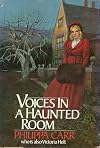
A young woman is torn between two men during the dawn of the French Revolution in this multigenerational saga by the New York Times–bestselling author.In the wake of the storming of the Bastille, Claudine de Tourville and her family flee France for the peaceful shores of England. When they arrive at her mother’s ancestral estate, Claudine feels as if she has come home. At Eversleigh Court, the seventeen-year-old finds herself caught between her wildly different stepbrothers. David is show more quiet, studious, and devoted, but it is the passionate, reckless Jonathan who enflames her heart. With France reeling from the execution of its king and queen, Claudine plunges into her own escalating web of deception and betrayal. A decision made in haste will come back to haunt her as a long-lost love returns to England and sends her life spinning out of control. Philippa Carr is at her provocative, liberating best as she describes a world torn between oppression and freedom. show less
Tags
Recommendations



























Member Reviews
I just finished prior to this two books of the generation two back and I must admit I spent most of the time trying to sort out who was related to who, a task complicated by all the children whose father was not their wives husbands.
Claudine is the heroine and, in this novel, very few other characters get the same starring role. Her sort of partial half cousins are the twins, David and Jonathan. David is quiet, bookish, and good natured. Jonathan is the rakish cad. Claudine spends most of the novel castigating herself for falling for the unpleasant charms of Jonathan and every set piece between them is just awful. Carr has advanced her male characters of this type from being "Take The Woman You Want" to a more subtle flattering seducer show more but the basic character is the same and just as repellant. Unfortunately, the women have also moved on to remorse and self-loathing for either being attracted to these rotten men or some other complicated set of motives never quite spelled out.
Besides the Claudine/Jonathan/David thing, there are about 200 side plots that are not hard to follow and not very interesting and leading to a very Victoria Holt style crazed killer type ending. Plus, there is always the French Revolution in case you get bored!
I'll advance a few generations in the next book of the series I haven't read but my desire to go back and read these all in order is rapidly diminishing. show less
Claudine is the heroine and, in this novel, very few other characters get the same starring role. Her sort of partial half cousins are the twins, David and Jonathan. David is quiet, bookish, and good natured. Jonathan is the rakish cad. Claudine spends most of the novel castigating herself for falling for the unpleasant charms of Jonathan and every set piece between them is just awful. Carr has advanced her male characters of this type from being "Take The Woman You Want" to a more subtle flattering seducer show more but the basic character is the same and just as repellant. Unfortunately, the women have also moved on to remorse and self-loathing for either being attracted to these rotten men or some other complicated set of motives never quite spelled out.
Besides the Claudine/Jonathan/David thing, there are about 200 side plots that are not hard to follow and not very interesting and leading to a very Victoria Holt style crazed killer type ending. Plus, there is always the French Revolution in case you get bored!
I'll advance a few generations in the next book of the series I haven't read but my desire to go back and read these all in order is rapidly diminishing. show less
Like the previous book in the series, we have a plodding narrative with little action and lots of repetition. The repetition in this case occurs between Claudine – the narrator – and Jonathon, who’s Claudine’s step-brother, brother-in-law, and lover all rolled into one. They have the same type of conversation every time they meet, which grows more annoying each time.
I also feel that certain themes from this story – adultery and the heroine not marrying the man she desires most – are repeated from the previous two books. This shows a lack of originality.
Some quality scenes emerge in places, though they often wind-up too quickly. Without giving the ending away, I’ll just state that I liked it, but the ‘danger’ element show more was over too quickly, as it is in every other book I’ve read by this author, be it as Carr, Holt, or Plaidy.
Of the characters, I rate Dickon as the strongest creation. He stars in the previous two books, but unfortunately, he isn’t featured as prominently in this one.
In short, this is an average volume in the Daughters of England series. show less
I also feel that certain themes from this story – adultery and the heroine not marrying the man she desires most – are repeated from the previous two books. This shows a lack of originality.
Some quality scenes emerge in places, though they often wind-up too quickly. Without giving the ending away, I’ll just state that I liked it, but the ‘danger’ element show more was over too quickly, as it is in every other book I’ve read by this author, be it as Carr, Holt, or Plaidy.
Of the characters, I rate Dickon as the strongest creation. He stars in the previous two books, but unfortunately, he isn’t featured as prominently in this one.
In short, this is an average volume in the Daughters of England series. show less
Ratings
Members
- Recently Added By
Author Information

259+ Works 37,396 Members
Jean Plaidy was a British writer who wrote under various pen names. Her real name is Eleanor Alice Burford Hibbert. She was born in London on September 1, 1906. Most of the books written as Jean Plaidy are historical romances based on English history featuring historical figures. The first, Beyond the Blue Mountains, was published in 1947. Hibbert show more also wrote five nonfiction histories and two children's books. Besides Jean Plaidy, Hibbert wrote under Victoria Holt, Phillipa Carr, Elbur Ford, Kathleen Kellow, Ellalice Tate, and her maiden name, Eleanor Burford. Hibbert died on January 18, 1993. (Bowker Author Biography) show less
Some Editions
Series

Common Knowledge
- Canonical title*
- Sydämen valinta
- Original title
- Voices in a Haunted Room
- Original publication date
- 1984
*Some information comes from Common Knowledge in other languages. Click "Edit" for more information.
Classifications
Statistics
- Members
- 112
- Popularity
- 285,591
- Reviews
- 2
- Rating
- (3.65)
- Languages
- English, Finnish, German, Spanish
- Media
- Paper, Ebook
- ISBNs
- 19
- ASINs
- 4