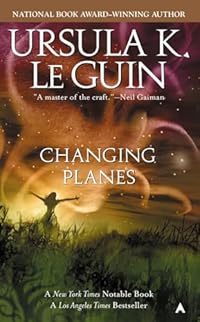
Changing Planes
by Ursula K. Le Guin
On This Page
Description
"All Le Guin's stories are...metaphors for the one human story; all her fantasy planets are this one. Le Guin is a quintessentially American writer, of the sort for whom the quest for the Peaceable Kingdom is ongoing." In this collection of short stories, Sita Dulip from Cincinnati finds a method of transcending the miserable experience of flying. A mere kind of twist and a slipping bend, easier to do than to describe, takes her not to Denver but to bizarre societies and cultures that show more sometimes mirror our own and sometimes open doors into the alien. Changing Planes is by turns funny, disturbing, and thought provoking. show lessTags
Recommendations





















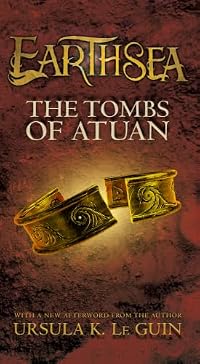
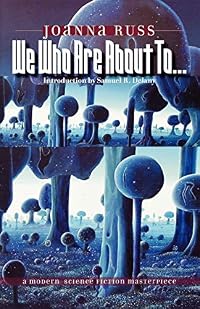



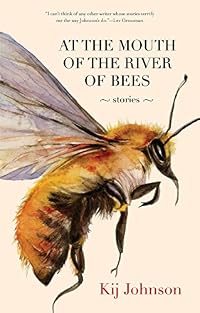






Member Recommendations

bunnygirl a classic of fictional travel writing

Member Reviews
This is a collection of short pieces, not even so much stories as observations on various places, assembled by Ursula Le Guin. The premise is that people can open up their minds to "changing planes"; the method for doing so is different on every plane, but in our plane, it has to be done while literally "changing planes"—you can only do it while waiting for a connecting flight in an airport! (Incidentally, the flap writer seems to think the stories are narrated by Sita Dulip, the Cincinnati(!) woman who invented the method, but that's clearly not the case; the narrator is a friend of hers.) The opening story lays out the basics of the method and is probably the funniest thing I've ever read by Le Guin, an enjoyable satire on the show more indignities of air travel.
The book reminds me of Italo Calvino's Invisible Cities, and that's surely on purpose; Le Guin had a fascination for that kind of fictional travelogue, as she translated a couple of them into English. The chapters are fairly different: some are full-fledged short stories about a trip taken by the narrator, some are explications of other societies and cultures, some are stories from those other planes. Most, of course, reflect back on our world, depicting other ways of being in the world and thus causing us to reflect on ours. My favorite along those lines was "Seasons of the Ansarac," about a plane where the inhabitants are migratory, and only engage in sex while in the north; in the south, they have no sex, no romance. It asks us to consider why our society is organized the way it is, and how it might be different; like many stories in the book, it also contains some brief moments of cultural imperialism. "The Royals of Hegn" is a good satire on our interest in royalty; it takes place on a plane where everyone is royalty except for a couple commoners that the royals are totally obsessed with. (Though like a couple stories in the book, it uses rape as a sort of tossed-off joke in a way that surprised me. I wonder if that would have been true if I had read it in 2003; I think our mores around this have shifted.) I also enjoyed the satire of "Great Joy," about a group of businessmen who remake another plane as a series of holiday-themed vacation sites: Christmas Island, Easter Island, Fourth (of July) Island, and so on.
Some of the sociological ones that were less satirical I found less interesting, but I did particularly like "The Building," a weird story about two societies on one plane, where the members of one continuously work on a building with no clear purpose or structure, and "The Fliers of Gy," about a plane where the occasional inhabitant is born who can fly—and is thus doomed some day to die when their wings spontaneously give out. Only one story did I not enjoy at all, "Woeful Tales from Mahigul," which relates a series of stories from one of the other planes, which I found difficult to find anything interesting in.
At her best, though, as always, Le Guin makes us imagine other worlds and reimagine ourselves. My favorite of these stories was "The Silence of the Asonu," which is about a plane where people gradually cease speaking as they grow older, and the visitors from other planes who desperately try to find meaning in the few words they do speak. show less
The book reminds me of Italo Calvino's Invisible Cities, and that's surely on purpose; Le Guin had a fascination for that kind of fictional travelogue, as she translated a couple of them into English. The chapters are fairly different: some are full-fledged short stories about a trip taken by the narrator, some are explications of other societies and cultures, some are stories from those other planes. Most, of course, reflect back on our world, depicting other ways of being in the world and thus causing us to reflect on ours. My favorite along those lines was "Seasons of the Ansarac," about a plane where the inhabitants are migratory, and only engage in sex while in the north; in the south, they have no sex, no romance. It asks us to consider why our society is organized the way it is, and how it might be different; like many stories in the book, it also contains some brief moments of cultural imperialism. "The Royals of Hegn" is a good satire on our interest in royalty; it takes place on a plane where everyone is royalty except for a couple commoners that the royals are totally obsessed with. (Though like a couple stories in the book, it uses rape as a sort of tossed-off joke in a way that surprised me. I wonder if that would have been true if I had read it in 2003; I think our mores around this have shifted.) I also enjoyed the satire of "Great Joy," about a group of businessmen who remake another plane as a series of holiday-themed vacation sites: Christmas Island, Easter Island, Fourth (of July) Island, and so on.
Some of the sociological ones that were less satirical I found less interesting, but I did particularly like "The Building," a weird story about two societies on one plane, where the members of one continuously work on a building with no clear purpose or structure, and "The Fliers of Gy," about a plane where the occasional inhabitant is born who can fly—and is thus doomed some day to die when their wings spontaneously give out. Only one story did I not enjoy at all, "Woeful Tales from Mahigul," which relates a series of stories from one of the other planes, which I found difficult to find anything interesting in.
At her best, though, as always, Le Guin makes us imagine other worlds and reimagine ourselves. My favorite of these stories was "The Silence of the Asonu," which is about a plane where people gradually cease speaking as they grow older, and the visitors from other planes who desperately try to find meaning in the few words they do speak. show less
Darn, this takes the unfortunate place as my least favorite Le Guin read so far, but it’s still well written and thought provoking--and I do like a good many of the stories inside. Definitely not her strongest work, though.
Content warnings:
- rape
- r ableist slur
- incest (in detail)
- ableist cr slur
Representation:
N/A
A woman named Sita Dulip discovers a way to transport herself from our earthly plane to nearly innumerable others--as long as she's waiting in an airport, is miserable, and is suffering from mild indigestion. Since then this type of travel been done by all sorts of people all around the globe, and in this collection one writer shares her experiences.
I think a big reason why I didn’t enjoy this--as an overall, cohesive show more work or looking at each story individually--as much as Le Guin’s other works is because firstly, these stories are less like actual short stories and more like ethnographic studies. Secondly, they lack a central heart that connects them in a more coherent way than the concept can alone (which would have worked better if there wasn’t a character “present” in every single one of them). I write “present” in quotation marks, because most of the time we’re just reading her travel diary. The stories contain fascinating notes on culture and world building creation, as well as the ever-present and relevant social commentary, but they will never be as engrossing as something that has an actual narrative.
Oh, but I love “The Nna Mmoy Language,” even if it is one of the above-type ethnographic stories. Le Guin is such an insightful and profound thinker. And overall an incredible inspiration.
But, of course, every collection of short stories is a grab bag, and this one is no exception. Unfortunately, most are just okay, with only a few standouts on either extreme. My least favorite is “The Fliers of Gy.” Not only does it use the cr*ppled slur many, many times, it attempts to use a disabled character to speak from a neuro-atypical pov to express superiority over neurotypicals/able-bodied people. It goes so far as to have the “disabled” people refuse to marry ableds. Many authors have done this “reverse oppression” kind of formula with the intent of getting their audience to become aware of a certain issue (like Malorie Blackman’s Noughts & Crosses and antiblack racism). As an autistic and cr*ppled person myself, this story left me more uncomfortable than anything, but I think I’d like to hear from another disabled and/or autistic person’s opinion on it before I go so far as to say it’s ableist or anything!
The last story is definitely strong, but it also shows a major issue I had with the collection as a cohesive unit. By the way this work introduces the narrator, it seems like it should have started off the collection. It’s the only story to actually introduce the narrator at all or give us any small idea of what she’s like outside of interviewing people--besides the book’s concept. She’s what’s holding the collection together, the traveler visiting and writing about each different plane. Most of the time, though, she’s not even present in the stories at all, which makes the collection’s theme less strong and more like a very polished, beautifully written book of notes about fictional cultures.
But! I was never bored, and I never counted down the pages. I even took my own notes. So it’s still a book worth reading, if you know why you’re reading. show less
Content warnings:
- rape
- r ableist slur
- incest (in detail)
- ableist cr slur
Representation:
N/A
A woman named Sita Dulip discovers a way to transport herself from our earthly plane to nearly innumerable others--as long as she's waiting in an airport, is miserable, and is suffering from mild indigestion. Since then this type of travel been done by all sorts of people all around the globe, and in this collection one writer shares her experiences.
I think a big reason why I didn’t enjoy this--as an overall, cohesive show more work or looking at each story individually--as much as Le Guin’s other works is because firstly, these stories are less like actual short stories and more like ethnographic studies. Secondly, they lack a central heart that connects them in a more coherent way than the concept can alone (which would have worked better if there wasn’t a character “present” in every single one of them). I write “present” in quotation marks, because most of the time we’re just reading her travel diary. The stories contain fascinating notes on culture and world building creation, as well as the ever-present and relevant social commentary, but they will never be as engrossing as something that has an actual narrative.
Oh, but I love “The Nna Mmoy Language,” even if it is one of the above-type ethnographic stories. Le Guin is such an insightful and profound thinker. And overall an incredible inspiration.
But, of course, every collection of short stories is a grab bag, and this one is no exception. Unfortunately, most are just okay, with only a few standouts on either extreme. My least favorite is “The Fliers of Gy.” Not only does it use the cr*ppled slur many, many times, it attempts to use a disabled character to speak from a neuro-atypical pov to express superiority over neurotypicals/able-bodied people. It goes so far as to have the “disabled” people refuse to marry ableds. Many authors have done this “reverse oppression” kind of formula with the intent of getting their audience to become aware of a certain issue (like Malorie Blackman’s Noughts & Crosses and antiblack racism). As an autistic and cr*ppled person myself, this story left me more uncomfortable than anything, but I think I’d like to hear from another disabled and/or autistic person’s opinion on it before I go so far as to say it’s ableist or anything!
The last story is definitely strong, but it also shows a major issue I had with the collection as a cohesive unit. By the way this work introduces the narrator, it seems like it should have started off the collection. It’s the only story to actually introduce the narrator at all or give us any small idea of what she’s like outside of interviewing people--besides the book’s concept. She’s what’s holding the collection together, the traveler visiting and writing about each different plane. Most of the time, though, she’s not even present in the stories at all, which makes the collection’s theme less strong and more like a very polished, beautifully written book of notes about fictional cultures.
But! I was never bored, and I never counted down the pages. I even took my own notes. So it’s still a book worth reading, if you know why you’re reading. show less
You have to sort of let it arrive, stepping gently in orange plastic shoes, muttering asides to the porpoises—you have to let overwrought metaphors tap you gently on the nose, and smile at them, and then stack the chips neatly on the side, and enjoy the sound of them clattering together. After all of that, there is genius in here that is not to be missed. Especially if you read it on a rainy day, while sitting in a quiet place.
Is there any greater master of speculative fiction than Ursula K. Le Guin? Here she uses the maddening experience of changing planes (read: sitting in airports post 9-11) as a perfect time to change planes (read: alternate levels of existence). Like an anthropologist in the field, she gives short reports on imagined societies that are so advanced as to be post-language and so primitive as to extend the Christmas shopping season year round and to stage battles with preordained outcomes. There are angel-like creatures with wings and devil-like creatures with hooves. Builders and birds, queens, placid people and immortal souls, and places like libraries and gardens and hotels and grog shops and streets that change direction as you traverse show more them--all are conjured in Le Guin's clear, unreliable, contradictory, inspirational, satirical voice. Whisper in my ear anytime at all, o great Le Guin! show less
Elegant, sharp, clever, insightful and deeply humane stories traversing different planes where people go while stuck at airports. Would that it were so. But then I'd have to go to airports.
****.5
Absolute masterclass in world-building. Le Guin manages to describe entire cultures in just a few pages in a tour de force of engaging and insightful writing. The premise is fantastic, and each anthropological vignette delves into different aspects of politics, history, economics, sex, art, language, etc. The balance of humorous travelogue, social critique, and academic vigor is finely tuned, reminiscent in spots of Gulliver's Travels, and of her other works.
The big problem is a significant dearth of plot, making it a chore to read the whole thing through. Best to read/listen to (the audiobook is fantastic) a chapter or two at a time.
Absolute masterclass in world-building. Le Guin manages to describe entire cultures in just a few pages in a tour de force of engaging and insightful writing. The premise is fantastic, and each anthropological vignette delves into different aspects of politics, history, economics, sex, art, language, etc. The balance of humorous travelogue, social critique, and academic vigor is finely tuned, reminiscent in spots of Gulliver's Travels, and of her other works.
The big problem is a significant dearth of plot, making it a chore to read the whole thing through. Best to read/listen to (the audiobook is fantastic) a chapter or two at a time.
This is a charming short story collection that is loosely tied together with a central premise of travelling between planes of existence. It worked well for me and it shows off the author's worldbuilding prowess although some of the different cultures were a little too similar in places. Overall, its a great book that doesn't overstay its welcome
Members
- Recently Added By
Published Reviews
ThingScore 75
Perhaps as a result, the book is marred in parts by signs of haste, bits of undigested spleen and even some uncharacteristic patches of cliché. ... Luckily, there is much in Changing Planes to make up for such lapses. Le Guin's intellectual fertility remains unmatched. Nearly every interplanary destination is a fully realized world, complete with language, nomenclature, landscape and social show more organization. And then, every so often, one comes across the ultimate seduction, a trademark Le Guin passage, perfect in every phrase and cadence, such as this description of the tenuous, cloudy plane of Zuehe ... show less
added by lquilter
Lists

Favorite Science Fiction by Women Authors
737 works; 196 members

Best 21st Century Books (So Far)
670 works; 86 members

Short Story Collections and Anthologies
260 works; 42 members

Speculative Fiction to Read
706 works; 31 members

Roads not travelled
11 works; 2 members

Books Read in 2025
4,090 works; 97 members
Author Information

488+ Works 166,651 Members
Ursula K. Le Guin was born Ursula Kroeber in Berkeley, California on October 21, 1929. She received a bachelor's degree from Radcliffe College in 1951 and a master's degree in romance literature of the Middle Ages and Renaissance from Columbia University in 1952. She won a Fulbright fellowship in 1953 to study in Paris, where she met and married show more Charles Le Guin. Her first science-fiction novel, Rocannon's World, was published in 1966. Her other books included the Earthsea series, The Left Hand of Darkness, The Dispossessed: An Ambiguous Utopia, The Lathe of Heaven, Four Ways to Forgiveness, and The Telling. A Wizard of Earthsea received an American Library Association Notable Book citation, a Horn Book Honor List citation, and the Lewis Carroll Shelf Award in 1979. She received the Medal for Distinguished Contribution to American Letters in 2014. She also received the Nebula Award and the Hugo Award. She also wrote books of poetry, short stories collections, collections of essays, children's books, a guide for writers, and volumes of translation including the Tao Te Ching of Lao Tzu and selected poems by Gabriela Mistral. She died on January 22, 2018 at the age of 88. (Bowker Author Biography) show less
Some Editions
Awards and Honors
Awards
Work Relationships
Is contained in
Contains
Common Knowledge
- Canonical title
- Changing Planes
- Original title
- Changing Planes; Changing planes : stories
- Original publication date
- 2003-07 (Collection) (Collection); 2003
- First words
- The range of the airplane--a few thousand miles, the other side of the world, coconut palms, glaciers, the poles, the Poles, a lama, a llama, etc.--is pitifully limited compared to the vast extent and variety of experience pr... (show all)ovided, to those who know how to use it, by the airport.
- Quotations
- We'd all like to see the moonstone towers of Nezihoa, as pictured in Roman's Planary Guide, the endless steppes of mist, the dim forests of the Sezu, the beautiful men and women of the Zuehe, with their slightly transl... (show all)ucent clothes and bodies, their pale grey eyes, their hair the color of tarnished silver, so fine the hand does not know when it touches it. ("Confusions of Uni", p.231)
- Last words
- (Click to show. Warning: May contain spoilers.)I know people die of heart attacks in very hot baths, but I took the risk.
- Blurbers
- Atwood, Margaret
- Original language
- English
Classifications
Statistics
- Members
- 1,983
- Popularity
- 10,577
- Reviews
- 59
- Rating
- (3.82)
- Languages
- 8 — Chinese, English, Finnish, French, Greek, Italian, Spanish, Turkish
- Media
- Paper, Audiobook, Ebook
- ISBNs
- 25
- ASINs
- 16