On This Page
Description
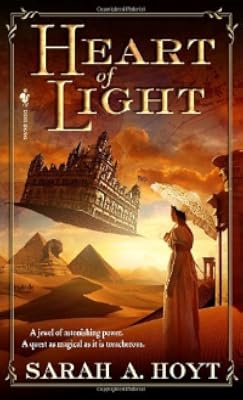
This enchanting debut novel speculates on the identity of William Shakespeare's Dark Lady, and presents a world of fairies and fantasy that is the setting for a tale about the love that set the young Shakespeare's heart ablaze--and aroused greatness within him.Tags
Recommendations














Member Reviews
Who was Shakespeare's Dark Lady, and where did he get some of his most memorable lines? Hoyt tells a tale of a power struggle amongst the elves, in which young Will Shakespeare (he's just nineteen at this point) and his family get sideswiped.
Quicksilver, a young elf who is mostly male but sometimes female, is the rightful heir to the throne of the elvish kingdom, but he's been displaced by his elder brother. This seems reasonable, when we first meet them, because while the brother's arrogant, Quicksilver is entirely self-absorbed, unable to see beyond his own wants and his own "rights," without the slightest regard for duty, responsibility, or the feelings of others. Any ra tional set of noblemen would have preferred the arrogant show more Sylvanus to the wholly irresponsible Quicksilver--especially since they don't know that Sylvanus murdered his parents, Oberon and Titania.
Sylvanus had taken a human wife, and the wife has now died, leaving an infant daughter in need of a wetnurse. To fill this need, the king has kidnapped another human woman with a young daughter--Nan Shakespeare, and baby Susanna. He also intends that Nan will be his new wife, a plan that doesn't please Nan. When Quicksilver meets the worried Will Shakespeare, looking for his missing wife and child, the young elf has the beginnings of a plan to get his revenge on his brother and regain his rightful place in the elvish scheme of things. Quicksilver needs someone else to strike the fatal blow against his brother, because whoever strikes that blow will die. Impetuous young Will, eager to be a man in the support and protection of his young family, will be easily persuaded, and not know enough to ask the right questions. It's a neat scheme, which will cost him nothing; the human will die, but human lives are so short anyway, that doesn't matter. Quicksilver presents himself to Shakespeare as the Lady Silver, and promises to help him regain his family in exchange for his help in avenging "her" parents' deaths.
And, of course, things immediately stop being neat. Quicksilver, despite his extreme self-involvement, does have a few real friends, especially the lovely Ariel and her brother Pyrite, and Ariel in particular attempts t o give him good advice. Will Shakespeare is a genuinely decent young man, who wants to help the distressed Lady Silver even while keeping focussed on trying to get his wife back from the elf king. The more Quicksilver has to pay attention to other people in order to get them to play their assigned parts in his scheme, the more he starts to see a reflection of himself in their eyes, and it isn't pretty.
I think it's fair to say that Quicksilver gets the kicking around he deserves in this story., while other characters do the growing up that they need to do. Interestingly, the only false notes I found were the intrusions of Shakespeare's lines into the mouths of the elves at critical moments. It's a clever touch, I suppose, but I think in this case it was a little too clever for an otherwise delightful book. show less
Quicksilver, a young elf who is mostly male but sometimes female, is the rightful heir to the throne of the elvish kingdom, but he's been displaced by his elder brother. This seems reasonable, when we first meet them, because while the brother's arrogant, Quicksilver is entirely self-absorbed, unable to see beyond his own wants and his own "rights," without the slightest regard for duty, responsibility, or the feelings of others. Any ra tional set of noblemen would have preferred the arrogant show more Sylvanus to the wholly irresponsible Quicksilver--especially since they don't know that Sylvanus murdered his parents, Oberon and Titania.
Sylvanus had taken a human wife, and the wife has now died, leaving an infant daughter in need of a wetnurse. To fill this need, the king has kidnapped another human woman with a young daughter--Nan Shakespeare, and baby Susanna. He also intends that Nan will be his new wife, a plan that doesn't please Nan. When Quicksilver meets the worried Will Shakespeare, looking for his missing wife and child, the young elf has the beginnings of a plan to get his revenge on his brother and regain his rightful place in the elvish scheme of things. Quicksilver needs someone else to strike the fatal blow against his brother, because whoever strikes that blow will die. Impetuous young Will, eager to be a man in the support and protection of his young family, will be easily persuaded, and not know enough to ask the right questions. It's a neat scheme, which will cost him nothing; the human will die, but human lives are so short anyway, that doesn't matter. Quicksilver presents himself to Shakespeare as the Lady Silver, and promises to help him regain his family in exchange for his help in avenging "her" parents' deaths.
And, of course, things immediately stop being neat. Quicksilver, despite his extreme self-involvement, does have a few real friends, especially the lovely Ariel and her brother Pyrite, and Ariel in particular attempts t o give him good advice. Will Shakespeare is a genuinely decent young man, who wants to help the distressed Lady Silver even while keeping focussed on trying to get his wife back from the elf king. The more Quicksilver has to pay attention to other people in order to get them to play their assigned parts in his scheme, the more he starts to see a reflection of himself in their eyes, and it isn't pretty.
I think it's fair to say that Quicksilver gets the kicking around he deserves in this story., while other characters do the growing up that they need to do. Interestingly, the only false notes I found were the intrusions of Shakespeare's lines into the mouths of the elves at critical moments. It's a clever touch, I suppose, but I think in this case it was a little too clever for an otherwise delightful book. show less
I couldn’t help but pick this book up: a Shakespeare historical fiction with fae? Yes, please. I figured it would be kind of silly, but at least entertaining, and it was that.
Shakespeare gets home to find that his wife and daughter have been captured; he finds out that the local fae king is responsible and works to get his family back. Overall, I thought this was a fun read. It’s entertaining and I love the idea of fae elements inspiring Shakespeare. Quicksilver is a fantastic character and I hope we get to see more of him in future books. I enjoyed seeing his character growth throughout the book. It was also fun to be introduced to the area where Shakespeare might have lived, and I always enjoy reading new takes on fae lore.
I did show more have a few issues with it, though. There were a few too many direct quotes from Shakespeare’s works to make me take it too seriously. Also, not much really happens. It’s a lot of internal growth and internal thought, which is fine, but when you have a battle between Shakespeare and the fae king, I want just a tiny bit more action. I’m also not a huge fan of how most of the female characters are portrayed. Maybe it’s just looking at them through Will’s or Quicksilver’s eyes, but they were not given complex roles at all. They were either very mean or simpering, which was unfortunate.
However, I still found this enjoyable and I’m interested to see what adventure awaits in the sequel. It’s a bit of a different take on both fantasy and historical fiction, so I love it for the uniqueness if nothing else.
Also posted on Purple People Readers. show less
Shakespeare gets home to find that his wife and daughter have been captured; he finds out that the local fae king is responsible and works to get his family back. Overall, I thought this was a fun read. It’s entertaining and I love the idea of fae elements inspiring Shakespeare. Quicksilver is a fantastic character and I hope we get to see more of him in future books. I enjoyed seeing his character growth throughout the book. It was also fun to be introduced to the area where Shakespeare might have lived, and I always enjoy reading new takes on fae lore.
I did show more have a few issues with it, though. There were a few too many direct quotes from Shakespeare’s works to make me take it too seriously. Also, not much really happens. It’s a lot of internal growth and internal thought, which is fine, but when you have a battle between Shakespeare and the fae king, I want just a tiny bit more action. I’m also not a huge fan of how most of the female characters are portrayed. Maybe it’s just looking at them through Will’s or Quicksilver’s eyes, but they were not given complex roles at all. They were either very mean or simpering, which was unfortunate.
However, I still found this enjoyable and I’m interested to see what adventure awaits in the sequel. It’s a bit of a different take on both fantasy and historical fiction, so I love it for the uniqueness if nothing else.
Also posted on Purple People Readers. show less
This historical fantasy combines two subjects that I absolutely love - Will Shakespeare and Fae. However, it was so slow that I just couldn't really get into it. The climax was good, but the rising action was a very gradual slope that did not make for exciting reading.
William Shakespeare, aged 19 or 20, a small-town schoolteacher, comes home one day to find his wife Nan and his infant daughter gone. A small log lies in baby Susannah's crib, giving him the only clue to their whereabouts: they've been snatched by the Fair Folk.
Quicksilver, heir of Oberon and Titania, comes home to find his his parents murdered and his throne usurped by his brother, Sylvanus. He enlists young Will in a scheme of revenge, with Nan as both bait and reward.
Alternating between happenings in the world of Faerie and events in Stratford-upon-Avon, we follow Will's desperate search for Nan, Quicksilver's desperate quest for vengeance, and Nan's indoctrination into the ways of the Fey.
It's possible I might have liked this book show more better had I read it in one sitting. It's a short thing, less than 300 pages, but even at that it felt too long. None of the chief characters, save Nan, engendered much sympathy. Quicksilver especially annoyed me -- arrogant, duplicitous, selfish, and self-righteous, he had no qualms about using and deceiving a "mere mortal" to his own ends, and I never quite bought the idea that he fell in love with Will. Will, even given some leeway for his youth, seemed much too wishy-washy and easily led. Only Nan seemed to have any strength of character.
Still, on the whole, it's not a bad story, a decent way to spend a few hours if you don't have anything better to read. show less
Quicksilver, heir of Oberon and Titania, comes home to find his his parents murdered and his throne usurped by his brother, Sylvanus. He enlists young Will in a scheme of revenge, with Nan as both bait and reward.
Alternating between happenings in the world of Faerie and events in Stratford-upon-Avon, we follow Will's desperate search for Nan, Quicksilver's desperate quest for vengeance, and Nan's indoctrination into the ways of the Fey.
It's possible I might have liked this book show more better had I read it in one sitting. It's a short thing, less than 300 pages, but even at that it felt too long. None of the chief characters, save Nan, engendered much sympathy. Quicksilver especially annoyed me -- arrogant, duplicitous, selfish, and self-righteous, he had no qualms about using and deceiving a "mere mortal" to his own ends, and I never quite bought the idea that he fell in love with Will. Will, even given some leeway for his youth, seemed much too wishy-washy and easily led. Only Nan seemed to have any strength of character.
Still, on the whole, it's not a bad story, a decent way to spend a few hours if you don't have anything better to read. show less
One day, a young William Shakespeare comes home from his teaching job to find his wife, Nan, and infant daughter, Susanna, missing. Stick figures have been left in their beds, which means that they haven't just left, they've been kidnapped by elves. Having no idea what to do or who to see, Will starts to think that his wife and child are gone forever.
Meantime, at a nearby elven castle invisible to humans, Titania and Oberon, the King and Queen, have been murdered. Their younger son, Sylvanus, has taken over the throne, leaving Quicksilver, the rightful heir, out of luck. He begins to plot Sylvanus' death, something that can only be done by a human, like young William. Nan has been kidnapped to become the Royal Nursemaid. The infant's show more mother died in childbirth, and highborn elven women are too frail and fragile to do real work. Part of the deal is that Nan marries Sylvanus, something she refuses to do because of her marriage vow to Will.
Defending Will from an attempt to permanently get him out of the way, Quicksilver is blamed for the death of another elf. Sylvanus permanently bars Quicksilver from the castle, making it invisible to him, and also cuts off Quicksilver from the elven "power source" (for lack of a better term).
Being able to change back and forth between male and female, Quicksilver, as a woman, seduces Will and broaches the idea of killing Sylvanus with what turns out to be a sort of magic knife. It is made of a sepcial metal that that causes any elven wound to be fatal. Sylvanus shows Nan a recording of their lovemaking, and her resolve to not marry Sylvanus begins to weaken. After all, Will has found someone more beautiful than she (Nan) is, and it's pretty hard to give up silks and soft beds.
This one is really good. For those who are into elves and fairies or William Shakespeare, it's especially worthwhile. It's a rather "quiet" story that's part of a series, but it's got good characters, it's easy to read, and it's just strange enough to be good. The reader won't go wrong with this. show less
Meantime, at a nearby elven castle invisible to humans, Titania and Oberon, the King and Queen, have been murdered. Their younger son, Sylvanus, has taken over the throne, leaving Quicksilver, the rightful heir, out of luck. He begins to plot Sylvanus' death, something that can only be done by a human, like young William. Nan has been kidnapped to become the Royal Nursemaid. The infant's show more mother died in childbirth, and highborn elven women are too frail and fragile to do real work. Part of the deal is that Nan marries Sylvanus, something she refuses to do because of her marriage vow to Will.
Defending Will from an attempt to permanently get him out of the way, Quicksilver is blamed for the death of another elf. Sylvanus permanently bars Quicksilver from the castle, making it invisible to him, and also cuts off Quicksilver from the elven "power source" (for lack of a better term).
Being able to change back and forth between male and female, Quicksilver, as a woman, seduces Will and broaches the idea of killing Sylvanus with what turns out to be a sort of magic knife. It is made of a sepcial metal that that causes any elven wound to be fatal. Sylvanus shows Nan a recording of their lovemaking, and her resolve to not marry Sylvanus begins to weaken. After all, Will has found someone more beautiful than she (Nan) is, and it's pretty hard to give up silks and soft beds.
This one is really good. For those who are into elves and fairies or William Shakespeare, it's especially worthwhile. It's a rather "quiet" story that's part of a series, but it's got good characters, it's easy to read, and it's just strange enough to be good. The reader won't go wrong with this. show less
Ann Hathaway has been kidnapped by the evil King of the Fairies, to be his nursemaid and consort. Will Shakespeare to the rescue!
I don’t play the ‘C’ card all that often but … I have cancer, and life is too short for this shit. I gave it three chapters, you can’t say fairer than that.
I don’t play the ‘C’ card all that often but … I have cancer, and life is too short for this shit. I gave it three chapters, you can’t say fairer than that.
Interesting. Shakespeare meets faeries!
Members
- Recently Added By
Lists

Faerie Mythology
87 works; 13 members


Recommended Faerie books
67 works; 22 members
Author Information

113+ Works 2,698 Members
Awards and Honors
Awards
Distinctions
Series

Work Relationships
Was inspired by
Common Knowledge
- People/Characters
- William Shakespeare; Anne Hathaway; Christopher Marlowe (Kit)
Classifications
Statistics
- Members
- 250
- Popularity
- 130,377
- Reviews
- 8
- Rating
- (3.43)
- Languages
- English
- Media
- Paper, Audiobook, Ebook
- ISBNs
- 7
- ASINs
- 2