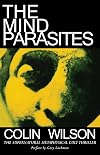
The Mind Parasites
by Colin Wilson
On This Page
Description
Wilson has blended H. P. Lovecraft's dark vision with his own revolutionary philosophy and unique narrative powers to produce a stunning, high-tension story of vaulting imagination. A professor makes a horrifying discovery while excavating a sinister archaeological site. For over 200 years, mind parasites have been lurking in the deepest layers of human consciousness, feeding on human life force and steadily gaining a foothold on the planet. Now they threaten humanity's extinction. They can show more be fought with one weapon only: the mind, pushed to--and beyond--its limits. Pushed so far that humans can read each other's thoughts, that the moon can be shifted from its orbit by thought alone. Pushed so that man can at last join battle with the loathsome parasites on equal terms. show lessTags
Recommendations







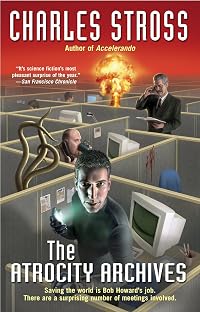


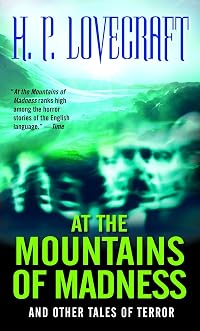


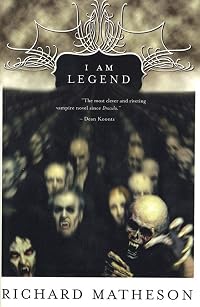


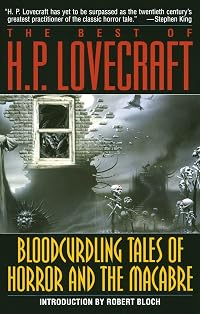





Member Recommendations
Momo by Michael Ende
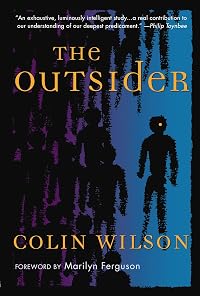
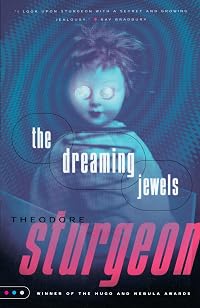
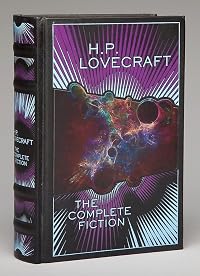
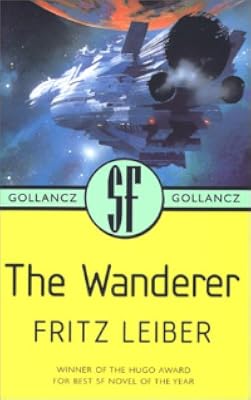
overtheseatoskye which finds similarly mystical explanations for modern ills, without the unsavory Ayn Rand-ish overtones.
Member Reviews
Starts out as a classic Lovecraftian novel and then takes a neck snapping turn into being an advanced schitzopost about the titular Mind Parasites, along with some psychic power unlocks that are bigger than anything found in a PKD novel. You get a real "what the hell am I reading" sensation that only gets worse toward the crescendo.
Wilson has blended H.P. Lovecraft's dark vision with his own revolutionary philosophy and unique narrative powers to produce a stunning, high-tension story of vaulting imagination. A professor makes a horrifying discovery while excavating a sinister archeological site. For over 200 years, mind parasites have been lurking in the deepest layers of human consciousness, feeding on human life force and steadily gaining a foothold on the planet. Now they threaten humanity's extinction.They can be fought with one weapon only: the mind, pushed to - and beyond - its limits. Pushed so far that humans can read each other's thoughts, that the moon can be shifted from its orbit by thought alone. Pushed so that man can at last join battle with the show more loathsome parasites on equal terms. show less
An archaeologist working on a desert site comes across some ruins buried so deeply that they have the potential to overturn understanding of all human history. Deeply invested in the dig, he makes the discovery that for more than 200 years vampire-like mind parasites have been lurking in human consciousness, sapping energy and the full potential of human creativity. With a firm foothold in the minds of the great men and women of the age, the parasites threaten to drag the Earth into catastrophic war and human extinction. Only the human mind itself can be used to overcome the threat.
I really wanted to like this but found it very challenging. This was partly because the ebook version I was using was horribly corrupted so every 10 pages or show more so it repeated whole sections, but mainly because I found it difficult to skate over the gaps in knowledge from when Wilson wrote this (late 1960s) to now. His lack of understanding of neuroscience and astronomy along with the technological advances made over 60 years meant that the book was badly dated. Still, the underpinning idea that the collective human psyche is flawed by drives that hold back progress and the full use of our potential was sound and that kept me reading. It's maybe one to try again another day. show less
I really wanted to like this but found it very challenging. This was partly because the ebook version I was using was horribly corrupted so every 10 pages or show more so it repeated whole sections, but mainly because I found it difficult to skate over the gaps in knowledge from when Wilson wrote this (late 1960s) to now. His lack of understanding of neuroscience and astronomy along with the technological advances made over 60 years meant that the book was badly dated. Still, the underpinning idea that the collective human psyche is flawed by drives that hold back progress and the full use of our potential was sound and that kept me reading. It's maybe one to try again another day. show less
I like how it started with the mystery and connections with Lovecraft and the ancient conspiracy
but i started to get bored in the second half with all the mind powers. I would have prefered it remaining about chasing the conspiracy of the mind parasites and chasing the threads of it
but i started to get bored in the second half with all the mind powers. I would have prefered it remaining about chasing the conspiracy of the mind parasites and chasing the threads of it
This was an excellent book examining the premise that since the 1800's/1900's there has been some form of energy being stifling mankind's creative energies through physical/material diversions. It goes through a lot of philosophy but the story, although fictional, it seems to make perfect sense. It's almost like some form of trans-dimensional entity sits on the tenuous thread that attaches our underlying joint consciousness. What I found very interesting was the way Wilson used the HP Lovecraft Cthulu mythology, I thought that was a really nice touch. The book was great, well written with excellent verbal imagery and interesting throughout.
I didn't come close to finishing this book, which is rare for me. It reads like the ramblings of a someone with a cliched case of paranoid schizophrenia who knows that SOMETHING IS GOING ON, and the smugness of his special knowledge/place in the world started to wear on me pretty quick. I wonder if Colin Wilson had an early version of the DSM in front of him while writing this.
My reaction to reading this book in 2005.
“Preface” -- Wilson recounts his history with Lovecraft. His first encounter was entirely provoked by the similar title of a Lovecraft collection The Outsider and Others with his own first work, the non-fiction The Outsider. Wilson initially found Lovecraft a sick, pessimistic recluse who weakly turned away from the world he was alienated from, taking vengeance on it in “gloomy fantasy”. (While he doesn’t come right out and say it, this seems to back up S. T. Joshi’s contention that Wilson found Lovecraft -- a pessimistic (he would have said indifferent) materialist a polar opposite in temperament and reacted accordingly.) Wilson proceeded to put forth this view in his The Strength to show more Dream “in which Lovecraft figures largely.” Later, he came to see Lovecraft as one of those rare, obsessed outsiders doomed by circumstances of economics, not to be able to give free reign to his powers unlike more famous outsiders like Shelley, Keats, and Byron. He speculates that a financially independent Lovecraft would have given free rein to his curiosity and produced less horror and more fantasy like “The Shadow Out of Time” or “The Call of Cthulhu”. A richer Lovecraft would have had more time and energy, probably would have produced more fiction, and, if it was well received by those he respected, he would have continued to write it. However, I don’t buy that he would not have had more physical horror elements like necrophilia (only present in a Lovecraft-Eddy collaboration) and cannibalism. Wilson compares Lovecraft to de Sade and notorious serial killers who concoct horrific fantasies because they are bored. I don’t think that’s the case with Lovecraft. He was interested in a lot of things and rarely seemed bored. He was genuinely interested in horror and the imaginative escape from the physical limits of reality that fantasy accorded. Wilson talks about some of the thematic issues he hopes to address in the novel, its inspirations (including the film Forbidden Planet), and immodestly calls a scene in the book a tour de force.
The Mind Parasites -- This is my first full exposure to Colin Wilson. Perhaps his more famous sociological and psychological works are worthwhile, but I was unimpressed with this rather dull novel. It fails as a Lovecraft pastiche. Granted, that probably was not its intent even though it uses the Lovecraftian devices of telling the story through documents and even a narrator to whom bad things might have happened as well as making explicit references to Lovecraft's deity Tsathogg.(The narrator disappears at the end though its not the result of foul play but, heavily implied, his transcendence to a new level.) . Other Lovecraftian elements are Lovecraft himself, Kadath, "The Call of Cthulhu", and, in connection with the ruins of Karatepe, Lovecraft's "The Shadow Out of Time". August Derleth also gets mentioned. But Wilson's style is turgid; he stops too long to bore us (almost as if proving he can do a story with lots of math -- though I didn't check the math) with details of telekinetically moving the moon into the sun; he takes too long to give us a plot of humans discovering their superhuman powers. (Wilson's friend A. E. van Vogt would have covered the same ground much more effectively.) This work is an attempt to use some of the ideas of Lovecraft in an extremely unLovecraftian way. Wilson, in his first exposure to Lovecraft, was turned off by his pessimism, his alleged hatred of life. Where Lovecraft's story talk of hideous life and the balm of ignorance and never mentions the possibility of human transcendence, much less the gaining of superhuman powers by pseudo-occult means, Wilson gives us a tale of a man initiating himself into Nietzchean a superhuman. (Wilson's narrator comes off as a bit of a creep with his ultimate disgust for the majority of mankind who he regards as stupidly unimaginative. He belongs to the elite .5% who can and will climb to godhood -- which is just what he does at story's end. His disgust for man is palpable towards the end though he doesn't contemplate wholescale murder of mankind's majority. Lovecraft may not have felt he had much in common with the bulk of people and also regarded them as unimaginative, but his letters do not reflect as much of a disgust with the bulk of man as we sense in Wilson's narrator.) And, of course, the whole plot is a violation of the materialism Lovecraft held. Wilson may try to wrap his plot up in pseudoscience (perhaps the reason for little bits on radioactive dating and astronomy) but his constant quoting of romantic writers and philosophers (as if a mere poetic quote can automatically be assumed to have the weight of science), the grab bag of occult ideas from Rhine's ESP experiments to Horbiger's history of Earth capturing successive moons, to mention (before Graham Hancock) of the alleged mysteries of Tiahuanaco to lunar influences on human behavior to Dunne's notions of time and the mind to mention of mescaline merely bored me with a representative example of late-1960s mystical ideas of human transcendence and the "powers of the mind" -- here, as in all mysticism, rationalized with analogy, the mind begin likened to an undiscovered country we must take possession of and drive out the squatting mind parasites. I wonder how original this all seemed even in 1967. Even the fostering of war by the mind parasites (an oh so 1960s notion of a United Africa on a military par with Europe and the US -- who oddly don't have NATO anymore.) reminded me, if my memory is correct, of Fortean (and Charles Fort is mentioned in this novel too) Eric Frank Russell's superior Sinister Barrier. (I have no idea if Wilson read that before writing this novel.) 1967 also seems a bit late to still be mentioning jungles on Venus. Now I think that Wilson meant some of this stuff tongue in cheek like the moon cataclysm stuff, but there is no humor here for a work whose Preface says is partly parodic and tongue in cheek. Certainly not a book I would recommend. show less
“Preface” -- Wilson recounts his history with Lovecraft. His first encounter was entirely provoked by the similar title of a Lovecraft collection The Outsider and Others with his own first work, the non-fiction The Outsider. Wilson initially found Lovecraft a sick, pessimistic recluse who weakly turned away from the world he was alienated from, taking vengeance on it in “gloomy fantasy”. (While he doesn’t come right out and say it, this seems to back up S. T. Joshi’s contention that Wilson found Lovecraft -- a pessimistic (he would have said indifferent) materialist a polar opposite in temperament and reacted accordingly.) Wilson proceeded to put forth this view in his The Strength to show more Dream “in which Lovecraft figures largely.” Later, he came to see Lovecraft as one of those rare, obsessed outsiders doomed by circumstances of economics, not to be able to give free reign to his powers unlike more famous outsiders like Shelley, Keats, and Byron. He speculates that a financially independent Lovecraft would have given free rein to his curiosity and produced less horror and more fantasy like “The Shadow Out of Time” or “The Call of Cthulhu”. A richer Lovecraft would have had more time and energy, probably would have produced more fiction, and, if it was well received by those he respected, he would have continued to write it. However, I don’t buy that he would not have had more physical horror elements like necrophilia (only present in a Lovecraft-Eddy collaboration) and cannibalism. Wilson compares Lovecraft to de Sade and notorious serial killers who concoct horrific fantasies because they are bored. I don’t think that’s the case with Lovecraft. He was interested in a lot of things and rarely seemed bored. He was genuinely interested in horror and the imaginative escape from the physical limits of reality that fantasy accorded. Wilson talks about some of the thematic issues he hopes to address in the novel, its inspirations (including the film Forbidden Planet), and immodestly calls a scene in the book a tour de force.
The Mind Parasites -- This is my first full exposure to Colin Wilson. Perhaps his more famous sociological and psychological works are worthwhile, but I was unimpressed with this rather dull novel. It fails as a Lovecraft pastiche. Granted, that probably was not its intent even though it uses the Lovecraftian devices of telling the story through documents and even a narrator to whom bad things might have happened as well as making explicit references to Lovecraft's deity Tsathogg.
Members
- Recently Added By
Published Reviews
The novel was published earlier in 1967 by Arthur Barker (London), but with a different introduction. It was then reprinted by Oneiric Press (Berkeley,CA) from 1972–75, initially by Michael Besher (aka Misha PanZobop; Paris, France) and Chellis Glendinning 1972, First Edition 1972. then by Besher and his brother Alexander Besher.
The story is about Professor Gilbert Austin's conflict with show more the Tsathogguans, invisible mind parasites that menace the most brilliant people on earth. show less
The story is about Professor Gilbert Austin's conflict with show more the Tsathogguans, invisible mind parasites that menace the most brilliant people on earth. show less
added by karnoefel
Het verslag van een ontdekkingstocht in de nog niet geëxploreerde gebieden van de menselijke geest. Plaats en tijd: een archeologische opgraving in Turkije zo rond het Jaar 2000. Professor Gilbert Austin is ervan overtuigd dat 'iets' de mens belet tot volledige ontplooiing van zijn geestelijke potentie te komen; krachten in de mens zelf aanwezig, onttrekken hun praktische macht aan de oerbron show more van de menselijke geest. Samen met een kleine groep ingewijden gaat de professor de strijd aan met de onzichtbare parasieten van de geest. show less
added by karnoefel
Lists

Weird and Weirder Fiction
270 works; 34 members

Jones & Newman: Best Horror Books Further Recommended Reading
577 works; 4 members
Author Information

223+ Works 13,615 Members
Colin Wilson was born on June 26, 1931 in Leicester, England. He attended a local technical school, where he did well in physics and chemistry, and left at 16 to work in a wool factory. Before becoming a writer, he worked as a laboratory assistant, tax clerk, laborer and hospital porter. His first book, The Outsider, was published in 1956 when he show more was 24 years old. During his lifetime, he wrote more than 100 works on a wide variety of subjects including philosophy, religion, occult and supernatural phenomenea, music, sex, crime and critical theory. His other works include Religion and the Rebel, The Age of Defeat, Ritual in the Dark, The Strength to Dream, Origins of the Sexual Impulse, The Occult, Alien Dawn, Dreaming to Some Purpose, The Angry Years: The Rise and Fall of the Angry Young Men, and Super Consciousness. His biographies include works on Bernard Shaw, David Lindsay, Herman Hesse, Wilhelm Reich, Jorge Luis Borges, Ken Russell, Rudolph Steiner, Aleister Crowley, and P. D. Ouspensky. Wilson died on December 5, 2013 at the age of 82. (Bowker Author Biography) Colin Wilson, author of such bestsellers as "The Outsider" & "The Occult", also writes on archaeology, astronomy, & cosmology. His recent book, "From Atlantis to the Sphinx", was a London "Times" bestseller. (Publisher Provided) show less
Some Editions
Series
Belongs to Publisher Series
Common Knowledge
- Canonical title
- The Mind Parasites
- Original title
- The Mind Parasites
- Original publication date
- 1967
- Epigraph
- I must, before I die, find some way to say the essential thing that is in me, that I have never said yet—a thing that is not love or hate or pity or scorn, but the very breath of life, fierce and coming from far away... (show all), bringing into human life the vastness and the fearful passionless force of non-human things . . .
Bertrand Russell
Letter to Constance Malleson, 1918.
quoted in
My Philosophical Development p. 261 - Dedication
- For August Derleth who suggested it
- First words
- We make no apology for devoting Volume III of the Cambridge History of the Nuclear Age to this new edition of that important document known as The Mind Parasites by Professor Gilbert Austin.
- Last words
- (Click to show. Warning: May contain spoilers.)And since it seems certain that no further evidence will ever be forthcoming, we have no alternative than to keep an open mind on the subject.
Classifications
Statistics
- Members
- 607
- Popularity
- 48,098
- Reviews
- 10
- Rating
- (3.60)
- Languages
- 8 — Dutch, English, French, German, Italian, Japanese, Lithuanian, Russian
- Media
- Paper, Audiobook, Ebook
- ISBNs
- 17
- ASINs
- 26