On This Page
Description
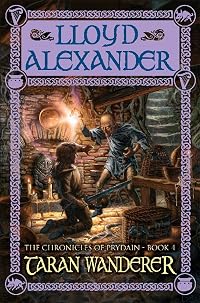
The fourth book of the Prydain cycle tells of the adventures that befell Taran when he went in search of his birthright and the truth about himself.Tags
Recommendations
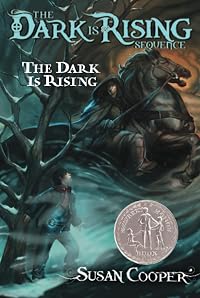
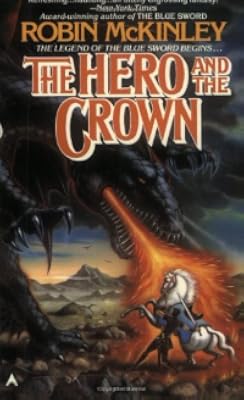
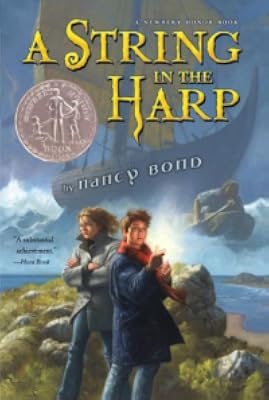
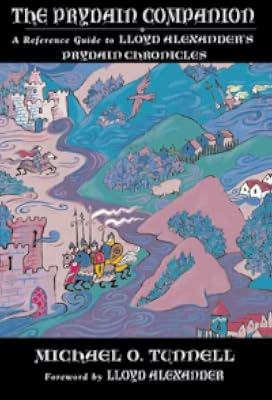

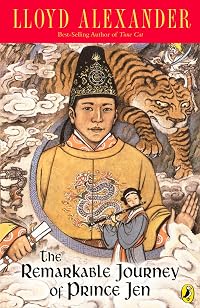
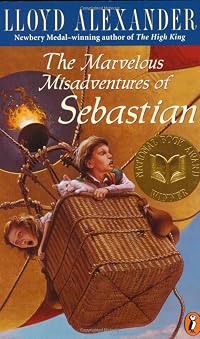

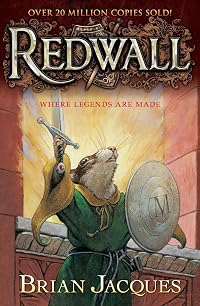
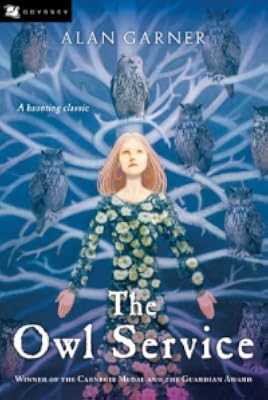
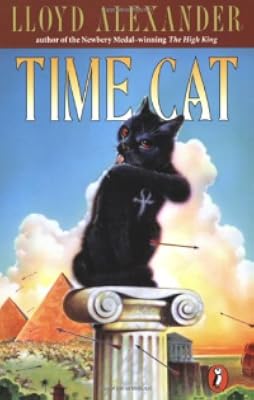
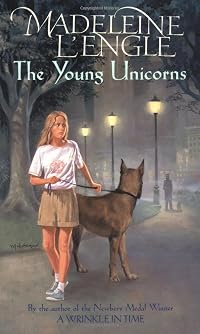
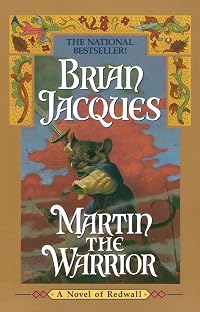
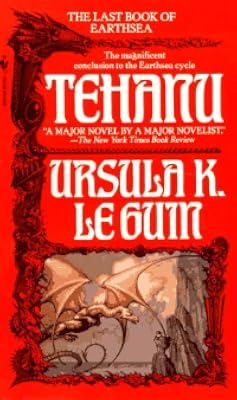

Member Recommendations

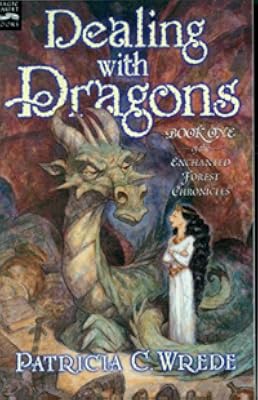
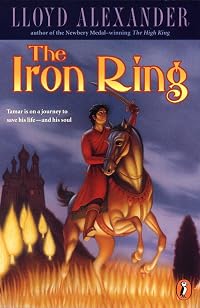
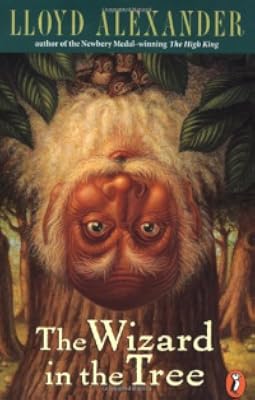
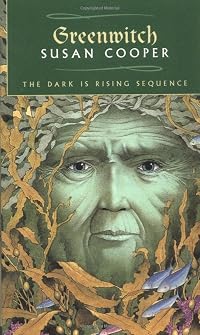
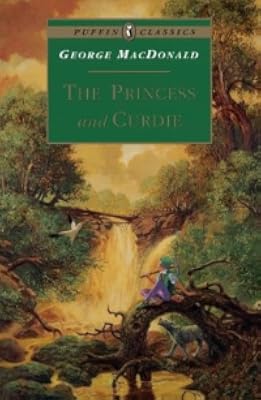
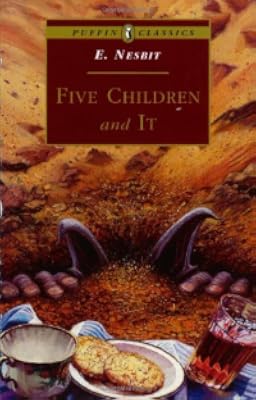
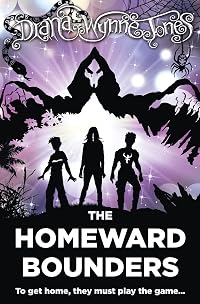
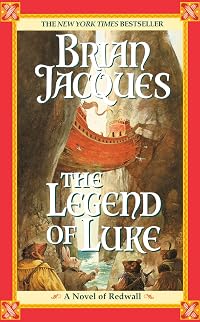
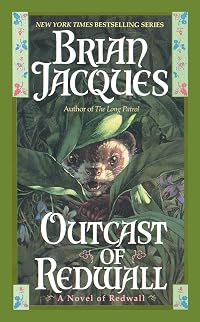
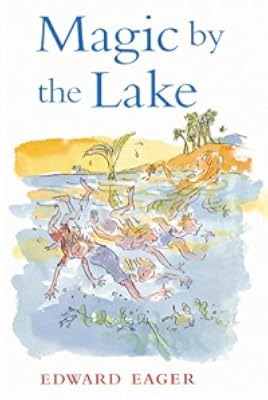
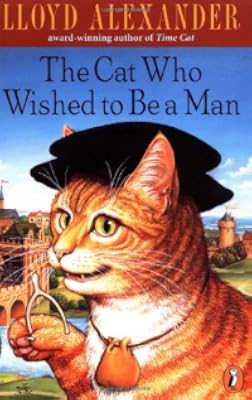
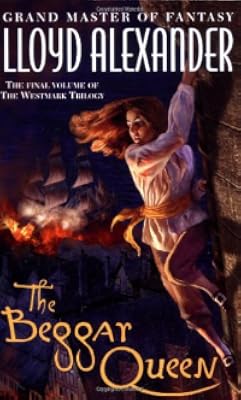
bertilak This is a stretch, but both books are about a young man repeatedly failing, yet learning and making friends while doing so.
Member Reviews
In which Taran must lose himself to find himself...
The most literary of the series, Taran Wanderer is probably my favourite thus far. Alexander seems to have got all his Tolkien ambition out of his system, and this book retreats back into a lovely, picaresque character study.
While several of the main characters return, many - including a couple of notable omissions - get a rest, which allows the format to focus on Taran's development. Here, he surpasses so many young orphan boys of fantasy lore, establishing a quest to genuinely find himself, whatever the answer may be. Along the way, he encounters numerous paragons of evil, of treachery, of cowardice, self-deceit, hypocrisy, and vapidity. At the same time, he meets people completely show more contented with their lot, and attempts to find his own place in the world.
There's not as much outright comedy in this book, although there are many moments of truth that earn a warm, knowing smile. And, along with the bard and the Fair Folk, Gurgi provides more than his fair share of joys. Is there any sight more beautiful in this series than that of Gurgi, perfectly cheerful, at the head of a small army of sheep? Adorable.
I'll be interested to see how Alexander ties things up in the final book, but certainly Taran Wanderer is an admirable continuation of the story. show less
The most literary of the series, Taran Wanderer is probably my favourite thus far. Alexander seems to have got all his Tolkien ambition out of his system, and this book retreats back into a lovely, picaresque character study.
While several of the main characters return, many - including a couple of notable omissions - get a rest, which allows the format to focus on Taran's development. Here, he surpasses so many young orphan boys of fantasy lore, establishing a quest to genuinely find himself, whatever the answer may be. Along the way, he encounters numerous paragons of evil, of treachery, of cowardice, self-deceit, hypocrisy, and vapidity. At the same time, he meets people completely show more contented with their lot, and attempts to find his own place in the world.
There's not as much outright comedy in this book, although there are many moments of truth that earn a warm, knowing smile. And, along with the bard and the Fair Folk, Gurgi provides more than his fair share of joys. Is there any sight more beautiful in this series than that of Gurgi, perfectly cheerful, at the head of a small army of sheep? Adorable.
I'll be interested to see how Alexander ties things up in the final book, but certainly Taran Wanderer is an admirable continuation of the story. show less
Probably my favorite of the Prydain series. It's a change from the earlier books in that Taran's quest is more personal than public and heroic, and the ending isn't quite as triumphant as his earlier missions. (Also, Eilonwy's absence means less humor than usual.) But I appreciated that he finally comes into his own and learns what is really important about identity (something I took longer to learn myself), and enjoyed his adventures among the Commot folk, especially Llonio the Lucky.
I remember this as always being my favourite of the Prydain books, the absence of Elionwy nothwithstanding. I now recognise the way in which it is one of the few fantasy novels to so consciously and carefully follow the patterns of certain types of heroic fairy tales, the young man on a quest of discovery and the various encounters on his journey that teach him the lessons or equip him with the magic or equipment or companions he needs to win, but presented as a modern piece of literature with fully realised settings and characters. It's a brilliant tale of growth and learning and the long and arduous acquisition of a tiny piece of wisdom that you knew all along, you just didn't know it. Heartbreaking and lovely, but also delightful and show more clever and warm, I can see why it appealed to me, a fantasy novel directly focused on growth and maturity, the sadness of leaving childhood and entering the grey complexities of adulthood echoed the bittersweet tones of The Lord Of Rings. show less
My memory was that this was my favorite book of the series, and the audiobook did not disappoint. Taran is at his best when he is separated from his more able companions; his weakness and inexperience made him easy for me to identify with as a kid, and as an adult I find it all the more appealing. While Gwydion and to a lesser extent Eilonwy are both Mary Sues, Taran comes more slowly to find his defining characteristic. Unusual in fantasy lit, Taran is repeatedly bested in battle. The part of the book I remembered most clearly was the time he spends among the common folk learning their trades. It is poignant and grounding as an introduction to a side of the world rarely seen in fantasy and especially in young adult fantasy. And yet it show more is just fantastic enough that the young man would show quick aptitude for such diverse tasks that in my memory it shines as the best part of the series; I was surprised on this re-read to find what a short chapter of the novel it was. show less
Taran Wanderer is the fourth Chronicle of Prydain and one of the most philosophical. Here Lloyd Alexander pits his Assistant Pig-Keeper Taran against his own worst enemy: himself. As he grows older, Taran begins to think of seriously aspiring to the Princess Eilonwy's hand — but how can he, when he knows nothing of his parentage or birth? Hoping to find a noble lineage that would make him an eligible suitor, Taran sets out with his friends to discover what he can of the world and his place in it.
It's a quest story, really, but the object of the quest is self-knowledge rather than a magical item. Of course, there is a magical item that comes in very handy in one of his adventures along the way (Morda's finger — to which Rowling's show more Horcruxes bear a very direct resemblance). But what Taran is really looking for is within. This sounds like a very 21st-century, self-esteemist, humanist perspective (no thanks!), but it isn't because ultimately Taran doesn't find his fulfillment within himself. He actually faces failure after failure in his own abilities as he travels the Free Commots and seeks to master the various trades and callings of its people.
When he does find Craddoc, a humble shepherd-farmer who claims to be his father, Taran must make the hardest choice of all. Throughout the story there's a clear-cut villain in Dorath the outlaw, but on reflection I think he is really just a personification of Taran's own worst side: what he could become.
After The Castle of Llyr, this was one of my less-loved of the Prydain stories, probably due to the lack of battles and enchantments and traditionally heroic deeds. But rereading as an adult has made me appreciate its depth a little more. The direction Alexander takes his story is so much more genuine and wholesome than the usual Disney tripe of "look within to find your destiny." Character is critical but it's outside ourselves we must look for lasting fulfillment. What a fantastic setup for the final and most moving Prydain Chronicle... recommended! show less
It's a quest story, really, but the object of the quest is self-knowledge rather than a magical item. Of course, there is a magical item that comes in very handy in one of his adventures along the way (Morda's finger — to which Rowling's show more Horcruxes bear a very direct resemblance). But what Taran is really looking for is within. This sounds like a very 21st-century, self-esteemist, humanist perspective (no thanks!), but it isn't because ultimately Taran doesn't find his fulfillment within himself. He actually faces failure after failure in his own abilities as he travels the Free Commots and seeks to master the various trades and callings of its people.
When he does find Craddoc, a humble shepherd-farmer who claims to be his father, Taran must make the hardest choice of all. Throughout the story there's a clear-cut villain in Dorath the outlaw, but on reflection I think he is really just a personification of Taran's own worst side: what he could become.
After The Castle of Llyr, this was one of my less-loved of the Prydain stories, probably due to the lack of battles and enchantments and traditionally heroic deeds. But rereading as an adult has made me appreciate its depth a little more. The direction Alexander takes his story is so much more genuine and wholesome than the usual Disney tripe of "look within to find your destiny." Character is critical but it's outside ourselves we must look for lasting fulfillment. What a fantastic setup for the final and most moving Prydain Chronicle... recommended! show less
Fascinating, the changes time brings! This was once my least favourite of the Prydain novels--a set of disjointed episodes with little direct bearing on the grand sweep of the series as a whole. The princess Eilonwy and Lord Gwydion don't even appear in this one, although Alexander finds ways to shoehorn in the other usuals, like Gurgi and Fflewddur Fflam. No, what's changed over time is perspective--and change and growth in perspective are what this book's all about, and so I guess it's no wonder kids (or me, as a kid) miss(ed) that. The parts of this that seemed uninspired before now seem canny--the duelling lords, Goryon-the-Valiant-who's-actually-a-coward and Gast-the-Openhanded-who's not that either, who were such hamhanded show more caricatures that the smart eight-year-old got all offended and fastidious--well, they're meant to be that, of course, with a wink, and the adult sees that Taran's coming of age consists in the reversal of relations between him and his fantasy land. Before he was a junior Quixote, frequently making an ass of himself because the real rules of fairyland were a carnivalized, tricksy version of the epic heroes-are-rewarded-in-this-best-of-all-possible-worlds that he thought he existed in. Not that Alexander's Neil Gaiman, a caster of masques--his Faerie is very much in the traditional mould. But Taran was the callow youth who saw it as more rulebound and reliable than it was, and when he tried to inhabit those forms by aping the epic hero, he was a cock. Now, he understands that things fall apart and rules are slippery, and that you navigate Faerie the exactly the same as you navigate the wonderworld of the Real (what ultimately makes all fairystories compelling)--with a dialogic sense and a reflexivity, with a trust in yourself that doesn't depend on being given "the answer" by the Mirror of Llunet, but on remaining at home within the evershifting boundaries and changes of the subject.
So Gast and Goryon are not characters, they're a scenario, a Rabelaisian or Swiftian play of overthetopness, pointed up by the episode where Taran and Gurgi are mistaken for giants--and Taran, smoothly stepping in with a narrative resolution cribbed from King Solomon, gives them the renormative "right answer" their absurd excess seeks. But then he moves on, and all the bits that seemed just a little bit off to the child--the understanding-seeker, the pattern-finder, the narrative-synthesizer--seem appropriately ironized now. I won't do the list; but that's how I found it. And so when Taran goes through another fairy-sequence at the end, learning in heavily symbolic, conventionalized ways that life is in turn a net for catching fish, a smithy for the tempering, a loom for the weaving, clay to be moulded--what he's really learning is that humanness precedes genre, milieu, even fictionality or nonfictionality. He's learning how to see things in shades of grey--that would be the simplest way to boil all this down (the most black-and-white way, ha ha) and that when you know who you are you can wake up and handle yourself tomorrow in a Prydainish cantrev or a call centre. I remember being young and thankfully fitting the Free Commots and Taran's defense thereof into a proto-socialist narrative that does that young kid credit, but it's not what was actually going on. It's showing not only that common folk, and all the craftsman shit they do that the kid was bored by but the adult reflects on with the tolerance of one who has worked, are more important than the Lord Gwydions, but that what you do doesn't depend on your provenance or the story in which you find yourself. There's no epic arc or reward for Taran as he toils beside Craddoc, the good man who's kept him there with lies. There's just knowing that he did his best--confidence in his own strength and a sense of how to engage with, cover for, and in time heal and ameliorate his weaknesses. There's just himself, the only achievable constant (and that only in a very complex sense) in strange, shifting, surprising human life. show less
So Gast and Goryon are not characters, they're a scenario, a Rabelaisian or Swiftian play of overthetopness, pointed up by the episode where Taran and Gurgi are mistaken for giants--and Taran, smoothly stepping in with a narrative resolution cribbed from King Solomon, gives them the renormative "right answer" their absurd excess seeks. But then he moves on, and all the bits that seemed just a little bit off to the child--the understanding-seeker, the pattern-finder, the narrative-synthesizer--seem appropriately ironized now. I won't do the list; but that's how I found it. And so when Taran goes through another fairy-sequence at the end, learning in heavily symbolic, conventionalized ways that life is in turn a net for catching fish, a smithy for the tempering, a loom for the weaving, clay to be moulded--what he's really learning is that humanness precedes genre, milieu, even fictionality or nonfictionality. He's learning how to see things in shades of grey--that would be the simplest way to boil all this down (the most black-and-white way, ha ha) and that when you know who you are you can wake up and handle yourself tomorrow in a Prydainish cantrev or a call centre. I remember being young and thankfully fitting the Free Commots and Taran's defense thereof into a proto-socialist narrative that does that young kid credit, but it's not what was actually going on. It's showing not only that common folk, and all the craftsman shit they do that the kid was bored by but the adult reflects on with the tolerance of one who has worked, are more important than the Lord Gwydions, but that what you do doesn't depend on your provenance or the story in which you find yourself. There's no epic arc or reward for Taran as he toils beside Craddoc, the good man who's kept him there with lies. There's just knowing that he did his best--confidence in his own strength and a sense of how to engage with, cover for, and in time heal and ameliorate his weaknesses. There's just himself, the only achievable constant (and that only in a very complex sense) in strange, shifting, surprising human life. show less
I loved the Black Cauldron for what it was - true adventure, bravery, camaraderie, excitement. This book, tho...
My first thought was that it’s a powerful coming of age story, but then again, Taran’s been coming of age since the Book of Three. He’s tested his mettle and found himself to be brave and daring and a true friend and hero. But while he rushed off to prove himself and also because he didn’t really have another choice in previous books, he has a clear mission and choice here. He’s looking for his parentage, to find out who he is; partly in hopes to deserve the love of a princess, but mostly because of the innate desire to just know himself.
As he searches he confronts his prejudices and shortcomings, falls victim to show more despair, and looks deep to consider leaving his quest for things that might be good, but aren’t the thing that he’s truly looking for.
The end isn’t particularly surprising, but it’s good. At least half of learning who you are is learning to accept what you can and can’t do or change. He comes home a wiser and richer boy for all his wandering. show less
My first thought was that it’s a powerful coming of age story, but then again, Taran’s been coming of age since the Book of Three. He’s tested his mettle and found himself to be brave and daring and a true friend and hero. But while he rushed off to prove himself and also because he didn’t really have another choice in previous books, he has a clear mission and choice here. He’s looking for his parentage, to find out who he is; partly in hopes to deserve the love of a princess, but mostly because of the innate desire to just know himself.
As he searches he confronts his prejudices and shortcomings, falls victim to show more despair, and looks deep to consider leaving his quest for things that might be good, but aren’t the thing that he’s truly looking for.
The end isn’t particularly surprising, but it’s good. At least half of learning who you are is learning to accept what you can and can’t do or change. He comes home a wiser and richer boy for all his wandering. show less
Members
- Recently Added By
Lists

Favorite Childhood Books
1,646 works; 518 members

Best Fantasy Novels
821 works; 359 members

Books I've Read More Than Once
602 works; 49 members
NPRs Ultimate Backseat Bookshelf: 100 Must-Reads for kids 9-14
222 works; 30 members
Mensa for Kids Excellence in Reading Award Program (Grades 4-6)
64 works; 9 members

Five books to read aloud to your kids
35 works; 17 members

Recommend the 20 best books you've read in the last five years
2,168 works; 602 members

LibraryThingers' 1001 Books You Must Read Before You Die
442 works; 30 members
1960s, Best books published therein
254 works; 22 members

Princess Tales
130 works; 4 members
Speculative Fiction to Read
706 works; 32 members

Books Read in 2022
5,166 works; 112 members

Favorite Kids Books (chapter, middle grade)
168 works; 4 members

Read in 1999
62 works; 1 member

Books Read in 2021
5,361 works; 114 members

Fiction with Men's Given Names in the Title
302 works; 11 members

Books Read in 2020
4,379 works; 124 members

Read in 2022
31 works; 1 member

50+ Books for a 6th Grader Who Loves to Read
53 works; 4 members

Books That Changed Me
158 works; 47 members
Ten Books That Have Stayed With Me
160 works; 30 members

1960s
281 works; 16 members

Top Five Books of 2015
811 works; 240 members

Books About Boys
175 works; 15 members

Books Read in 2015
3,299 works; 126 members
Honey For a Child's Heart
1,152 works; 25 members
Ambleside Books
459 works; 18 members

The Five Books That Represent Us
391 works; 148 members
Talk Discussions
Past Discussions
***Group Read: The Chronicles of Prydain (Spoiler) in 75 Books Challenge for 2010 (May 2010)
***Group Read: The Chronicles of Prydain by Lloyd Alexander in 75 Books Challenge for 2010 (May 2010)
Group Read: The Chronicles of Prydain by Lloyd Alexander in 75 Books Challenge for 2009 (December 2009)
Author Information

95+ Works 55,663 Members
Lloyd Alexander, January 30, 1924 - May 17, 2007 Born Lloyd Chudley Alexander on January 30, 1924, in Philadelphia, Pennsylvania to Allan Audley and Edna Chudley Alexander, Lloyd knew from a young age that he wanted to write. He was reading by the time he was 3, and though he did poorly in school, at the age of fifteen, he announced that he wanted show more to become a writer. At the age of 19 in 1942, Alexander dropped out of the West Chester State Teachers College in Pennsylvania after only one term. In 1943, he attended Lafayette College in Easton, PA, before dropping out again and joining the United States Army during World War II. Alexander served in the Intelligence Department, stationed in Wales, and then went on to Counter-Intelligence in Paris, where he was promoted to Staff Sergeant. When the war ended in '45, Alexander applied to the Sorbonne, but returned to the States in '46, now married. Alexander worked as an unpublished writer for seven years, accepting positions such as cartoonist, advertising copywriter, layout artist, and associate editor for a small magazine. Directly after the war, he had translated works for such artists as Jean Paul Sartre. In 1955, "And Let the Credit Go" was published, Alexander's first book which led to 10 years of writing for an adult audience. He wrote his first children's book in 1963, entitled "Time Cat," which led to a long career of writing for children and young adults. Alexander is best known for his "Prydain Chronicles" which consist of "The Book of Three" in 1964, "The Black Cauldron" in 1965 which was a Newbery Honor Book, as well as an animated motion picture by Disney which appeared in 1985, "The Castle of Llyr" in 1966, "Taran Wanderer" in 1967, a School Library Journal's Best Book of the Year and "The High King" which won the Newberry Award. Many of his other books have also received awards, such as "The Fortune Tellers," which was a Boston Globe Horn Book Award winner. In 1986, Alexander won the Regina Medal for Lifetime Achievement from the Catholic Library Association. His titles have been translated into many languages including, Dutch, Spanish, French, German, Hebrew, Italian, Japanese, Norwegian, Serbo-Croation and Swedish. He died on May 17, 2007. (Bowker Author Biography) show less

Lloyd Alexander has a Legacy Library. Legacy libraries are the personal libraries of famous readers, entered by LibraryThing members from the Legacy Libraries group.
Some Editions
Awards and Honors
Awards
Series

Work Relationships
Is contained in
Common Knowledge
- Canonical title
- Taran Wanderer
- Original title
- Taran Wanderer
- Alternate titles*
- Taran und der Zauberspiegel
- Original publication date
- 1967; 1967-08-24
- People/Characters
- Taran; Gurgi; Fflewddur Fflam; Doli; Coll [in Lloyd Alexander's Chronicles of Prydain]; Hen Wen (show all 26); Dallben; Orddu; Orwen; Orgoch; Lord Goryon; Aeddan; Alarca; Lord Gast; King Smoit; Kaw; Morda; Dorath; Craddoc; Llonio; Hevydd; Dwyvach; Annlaw; Drudwas; Llyan; Llassar
- Important places
- Prydain; Caer Dallben; Marshes of Morva; Llawgadarn Mountains; Caer Cadarn; Free Commots (show all 7); Cantrev Cadiffor
- Dedication
- For Wayfarers still journeying, for Wanderers at rest
- First words
- It was full springtime, with promise of the richest summer the farm had ever seen. The orchard was white with fragrant blossoms; the newly planted fields lay light as green mist. Yet the sights and scents gave Taran little jo... (show all)y. To him, Cael Dallben was empty. Though he helped Coll with the weeding and cultivating, and tended the white pig, Hen Wen, with as much care as ever, he went about his tasks distractedly. One thought alone was in his mind. [from chapter 1, "Who Am I?"]
Author's Note: This fourth chronicle of Prydain begins as a gallant, high-hearted quest, which soon becomes more intense and perhaps more essentially heroic than the preceding adventures. - Quotations
- "Life's a matter of luck. Trust it, and a man's bound to find what he seeks, one day or the next."
"If I fret over tomorrow, I'll have little joy today."
"Life's a forge, say I! Face the pounding; don't fear the proving; and you'll stand well against any hammer and anvil!"
"Life a forge?...A loom, rather, where lives and days intertwine; and wise is he who can learn the pattern." - Last words
- (Click to show. Warning: May contain spoilers.)From the hills a wind had risen, driving the scattered leaves before it, bearing homeward to Caer Dallben. Taran followed it.
- Original language
- English
- Disambiguation notice*
- Originaltitel: Taran Wanderer
*Some information comes from Common Knowledge in other languages. Click "Edit" for more information.
Classifications
- Genres
- Fiction and Literature, Fantasy, Kids
- DDC/MDS
- 813.54 — Literature & rhetoric American literature in English American fiction in English 1900-1999 1945-1999
- LCC
- PZ7 .A3774 .T — Language and Literature Fiction and juvenile belles lettres Fiction and juvenile belles lettres Juvenile belles lettres
- BISAC
Statistics
- Members
- 5,655
- Popularity
- 2,332
- Reviews
- 66
- Rating
- (4.07)
- Languages
- 13 — Czech, Danish, Dutch, English, Estonian, Finnish, French, German, Hebrew, Italian, Spanish, Swedish, Portuguese (Portugal)
- Media
- Paper, Audiobook, Ebook
- ISBNs
- 59
- ASINs
- 32