On This Page
Description
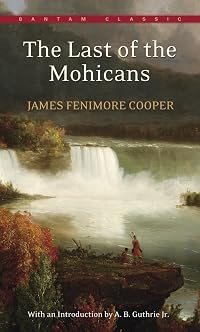
The Last of the Mohicans is the second book in Cooper's Leatherstocking Tales pentalogy, and remains his best-known work. It is a historical novel set in the French and Indian war in New York, and centers around the massacre of surrendered Anglo-American troops. The two daughters of the British commander are kidnapped, but rescued by the last two Mohicans. The title comes from a quote by Tamanend: "I have lived to see the last warrior of the wise race of the Mohicans"..
Tags
Recommendations

















Member Recommendations
anonymous user Set in a different part of the country a century later with similar themes.
Morryman84 Similar adventures, though Louis L'Amour's writing and Plot was easier for me to follow
Member Reviews
--May contain minor spoilers--
This novel held a few charms, but none were sustained throughout. Although the plot is one of adventure and suspense, to the modern reader the prose and dialogue often come off as goofy at best. The multiple epithets for each character, for example, imply a sense of grandeur to the pageant that simply wasn't there. The sentence structure, the narrative voice, the epigraphs that preface each chapter and the dialogue all shared in this effect. I was initially entertained by Cooper's eagerness to please, but eventually groans and eye-rolls began to take their toll.
The book is at its best when we're getting to know the characters. I became fond of Major Heyward, and much preferred his character to that of show more Hawkeye the scout. Hawkeye is likely meant to be portrayed as an amazing hero, but he starts out as a completely insufferable know-it-all. (Hawkeye becomes much more tolerable in the final third of the book, but by that point the book has other problems...) I enjoyed the banter with Gamut, the descriptions of the Munro family's love for and loyalty to one another, and the portrayal of Uncas's and Chingachgook's relationship. Magua makes a worthy foe.
Memorably, whenever a character is engaged in a debate or is called upon to make a stirring speech, Cooper goes to great lengths to describe the rhetorical strategy, cunning, and eloquence that must be employed for the occasion. One is asked to hear the listeners of these speeches oooh and aaah as Cooper praises the words of his noble and ignoble characters. These speeches on the page, however, are never all that different from how he has any given character speak the most casual dialogue anyway. It's goofball stuff.
Cooper asks for a heavy suspension of disbelief when it comes to the amazing prowess of Hawkeye, but even this does not prepare one for later chapters featuring characters infiltrating enemy villages by wearing... a bear costume. (There was also a brief moment of a character blending in with some beavers.) There are truly impressive moments in the book (the massacre outside the fort, for example) but having recently finished it I just can't take it seriously--I'm hung up on the complete cheese of the hero crawling around disguised as a gruff but domesticated bear and getting away with it. Only the experienced eye of Uncas can notice the subtle differences between this farce and the real thing!
I read this book out of literary/historical interest, and I'm glad I read it. I enjoyed it at times, although maybe not for the reasons Cooper may have intended. My curiosity is now satisfied, and I will not be looking to read more Cooper. show less
This novel held a few charms, but none were sustained throughout. Although the plot is one of adventure and suspense, to the modern reader the prose and dialogue often come off as goofy at best. The multiple epithets for each character, for example, imply a sense of grandeur to the pageant that simply wasn't there. The sentence structure, the narrative voice, the epigraphs that preface each chapter and the dialogue all shared in this effect. I was initially entertained by Cooper's eagerness to please, but eventually groans and eye-rolls began to take their toll.
The book is at its best when we're getting to know the characters. I became fond of Major Heyward, and much preferred his character to that of show more Hawkeye the scout. Hawkeye is likely meant to be portrayed as an amazing hero, but he starts out as a completely insufferable know-it-all. (Hawkeye becomes much more tolerable in the final third of the book, but by that point the book has other problems...) I enjoyed the banter with Gamut, the descriptions of the Munro family's love for and loyalty to one another, and the portrayal of Uncas's and Chingachgook's relationship. Magua makes a worthy foe.
Memorably, whenever a character is engaged in a debate or is called upon to make a stirring speech, Cooper goes to great lengths to describe the rhetorical strategy, cunning, and eloquence that must be employed for the occasion. One is asked to hear the listeners of these speeches oooh and aaah as Cooper praises the words of his noble and ignoble characters. These speeches on the page, however, are never all that different from how he has any given character speak the most casual dialogue anyway. It's goofball stuff.
Cooper asks for a heavy suspension of disbelief when it comes to the amazing prowess of Hawkeye, but even this does not prepare one for later chapters featuring characters infiltrating enemy villages by wearing... a bear costume. (There was also a brief moment of a character blending in with some beavers.) There are truly impressive moments in the book (the massacre outside the fort, for example) but having recently finished it I just can't take it seriously--I'm hung up on the complete cheese of the hero crawling around disguised as a gruff but domesticated bear and getting away with it. Only the experienced eye of Uncas can notice the subtle differences between this farce and the real thing!
I read this book out of literary/historical interest, and I'm glad I read it. I enjoyed it at times, although maybe not for the reasons Cooper may have intended. My curiosity is now satisfied, and I will not be looking to read more Cooper. show less
A classic for good reasons. A travel/adventure tale, set in the 1700's against the backdrop of the French and Indian War (7 Years War) in northern New York State. I thought this was an excellent portrayal of the times and a favorable portrayal of the native Americans, which was not always the case at the time. Well written, it conveys the feel of the forest and the emotions of those involved very well.
By and large, I found Cooper's The Last of the Mohicans a rather enjoyable read and even frequently humorous, though I'm reasonably sure that humor was not in the author's mind as he wrote in early 19th century America. This needs explaining, but first let's consider why I read the book in the first place. After all, it was first published in 1826, 197 years ago (and counting). The age of the novel is precisely why I determined to read it. After all, to quote history.com, it is considered to be “one of the earliest distinctive American novels.” To expand on this, britannica.com notes that “by the first decades of the 19th century, a truly American literature began to emerge. Though still derived from British literary tradition, show more the short stories and novels published from 1800 through the 1820s began to depict American society and explore the American landscape in an unprecedented manner.” Britannica goes on to cite Cooper as a defining example of a novelist of this period. It seemed obvious to me that, if one wishes to profess any knowledge of American literature, one needs to be at least familiar with Cooper's works, yet he was studied neither in my university course on “The Novel” nor in my course on “American Literature,” so I decided to rectify the omission.
Now to explain my introductory statement about humor. Language, being a social and cultural creation, is characterized by continuous evolution with neologisms popping up here and there, older words vanishing into the mists of forgetfulness, words remaining but with new uses and connotations, new styles of expression, and so on. In addition to language, societal assumptions, biases, and values are in a constant state of flux as well, and that which is considered a positive trait today may wear a negative face tomorrow, and that which is felt to be an objective truth now may well be seen as a prejudice born of ignorance in the future. Reading books such as The Last of the Mohicans opens a window through which one can view societal mores and the language by which they are described as they existed, in this case, nearly two centuries ago. Such an experience should thoroughly disabuse one of the erroneous belief that society is in any way permanent or stagnant and may also give the reader a chuckle or two at the changes that have occurred.
Cooper's writing style, while perfectly professional and polished for a literate man of his age, frequently appears stilted and grandiloquent when contrasted with 20th and 21st century styles. The apparent formality of the language contrasts so abruptly with the forested frontier environment and the struggles of the characters that I found it a source of continual amusement.
Similarly, many of the traits with which Cooper has imbued his characters have undergone significant social reappraisal in the most recent 200 years. For example, the two significant female characters in the novel receive the most admirable praise for their decorum and “alabaster” features. Portrayed as having achieved the very best features representative of their sex, they are in continual need of the strong care and protection of an honorable male member of the species, and, as their aging father laments, are surely unable to endure the privations of being captives in a wild forest. Far from appearing such fine examples of proper womanhood today, they would now be best described as “shrinking violets” and likely admonished to “stand on their own two feet.” It is amusing to compare the traits considered admirable in Cooper's time with such traits today.
In a similar vein, Cooper's depiction of his Native American characters highlights stereotypes beautifully. The character of Uncas, obviously the inspiration for the book's title, is the “noble savage” personified. All of the Natives, of course, display powers of concealment, of hearing, of discovery, and of every other facet of woodlore necessary for survival in the wilderness that far surpass those available to white men thanks to their intrinsic natures. True, as a result of his experience in the forest, Hawkeye exhibits similar traits, but every time the scout alludes to them he indicates how unusual it is for him who has no “cross” (i.e., mixed-race blood) to have such skills. He is very much the exception, not the rule, to be a white man with such abilities. As with our comely ladies, a comparison of yesterday's stereotypes with today's slightly more enlightened knowledge can evoke a few chuckles from the reader.
The very plot of the novel even has a humorous aspect. Really now, why are two very ladylike daughters of an elderly post commandant even being escorted through the trackless forest inhabited by hostile Indians in the midst of the French and Indian War far from the frontiers of civilization? That beggars belief. I am almost convinced that Cooper wrote this entertaining novel with his tongue firmly embedded in his cheek, and for that I rate him an even more entertaining author than I originally thought. Whether Cooper was intending to be deadly serious in his depictions and narratives or whether he was adroitly poking a bit of fun at his credulous 19th century readers, The Last of the Mohicans, as we read it in the 21st century, is an entertaining tale with more than a little levity in it—even if we modern readers have contributed that levity. True, the ending is a bit sad (not every character survives), but it's also an early and surprisingly progressive look (at least at the spiritual level) at what American society would later term amalgamation and, later still, miscegenation. Might Cooper be launching a very small and partially disguised criticism at one of society's prejudices?
Whether or not a reader will enjoy this novel depends greatly upon his or her reasons for picking it up as well as on his or her expectations. In its writing, it is quite different from a modern 21st century adventure novel. If one does choose to read it, enjoy the fictional and highly romanticized adventure, but keep a corner of the mind open to—just possibly—a touch of intentional humor and perhaps even a bit of social commentary hidden among the narratives. We can always debate later as to whether the author intended these things or whether we readers are injecting them ourselves. show less
Now to explain my introductory statement about humor. Language, being a social and cultural creation, is characterized by continuous evolution with neologisms popping up here and there, older words vanishing into the mists of forgetfulness, words remaining but with new uses and connotations, new styles of expression, and so on. In addition to language, societal assumptions, biases, and values are in a constant state of flux as well, and that which is considered a positive trait today may wear a negative face tomorrow, and that which is felt to be an objective truth now may well be seen as a prejudice born of ignorance in the future. Reading books such as The Last of the Mohicans opens a window through which one can view societal mores and the language by which they are described as they existed, in this case, nearly two centuries ago. Such an experience should thoroughly disabuse one of the erroneous belief that society is in any way permanent or stagnant and may also give the reader a chuckle or two at the changes that have occurred.
Cooper's writing style, while perfectly professional and polished for a literate man of his age, frequently appears stilted and grandiloquent when contrasted with 20th and 21st century styles. The apparent formality of the language contrasts so abruptly with the forested frontier environment and the struggles of the characters that I found it a source of continual amusement.
Similarly, many of the traits with which Cooper has imbued his characters have undergone significant social reappraisal in the most recent 200 years. For example, the two significant female characters in the novel receive the most admirable praise for their decorum and “alabaster” features. Portrayed as having achieved the very best features representative of their sex, they are in continual need of the strong care and protection of an honorable male member of the species, and, as their aging father laments, are surely unable to endure the privations of being captives in a wild forest. Far from appearing such fine examples of proper womanhood today, they would now be best described as “shrinking violets” and likely admonished to “stand on their own two feet.” It is amusing to compare the traits considered admirable in Cooper's time with such traits today.
In a similar vein, Cooper's depiction of his Native American characters highlights stereotypes beautifully. The character of Uncas, obviously the inspiration for the book's title, is the “noble savage” personified. All of the Natives, of course, display powers of concealment, of hearing, of discovery, and of every other facet of woodlore necessary for survival in the wilderness that far surpass those available to white men thanks to their intrinsic natures. True, as a result of his experience in the forest, Hawkeye exhibits similar traits, but every time the scout alludes to them he indicates how unusual it is for him who has no “cross” (i.e., mixed-race blood) to have such skills. He is very much the exception, not the rule, to be a white man with such abilities. As with our comely ladies, a comparison of yesterday's stereotypes with today's slightly more enlightened knowledge can evoke a few chuckles from the reader.
The very plot of the novel even has a humorous aspect. Really now, why are two very ladylike daughters of an elderly post commandant even being escorted through the trackless forest inhabited by hostile Indians in the midst of the French and Indian War far from the frontiers of civilization? That beggars belief. I am almost convinced that Cooper wrote this entertaining novel with his tongue firmly embedded in his cheek, and for that I rate him an even more entertaining author than I originally thought. Whether Cooper was intending to be deadly serious in his depictions and narratives or whether he was adroitly poking a bit of fun at his credulous 19th century readers, The Last of the Mohicans, as we read it in the 21st century, is an entertaining tale with more than a little levity in it—even if we modern readers have contributed that levity. True, the ending is a bit sad (not every character survives), but it's also an early and surprisingly progressive look (at least at the spiritual level) at what American society would later term amalgamation and, later still, miscegenation. Might Cooper be launching a very small and partially disguised criticism at one of society's prejudices?
Whether or not a reader will enjoy this novel depends greatly upon his or her reasons for picking it up as well as on his or her expectations. In its writing, it is quite different from a modern 21st century adventure novel. If one does choose to read it, enjoy the fictional and highly romanticized adventure, but keep a corner of the mind open to—just possibly—a touch of intentional humor and perhaps even a bit of social commentary hidden among the narratives. We can always debate later as to whether the author intended these things or whether we readers are injecting them ourselves. show less
No, I didn't care for this one much, I'm afraid. A main character who is white but lives among the Indians and so embodies the best of both worlds (the forest prowess of the natives but the moral and intellectual superiority of the white man), natives who are inherently lesser, but with two 'noble' exceptions, white soldiers who are brave but dumb and weak compared to that amazing main character, and two damosels in constant need of rescuing - blech. I will say that the ending was unexpectedly un-pat, which was a bit of a nice surprise, but not enough to save this one.
Introduction and Notes by David Blair. University of Kent at Canterbury.
It is 1757. Across north-eastern America the armies of Britain and France struggle for ascendancy. Their conflict, however, overlays older struggles between nations of native Americans for possession of the same lands and between the native peoples and white colonisers. Through these layers of conflict Cooper threads a thrilling narrative, in which Cora and Alice Munro, daughters of a British commander on the front line of the colonial war, attempt to join their father. Thwarted by Magua, the sinister 'Indian runner', they find help in the person of Hawkeye, the white woodsman, and his companions, the Mohican Chingachgook and Uncas, his son, the last of his show more tribe.
Cooper's novel is full of vivid incident- pursuits through wild terrain, skirmishes, treachery and brutality- but reflects also on the interaction between the colonists and the native peoples. Through the character of Hawkeye, Cooper raises lasting questions about the practises of the American frontier and the eclipse of the indigenous cultures.
And, a few thoughts of my own.
Natives were brutal in their battles. The conflict is not white vs. native, but native vs. native, vs. French and British global ambitions. Magua is the antagonist, and the half-white, half-Mohican Hawkeye is the protagonist. Cooper authentically and appreciatively portrays natives, which subverts the radical view that whites are supremacists.
James Fenimore Cooper (1789-1851) stands as one of America's first major novelists and a complex chronicler of the nation's westward expansion. Best known for his Leatherstocking Tales, including "The Last of the Mohicans," Cooper captured both the romance and tragedy of America's frontier experience during the height of Manifest Destiny.
Writing during the era when Americans believed it was their divine mission to expand across the continent, Cooper displayed a uniquely nuanced perspective on this national ideology. His novels celebrated the rugged individualism and natural nobility he saw in frontier life, portraying the American wilderness as a source of moral purification and democratic virtue. Yet Cooper also served as one of the earliest critics of unchecked expansion, particularly in his sympathetic portrayals of Native Americans facing displacement and cultural destruction.
Through characters like Natty Bumppo (Hawkeye), Cooper embodied the American pioneer spirit while simultaneously mourning what was lost in the process. His work revealed the inherent tensions in Manifest Destiny—the simultaneous celebration of progress and recognition of its human costs. Cooper understood that America's westward march brought both opportunity and tragedy, civilization and destruction.
This duality made Cooper both a product of his expansionist age and a prophet warning of its consequences. His literary legacy lies not just in establishing American literature as distinct from European traditions, but in providing one of the first artistic examinations of the moral complexities underlying America's continental ambitions. Cooper saw Manifest Destiny as both America's greatest opportunity and its most troubling moral challenge until Americans struggled with the rising Democrat Party's advocacy of slavery. show less
It is 1757. Across north-eastern America the armies of Britain and France struggle for ascendancy. Their conflict, however, overlays older struggles between nations of native Americans for possession of the same lands and between the native peoples and white colonisers. Through these layers of conflict Cooper threads a thrilling narrative, in which Cora and Alice Munro, daughters of a British commander on the front line of the colonial war, attempt to join their father. Thwarted by Magua, the sinister 'Indian runner', they find help in the person of Hawkeye, the white woodsman, and his companions, the Mohican Chingachgook and Uncas, his son, the last of his show more tribe.
Cooper's novel is full of vivid incident- pursuits through wild terrain, skirmishes, treachery and brutality- but reflects also on the interaction between the colonists and the native peoples. Through the character of Hawkeye, Cooper raises lasting questions about the practises of the American frontier and the eclipse of the indigenous cultures.
And, a few thoughts of my own.
Natives were brutal in their battles. The conflict is not white vs. native, but native vs. native, vs. French and British global ambitions. Magua is the antagonist, and the half-white, half-Mohican Hawkeye is the protagonist. Cooper authentically and appreciatively portrays natives, which subverts the radical view that whites are supremacists.
James Fenimore Cooper (1789-1851) stands as one of America's first major novelists and a complex chronicler of the nation's westward expansion. Best known for his Leatherstocking Tales, including "The Last of the Mohicans," Cooper captured both the romance and tragedy of America's frontier experience during the height of Manifest Destiny.
Writing during the era when Americans believed it was their divine mission to expand across the continent, Cooper displayed a uniquely nuanced perspective on this national ideology. His novels celebrated the rugged individualism and natural nobility he saw in frontier life, portraying the American wilderness as a source of moral purification and democratic virtue. Yet Cooper also served as one of the earliest critics of unchecked expansion, particularly in his sympathetic portrayals of Native Americans facing displacement and cultural destruction.
Through characters like Natty Bumppo (Hawkeye), Cooper embodied the American pioneer spirit while simultaneously mourning what was lost in the process. His work revealed the inherent tensions in Manifest Destiny—the simultaneous celebration of progress and recognition of its human costs. Cooper understood that America's westward march brought both opportunity and tragedy, civilization and destruction.
This duality made Cooper both a product of his expansionist age and a prophet warning of its consequences. His literary legacy lies not just in establishing American literature as distinct from European traditions, but in providing one of the first artistic examinations of the moral complexities underlying America's continental ambitions. Cooper saw Manifest Destiny as both America's greatest opportunity and its most troubling moral challenge until Americans struggled with the rising Democrat Party's advocacy of slavery. show less
This novel is set in 1757 during the Seven Years War when Britain and France battled for control of North America. It is very well written, with evocative descriptions of the landscape, and portrays the multi-faceted life of the various tribes of North American "Red Indians", depicting Native American characters in way in a way that no significant American had done before. There are, of course, still examples of the language of the time (published in 1826) that we wouldn't use today ("savages" vs. "civilised men"), but he portrays a rich variety of characters, including the central character, the young and heroic Uncas and his dignified father Chingachgook, and the villainous Magua; compared to these, the white European-American show more characters are much blander, particularly the sisters Cora and Alice, who are depicted as beautiful bland ciphers, as young female characters so often were in 19th century literature on both sides of the Atlantic. Between them is the figure of Hawkeye/Natty Bumppo, a white man raised by Delaware Indians, able to act as a bridge between the two cultures. The action of the novel revolves around the rescue of Cora and Alice from the clutches of the Hurons who have kidnapped them, and contains some impressive and violent set pieces, involving much scalping. There were passages where my interest waned, nevertheless this is deservedly an early classic of American literature. show less
If time travel were possible, I'd go back in time and assassinate James Fenimore Cooper before he ever put pen to paper (in this imaginary scenario, let it be known that I also possess mad ninja skills). Why do I hate Cooper so much? Let me count the ways:
1) His never-ending description of every rock, twig, river, etc., that the main characters come into contact with. No pebble escapes his scrutiny. This book would have been 3 pages long without the description. And even then, it would have been 3 pages too long.
2) Native American dialogue is limited to the occasional exclamation of "Hugh." Not Hugh as in Hefner, but something more like "huh." They're a quiet people, apparently. I'm shocked they don't greet each other by saying, "How."
2 show more 1/2) While we're on the subject, they're all stereotypes of either the noble savage variety or the "me big chief Ugh-a-Mug gotta have 'em squaw" variety. The whole thing is a racist piece of crap. And don't tell me that Cooper was reflecting the beliefs of the time because, while that may explain the racism, it doesn't explain away the crap bit.
3) Practically every speech by Hawk-eye will contain some bit of dialogue such as, "Even though white blood runs through my veins." Lest we forget he's white since he's been hobnobbing with the natives for so long.
4) Those damn women just keep getting kidnapped.
5) For an action story, it's mind-numbingly boring. To illustrate, I give you a riveting, action packed scene in which Duncan, the British officer, tries to distract le Renard Subtil (also known as Magua, also known as Wes Studi in the film) with a discussion of French etymology. Dash cunning of him, don't you think? It sure would have sucked if he had just attacked him with a knife, a gun, or even a rapier wit. Apparently Duncan's plan was to wear down his enemy with sheer boredom:
'Here is some confusion in names between us, le Renard,' said Duncan, hoping to provoke a discussion. 'Daim is the French for deer, and cerf for stag; elan is the true term, when one would speak of an elk.'
6) Everyone is known by about three or four different names, because anything less would have been confusing. Right, Coop?
7) Did I mention that it's just frickin' boring? I would rather slam my head in a car door than ever read this book again.
The best part about the book was that there were entire sections in French. For once, lack of knowledge about a foreign language has paid off! I was practically giddy with excitement when I encountered entire pages of French dialogue as it meant, mon Dieu!, I got to skip the entire page. show less
1) His never-ending description of every rock, twig, river, etc., that the main characters come into contact with. No pebble escapes his scrutiny. This book would have been 3 pages long without the description. And even then, it would have been 3 pages too long.
2) Native American dialogue is limited to the occasional exclamation of "Hugh." Not Hugh as in Hefner, but something more like "huh." They're a quiet people, apparently. I'm shocked they don't greet each other by saying, "How."
2 show more 1/2) While we're on the subject, they're all stereotypes of either the noble savage variety or the "me big chief Ugh-a-Mug gotta have 'em squaw" variety. The whole thing is a racist piece of crap. And don't tell me that Cooper was reflecting the beliefs of the time because, while that may explain the racism, it doesn't explain away the crap bit.
3) Practically every speech by Hawk-eye will contain some bit of dialogue such as, "Even though white blood runs through my veins." Lest we forget he's white since he's been hobnobbing with the natives for so long.
4) Those damn women just keep getting kidnapped.
5) For an action story, it's mind-numbingly boring. To illustrate, I give you a riveting, action packed scene in which Duncan, the British officer, tries to distract le Renard Subtil (also known as Magua, also known as Wes Studi in the film) with a discussion of French etymology. Dash cunning of him, don't you think? It sure would have sucked if he had just attacked him with a knife, a gun, or even a rapier wit. Apparently Duncan's plan was to wear down his enemy with sheer boredom:
'Here is some confusion in names between us, le Renard,' said Duncan, hoping to provoke a discussion. 'Daim is the French for deer, and cerf for stag; elan is the true term, when one would speak of an elk.'
6) Everyone is known by about three or four different names, because anything less would have been confusing. Right, Coop?
7) Did I mention that it's just frickin' boring? I would rather slam my head in a car door than ever read this book again.
The best part about the book was that there were entire sections in French. For once, lack of knowledge about a foreign language has paid off! I was practically giddy with excitement when I encountered entire pages of French dialogue as it meant, mon Dieu!, I got to skip the entire page. show less
Members
- Recently Added By
Published Reviews
ThingScore 25
… The book was first published in 1826, and conveys the prejudices of the time. This is primarily an adventure story written from a European viewpoint. The "dusky, savage" Huron kidnappers are the villains, and the Mohicans are stereotypically romanticized as courageous and stoic. However, even complimentary comments sometimes indicate underlying prejudice as when… scout Hawkeye observes show more to Chingachgook, "You are a just man for an Indian." The term "squaw" is used several times. show less
added by CourtyardSchool
Lists

1001 Books You Must Read Before You Die
1,448 works; 1,137 members

Read the book and saw the movie
1,170 works; 195 members

1898 C.K. Shorter List of Best 100 Novels
100 works; 34 members

Favourite 19th century fiction
257 works; 62 members

Historical Fiction
889 works; 89 members

Great American Novels
158 works; 40 members
Favourite Books
1,820 works; 316 members

Best War Stories
87 works; 16 members

Best Adventure Stories
66 works; 15 members
Best Friendship Stories
205 works; 16 members
19th Century
190 works; 16 members
150 Best Novels Selected by Brander Matthews (1883)
150 works; 7 members

Books Set in New York State
65 works; 11 members

Books You Read During High School (For School)
301 works; 52 members
The American Experience
173 works; 18 members
Out of Copyright
244 works; 14 members
1,001 BYMRBYD Concensus
723 works; 27 members

One Book, Many Authors
441 works; 40 members

Unread books
1,063 works; 83 members

1964 College Preparatory Reading List
202 works; 8 members

Publisher's Weekly Bestsellers Prior to 1895 in Chronological Order
95 works; 6 members

Western World's Greatest Books - Project Gutenberg
295 works; 15 members

NPRs your picks: top 100 Killer Thrillers
100 works; 17 members

War Literature
101 works; 19 members
Best of American Literature
146 works; 9 members

1820s
8 works; 1 member

The film surpassed the book
13 works; 3 members
The College Board: 101 Great Books Recommended for College-Bound Readers
111 works; 7 members

SWORDS GUNS BATTLES
30 works; 3 members
Racism and Race Relations in Literature
48 works; 9 members
F. B. Perkins' List of 100 Best Fiction
100 works; 5 members

Books Read in 2020
4,379 works; 124 members

100
56 works; 1 member

CCE 1000 Good Books List
1,033 works; 12 members
Overdue Podcast
808 works; 9 members

Set in the 18th century
13 works; 4 members
American Lit for Eng 11 Research Project
368 works; 6 members

AP Lit
363 works; 6 members

Mustich's 1000 Books to Read Before You Die: A Life Changing List
1,001 works; 20 members

Childhood Favorites
427 works; 24 members
The League of Extraordinary Gentlemen
87 works; 4 members
Works in the game of Authors
44 works; 2 members

Recommended Reading : 600 Classics Reviewed, Editors of Salem Press, 2015
634 works; 6 members

DigitalDreamDoor top 300
300 works; 4 members

Read in 1999–2000
24 works; 1 member
Read For Your Life
157 works; 1 member

Classics Book Club 2025
11 works; 1 member

Books about Frontier Life and Pioneers
55 works; 7 members

The Art of Manliness' 100+ Books Every Man Should Read
108 works; 2 members
A Reading List
100 works; 3 members

Favorite Childhood Books
1,651 works; 515 members

Books Read in 2021
5,361 works; 114 members
Honey For a Child's Heart
1,152 works; 25 members

Mensa for Kids Excellence in Reading Award Program (Grades 7-8)
62 works; 1 member
Books available on Open Library
171 works; 4 members

My TBR
371 works; 3 members

Mensa for Kids Excellence in Reading Award Program (Grades 7-8)
62 works; 3 members
Fiction (Mostly) in Selective Bibliography of American Literature 1775-1900
431 works; 3 members
Newark Public Library's 1904 List of a Thousand of the Best Novels
98 works; 5 members
Readable Classics
110 works; 15 members

Best of World Literature
437 works; 52 members
Author Information

James Fenimore Cooper, acclaimed as one of the first American novelists, was born in Burlington, N.J., on September 15, 1789. When he was one year old, his family moved to Cooperstown, N.Y., which was founded by his father. Cooper attended various grammar schools in Burlington, Cooperstown, and Albany, and entered Yale University in 1803 at the show more age of 13. In 1806, Cooper was expelled from Yale for pushing a rag with gunpowder under a classmate's door, causing it to explode. He then spent some time as a merchant seaman and served as a midshipman in the U.S. Navy from 1808-1811. In 1811, Cooper married Susan De Lancey, and lived the life of a country gentleman until one day in 1820. Cooper and his wife were reading a book together. When Cooper told Susan that he could write a better book than the one they were reading, she challenged him to do so. Thus began his career as an author, with Precaution (first published anonymously). Cooper is known for writing more than 50 works under his own name, Jane Morgan, and Anonymous. His works included fiction, nonfiction, history, and travel sketches. He gained insight for his travel works while the Cooper family lived in Europe from 1826 to 1833. Cooper is best known for the novel The Last of The Mohicans, which has been made into several motion picture adaptations, the most recent starring Daniel Day-Lewis as Hawkeye. The Last of the Mohicans is part of The Leatherstocking Tales, which includes the other novels, The Pioneers, The Deerslayer, and The Pathfinder. Hawkeye, whose given name is Nathaniel Bumpo, is a recurring character in the series which accurately chronicles early American pioneering life and events during the French and Indian War. In 1851, Cooper developed a liver condition, dying on September 14th of that year, just one day before his 62nd birthday. (Bowker Author Biography) show less
All Editions
Some Editions
Awards and Honors
Notable Lists
Daniel S. Burt's Novel 100 (088 – 88)
Series

Belongs to Publisher Series
Lindqvists ungdomsböcker (221)
World's Greatest Literature (Volume 1)
Junior Classics (Greystone Press)
Airmont Classics (5)
KOD (53)
Geração Público (14)
Библиотека приключений (I, 16)
Penguin American Library (PAL24)
Dean's Classics (25)
Grandes Novelas de Aventuras (XXVII)
Reader's Enrichment Series (RE 309)
El País Aventuras (47)
The Pocket Library (PL-62)
Tus libros (132)
Everyman's Library (79)
Corticelli [Mursia] (116)
The World's Classics (163)
insel taschenbuch (0180 / 1212)
Work Relationships
Is contained in
Lederstrumpf-Romane: Der letzte Mohikaner. Der Pfadfinder (Die grosse Erzähler-Bibliothek der Weltliteratur) by James Fenimore Cooper
The Count of Monte Cristo, The Three Musketeers,The Red Badge of Courage,The Last of the Mohicans,The man in the Iron Mask (Classic Collections) by Alexandre Dumas père
Is retold in
Has the (non-series) sequel
Has the adaptation
Is abridged in
Reader's Digest: die schönsten Bücher für junge Leser. Teil 207 by Baroness Orczy/James Fenimore Cooper/Hermann Hesse/James Hilton
One hundred best novels condensed: 3 of 4 see note: Adam Bede; Tess of the D'Urbervilles; Don Quixote; East Lynne; Count of Monte Cristo; Paul and Virginia; Tom Brown's School Days; Waverley; Dombey and Son; Romola; Legend of Sleepy Hollow; Last of the Mohicans; Wreck of the "Grosvenor"; Right of Way; Coniston; Far from the Madding Crowd; Woman in White; Deemster; Waterloo; Hypatia; Kidnapped; Oliver Twist; Gil Blas; Peg Woffington; Virginians by Edwin Atkins Grozier
Has as a reference guide/companion
Has as a commentary on the text
Has as a student's study guide
Has as a teacher's guide
Common Knowledge
- Canonical title
- The Last of the Mohicans
- Original title
- The Last of the Mohicans: A Narrative of 1757; The Last of the Mohicans
- Original publication date
- 1826
- People/Characters
- Natty Bumppo; Hawkeye; Magua; Major Duncan Heyward; Cora Munro; Uncas (show all 7); Alice Munro
- Important places
- Lake George, New York, USA; New York, USA
- Important events
- French and Indian War; Seven Years' War
- Related movies
- The Last of the Mohicans (1936 | IMDb); The Last of the Mohicans (1992 | IMDb); The Last of the Mohicans (1932 | IMDb); The Last of the Mohicans (1920 | IMDb); The Last of the Mohicans (1971 | IMDb); Hawkeye and the Last of the Mohicans (1957 | IMDb)
- First words
- It was a feature peculiar to the colonial wars of North America, that the tolls and dangers of the wilderness were to be encountered before the adverse hosts could meet.
- Last words
- (Click to show. Warning: May contain spoilers.)In the morning I saw the sons of Unamis happy and strong; and yet, before the night has come, have I lived to see the last warrior of the last race of the Mohicans.
- Publisher's editor*
- EDAF, Ediciones- Distribuciones, S.A. Madrid
- Original language
- English
- Canonical DDC/MDS
- 813.2
- Disambiguation notice
- The ISBN1848373147 is for a book, not a DVD.
This is a video recording; please do not combine it with the original book by James Fenimore Cooper.
*Some information comes from Common Knowledge in other languages. Click "Edit" for more information.
Classifications
- Genres
- Fiction and Literature, General Fiction, Historical Fiction
- DDC/MDS
- 813.2 — Literature & rhetoric American literature in English American fiction in English Post-Revolutionary 1776-1830
- LCC
- PS1408 .A1 — Language and Literature American literature American literature Individual authors 19th century
- BISAC
Statistics
- Members
- 15,355
- Popularity
- 459
- Reviews
- 145
- Rating
- (3.48)
- Languages
- 29 — Albanian, Catalan, Chinese, Czech, Danish, Dutch, English, Estonian, Finnish, French, German, Greek, Hungarian, Italian, Lithuanian, Malay, Norwegian (Bokmål), Norwegian, Polish, Romanian, Russian, Serbian, Croatian, Slovak, Spanish, Swedish, Turkish, Ukrainian, Portuguese (Portugal)
- Media
- Paper, Audiobook, Ebook
- ISBNs
- 841
- UPCs
- 7
- ASINs
- 447