On This Page
Description
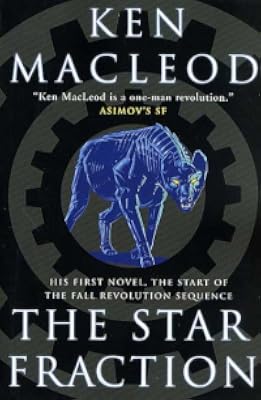
Britain in the 21st century is a Balkanized mess. Moh Kohn is a security mercenary unaware that he holds the key to information which could change the world. Janis Taine is a scientist who needs Mohs help. And a rogue computer program is guiding events to a breathtaking conclusion.Tags
Recommendations


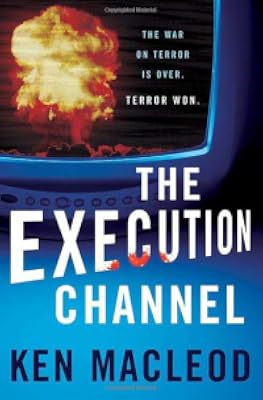
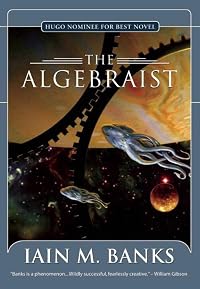
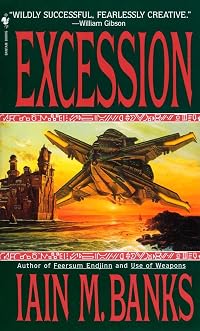
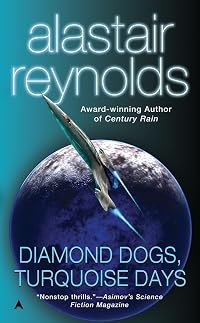
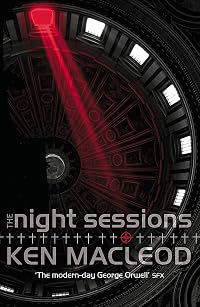
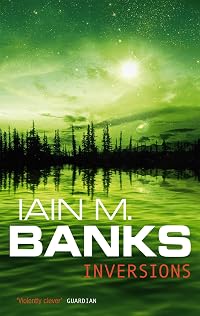
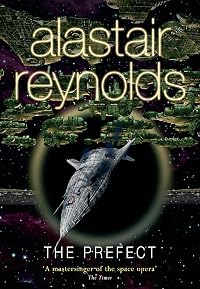
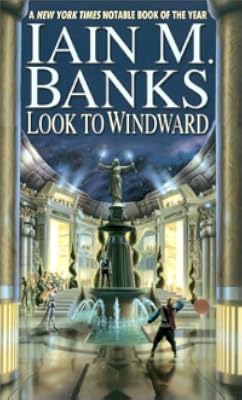


Member Recommendations
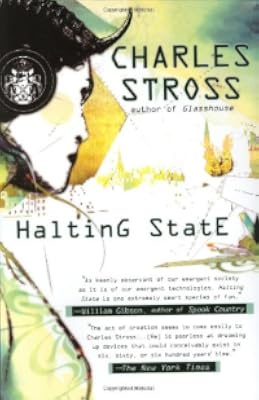
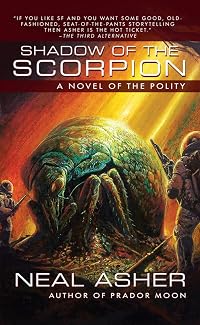
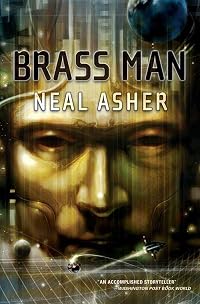
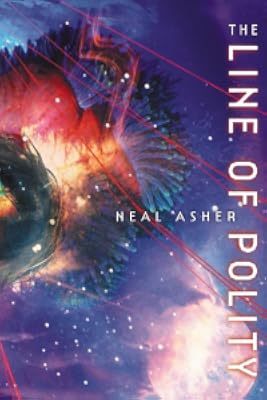
Noisy Anarchy viewed from both sides of the fence. 'Snow Crash' offers the capitalist view and 'The Star Fraction' offers the socialist counterpart.
20
Member Reviews
Norlonto had the smell of a port city, that openness to the world: the sense that you had only to step over a gap to be carried away to anywhere. (Perhaps the sea had been the original fifth-colour country, but it had been irretrievably stained with the bloody ink from all the others.) And it had also the feel that the world had come to it. In part this was illusory: most of the diversity around them had arrived much earlier than the airships and space platforms, yet her and there Kohn could pick up the clacking magnetic boots, the rock-climber physique, the laid-back Esperanto drawl or the orbital labour aristocracy. Men and women who'd hooked a lift on a re-entry glider to blow a month's pay in a shorter time, and in more inventive show more ways, than Khazakhstan or Guiné or Florida could allow.
I've read this author's "Engines of Light Trilogy" on a book ring, and very much enjoyed them. "The Star Fraction" was his first novel, and the first book of a quartet. The next book in the series, "The Stone Canal" is already on my TBR pile and I don't think it'll be long before I get round to reading it and acquiring the other two.
"The Star Fraction" is set in a near-future Britain that split into a patchwork of small states, but overshadowed by the power of the US/UN, whose Space Defence system allows them to prevent states such as Norlonto from realising their ambitions to expand their activities into space. The mini-states are controlled by different political factions, and their convoluted alliances, both overt and covert, mean that you have to pay careful attention to what is going on; you can’t let your attention wander while reading this book. Once I got the hang of the splintered left-wing factions that the hero of this novel navigates with ease, and the various entities and programs running on the net, I found it really exciting, and it had a strong ending unlike a lot of other books in the cyberpunk/post-cyberpunk genre. show less
I've read this author's "Engines of Light Trilogy" on a book ring, and very much enjoyed them. "The Star Fraction" was his first novel, and the first book of a quartet. The next book in the series, "The Stone Canal" is already on my TBR pile and I don't think it'll be long before I get round to reading it and acquiring the other two.
"The Star Fraction" is set in a near-future Britain that split into a patchwork of small states, but overshadowed by the power of the US/UN, whose Space Defence system allows them to prevent states such as Norlonto from realising their ambitions to expand their activities into space. The mini-states are controlled by different political factions, and their convoluted alliances, both overt and covert, mean that you have to pay careful attention to what is going on; you can’t let your attention wander while reading this book. Once I got the hang of the splintered left-wing factions that the hero of this novel navigates with ease, and the various entities and programs running on the net, I found it really exciting, and it had a strong ending unlike a lot of other books in the cyberpunk/post-cyberpunk genre. show less
Let's do a bit of time-travelling. In early 1990s east coast Scotland, two friends meet to discuss their efforts at writing a breakthrough science fiction novel. One is Iain Banks, already tipped as an up-and-coming, if controversial, young novelist, who is trying to sell a revised version of a science-fiction novel he wrote some time back. The other is Ken MacLeod, who has yet to make his first sale. Over a series of pints, sometimes in a pub in the shadow of the mighty Forth Bridge, they discuss publishing, writing, the awfulness of the Tory government, the possible future course of socialism, the role of 9-to-5 jobs in a modern post-industrial globalised economy and the state of science fiction. The author photograph on the dust show more jacket back flap of his first novel shows MacLeod as a typical Leftist rough-and-ready activist. And out of this fervent came that novel, The Star Fraction.
It is a cyberpunk take on factionalist Leftist politics in a balkanised 21st century Britain. In 1995, when the novel was published, this was still a possible future (though it would take a major leap of faith to imagine the fragmented far Left achieving the level of boots-on-the-ground presence that MacLeod imagines). Now, more than twenty years on, this reads more like an alternative history, where Tony Benn was a philosopher, not a politician, and a state of open - and semi-legal - warfare exists between the State, a revolutionary army deposed from power by a resurgent monarchy, various statelets and their organs of state control, the USA, the UN, and a patchwork of revolutionary militias and mercenaries. The main protagonist, for example, is a mercenary security operative for the Felix Dzerzhinsky Workers' Defence Collective; other organisations are equally appropriately named. In the 1970s, one British trade union was likened to Beirut; think of the Lebanese civil war and you will begin to understand the complexity of the world MacLeod has created. There are fundamentalist religious groups, political groups, anarchists, all the shades of Leftists you can imagine and special forces of all allegiances and none. Mere anarchy is loosed upon the world, as someone once said.
The said protagonist carries a modified Kalashnikov for which the phrase "the gun spoke" is, for once, not a metaphor. He gets involved with a research scientist working on neural biochemistry. There are antiheroes and villains, AIs and love stories. It will help the reader if they have at least some familiarity with the British Left; not just the trade union movement and the Labour Party, but other groupuscules and parties, the iconographic texts of the Left and individuals such as Tony Cliff and John Pilger (just two of the journalistic icons namechecked in the book amongst many more). It helps if you know that in some circles, Leo Trotsky is (still) referred to as "the Old Man", or if you can sing the words to "Red fly the banners, O!"
Having said all that, the story itself is reasonably straightforward once you accept the premise of the balkanised Britain, can cope with multiple viewpoint characters, and are happy with what turns out to be a fairly standard cyberpunk plot underneath all the subversiveness. Technology is resolutely mid-1990s, extrapolated, but bears a strong resemblance to the earlier works of William Gibson. The text is riddled with allusions, puns and references. The pace is fast.
MacLeod's later novels calm down somewhat, and in those books he does not wear his political heart so much on his sleeve. But in this first outing, you get the unadulterated raw Left-wing spirit. show less
It is a cyberpunk take on factionalist Leftist politics in a balkanised 21st century Britain. In 1995, when the novel was published, this was still a possible future (though it would take a major leap of faith to imagine the fragmented far Left achieving the level of boots-on-the-ground presence that MacLeod imagines). Now, more than twenty years on, this reads more like an alternative history, where Tony Benn was a philosopher, not a politician, and a state of open - and semi-legal - warfare exists between the State, a revolutionary army deposed from power by a resurgent monarchy, various statelets and their organs of state control, the USA, the UN, and a patchwork of revolutionary militias and mercenaries. The main protagonist, for example, is a mercenary security operative for the Felix Dzerzhinsky Workers' Defence Collective; other organisations are equally appropriately named. In the 1970s, one British trade union was likened to Beirut; think of the Lebanese civil war and you will begin to understand the complexity of the world MacLeod has created. There are fundamentalist religious groups, political groups, anarchists, all the shades of Leftists you can imagine and special forces of all allegiances and none. Mere anarchy is loosed upon the world, as someone once said.
The said protagonist carries a modified Kalashnikov for which the phrase "the gun spoke" is, for once, not a metaphor. He gets involved with a research scientist working on neural biochemistry. There are antiheroes and villains, AIs and love stories. It will help the reader if they have at least some familiarity with the British Left; not just the trade union movement and the Labour Party, but other groupuscules and parties, the iconographic texts of the Left and individuals such as Tony Cliff and John Pilger (just two of the journalistic icons namechecked in the book amongst many more). It helps if you know that in some circles, Leo Trotsky is (still) referred to as "the Old Man", or if you can sing the words to "Red fly the banners, O!"
Having said all that, the story itself is reasonably straightforward once you accept the premise of the balkanised Britain, can cope with multiple viewpoint characters, and are happy with what turns out to be a fairly standard cyberpunk plot underneath all the subversiveness. Technology is resolutely mid-1990s, extrapolated, but bears a strong resemblance to the earlier works of William Gibson. The text is riddled with allusions, puns and references. The pace is fast.
MacLeod's later novels calm down somewhat, and in those books he does not wear his political heart so much on his sleeve. But in this first outing, you get the unadulterated raw Left-wing spirit. show less
Having read a number of Ken MacLeod's more recent books, I've now gone back to his first novel The Star Fraction. Although the emergence of praeterhuman artificial intelligence is key to the plot, the book is far more focused on the political than the technological, and the few retrospective technological clinkers (typical of the cyberpunk of the late 20th century) in no way dampen the political imagination and its relevance to readers more than twenty years after its original publication.
The chief characters of the book are a "security mercenary" and a research scientist, and the setting is a balkanized England of "micro-states" subject to the US/UN after a Third World War of the 2020s. The story is fast-paced, with intrigue show more predominant over still-present sex and violence, but a prior appreciation of 20th-century revolutionary and imperialist projects is important for the reader's understanding. The villains are a little overdrawn in a way that sometimes verges on the comic, but they are often as absorbing as the protagonists.
This book is tagged as the first in "The Fall Revolution," a set of novels in a shared history, with varying timelines. It falls just a bit short of the work of MacLeod's I read in the "Engines of Light" series, or the standalone Newton's Wake, but it's still very good, and I'm sure I'll go on to read others in the sequence. show less
The chief characters of the book are a "security mercenary" and a research scientist, and the setting is a balkanized England of "micro-states" subject to the US/UN after a Third World War of the 2020s. The story is fast-paced, with intrigue show more predominant over still-present sex and violence, but a prior appreciation of 20th-century revolutionary and imperialist projects is important for the reader's understanding. The villains are a little overdrawn in a way that sometimes verges on the comic, but they are often as absorbing as the protagonists.
This book is tagged as the first in "The Fall Revolution," a set of novels in a shared history, with varying timelines. It falls just a bit short of the work of MacLeod's I read in the "Engines of Light" series, or the standalone Newton's Wake, but it's still very good, and I'm sure I'll go on to read others in the sequence. show less
This was the first book of Ken Macleod's that I read, and it made a great impact. Macleod paints a vivid picture of a near-future London fragmented into city states with markedly separate laws (or lack of them), social and religious mores and financial systems, functioning overall in an extreme market-driven anarchy. There's computing, AI, networks and systems of trust woven into the technological mix. It's a fast-paced story which is fun and deals with serious issues in a light-hearted way. Macleod clearly has first-hand knowledge of fringe politics, computing and the areas he writes about. I lived for many years in the streets that form part of the setting of this novel and felt I was walking them with the characters.
I often don't show more enjoy fiction of the near future, but Macleod is streets apart from anyone else I've read who writes that. (I should note that the later novels in this series deal with issues that are in some cases much further in the future, although at least one contains some element of prequel.)
Macleod is good at escaping cliche; he can have armies without this being typical miltary SF, his characters are people you care about. Start here if you haven't encountered him before. show less
I often don't show more enjoy fiction of the near future, but Macleod is streets apart from anyone else I've read who writes that. (I should note that the later novels in this series deal with issues that are in some cases much further in the future, although at least one contains some element of prequel.)
Macleod is good at escaping cliche; he can have armies without this being typical miltary SF, his characters are people you care about. Start here if you haven't encountered him before. show less
an ambitious and interesting book, about factionalism in political ideas, chaotic structures, the care and feeding of AIs, and suchlike stuff in the near future. first of a series. i wouldn't say it quite comes off: the author's reach in style sometimes seems to exceed his grasp, and some of his political projections on political factions seem to me a bit glib and even shaky. also his characters never really come to life. nevertheless i read in it echoes of Banks, and echoes of Dhalgren-period Delany, which is pretty good company to keep. plus it's an early book (1995), with a central concept that could be developed further into some fruitful territory, and so i quite look forward to reading the next one in the series.
‘The Star Faction’ gave me a pleasant feeling of nostalgia, reminding me of all the cyberpunk that I read during my teenage years. Not surprising, as it was published in 1995. Although the focus on convoluted left wing politics gives it an original twist, there’s also a lot of this sort of very familiar business:
As with past cyberpunk reading experiences, for a good deal of the novel I didn’t really know what was going on or who that guy was (I kept getting Jordan and show more Donovan confused). There was a great deal of jargon being thrown around which took me a good while to pick up. Possibly as a consequence of this density of linguistic innovation, I found the characters a bit flat - an issue I have often encountered in cyberpunk. At the end, I had a nagging feeling that I was missing something. I think I got the overall AI plot, but the political machinations remained somewhat opaque. Maybe I’m out of practise with cyberpunk and need a refresher course before jacking back into the mainframe? In any event, ‘The Star Fraction’ was a pretty fun read, with enough wit and incident to keep me amused on a five hour train journey, but I probably won’t seek out the sequels. Cyberpunk in general seems dated twenty years later, when so much of life is actually lived in cyberspace. The politics here (or what I grasped of them) are also rather difficult to relate to the contemporary world. show less
"All right," he said. He stood and stretched and grinned at all of them. “I’m gonna need a terminal, my gun, the drug samples, some anti-som tabs, and half a pack of filter joints.” He looked away for a moment, then sighed to himself. “Medium tar.”
As with past cyberpunk reading experiences, for a good deal of the novel I didn’t really know what was going on or who that guy was (I kept getting Jordan and show more Donovan confused). There was a great deal of jargon being thrown around which took me a good while to pick up. Possibly as a consequence of this density of linguistic innovation, I found the characters a bit flat - an issue I have often encountered in cyberpunk. At the end, I had a nagging feeling that I was missing something. I think I got the overall AI plot, but the political machinations remained somewhat opaque. Maybe I’m out of practise with cyberpunk and need a refresher course before jacking back into the mainframe? In any event, ‘The Star Fraction’ was a pretty fun read, with enough wit and incident to keep me amused on a five hour train journey, but I probably won’t seek out the sequels. Cyberpunk in general seems dated twenty years later, when so much of life is actually lived in cyberspace. The politics here (or what I grasped of them) are also rather difficult to relate to the contemporary world. show less
From the beginning, MacLeod's novel is bound up in political ideologies, philosophy, and various factions of rebels and idealists. And, at heart, this is the problem within the novel. More important than plot or character, it seems that MacLeod wants to explore ideas and logical progressions from historical changes, as wrapped up in Marxist philosophy, socialism, and capitalism. Nothing works, and the characters and scientific developments along the way are alternately stuck in the middle or fighting multiple systems at once. While the ideas here, and many of the scenes and characters as well, are interesting and engaging, there's never enough focus on character or the plots of here-and-now (as opposed to historical or ideological or show more political, as the case may be) in the novel for readers to really gain a footing of interest.
Was I entertained? At many points, I was, just as I was often impressed by the twists and turns MacLeod put together. But was I so engaged that I had to turn the page, or that I was anxious that a particular character triumph or discover some truth? No. And, sadly, I don't really feel the need to pick up the next piece in the series. I can acknowledge MacLeod's accomplishments in this piece, but for me, I desperately needed less theory and political argument, and a bit more development of the characters who might have made me care more about their ideals. Simply, I think that the book just took on too much in this first installment of the series. show less
Was I entertained? At many points, I was, just as I was often impressed by the twists and turns MacLeod put together. But was I so engaged that I had to turn the page, or that I was anxious that a particular character triumph or discover some truth? No. And, sadly, I don't really feel the need to pick up the next piece in the series. I can acknowledge MacLeod's accomplishments in this piece, but for me, I desperately needed less theory and political argument, and a bit more development of the characters who might have made me care more about their ideals. Simply, I think that the book just took on too much in this first installment of the series. show less
Members
- Recently Added By
Lists

Exploration of alternative economical systems
40 works; 3 members

Arthur C. Clarke Award Winners and Shortlisted Books
219 works; 14 members

Favorite Science Fiction
458 works; 224 members
Author Information

61+ Works 12,411 Members
Some Editions
Awards and Honors
Awards
Series


Work Relationships
Is contained in
Common Knowledge
- Canonical title
- The Star Fraction
- Original publication date
- 1995-09
- People/Characters
- Moh Kohn; Jordan Brown; Janis Taine
- Important places
- Edinburgh, Scotland, UK; Glasgow, Scotland, UK
- Dedication
- For Carol
- First words
- It was hot on the roof.
- Last words
- (Click to show. Warning: May contain spoilers.)I hope I see you again.
- Publisher's editor
- Nielsen Hayden, Patrick (Tor)
- Original language
- English
Classifications
Statistics
- Members
- 1,206
- Popularity
- 20,693
- Reviews
- 21
- Rating
- (3.60)
- Languages
- English, Finnish, German, Italian
- Media
- Paper, Audiobook, Ebook
- ISBNs
- 11
- UPCs
- 1
- ASINs
- 7