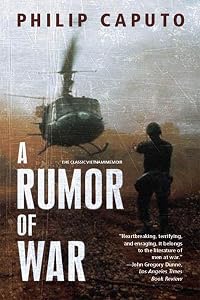
A Rumor of War
by Philip Caputo
On This Page
Description
"In March of 1965, Lieutenant Philip J. Caputo landed at Danang with the first ground combat unit deployed to Vietnam. Sixteen months later, having served on the line in one of modern history's ugliest wars, he returned home -- physically whole but emotionally wasted, his youthful idealism forever gone. A Rumor of War is far more than one soldier's story. Upon its publication in 1977, it shattered America's indifference to the fate of the men sent to fight in the jungles of Vietnam. In the show more years since then, it has become not only a basic text on the Vietnam War but also renowned classic in the literature of wars throughout history and, as the author writes, of 'the things men do in war and the things war does to them.'" -- Back cover. show lessTags
Recommendations




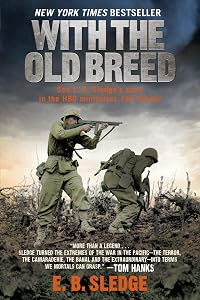
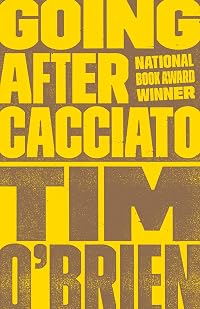
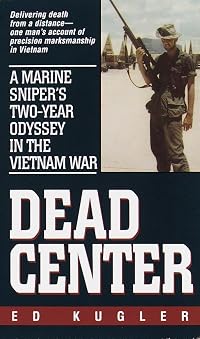
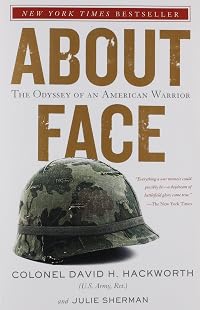
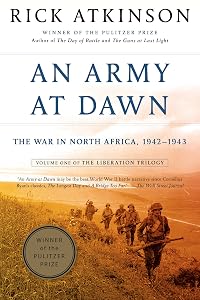
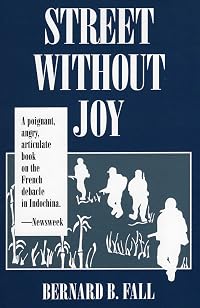


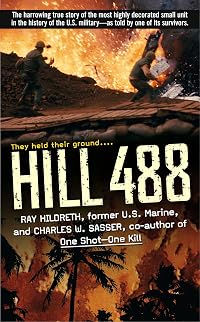
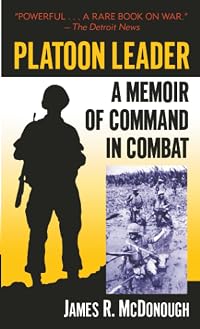

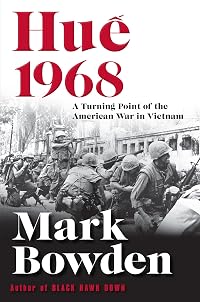
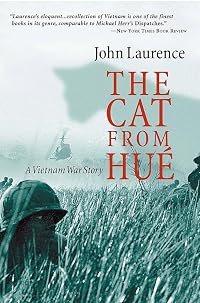
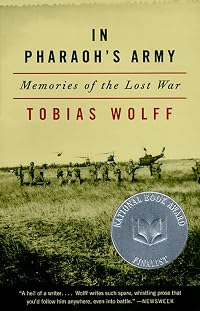
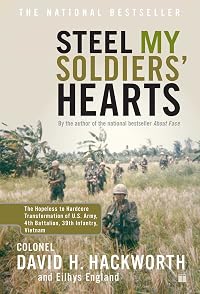



Member Recommendations

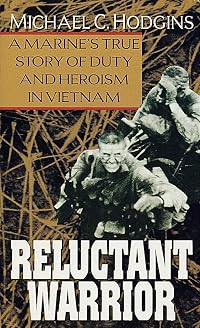
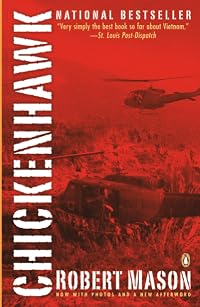
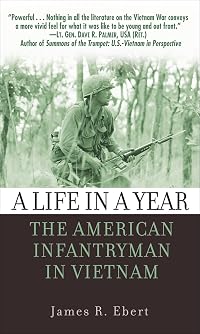
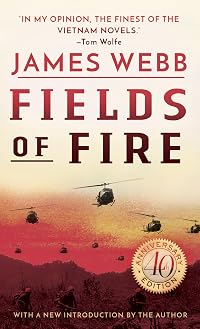
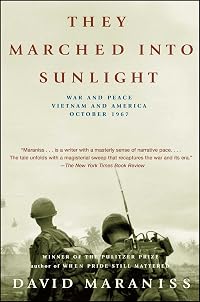
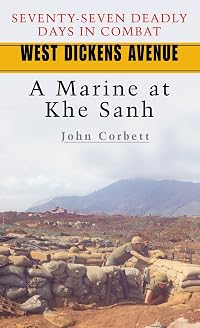
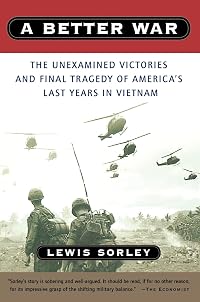
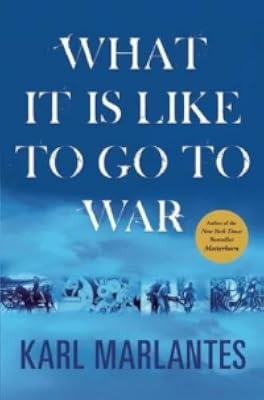
villemezbrown One of the books discussed in the text.
Member Reviews
I think I have read this back in the eighties; but I am not sure. But reading it [again] was no hardship. This is certainly one of the masterpieces to emerge from the Vietnam War. The core of the book takes place in the early days of the war, when the US troops move from advisors to combatants. It tells simply and clearly of the horror and fascination of war through the eyes of a naive junior officer. The writing style is very clear and uncluttered and, although I often shuddered, I enjoyed the read. The story is in the core of the book, but I urge everyone to read the prologue and the epilogue. These are brillantly set out thoughts on why the US were there in the first place [despite the French experience and the massive corruption] show more and then why it all went wrong. As I said a masterpiece! show less
A RUMOR OF WAR, by Philip Caputo.
This is a RE-read for me. I first read Caputo's Vietnam war memoir more than 35 years ago, in a mass market paperback edition, when it was still a pretty new book. Then it was just a very popular and bestselling book. This time I read it in a 1996 Holt Paperback edition, with a front cover caption calling it "The Classic Vietnam Memoir." And it has certainly earned this title, still in print, still much-read. One of the lines I remembered was a comment from a seasoned Korean War veteran, who told the young Lieutenant Caputo - "Before you leave here, sir, you're going to learn that one of the most brutal things in the world is your average nineteen-year-old American boy." And in the madness and heat of show more combat, young Caputo learned this to be too true. Indeed, he even discovered some of that brutality in himself.
One especially affecting section of the narrative depicts the time that Caputo spent as "Officer in Charge of the Dead," and the fevered, too-real nightmares that went with that job. Another is the unsettling, inebriated feeling he experiences during R&R in Saigon, a feeling that he suddenly realizes is no more than freedom from fear. Similarly, near the end of his tour, he feels it again when he becomes, at least temporarily, indifferent to death.
"It was not a feeling of invincibility; indifference, rather. I had ceased to fear death because I had ceased to care about it. Certainly I had no illusions that my death, if it came, would be a sacrifice. It would merely be a death, and not a good one either ... There were no good deaths in the war."
The real insanity of the war is perhaps best illustrated in Caputo's being brought up on murder charges for a patrol and 'snatch' of suspected VC's he helped to plan. By that time he was not simply indifferent, he was angry, and he could no longer stomach the war.
The flat numbness that was felt by so many veterans of the Vietnam war is well summed up with the final lines of Caputo's story as he takes off on a flight out of Vietnam, bound for home -
"None of us was a hero. We would not return to cheering crowds, parades, and the pealing of great cathedral bells. We had done nothing more than endure. We had survived, and that was our only victory."
Philip Caputo is a fine writer, and yes, this is "The classic Vietnam memoir." Very highly recommended. show less
This is a RE-read for me. I first read Caputo's Vietnam war memoir more than 35 years ago, in a mass market paperback edition, when it was still a pretty new book. Then it was just a very popular and bestselling book. This time I read it in a 1996 Holt Paperback edition, with a front cover caption calling it "The Classic Vietnam Memoir." And it has certainly earned this title, still in print, still much-read. One of the lines I remembered was a comment from a seasoned Korean War veteran, who told the young Lieutenant Caputo - "Before you leave here, sir, you're going to learn that one of the most brutal things in the world is your average nineteen-year-old American boy." And in the madness and heat of show more combat, young Caputo learned this to be too true. Indeed, he even discovered some of that brutality in himself.
One especially affecting section of the narrative depicts the time that Caputo spent as "Officer in Charge of the Dead," and the fevered, too-real nightmares that went with that job. Another is the unsettling, inebriated feeling he experiences during R&R in Saigon, a feeling that he suddenly realizes is no more than freedom from fear. Similarly, near the end of his tour, he feels it again when he becomes, at least temporarily, indifferent to death.
"It was not a feeling of invincibility; indifference, rather. I had ceased to fear death because I had ceased to care about it. Certainly I had no illusions that my death, if it came, would be a sacrifice. It would merely be a death, and not a good one either ... There were no good deaths in the war."
The real insanity of the war is perhaps best illustrated in Caputo's being brought up on murder charges for a patrol and 'snatch' of suspected VC's he helped to plan. By that time he was not simply indifferent, he was angry, and he could no longer stomach the war.
The flat numbness that was felt by so many veterans of the Vietnam war is well summed up with the final lines of Caputo's story as he takes off on a flight out of Vietnam, bound for home -
"None of us was a hero. We would not return to cheering crowds, parades, and the pealing of great cathedral bells. We had done nothing more than endure. We had survived, and that was our only victory."
Philip Caputo is a fine writer, and yes, this is "The classic Vietnam memoir." Very highly recommended. show less
Observing Trump's casual attack on Venezuela and listening to his drum-banging, and the return trip to machine-gun survivors had me pulling Vietnam stuff out of my library. I had read Karl Marlantes' memoir (Matterhorn) several years ago and was struck by observational similarities between Caputo and Marlantes. Both reveal the guilty pleasure they both felt from going to war. After returning home, both missed it, the camaraderie and “aliveness” that battle brings to the psyche. During officer training, a particularly boring session filled with WWII tactics that proved to be completely irrelevant to Vietnam, a classmate whispered to Caputo, “You know,” he whispered, “the trouble with war is that there isn’t any background show more music.”
I happened to watch a particularly terrifying video on Youtube about non-human threats to the soldiers: snakes, tigers, and centipedes. Vietnam is home to multiple species of extremely venomous snakes: the krait, bamboo pit viper, King Cobra, Monocle Cobra, sea snakes in the rivers, Weaver ants, and even poisonous plants: “The plant contains a compoundsimilar to strychnine and its effects can be felt almost immediately, eventually leading to death by asphyxiation. Despite its killer reputation, accidentally ingesting heartbreak grass occurs quite regularly and has been in the news over the last few years in relation to the suspicious death of a Russian whistle-blower in 2012. The centipedes could be a foot long and possessed an extremely painful bite: it would kill you, just make you miserable but wouldn't get you an evacuation helicopter unlike” Tigers, crocodiles and elephants – oh my! Plants and hard-to-see insects aren’t the only dangers lurking in the Vietnam jungle. Crocodiles lurk in the water, and elephants can charge unprovoked." (1)
Marlantes and Caputo both acknowledge that to be a leader you have to order friends into situations where there is a likelihood they will die. And they are always the best guys, because in order to meet the object you need the best guys, not the ones with bone spurs. Soldiers dies by the hundreds taking hills because they were ordered to do so, only to have those hills evacuated and abandoned a matter of days or weeks later. It's no wonder morale sank. It was all about body count; the problem was the U.S. body count was escalating as well. By April 1969 35,000 Americans had been killed; 60% were under 21.
Caputo reached a point where death was not to be feared. His description is almost lyrical. His platoon was sent on a mission where they were essentially bait for the NLF only to come under artillery fire from their own guns.
The ground slammed against my chest, bouncing me up an inch or so, and a part of me kept going up. I felt myself floating up out of myself, up to the tops of the trees. Hovering there, I felt an ineffable calm. I could see the flashing shells, but they no longer frightened me, because I was a spirit. I saw myself lying face down in the foxhole, my arms wrapped around the back of my neck. I felt no fear, just a great calm and a genial contempt for the puny creature cringing in the foxhole below me. I wondered if I was dying. Well, if I am, I thought, it is not so bad. Dying is actually pleasant. It is painless. Death is an end to pain. Rich the treasure, sweet the pleasure, sweet is pleasure after pain. Death is a pleasure. The Big D is the world’s most powerful narcotic, the ultimate anesthetic.
Another quote:
We ate lunch. Our rations were the same as the Viet Cong’s: cooked rice rolled into a ball and stuffed with raisins. The riceballs were easier to carry than the heavy C-ration tins and alleviated the diarrhea from which we all suffered. Eating the rice on that desolate hill, it occurred to me that we were becoming more and more like our enemy. We ate what they ate. We could now move through the jungle as stealthily as they. We endured common miseries. In fact, we had more in common with the Viet Cong than we did with that army of clerks and staff officers in the rear.
Life was a matter of blind chance. Walking back from the patrol during a cease fire, in constant rain, many suffering from immersion foot, someone stumbled on a hidden mine they blew up injuring many, but for Caputo, because he was standing in a certain place, and wearing a flak jacket, could pick the shrapnel out of his jacket, but the men around him were not as lucky. Rodella was being worked on by a corpsman. He had a sucking chest wound.
It was his eyes that troubled me most. They were the hurt, dumb eyes of a child who has been severely beaten and does not know why. It was his eyes and his silence and the foamy blood and the gurgling, wheezing sound in his chest that aroused in me a sorrow so deep and a rage so strong that I could not distinguish the one emotion from the other.
And then, of course, there was the paperwork (need the info from the dog tags and details about the explosion) before they would send the medevac choppers. And the radios quit (WWII vintage) but finally after Caputo's threats, the choppers were on their way.
The finale or consequence can be summarized by the tragedy of the "snatch patrol. Driven by exhaustion, fear, and a "savage desire" for results, Caputo sends a squad into a Vietnamese village to capture two suspected Viet Cong. Though his formal orders are to capture, he implicitly communicates a desire for blood. The squad subsequently kills two young men—one of whom was actually their own informant.
Following the event, Caputo and his men were court-martialed for premeditated murder; penalty: firing squad. During the preparation for the trial, Caputo's excellent defense counsel, Rader, meticulously grooms Caputo to present "facts" that are technically true but stripped of their psychological and environmental context. Ultimately, Caputo realizes the trial is not designed to find the truth, but to protect the institution by either branding the men as "criminals" or acquitting them to prove the system’s virtue, all while ignoring the war’s inherent role in the tragedy.
In the sterile environment of a courtroom, "facts" are the currency of justice. They are cold, verifiable, and binary. However, as Caputo demonstrates in his account of the Giao-Tri killings, a collection of facts can be used to tell a profound lie. The central conflict of the text lies in the "wide gulf" between the facts—the technical details of orders and actions—and the truth—the psychological and moral reality of men transformed by the "moral bacteria" of war.
Rader, is a master of the factual. He insists on a narrative where Caputo issued a "clear, legitimate order" that was simply "disobeyed." Rader’s strategy relies on the "inexorable logic of the law," which values what was said over what was meant. On the witness stand, Caputo performs excellently, "parroting" rehearsed testimony that contains no perjury. Every word is technically a fact: he did order a capture; he did not order an assassination. Yet, Caputo acknowledges that this factual account is not the truth. It ignores the "silent communication" of bloodlust shared with his men and the "addled state of mind" produced by months of stalking through a landscape of landmines and "free-fire zones."
The "truth," according to Caputo, is a "synthesis" that the court-martial is specifically designed to conceal. The truth is that the war itself—its policies of "body counts" and its demand for "bodies" over prisoners—created the conditions for the murder. The truth is that the line between a soldier and a murderer becomes blurred when the institution rewards the latter while providing the legal framework to punish the former when it becomes politically inconvenient. To admit this truth would be to "open a real can of worms," questioning the morality of the American intervention itself.
Caputo's "crimes" were committed in a environment where the usual rules of society were not just suspended, but inverted. The military’s "sole aim was to kill Viet Cong." Success was measured by the Body Count. This metric incentivized violence and stripped away the distinction between enemy combatant and civilian. In "Free-Fire zones, soldiers were authorized to fire on anything that moved. Caputo notes the irony that the military used "weapons far more horrible than pistols" (like napalm or heavy artillery) to kill civilians daily, yet he was being tried for the death of two individuals as if he were a "common criminal" in a peacetime city. Caputo’s frustration and moral conundrum stems from the fact that the military defines "murder" not by the act of killing itself, but by the context of the paperwork. If the victims had been confirmed VC, he would have received a medal; because they were civilians, he faced a firing squad.
The reason this is an "absurdity" is that a trial for murder in a war zone necessitates a trial of the war itself. If Caputo is guilty, then the system that produced him and the policies that directed him (like the reward for "bodies") are also guilty. The military legal system functions as a mechanism for "institutional conscience." By focusing strictly on the facts of the "detective story," the Marine Corps ensures that regardless of the verdict, the institution remains unblemished. If found guilty, the men are "common criminals" who do not represent the "fine fighting sons" of America. If found innocent, the system has proven its "fairness." In both scenarios, the war is acquitted. The facts act as a shield, protecting the observers from the "horror" Caputo feels when he looks into the "glassy eyes" of the dead boy.
The legal absurdity Caputo describes is the ultimate "Catch-22" of the Vietnam War. He points out a fundamental hypocrisy: the military spent months stripping away his civilian inhibitions to turn him into an efficient killer, only to re-apply those same civilian moral standards once his killing became a public relations liability.
(1)https://www.warhistoryonline.com/vietnam-war/vietnam-jungle.html
From the archives
Yeah, we ran into tigers. In infantry combat talk, a tiger is an ambush. So, I’m on the radio and Scott on the chopper calls up and tells me, “You’ve got a tiger in front of you,” and obviously I’m thinking there’s an ambush in front of me, and I said, “Well how many are there,” and he said, “One,” and I laughed. I said, “Well that’s not a tiger, that’s a sniper.” He says, “No,” he says, “Tiger, you know, the one on the four legs!” So, that was more scary than an ambush to me because a tiger can rip you apart. So, they scared it off, a tiger. Snakes of course, obviously we ran into a lot of snakes over there. That was about it. I mean, there were spottings of elephants but I’d never seen an elephant over there. That was pretty much it as far as the wildlife and the monkeys.
(https://vva.vietnam.ttu.edu/images.php?img=/OH/OH0152/OH0152.pdf&from=website)
See also my meditations on the Medina trial. (https://www.blogger.com/blog/post/edit/6846404/6980786378090056828) show less
I happened to watch a particularly terrifying video on Youtube about non-human threats to the soldiers: snakes, tigers, and centipedes. Vietnam is home to multiple species of extremely venomous snakes: the krait, bamboo pit viper, King Cobra, Monocle Cobra, sea snakes in the rivers, Weaver ants, and even poisonous plants: “The plant contains a compoundsimilar to strychnine and its effects can be felt almost immediately, eventually leading to death by asphyxiation. Despite its killer reputation, accidentally ingesting heartbreak grass occurs quite regularly and has been in the news over the last few years in relation to the suspicious death of a Russian whistle-blower in 2012. The centipedes could be a foot long and possessed an extremely painful bite: it would kill you, just make you miserable but wouldn't get you an evacuation helicopter unlike” Tigers, crocodiles and elephants – oh my! Plants and hard-to-see insects aren’t the only dangers lurking in the Vietnam jungle. Crocodiles lurk in the water, and elephants can charge unprovoked." (1)
Marlantes and Caputo both acknowledge that to be a leader you have to order friends into situations where there is a likelihood they will die. And they are always the best guys, because in order to meet the object you need the best guys, not the ones with bone spurs. Soldiers dies by the hundreds taking hills because they were ordered to do so, only to have those hills evacuated and abandoned a matter of days or weeks later. It's no wonder morale sank. It was all about body count; the problem was the U.S. body count was escalating as well. By April 1969 35,000 Americans had been killed; 60% were under 21.
Caputo reached a point where death was not to be feared. His description is almost lyrical. His platoon was sent on a mission where they were essentially bait for the NLF only to come under artillery fire from their own guns.
The ground slammed against my chest, bouncing me up an inch or so, and a part of me kept going up. I felt myself floating up out of myself, up to the tops of the trees. Hovering there, I felt an ineffable calm. I could see the flashing shells, but they no longer frightened me, because I was a spirit. I saw myself lying face down in the foxhole, my arms wrapped around the back of my neck. I felt no fear, just a great calm and a genial contempt for the puny creature cringing in the foxhole below me. I wondered if I was dying. Well, if I am, I thought, it is not so bad. Dying is actually pleasant. It is painless. Death is an end to pain. Rich the treasure, sweet the pleasure, sweet is pleasure after pain. Death is a pleasure. The Big D is the world’s most powerful narcotic, the ultimate anesthetic.
Another quote:
We ate lunch. Our rations were the same as the Viet Cong’s: cooked rice rolled into a ball and stuffed with raisins. The riceballs were easier to carry than the heavy C-ration tins and alleviated the diarrhea from which we all suffered. Eating the rice on that desolate hill, it occurred to me that we were becoming more and more like our enemy. We ate what they ate. We could now move through the jungle as stealthily as they. We endured common miseries. In fact, we had more in common with the Viet Cong than we did with that army of clerks and staff officers in the rear.
Life was a matter of blind chance. Walking back from the patrol during a cease fire, in constant rain, many suffering from immersion foot, someone stumbled on a hidden mine they blew up injuring many, but for Caputo, because he was standing in a certain place, and wearing a flak jacket, could pick the shrapnel out of his jacket, but the men around him were not as lucky. Rodella was being worked on by a corpsman. He had a sucking chest wound.
It was his eyes that troubled me most. They were the hurt, dumb eyes of a child who has been severely beaten and does not know why. It was his eyes and his silence and the foamy blood and the gurgling, wheezing sound in his chest that aroused in me a sorrow so deep and a rage so strong that I could not distinguish the one emotion from the other.
And then, of course, there was the paperwork (need the info from the dog tags and details about the explosion) before they would send the medevac choppers. And the radios quit (WWII vintage) but finally after Caputo's threats, the choppers were on their way.
The finale or consequence can be summarized by the tragedy of the "snatch patrol. Driven by exhaustion, fear, and a "savage desire" for results, Caputo sends a squad into a Vietnamese village to capture two suspected Viet Cong. Though his formal orders are to capture, he implicitly communicates a desire for blood. The squad subsequently kills two young men—one of whom was actually their own informant.
Following the event, Caputo and his men were court-martialed for premeditated murder; penalty: firing squad. During the preparation for the trial, Caputo's excellent defense counsel, Rader, meticulously grooms Caputo to present "facts" that are technically true but stripped of their psychological and environmental context. Ultimately, Caputo realizes the trial is not designed to find the truth, but to protect the institution by either branding the men as "criminals" or acquitting them to prove the system’s virtue, all while ignoring the war’s inherent role in the tragedy.
In the sterile environment of a courtroom, "facts" are the currency of justice. They are cold, verifiable, and binary. However, as Caputo demonstrates in his account of the Giao-Tri killings, a collection of facts can be used to tell a profound lie. The central conflict of the text lies in the "wide gulf" between the facts—the technical details of orders and actions—and the truth—the psychological and moral reality of men transformed by the "moral bacteria" of war.
Rader, is a master of the factual. He insists on a narrative where Caputo issued a "clear, legitimate order" that was simply "disobeyed." Rader’s strategy relies on the "inexorable logic of the law," which values what was said over what was meant. On the witness stand, Caputo performs excellently, "parroting" rehearsed testimony that contains no perjury. Every word is technically a fact: he did order a capture; he did not order an assassination. Yet, Caputo acknowledges that this factual account is not the truth. It ignores the "silent communication" of bloodlust shared with his men and the "addled state of mind" produced by months of stalking through a landscape of landmines and "free-fire zones."
The "truth," according to Caputo, is a "synthesis" that the court-martial is specifically designed to conceal. The truth is that the war itself—its policies of "body counts" and its demand for "bodies" over prisoners—created the conditions for the murder. The truth is that the line between a soldier and a murderer becomes blurred when the institution rewards the latter while providing the legal framework to punish the former when it becomes politically inconvenient. To admit this truth would be to "open a real can of worms," questioning the morality of the American intervention itself.
Caputo's "crimes" were committed in a environment where the usual rules of society were not just suspended, but inverted. The military’s "sole aim was to kill Viet Cong." Success was measured by the Body Count. This metric incentivized violence and stripped away the distinction between enemy combatant and civilian. In "Free-Fire zones, soldiers were authorized to fire on anything that moved. Caputo notes the irony that the military used "weapons far more horrible than pistols" (like napalm or heavy artillery) to kill civilians daily, yet he was being tried for the death of two individuals as if he were a "common criminal" in a peacetime city. Caputo’s frustration and moral conundrum stems from the fact that the military defines "murder" not by the act of killing itself, but by the context of the paperwork. If the victims had been confirmed VC, he would have received a medal; because they were civilians, he faced a firing squad.
The reason this is an "absurdity" is that a trial for murder in a war zone necessitates a trial of the war itself. If Caputo is guilty, then the system that produced him and the policies that directed him (like the reward for "bodies") are also guilty. The military legal system functions as a mechanism for "institutional conscience." By focusing strictly on the facts of the "detective story," the Marine Corps ensures that regardless of the verdict, the institution remains unblemished. If found guilty, the men are "common criminals" who do not represent the "fine fighting sons" of America. If found innocent, the system has proven its "fairness." In both scenarios, the war is acquitted. The facts act as a shield, protecting the observers from the "horror" Caputo feels when he looks into the "glassy eyes" of the dead boy.
The legal absurdity Caputo describes is the ultimate "Catch-22" of the Vietnam War. He points out a fundamental hypocrisy: the military spent months stripping away his civilian inhibitions to turn him into an efficient killer, only to re-apply those same civilian moral standards once his killing became a public relations liability.
(1)https://www.warhistoryonline.com/vietnam-war/vietnam-jungle.html
From the archives
Yeah, we ran into tigers. In infantry combat talk, a tiger is an ambush. So, I’m on the radio and Scott on the chopper calls up and tells me, “You’ve got a tiger in front of you,” and obviously I’m thinking there’s an ambush in front of me, and I said, “Well how many are there,” and he said, “One,” and I laughed. I said, “Well that’s not a tiger, that’s a sniper.” He says, “No,” he says, “Tiger, you know, the one on the four legs!” So, that was more scary than an ambush to me because a tiger can rip you apart. So, they scared it off, a tiger. Snakes of course, obviously we ran into a lot of snakes over there. That was about it. I mean, there were spottings of elephants but I’d never seen an elephant over there. That was pretty much it as far as the wildlife and the monkeys.
(https://vva.vietnam.ttu.edu/images.php?img=/OH/OH0152/OH0152.pdf&from=website)
See also my meditations on the Medina trial. (https://www.blogger.com/blog/post/edit/6846404/6980786378090056828) show less
This is one of those books that changed writing about war, but our generation questioned all the values during 1960s and early 1970s. I am old enough to remember the war protests, and I volunteered one summer at the local VA hospital mental ward so I first hand the effects of war. The book starts when the main character is enlisted as an officer in the marines, indoctrinated into the system, and then starts questioning the purpose of the war versus the lose of life. Watching young men blown into unrecognizable masses and their lives cut short, the impact on their families, as well as the other soldiers makes for emotional conflict. And if you were raised Catholic and brought up to believe every person is the image of God, how do you show more reconcile your religious beliefs with your orders to kill? show less
Simply the best book about Vietnam that I have ever read, and I have read many! The honesty with which Caputo writes this is refreshing and the journey he takes personally from initial deployment to his return home is fascinating. The book is powerful and it is the first book I recommend when one asks me for a book on Vietnam.
I have had Philip Caputo's A Rumor of War, on my bookshelf and TBR pile for year and having just finished it, I have to say it was a compelling story. A Memoir of one man's experience in Vietnam, we here from Lt. Philip Caputo in his own words.
Landing in Danang withe Marine in 1965, Caputo tells of us of his thrill of being part of his "splendid little war." By the end of his tour he has been leading a platoon 2 different time, in between being a staff officer and at the end of his term again being a staff officer. He and his men had been accused and tried for the murder of two South Vietnamese, a murder which he men were later acquitted for and he having the most serious charges dropped. He blamed both himself and the war this show more "atrocity.", not shirking from responsibility but trying to place a greater understanding of being in the field for an extended time in Vietnam.
An excellent book of one man's perspective of his service in Vietnam from the highs to the lows with a brief epilogue of his post military life.
A must read. show less
Landing in Danang withe Marine in 1965, Caputo tells of us of his thrill of being part of his "splendid little war." By the end of his tour he has been leading a platoon 2 different time, in between being a staff officer and at the end of his term again being a staff officer. He and his men had been accused and tried for the murder of two South Vietnamese, a murder which he men were later acquitted for and he having the most serious charges dropped. He blamed both himself and the war this show more "atrocity.", not shirking from responsibility but trying to place a greater understanding of being in the field for an extended time in Vietnam.
An excellent book of one man's perspective of his service in Vietnam from the highs to the lows with a brief epilogue of his post military life.
A must read. show less
Tremendous book. Every politician - president or legislator - who votes for sending our young men into war should read this book and then think long and hard about the consequences and suffering that comes from their actions. Rumor of War describes the human experience of the violence in a way that I've never seen before. I will encourage my grandson to read this in a few years so that he understands that real war is not the video war games he likes to play.
Members
- Recently Added By
Lists

Books recommended in the history category on FiveBooks.com
329 works; 4 members

LT picks: Blue Books
197 works; 44 members
Author Information

22+ Works 4,886 Members
Philip Caputo was born on June 10, 1941 in Chicago, Illinois. He received a B.A. from Loyola University in 1964. He served in the U.S. Marine Corps from 1964 to 1967. His first book, A Rumor of War (1977), recounts his military tour of Vietnam. He has written more than fifteen books including Horn of Africa, Indian Country, Equation for Evil, show more Crossers, and The Longest Road. His journalism career began in 1968, when he joined the staff of the Chicago Tribune, serving as a general assignment and team investigative reporter until 1972 and then as a foreign correspondent for the next five years. In 1972 he and Hugh Jones received a Pulitzer Prize for their coverage of election fraud in the primaries. He has also written for the New York Times, Washington Post, the Boston Globe, the Los Angeles Times, and many other publications. He has worked as a screenwriter for Paramount Pictures and Michael Douglas Productions. (Bowker Author Biography) show less
Awards and Honors
Awards
Distinctions
Work Relationships
Common Knowledge
- Original publication date
- 1977
- People/Characters
- Philip Caputo
- Important places
- Vietnam
- Related movies
- A Rumor of War (1980 | IMDb)
- Epigraph
- And ye shall hear of wars and rumors of wars. See that ye be not troubled, for all these things must come to pass, but the end is not yet . . . For nation shall rise against nation and kingdom against kingdom . . . Then shall... (show all) they deliver you up to be afflicted and shall put you to death . . . But he that shall endure unto the end, he shall be saved.
- Matthew 24:6-13
In thy faint slumbers I by thee have watch'd
And heard thee murmur tales of iron wars . . .
- Shakespeare, Henry IV, Part I
No great dependence is to be placed on the eagerness of young soldiers in action, for the prospect of fighting is agreeable to those who are strangers to it.
- Vegetius, Roman military writer, 4th century A.D.
Let the boy try along this bayonet-blade
How cold steel is, and keen with hunger fo blood . . .
Wilfred Owen, "Arms and the Boy" - Dedication
- TO
SERGEANT HUGH JOHN SULLIVAN
C Company, First Battalion, Third Marines
Killed in action, June 1965
and
FIRST LIEUTENANT WALTER NEVILLE LEVY
C Company, First Battalion, First Marines
Ki... (show all)lled in action, September 1965 - First words
- This book does not pretend to be history. [Prologue]
At the age of twenty-four, I was more prepared for death than I was for life. [Chapter One] - Last words
- (Click to show. Warning: May contain spoilers.)It was over.
- Blurbers
- Byran, C.D.B; Dunne, John Gregory; Lehmann-Haupt, Christopher; Solotaroff, Ted; Styron, William
- Original language
- English
Classifications
- Genres
- Biography & Memoir, Nonfiction, History
- DDC/MDS
- 959.70438 — History & geography History of Asia Southeast Asia: Myanmar, Thailand, Laos, Cambodia, Vietnam Vietnam 1949- 1961–1975 Vietnamese War Other military topics
- LCC
- DS559.5 .C36 — History of Europe, Asia, Africa and Oceania Asia History of Asia Southeast Asia French Indochina Vietnam. Annam Vietnamese Conflict
- BISAC
Statistics
- Members
- 2,224
- Popularity
- 9,128
- Reviews
- 29
- Rating
- (4.03)
- Languages
- 9 — Danish, Dutch, English, Finnish, French, Italian, Norwegian (Bokmål), Spanish, Swedish
- Media
- Paper, Audiobook, Ebook
- ISBNs
- 39
- ASINs
- 29