On This Page
Description
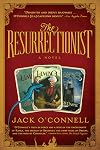
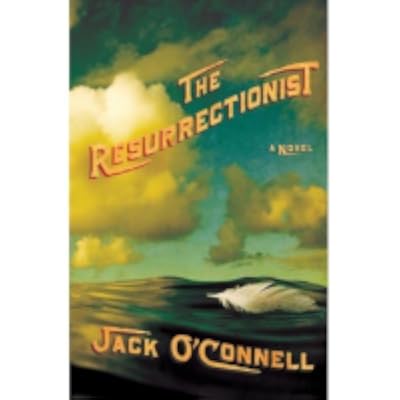
Gritty noir fiction, mind-bending fantasy, and medical thriller combine in a new novel by an author dubbed the "cyberpunk Dashiell Hammett."Sweeney is a druggist by trade; Danny, his son, is in a persistent coma, the victim of an accident. Hoping for a miracle, they have come to the Peck Clinic, a fortress-like haven in a post-industrial city overrun by gangs. Doctors there claim to have resurrected two patients who were similarly lost in the void.
Gradually, Sweeney realizes that the cure show more for his son’s condition may lie in “Limbo,” a fantasy comic-book world into which Danny had been drawn at the time of his accident. Plunged into the intrigue that surrounds the clinic, Sweeney searches for answers and instead finds sinister back alleys, brutal dead ends, and terrifying rabbit holes of mystery.
Full of puzzles and surprises, Resurrectionist is a surreal, gothic meditation on identity, the nature of consciousness, the power of stories, love, mad scientists, circus freaks, and ultimately forgiveness—both giving and receiving.
. Literature. Suspense. Thriller. Fiction. show less
Tags
Recommendations












Member Recommendations

Member Reviews
The Resurrectionist is a mind-warping surrealist look at where coma victims disappear to during their perpetual slumbering. The Peck clinic is famous for its ability to treat and awaken comatose individuals. With mysterious techniques it has woken two people in the past, and Sweeney is fervently praying for a 3rd; his young son. Meanwhile the Goldfaden Freaks, a hodgepodge of physically anomalous individuals who make up a circus sideshow, have abandoned their employers to voyage across the country.
You would think these two plots would have little to do with one another, right? You'd be surprised.
The two stories, while worlds apart, share many parallels that remain frustratingly vague, which I believe allows the reader to draw their own show more connections and conclusions. The book a golem to be molded by the reader, the ending isn't entirely resolute and many aspects of the story remains obscure, but it was the journey that was most important. I'm still unsure about much of the happenings within the story, yet I enjoyed every minute I spent reading it.
A strange book, but an enjoyable one! show less
You would think these two plots would have little to do with one another, right? You'd be surprised.
The two stories, while worlds apart, share many parallels that remain frustratingly vague, which I believe allows the reader to draw their own show more connections and conclusions. The book a golem to be molded by the reader, the ending isn't entirely resolute and many aspects of the story remains obscure, but it was the journey that was most important. I'm still unsure about much of the happenings within the story, yet I enjoyed every minute I spent reading it.
A strange book, but an enjoyable one! show less
The Resurrectionist is probably not a book I would normally have bought on my own, though the title (which I love) would have intrigued me enough to pick it off the shelf and give it a good gander. Fast paced, part mystery, part circus freak show, part outlaw biker-gang escapades, part comatose child and his insomniac, pharmacist father, part creepy coma clinic, part dark fantasy, and part Limbo comic book adventure (though the comic book part of it, come to find out, incorporates all of the above parts listed), The Resurrectionist, simply put, is hard to classify. Which is probably a good thing. It’s not pure mystery, not pure fantasy, not pure hardboiled noir, not pure tragedy, not pure father/son contemporary drama, though it is, show more nonetheless, pure fun. The Resurrectionist is a dream world adventure into and out of a parallel universe. When the two universes collide, broken, despairing lives become whole. I highly recommend it. show less
 This review was written for LibraryThing Early Reviewers.
This is the weirdest of the 5 (so far) books in the Quinsigamond series and that is saying something. Sweeney is a man on the edge. Unable to cope with the guilt of not being there when his son Danny's accident occurred he will do anything to try and restore Danny from the coma he's been in ever since. That's all he lives for so when an opening appears at the renowned Peck clinic in Quinsigamond, Sweeney applies and is granted a place for his son amongst the patients. He is also taken on as a pharmacist within the clinic itself. Events don't transpire exactly as he's hoped and soon find Sweeney enmeshed with a biker group that's also made it's way to the rust-belt factory town who have plans of their own for Sweeney and Danny. Which way show more will Sweeney eventually lean? Who can he trust to do the right thing for his son?
Interjected within this story we are also treated to excerpts from Danny's favourite comic book, Limbo, which is about a troupe of freaks forced to flee from their circus home and follow the mystical instructions given to the chicken boy when he enters into Limbo while in the grip of a seizure. While fleeing a mad doctor they're trying to re-unite chicken boy with his long lost father believed to be on the far shores of Gehenna. I did mention that this book was weird, right?
The two narratives eventually join up to form a whole that speculates on consciousness and where we go when that is lost and the feelings of guilt and rage of those that get left behind. It also takes a look at how stories can have an effect on people's lives and not always for the betterment thereof. This book will not be everyone's cup of tea, the characters in the main are mostly unlikeable, there's quite a mishmash of elements in the storytelling linking gothic and noirish mystery that will not sit well with everyone. But for me, because I've enjoyed the previous work of the author it seems to have built nicely to this. I wouldn't recommend this as a first experience of his work though but I found it quite compelling. show less
Interjected within this story we are also treated to excerpts from Danny's favourite comic book, Limbo, which is about a troupe of freaks forced to flee from their circus home and follow the mystical instructions given to the chicken boy when he enters into Limbo while in the grip of a seizure. While fleeing a mad doctor they're trying to re-unite chicken boy with his long lost father believed to be on the far shores of Gehenna. I did mention that this book was weird, right?
The two narratives eventually join up to form a whole that speculates on consciousness and where we go when that is lost and the feelings of guilt and rage of those that get left behind. It also takes a look at how stories can have an effect on people's lives and not always for the betterment thereof. This book will not be everyone's cup of tea, the characters in the main are mostly unlikeable, there's quite a mishmash of elements in the storytelling linking gothic and noirish mystery that will not sit well with everyone. But for me, because I've enjoyed the previous work of the author it seems to have built nicely to this. I wouldn't recommend this as a first experience of his work though but I found it quite compelling. show less
The Resurrectionist is about a man named Sweeney, whose son enters into a coma. Sweeney continuously lies to others about the circumstances under which his son was rendered comatose, as the truth is too uncomfortable for him to bear, but if the truth was ever actually revealed, I cannot recall. Sweeney takes his son to the Peck Clinic, renowned for having unusual successes with "arousals" and that is where the story begins.
I didn't like it. It's a good premise-- a father coping with such a tragedy-- but O'Connell fails to go anywhere interesting with it. It starts off promisingly enough, with Sweeney himself a decent character, but it just gets stranger and stranger and not in a good way. Soon, Sweeney is being initiated into a gang for show more reasons I never understood and tripping out on a hallucinogen made from the brain fluid of his own son, resulting in a surreal sequence merging reality and fantasy that Philip K. Dick would have done better. In the end, we're told that Sweeney needs to forgive his son to let him wake, but this pretty much comes out of nowhere and we're never told why or what for.
A major part of the book is Limbo Comics, a series of comic books that Sweeney's son enjoyed up until he was knocked unconscious. The promise of a journey into a comic book world was one of the things that drew me to this novel in the first place, and here it utterly disappoints. Every few chapters, the main narrative is interrupted for an issue of Limbo Comics. These stories are quite interesting (indeed, the stretch of issues #6-8 is far more interesting than anything else in the novel), but these comic stories are told in an ordinary prose style. It never feels like O'Connell is describing the events of a comic book. For example:
"The hecklers and the rowdies always saved their strength for the hermaphrodite. It had always been the same back home. Milena had heard every comment and developed several standard responses. So when the Chief said, 'You gonna' show them to me?' Milena didn't even think before s/he said, 'Not till you show me yours first.'" (155)
That's not a story being told visually, in a comics fashion. Of course, this is prose, but you cannot even imagine the comic book panel that would be depicted there; to pull that off, the panel (every panel) would need to be almost entirely narration or internal monologue. These sections would be much more effective if they actually felt like comic books: whether rendered in the form of a comic script or merely a description of one. Best would be actual comics, of course, but I suppose that wasn't possible.
The depicted issues jump around a bit, which is disappointing-- it moves straight from issue #2 to #6, skipping issues where (from what Sweeney tells us elsewhere), vital portions of Limbo Comics' set-up are established. And then, the final issue is apparently #10, which makes no sense. We're told that Limbo Comics has been wildly successful, with a cartoon, a movie, elaborate guidebooks, trading cards, and much other merchandising all tying together to make a large, cohesive world. This amazing series only lasts ten issues? It doesn't fit with what Sweeney tells us about the set-up; the repeating formula he describes would only have time to play out twice in that amount of time, which hardly makes for a repeating formula at all. Or any time to grow and develop characters, something we're told the comic book does.
This feels like I'm quibbling, but when an ostensible comic book world is the cornerstone of your novel, you have to get that comic book world right. O'Connell doesn't. That said, I'd much rather read about the world of Limbo Comics than that of The Resurrectionist.
Things keep on happening with little explanation as the novel goes on, and though they are intriguing at first, the sheer number of bizarre happenings quickly becomes tedious, especially as they never are explained. Predictably, Limbo Comics crosses over into the real world in the end. And that's where I became totally disinterested, because all story logic had been abandoned. Why was any of this happening? What was happening anyhow? I couldn't tell, and I didn't really care.
The events of The Resurrectionist flow from point to point with little depth and less logic, and its a poor showing indeed when the fictional world within a book is more interesting than the book itself. Especially when that world-within-the-world is flawed in its presentation to begin with. show less
I didn't like it. It's a good premise-- a father coping with such a tragedy-- but O'Connell fails to go anywhere interesting with it. It starts off promisingly enough, with Sweeney himself a decent character, but it just gets stranger and stranger and not in a good way. Soon, Sweeney is being initiated into a gang for show more reasons I never understood and tripping out on a hallucinogen made from the brain fluid of his own son, resulting in a surreal sequence merging reality and fantasy that Philip K. Dick would have done better. In the end, we're told that Sweeney needs to forgive his son to let him wake, but this pretty much comes out of nowhere and we're never told why or what for.
A major part of the book is Limbo Comics, a series of comic books that Sweeney's son enjoyed up until he was knocked unconscious. The promise of a journey into a comic book world was one of the things that drew me to this novel in the first place, and here it utterly disappoints. Every few chapters, the main narrative is interrupted for an issue of Limbo Comics. These stories are quite interesting (indeed, the stretch of issues #6-8 is far more interesting than anything else in the novel), but these comic stories are told in an ordinary prose style. It never feels like O'Connell is describing the events of a comic book. For example:
"The hecklers and the rowdies always saved their strength for the hermaphrodite. It had always been the same back home. Milena had heard every comment and developed several standard responses. So when the Chief said, 'You gonna' show them to me?' Milena didn't even think before s/he said, 'Not till you show me yours first.'" (155)
That's not a story being told visually, in a comics fashion. Of course, this is prose, but you cannot even imagine the comic book panel that would be depicted there; to pull that off, the panel (every panel) would need to be almost entirely narration or internal monologue. These sections would be much more effective if they actually felt like comic books: whether rendered in the form of a comic script or merely a description of one. Best would be actual comics, of course, but I suppose that wasn't possible.
The depicted issues jump around a bit, which is disappointing-- it moves straight from issue #2 to #6, skipping issues where (from what Sweeney tells us elsewhere), vital portions of Limbo Comics' set-up are established. And then, the final issue is apparently #10, which makes no sense. We're told that Limbo Comics has been wildly successful, with a cartoon, a movie, elaborate guidebooks, trading cards, and much other merchandising all tying together to make a large, cohesive world. This amazing series only lasts ten issues? It doesn't fit with what Sweeney tells us about the set-up; the repeating formula he describes would only have time to play out twice in that amount of time, which hardly makes for a repeating formula at all. Or any time to grow and develop characters, something we're told the comic book does.
This feels like I'm quibbling, but when an ostensible comic book world is the cornerstone of your novel, you have to get that comic book world right. O'Connell doesn't. That said, I'd much rather read about the world of Limbo Comics than that of The Resurrectionist.
Things keep on happening with little explanation as the novel goes on, and though they are intriguing at first, the sheer number of bizarre happenings quickly becomes tedious, especially as they never are explained. Predictably, Limbo Comics crosses over into the real world in the end. And that's where I became totally disinterested, because all story logic had been abandoned. Why was any of this happening? What was happening anyhow? I couldn't tell, and I didn't really care.
The events of The Resurrectionist flow from point to point with little depth and less logic, and its a poor showing indeed when the fictional world within a book is more interesting than the book itself. Especially when that world-within-the-world is flawed in its presentation to begin with. show less
This review was written for LibraryThing Early Reviewers.Ultimately this book has been engineered to be a good, quick read and little more: there is no there there. I found it gripping and yet a great disappointment. So many plot elements are left unresolved, story threads abandoned and characters undeveloped (including the fate of the title character).
The story of Sweeney, a pushed-to-the-edge pharmacist and his comatose son Danny and their journey to The Peck Clinic for better care and the possibility of an awakening is woven in with the comic book tale of Limbo and the quest of a band of circus freaks to find safe haven. An additional thread follows the Abominations, a biker gang with an agenda.
Violence is graphic and yet improbable. Pirates are vicious but inept; bikers, stereotypically show more dumb as a post (unless they’re introspective chemists or moody leaders) and freaks are torn from the sideshow posters that we all grew up with. The twilight zone of the Peck Clinic feels as though it exists in a perpetual late night shift. For such a world famous institution, they felt woefully understaffed.
The world of Limbo as described in the book is nothing a responsible father would allow his six year old son to become obsessed over, much less paper his life with. I kept thinking the world of Chicken Little would be a more probable (and frightening) story for a young child than the ensemble gathered around Chicken Boy. A likelier possibility might have been to make Danny a teenager.
The Resurrectionist is the only book by O’Connell that I’ve read, but there’s been such positive notice for his earlier work that I intend to pick one up and hope that the failures of this book were an aberration. show less
The story of Sweeney, a pushed-to-the-edge pharmacist and his comatose son Danny and their journey to The Peck Clinic for better care and the possibility of an awakening is woven in with the comic book tale of Limbo and the quest of a band of circus freaks to find safe haven. An additional thread follows the Abominations, a biker gang with an agenda.
Violence is graphic and yet improbable. Pirates are vicious but inept; bikers, stereotypically show more dumb as a post (unless they’re introspective chemists or moody leaders) and freaks are torn from the sideshow posters that we all grew up with. The twilight zone of the Peck Clinic feels as though it exists in a perpetual late night shift. For such a world famous institution, they felt woefully understaffed.
The world of Limbo as described in the book is nothing a responsible father would allow his six year old son to become obsessed over, much less paper his life with. I kept thinking the world of Chicken Little would be a more probable (and frightening) story for a young child than the ensemble gathered around Chicken Boy. A likelier possibility might have been to make Danny a teenager.
The Resurrectionist is the only book by O’Connell that I’ve read, but there’s been such positive notice for his earlier work that I intend to pick one up and hope that the failures of this book were an aberration. show less
This review was written for LibraryThing Early Reviewers.Maybe the ultimate in that broad/vague genre called “speculative” fiction--a speculation on the nature of consciousness itself. Up till now, O’Connell has been known as a mystery writer, and his plotting skills are on elaborate display here, as three distinct worlds are brought into collision. At the center is the character of Sweeney, a completely isolated, guilt-ridden and anger-driven insomniac father/widower, navigating a nightmarish reality of a new job as pharmacist at the Peck, a clinic to which he’s transferred his comatose 6-year-old son Danny (victim of a mysterious fall down stairs) in hope of a miracle cure. Peck and his daughter represent a kind of Frankensteinian over-reach involving harvesting stem cells from show more aborted fetuses (Sweeney doesn’t know the details). When he’s not working the night shift, Sweeney is reading to his son from the boy’s favorite comic book series, “Limbo,” which is written up in separate chapters of the book and is every bit as compelling as the “real” story. There’s a doubling of characters here: Chicken Boy clearly meant to represent Danny, the evil Dr. Fleiss (Peck), who is the resurrectionist of the title (who, it turns out, is chasing the band of circus freaks out of a desire to resurrect them as “normal”--which he has the power to do, and does (except for Chick)--an ending to the comic series to which Danny objected so violently the ensuing tantrum turns out to be what led to his fall. He didn’t object to Chick’s death, but to the “death”/normalization of the freaks. Sweeney learns this via an hallucinatory journey into Limbo (brought on by injection of a drug concocted by the chemist who hangs with a biker gang that includes some of Danny’s brain fluid--yes, I know how this part sounds…) where he sees Danny’s accident from Danny’s point of view. The biker gang, named the Abomination and individually named for various animals, represents another doubling of the freaks--their motivations are unfortunately unclear, but they’re trying to free Sweeney’s mind from the notion that Danny’s return to him is possible or even desirable, while he can be with his son in Danny’s world of Limbo. The hookup between the worlds is one of Danny’s nurses, Nadia, who has worked at a number of coma clinics and believes that the ultimate answer (permanent Limbo??) is at a place in the Old World (Gehenna--the comic book world the freaks are trying to reach?), to which everyone in the gang--and Sweeney and son--is journeying at the end of the novel. Obviously raises more questions than it answers, but is amazingly imaginative and compelling (talk about a book you can’t put down!) and hard to stop thinking about. Forgiveness--Sweeney of his son and suicide wife--son of father, etc., key. show less
There's a lot happening in this book. Deeply personal musings on consciousness, death, and dealing with the sickness of a loved on collide with a surreal and testosterone-fueled wake up call for that man who finds himself floating while life happens to him. The tone is decidedly sardonic, but recalls a pulp-noir nihilism that is attractive not because of its danger, but because of its release. The descriptions given of the hospital and the working environment therein boast an epic, fantastical nature yet echo the darkening mood the novel creates over its course.
There's action and deep heartache within. Recommended.
There's action and deep heartache within. Recommended.
This review was written for LibraryThing Early Reviewers.Members
- Recently Added By
Lists

Shirley Jackson Award Winners and Shortlist 2007-2020
77 works; 6 members

Stories Set at Carnivals, Circuses, and Theme Parks
39 works; 6 members

Books Read in 2010
631 works; 11 members
Author Information

9+ Works 849 Members
Some Editions
Awards and Honors
Awards
Distinctions
Series

Common Knowledge
- Original publication date
- 2008-04-01
- People/Characters
- Sweeney; Danny
- Important places
- Peck Clinic; Limbo
- Epigraph
- Mea maxima culpa -Menlo
- Dedication
- To James Daniel
- First words
- Alone in the doctor's office, Sweeney's eyes lingered on the final panel and, once again, he found himself feeling something close to sympathy for the cartoon strongman, exiled and adrift, the world torn down in a random inst... (show all)ant and supplanted with a precarious replacement.
- Last words
- (Click to show. Warning: May contain spoilers.)"I forgive you."
Classifications
Statistics
- Members
- 331
- Popularity
- 96,012
- Reviews
- 29
- Rating
- (3.22)
- Languages
- English, French
- Media
- Paper, Audiobook, Ebook
- ISBNs
- 12
- UPCs
- 1
- ASINs
- 3