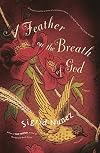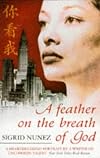
A Feather on the Breath of God
by Sigrid Nunez
On This Page
Description
A young woman looks back to the world of her immigrant parents: a Chinese-Panamanian father and a German mother, who meet in postwar Germany and settle in New York City. Growing up in a housing project in the 1950s and 1960s, the narrator escapes into dreams inspired both by her parents' stories and by her own reading and, for a time, into the otherworldly life of ballet. A yearning homesick mother, a silent and withdrawn father, the ballet-these are the elements that shape the young woman's show more imagination and her sexuality. show lessTags
Recommendations


































Member Recommendations
by JuliaMaria
Member Reviews
A talented writer's first-person narrative, where the author, Sigrid Nunez, explores her immigrant parents and the impact family relationships have had on her own life.
Employing a distinctive, stream-of-consciousness style, Nunez shares sometimes random memories which, when taken together, paint rich, multi-dimensional images of her parents. They are both remote, complex, and struggling to fit into an America which does meet their expectations. And they are fundamentally mismatched.
Her Chinese-Panamanian father works so many hours, in low-paying jobs, that he barely has time for ANY relationship with his wife and children. Her stay-at-home mother, a German immigrant, is deeply unhappy and longs to return to her homeland, complaining show more to her family all the time. Neither parent loves the other and their fights provide a continuous soundtrack to the lives of their young daughters.
As a teen, the narrator eventually finds some satisfactory escape and identity in studying ballet -- in appreciating its beauty, recognizing its inherent sexism, and through exposure to fellow students from more privileged backgrounds. Though determined not to marry, the author also describes an intense, long-term affair with a Russian immigrant -- one whose personal values and experiences differ so completely from her own.
However, while the four portraits Nunez creates (father, mother, self, lover) are vibrant and complex, there is little story to this narrative. It feels much more like the author's recollections of episodes in her life. No one comes off as particularly admirable. The ending did not provide much resolution. Instead, it felt to me like A FEATHER ON THE BREATH OF GOD is a young writer's attempting to understand her parents' immigrant experience and the ways it damaged her. show less
Employing a distinctive, stream-of-consciousness style, Nunez shares sometimes random memories which, when taken together, paint rich, multi-dimensional images of her parents. They are both remote, complex, and struggling to fit into an America which does meet their expectations. And they are fundamentally mismatched.
Her Chinese-Panamanian father works so many hours, in low-paying jobs, that he barely has time for ANY relationship with his wife and children. Her stay-at-home mother, a German immigrant, is deeply unhappy and longs to return to her homeland, complaining show more to her family all the time. Neither parent loves the other and their fights provide a continuous soundtrack to the lives of their young daughters.
As a teen, the narrator eventually finds some satisfactory escape and identity in studying ballet -- in appreciating its beauty, recognizing its inherent sexism, and through exposure to fellow students from more privileged backgrounds. Though determined not to marry, the author also describes an intense, long-term affair with a Russian immigrant -- one whose personal values and experiences differ so completely from her own.
However, while the four portraits Nunez creates (father, mother, self, lover) are vibrant and complex, there is little story to this narrative. It feels much more like the author's recollections of episodes in her life. No one comes off as particularly admirable. The ending did not provide much resolution. Instead, it felt to me like A FEATHER ON THE BREATH OF GOD is a young writer's attempting to understand her parents' immigrant experience and the ways it damaged her. show less
This was really disappointing; I loved Salvation City, which was poised, objective, intelligent and clear. This is rapturous, deeply personal, irrational and unreflective. Now, it just so happens that the book pushes almost every button on my pad of "Things I Dislike." A brief list would include:
* attempts to use language as a metaphysical analogy for everything.
* unnecessary mentions of The Body as metaphysical analogy for everything.
* belief that the real problems of the world are problems of identity and respect.
* use of the historical present tense (note to all authors: English is not French).
* switching from historical present to past tense and back again for no apparent reason.
* first person narrator.
* unironic aphorisms.
* show more name-dropping.
* failure to achieve any distance between first-person narrator, implied author, and author.
* tied to said failure, a fair degree of tiresome self-pity.
* literary sex.
* worst of all, sentences lacking verbs that are meant to signify INTENSITY, but just signify laziness.
There's no narrative to speak of, and no character development really, and not much in the way of revelation or interest. That said, the material of the book would probably interest most people. It couldn't be any more '90s hip if it tried: the child of an immigrant couple struggles with memories of her Panamanian/Chinese distant father and German but not-quite-fully-de-Nazified mother, her identity, her gender, art, the body, language and New York. The middle sections of the book were easily the best: the first focuses on the daughter's relationship with her mother, and is quite moving. The second focuses on her experiences as a ballerina, and would have made a great short story. But the opening section about her father, and the closing section about a relationship with a Russian immigrant, are unenlightening and dull. I'm open to the idea that heterosexual women would get more out of it than I did, but my main thought at the end of the book was something like: suck it up, get better friends, stop hating yourself and your parents for no reason, and for God's sake don't criticize your Russian boyfriend's mis-use of the past conditional if you can't even keep your own tenses consistent.
As I said, I was very disappointed. Next time I get the urge to read Nunez, I'll just re-read Salvation City. show less
* attempts to use language as a metaphysical analogy for everything.
* unnecessary mentions of The Body as metaphysical analogy for everything.
* belief that the real problems of the world are problems of identity and respect.
* use of the historical present tense (note to all authors: English is not French).
* switching from historical present to past tense and back again for no apparent reason.
* first person narrator.
* unironic aphorisms.
* show more name-dropping.
* failure to achieve any distance between first-person narrator, implied author, and author.
* tied to said failure, a fair degree of tiresome self-pity.
* literary sex.
* worst of all, sentences lacking verbs that are meant to signify INTENSITY, but just signify laziness.
There's no narrative to speak of, and no character development really, and not much in the way of revelation or interest. That said, the material of the book would probably interest most people. It couldn't be any more '90s hip if it tried: the child of an immigrant couple struggles with memories of her Panamanian/Chinese distant father and German but not-quite-fully-de-Nazified mother, her identity, her gender, art, the body, language and New York. The middle sections of the book were easily the best: the first focuses on the daughter's relationship with her mother, and is quite moving. The second focuses on her experiences as a ballerina, and would have made a great short story. But the opening section about her father, and the closing section about a relationship with a Russian immigrant, are unenlightening and dull. I'm open to the idea that heterosexual women would get more out of it than I did, but my main thought at the end of the book was something like: suck it up, get better friends, stop hating yourself and your parents for no reason, and for God's sake don't criticize your Russian boyfriend's mis-use of the past conditional if you can't even keep your own tenses consistent.
As I said, I was very disappointed. Next time I get the urge to read Nunez, I'll just re-read Salvation City. show less
A strange novel, this one by Nunez, made up of four parts that seem, and probably are, born at different times from different inner drives. The whole is to all intents and purposes a novel of formation. The story of the growth of a young girl, the daughter of a strange family, whose common denominator is strangeness. The parents, to whom the first two parts of the book are dedicated, have no common background, practically do not speak the same language, and live with an undercurrent of despair and dissatisfaction that is the main input they offer their daughter. In the third part, the daughter falls in love with classical ballet, too late and with too little talent to succeed, and in this falling in love one can see the inprinting of show more dissatisfaction due to the family upbringing. In the fourth part, the daughter is an adult and pays the pledge to her being an eternal immigrant, to what in German is called 'Migrationshintergrund', by falling in love with a beautiful and dangerous man, a Russian immigrant whom she teaches English. It is this love, however, that ultimately cures her of her being the child of immigrants and makes her authentically American.
The book is sublimely written. There is not a sentence that is not perfect, clear, exactly where it should be. Everywhere except, perhaps, in the second part, the part about the mother. I fear it is because we daughters always struggle to put our mothers in perspective, or because we fear we have inherited their faults: indeed, in part three, Nunez writes that when auditioning dancers, it is not the pupil one should look at, but the mother, to see if indeed that promising child will, once developed, have the physique of a dancer (and, perhaps, the mind too). show less
The book is sublimely written. There is not a sentence that is not perfect, clear, exactly where it should be. Everywhere except, perhaps, in the second part, the part about the mother. I fear it is because we daughters always struggle to put our mothers in perspective, or because we fear we have inherited their faults: indeed, in part three, Nunez writes that when auditioning dancers, it is not the pupil one should look at, but the mother, to see if indeed that promising child will, once developed, have the physique of a dancer (and, perhaps, the mind too). show less
I’ve seen many glowing reviews over the last few years for Sigrid Nunez’ writing, but I’ve never gotten around to reading her work. I wanted to try one of her novels that wasn’t The Friend (I’m not a dog person), so I picked up A Feather on the Breath of God which is about immigrant parents and growing up different. It’s a fantastically written story and I look forward to reading more of her work.
The first-person narrator of the story is never named, but it’s the story of her parents, growing up overseas and coming to America, which doesn’t turn out to be the dream life that they expected. The first part is the story of her father, who is Chinese but was born in Panama. The narrator is astonished when she hears her show more father speak in Chinese as it’s not something she’s ever contemplated. She and her sisters want to know more about what is Chinese, but her father brushes them off. Yet in their eyes, he is definitely different to other fathers, working long hours and speaking broken English. The second part moves on to their mother, who is from Germany and proud of it. She’s not happy with life in the housing projects (or her life in general) and sometimes takes it out on her children (or her husband). In comparison to the girls’ father, she is strong and outspoken while he is meek and quiet. The third part is about the narrator’s relatively short-lived time learning ballet. Although she is not a good dancer, in ballet she finds discipline and also freedom from her family as well as her first taste of independence. The last part is about the narrator as an adult, falling in love with one of her Russian students she teaches English to. To others, Vadim appears as a bad man, best avoided. To her, he represents something familiar, like her parents but he is accessible in ways that her parents never were.
Nunez writes beautifully. Although this isn’t a long novel, it’s elegantly crafted with each sentence carefully worded. As a reader, I wanted to savour every word and work out its place in the overall picture. It’s wistful at times, reminiscing on childhood and bitter in others as the narrator reflects on missed opportunities with her parents and others. At times, it brings make the warmth of childhood memories and in her relationship with Vadim, brings about feelings of teenage rebellion. It’s also a story of not knowing where to fit in – she doesn’t fit in with the Chinese kids at school, nor the rich. (Even Vadim, who arguably knows her best, doesn’t believe she is part Chinese at first.) It’s a story too of childhood colouring future choices, such as the narrator’s choice not to marry after her parents’ volatile marriage. It’s hard to believe this was Nunez’s debut work, but I’m grateful that I have much more of her work to enjoy.
http://samstillreading.wordpress.com show less
The first-person narrator of the story is never named, but it’s the story of her parents, growing up overseas and coming to America, which doesn’t turn out to be the dream life that they expected. The first part is the story of her father, who is Chinese but was born in Panama. The narrator is astonished when she hears her show more father speak in Chinese as it’s not something she’s ever contemplated. She and her sisters want to know more about what is Chinese, but her father brushes them off. Yet in their eyes, he is definitely different to other fathers, working long hours and speaking broken English. The second part moves on to their mother, who is from Germany and proud of it. She’s not happy with life in the housing projects (or her life in general) and sometimes takes it out on her children (or her husband). In comparison to the girls’ father, she is strong and outspoken while he is meek and quiet. The third part is about the narrator’s relatively short-lived time learning ballet. Although she is not a good dancer, in ballet she finds discipline and also freedom from her family as well as her first taste of independence. The last part is about the narrator as an adult, falling in love with one of her Russian students she teaches English to. To others, Vadim appears as a bad man, best avoided. To her, he represents something familiar, like her parents but he is accessible in ways that her parents never were.
Nunez writes beautifully. Although this isn’t a long novel, it’s elegantly crafted with each sentence carefully worded. As a reader, I wanted to savour every word and work out its place in the overall picture. It’s wistful at times, reminiscing on childhood and bitter in others as the narrator reflects on missed opportunities with her parents and others. At times, it brings make the warmth of childhood memories and in her relationship with Vadim, brings about feelings of teenage rebellion. It’s also a story of not knowing where to fit in – she doesn’t fit in with the Chinese kids at school, nor the rich. (Even Vadim, who arguably knows her best, doesn’t believe she is part Chinese at first.) It’s a story too of childhood colouring future choices, such as the narrator’s choice not to marry after her parents’ volatile marriage. It’s hard to believe this was Nunez’s debut work, but I’m grateful that I have much more of her work to enjoy.
http://samstillreading.wordpress.com show less
A talented writer's first-person narrative, where the author, Sigrid Nunez, explores her immigrant parents and the impact family relationships have had on her own life.
Employing a distinctive, stream-of-consciousness style, Nunez shares sometimes random memories which, when taken together, paint rich, multi-dimensional images of her parents. They are both remote, complex, and struggling to fit into an America which does meet their expectations. And they are fundamentally mismatched.
Her Chinese-Panamanian father works so many hours, in low-paying jobs, that he barely has time for ANY relationship with his wife and children. Her stay-at-home mother, a German immigrant, is deeply unhappy and longs to return to her homeland, complaining show more to her family all the time. Neither parent loves the other and their fights provide a continuous soundtrack to the lives of their young daughters.
As a teen, the narrator eventually finds some satisfactory escape and identity in studying ballet -- in appreciating its beauty, recognizing its inherent sexism, and through exposure to fellow students from more privileged backgrounds. Though determined not to marry, the author also describes an intense, long-term affair with a Russian immigrant -- one whose personal values and experiences differ so completely from her own.
However, while the four portraits Nunez creates (father, mother, self, lover) are vibrant and complex, there is little story to this narrative. It feels much more like the author's recollections of episodes in her life. No one comes off as particularly admirable. The ending did not provide much resolution. Instead, it felt to me like A FEATHER ON THE BREATH OF GOD is a young writer's attempting to understand her parents' immigrant experience and the ways it damaged her. show less
Employing a distinctive, stream-of-consciousness style, Nunez shares sometimes random memories which, when taken together, paint rich, multi-dimensional images of her parents. They are both remote, complex, and struggling to fit into an America which does meet their expectations. And they are fundamentally mismatched.
Her Chinese-Panamanian father works so many hours, in low-paying jobs, that he barely has time for ANY relationship with his wife and children. Her stay-at-home mother, a German immigrant, is deeply unhappy and longs to return to her homeland, complaining show more to her family all the time. Neither parent loves the other and their fights provide a continuous soundtrack to the lives of their young daughters.
As a teen, the narrator eventually finds some satisfactory escape and identity in studying ballet -- in appreciating its beauty, recognizing its inherent sexism, and through exposure to fellow students from more privileged backgrounds. Though determined not to marry, the author also describes an intense, long-term affair with a Russian immigrant -- one whose personal values and experiences differ so completely from her own.
However, while the four portraits Nunez creates (father, mother, self, lover) are vibrant and complex, there is little story to this narrative. It feels much more like the author's recollections of episodes in her life. No one comes off as particularly admirable. The ending did not provide much resolution. Instead, it felt to me like A FEATHER ON THE BREATH OF GOD is a young writer's attempting to understand her parents' immigrant experience and the ways it damaged her. show less
Sigrid Nunez is such an unlikely phenom--at least it seems so to me, because I share her experience of American birth in a family of ethnicity spanning East and West, and honestly my whole life has always been about finding the language, finding the right words. How wonderful that the second half of the book is written from the point of view of an ESL teacher in love with her immigrant student, who she loves no less for being a philanderer and a petty criminal. It feels like the best of metaphors for claiming and exercising the responsibilities of America.
I want to read everything by Sigrid Nunez! The Friend and What Are You Going Through have sent me back to her earlier work.
Members
- Recently Added By
Lists

Books Read in 2022
5,164 works; 113 members

Books Read in 2021
5,361 works; 113 members
Author Information

13+ Works 4,613 Members
Awards and Honors
Awards
Common Knowledge
- Canonical title
- A Feather on the Breath of God
- Original title
- A Feather on the Breath of God
- Alternate titles*
- Wie eine Feder auf dem Atem Gottes
- Original publication date
- 1995
*Some information comes from Common Knowledge in other languages. Click "Edit" for more information.
Classifications
Statistics
- Members
- 291
- Popularity
- 110,118
- Reviews
- 10
- Rating
- (3.74)
- Languages
- Dutch, English, German
- Media
- Paper, Ebook
- ISBNs
- 12
- ASINs
- 5