On This Page
Description
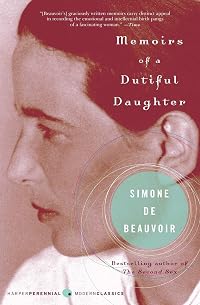
"A book that will leave no one indifferent, and no one affected in quite the same way." -New York Times A superb autobiography by one of the great literary figures of the twentieth century Simone de Beauvoir's Memoirs of a Dutiful Daughter offers an intimate picture of growing up in a bourgeois French family, rebelling as an adolescent against the conventional expectations of her class, and striking out on her own with an intellectual and existential ambition exceedingly rare in a young show more woman in the 1920s. Beauvoir vividly evokes her friendships, love interests, mentors, and the early days of the most important relationship of her life, with fellow student Jean-Paul Sartre, against the backdrop of a turbulent political time. show lessTags
Recommendations































Member Recommendations
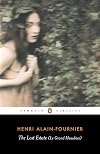
Cecrow Fiction, mentioned several times in Simone's first memoir.
20

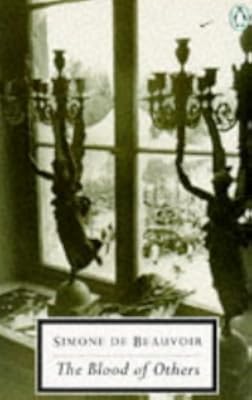
JuliaMaria Der Titel der Memoiren von Bianca Lamblin ist diesem ersten Band der Memoiren von Simone de Beauvoir entlehnt. Man muss die Memoiren von Lamblin nicht unbedingt lesen, aber es gibt einen Eindruck der Beziehung von Simone de Beauvoir und Jean-Paul Sartre.
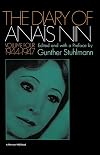
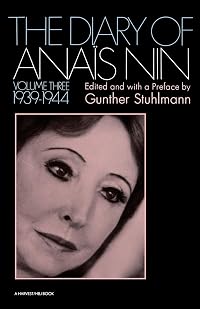
JuliaMaria Simone de Beauvoir und Anais Nin, zwei faszinierende sehr unterschiedliche Frauen derselben Generation, und wie sie ihre Leben für sich und uns aufbereiten. Die eine über eine detaillierte mehrere Bände umfassende Autobiographie, die andere über tägliche Tagebucheinträge, die viele viele Bände füllen.
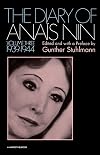
kitzyl Recollections of a Catholic girlhood that created feminist writers.
Member Reviews
This memoir precedes Simone de Beauvoir's troubled teaching years, covering her childhood and her own adolescence. I understand she becomes more self-conscious about who she may offend as well as less objective in the subsequent volumes. Under those circumstances, it would be hard to match or beat this impeccable first one.
Simone was of my grandmother's generation, born in Paris to a well-off upper-class bourgeois family with several extended members nearby. I was able to relate to her on a startlingly deep level, despite all of the circumstantial differences. She wrote about her inner thoughts and feelings, perceptions from her childhood and maturing years that I could intimately relate to. When she wrote about the self-discovery at show more five that she had an internal life that no one else was privy to, I remember that moment. I remember what she remembers, how it was as a child to view adults as all-knowing, almost another race of all-powerful beings whom I could not imagine questioning, and how that changes as one grows. How it appears as though one's future will (of course!) be glorious and come of its own accord, until the struggle becomes more apparent and the promise more remote, and the required work more obvious. The pleasures of finding one's own brand of certainty, and the pain of its mismatch with the distinguishably different certainties held by close family members; the conflicts and consequent repressions, the bitterness and loneliness. The false idols, and the unexpected happy discoveries.
I've read several books before that caused me to reminisce about my childhood, but rarely one like this that brought my teenage and early university memories so vividly back to life. In some respects she was more naive, but in others much wiser than myself. Her memoir is not merely a recording of memories. She is intensely interested in understanding and explaining from her adult, hindsight perspective, endowed with psychological insight, throwing me into my own self-analysis through compare-contrast. Achieving independence, a sense of self and identity, is a major theme and captured by the memoir's title. She relates in detail the stages she moved through in her perception of her parents: from viewing them as faultless to gradually becoming more resentful of the control and limitations their views imposed. Too driven by curiosity about the world to accept explanations like "because it isn't done" without questioning, still she needed to mature before she could openly challenge them. This portion of her story concludes with a statement that to choose a life for oneself can literally mean choosing to live.
Another major theme is her approach to romance, which could be read as cold and calculated if it wasn't so driven by romantic notions. I loved this feminist take (at age 15! in 1923!) about what sort of man she should wish to meet: "If in the absolute sense a man, who was a member of the privileged species and already had a flying start over me, did not count more than I did, I was forced to the conclusion that in a relative sense he counted less: in order to be able to acknowledge him as my equal, he would have to prove himself my superior in every way." In other words, a man must work twice as hard as a woman to impress her. Only Sartre could measure up to so high a standard, and it provides a kind of rising climax to this portion of her story as their orbiting worlds begin to overlap. I've a natural suspicion of any memoirist's self-portrait, but still I think I would have liked knowing Simone as a fellow student had our lives coincided. Her hard-headed steadiness and certainty in her principles and secular beliefs, a readiness to question everything; she would have been fantastic company. show less
Simone was of my grandmother's generation, born in Paris to a well-off upper-class bourgeois family with several extended members nearby. I was able to relate to her on a startlingly deep level, despite all of the circumstantial differences. She wrote about her inner thoughts and feelings, perceptions from her childhood and maturing years that I could intimately relate to. When she wrote about the self-discovery at show more five that she had an internal life that no one else was privy to, I remember that moment. I remember what she remembers, how it was as a child to view adults as all-knowing, almost another race of all-powerful beings whom I could not imagine questioning, and how that changes as one grows. How it appears as though one's future will (of course!) be glorious and come of its own accord, until the struggle becomes more apparent and the promise more remote, and the required work more obvious. The pleasures of finding one's own brand of certainty, and the pain of its mismatch with the distinguishably different certainties held by close family members; the conflicts and consequent repressions, the bitterness and loneliness. The false idols, and the unexpected happy discoveries.
I've read several books before that caused me to reminisce about my childhood, but rarely one like this that brought my teenage and early university memories so vividly back to life. In some respects she was more naive, but in others much wiser than myself. Her memoir is not merely a recording of memories. She is intensely interested in understanding and explaining from her adult, hindsight perspective, endowed with psychological insight, throwing me into my own self-analysis through compare-contrast. Achieving independence, a sense of self and identity, is a major theme and captured by the memoir's title. She relates in detail the stages she moved through in her perception of her parents: from viewing them as faultless to gradually becoming more resentful of the control and limitations their views imposed. Too driven by curiosity about the world to accept explanations like "because it isn't done" without questioning, still she needed to mature before she could openly challenge them. This portion of her story concludes with a statement that to choose a life for oneself can literally mean choosing to live.
Another major theme is her approach to romance, which could be read as cold and calculated if it wasn't so driven by romantic notions. I loved this feminist take (at age 15! in 1923!) about what sort of man she should wish to meet: "If in the absolute sense a man, who was a member of the privileged species and already had a flying start over me, did not count more than I did, I was forced to the conclusion that in a relative sense he counted less: in order to be able to acknowledge him as my equal, he would have to prove himself my superior in every way." In other words, a man must work twice as hard as a woman to impress her. Only Sartre could measure up to so high a standard, and it provides a kind of rising climax to this portion of her story as their orbiting worlds begin to overlap. I've a natural suspicion of any memoirist's self-portrait, but still I think I would have liked knowing Simone as a fellow student had our lives coincided. Her hard-headed steadiness and certainty in her principles and secular beliefs, a readiness to question everything; she would have been fantastic company. show less
The first volume of de Beauvoir's memoir, Memoirs of a Dutiful Daughter, is both distressing and fascinating. An account of her childhood to early adulthood: from her Catholic upbringing to her abandonment of religious sentiments and confinements ad nauseam in exchange of at times depressing, second-guessing journey to the eye-opening comforts of Philosophy.
Brought up in a bourgeois family restricted both by religion and expected gender roles, de Beauvoir was perceptive and insightful, her questions challenging in nature. As a child, she pondered about her easy acceptance of the truth after finding out Santa Claus was not real and their Christmas presents came from their parents, 'is this because we still get what we wanted that even if show more it's a deception it matters not?' and a budding scepticism towards adults' intent whenever they express concern and kindness, 'are they doing this to make me obey them?'. Towards her adolescence, amidst her parents' literary censorship and avoidance on conversations about sex (babies came from the anus, her mother stated), she acquired her own set of beliefs and discarded those which were stifling to her until she had to prove herself from her parents' disappointments regarding her choices (especially her choice to teach and refusal to adopt the common female role of that era).
Her literary undertakings greatly contributed on her growth both as an author and a thinker, ** "Literature took the place in my life that had once been occupied by religion: it absorbed me entirely, and transfigured my life." (p204) Nobody managed to stop her. They called her thirst for knowledge corruption, her influence evil. Her rebellious attitude often coincided with her ambivalent feelings towards marriage and family. It's a tug-of-war between her intellectual and spiritual lives, ** "The consequence was that I grew accustomed to the idea that my intellectual life — embodied by my father — and my spiritual life — expressed by my mother — were two heterogeneous fields of experience which had nothing in common." (p41). By her early 20s, though struggling, she had made peace with her inner desire, opting for the rewarding and difficult intellectual path in spite of her relatable, terrible longing for a romantic relationship. She was obviously head over heels with her cousin Jacques which she eventually learnt to move on from. However, a series of disillusionment can still be sensed with her string of platonic and ambiguous friendships which lasted years. She mused that it was easy for men to form a platonic friendship with her because she had a "female appearance and a male brain". Curiously, she didn't scare men off. However, most often than not, she saw herself as alien, different, never fitting anywhere. This was until she met Sartre and found in him her intellectual and romantic match; Sartre supported and took her under his wing, his respect and support for her choices was a breathe of fresh air; an enlightenment in itself. He did not put her inside The Gender Box: that women ought to marry and make herself a wife, nothing else. de Beauvoir's admiration for Sartre transcended the pages of this book and it was such a delight to read. I personally wanted more. Amusingly, it took 300 pages before she finally mentioned Sartre and his failure on a written exam.
What was deeply moving in de Beauvoir's memoir was how the people in her life, as she developed as a person, also developed for better or for worse. Vividly, we read and, to an extent, relate to the sudden estrangements, changes, and pleasant closeness she had with people beloved to her. It took years, at times it took only words. It depicted the loss of innocence and the fears of adulthood. Her longing for solitude both anguished and comforted her. She was a contradictory we all could find ourselves in.
Memoirs of a Dutiful Daughter was surprisingly painful by the end. A reflection of how remorse and guilt impact the conscience more so when they're without logic. It reminded me of what Winterson said regarding religious upbringing that one cannot completely eradicate it from one's inner self. However tiny, there'll always be a remnant of it left. We only have to try our best to silence it to a mere whisper of nonsense. This was a spectacular memoir. It's something that will certainly stay with me for a while. I honestly can't wait to get my hands on the second volume then surround myself with her fiction and hardcore philosophical works. show less
Brought up in a bourgeois family restricted both by religion and expected gender roles, de Beauvoir was perceptive and insightful, her questions challenging in nature. As a child, she pondered about her easy acceptance of the truth after finding out Santa Claus was not real and their Christmas presents came from their parents, 'is this because we still get what we wanted that even if show more it's a deception it matters not?' and a budding scepticism towards adults' intent whenever they express concern and kindness, 'are they doing this to make me obey them?'. Towards her adolescence, amidst her parents' literary censorship and avoidance on conversations about sex (babies came from the anus, her mother stated), she acquired her own set of beliefs and discarded those which were stifling to her until she had to prove herself from her parents' disappointments regarding her choices (especially her choice to teach and refusal to adopt the common female role of that era).
Her literary undertakings greatly contributed on her growth both as an author and a thinker, ** "Literature took the place in my life that had once been occupied by religion: it absorbed me entirely, and transfigured my life." (p204) Nobody managed to stop her. They called her thirst for knowledge corruption, her influence evil. Her rebellious attitude often coincided with her ambivalent feelings towards marriage and family. It's a tug-of-war between her intellectual and spiritual lives, ** "The consequence was that I grew accustomed to the idea that my intellectual life — embodied by my father — and my spiritual life — expressed by my mother — were two heterogeneous fields of experience which had nothing in common." (p41). By her early 20s, though struggling, she had made peace with her inner desire, opting for the rewarding and difficult intellectual path in spite of her relatable, terrible longing for a romantic relationship. She was obviously head over heels with her cousin Jacques which she eventually learnt to move on from. However, a series of disillusionment can still be sensed with her string of platonic and ambiguous friendships which lasted years. She mused that it was easy for men to form a platonic friendship with her because she had a "female appearance and a male brain". Curiously, she didn't scare men off. However, most often than not, she saw herself as alien, different, never fitting anywhere. This was until she met Sartre and found in him her intellectual and romantic match; Sartre supported and took her under his wing, his respect and support for her choices was a breathe of fresh air; an enlightenment in itself. He did not put her inside The Gender Box: that women ought to marry and make herself a wife, nothing else. de Beauvoir's admiration for Sartre transcended the pages of this book and it was such a delight to read. I personally wanted more. Amusingly, it took 300 pages before she finally mentioned Sartre and his failure on a written exam.
What was deeply moving in de Beauvoir's memoir was how the people in her life, as she developed as a person, also developed for better or for worse. Vividly, we read and, to an extent, relate to the sudden estrangements, changes, and pleasant closeness she had with people beloved to her. It took years, at times it took only words. It depicted the loss of innocence and the fears of adulthood. Her longing for solitude both anguished and comforted her. She was a contradictory we all could find ourselves in.
Memoirs of a Dutiful Daughter was surprisingly painful by the end. A reflection of how remorse and guilt impact the conscience more so when they're without logic. It reminded me of what Winterson said regarding religious upbringing that one cannot completely eradicate it from one's inner self. However tiny, there'll always be a remnant of it left. We only have to try our best to silence it to a mere whisper of nonsense. This was a spectacular memoir. It's something that will certainly stay with me for a while. I honestly can't wait to get my hands on the second volume then surround myself with her fiction and hardcore philosophical works. show less
Beautifully translated by James Kirkup (which makes me wonder what the original reads like), this memoir has me absolutely enamoured. Especially as I'm granted front row seats to some of my favourite topics: the cumulative effects of the events and the environments, big and small, that shapes a person (Beauvoir in this case), and the secret inner lives of children.
The precociousness of young Beauvoir is coupled with some genuinely apt descriptions of what it felt like to be a child that I have mostly forgotten. One can argue that since it is a memoir, written after the fact of childhood, it has been painted more rosy etc. But even as a heightened fiction, I still find it highly relatable and fascinating as an ontological study of how a show more person - a being! - really comes to BE!
There is such honesty and immediacy to Beauvoir's recollection of her early years that whilst I didn't always agree with her choiceslike, c'mon, Jacques and Herbaud were total asses, stop falling for their "you're not like other girls/you're just like one of the guys" bullshit and think that their "don't talk to other men" jealousies are flattering , I cannot help but respect her own strong sense of intellectual purpose and her unquenchable thirst for knowledge. The way she constantly challenges herself to re-evaluate her beliefs, expand her worldviews, and be the best purely-intellectual person that she can be is something I really admire.
I look forward to reading volume two, which will hopefully continue from Beauvoir's eventual independence from the moral restrictions imposed by her family/society. show less
The precociousness of young Beauvoir is coupled with some genuinely apt descriptions of what it felt like to be a child that I have mostly forgotten. One can argue that since it is a memoir, written after the fact of childhood, it has been painted more rosy etc. But even as a heightened fiction, I still find it highly relatable and fascinating as an ontological study of how a show more person - a being! - really comes to BE!
There is such honesty and immediacy to Beauvoir's recollection of her early years that whilst I didn't always agree with her choices
I look forward to reading volume two, which will hopefully continue from Beauvoir's eventual independence from the moral restrictions imposed by her family/society. show less
The short of it: From the opening pages I fell head over heels for Memoires d'une jeune fille rangée (translated into English as Memoirs of a Dutiful Daughter but more literally "Memoirs of a well-behaved girl"), the first of four volumes in de Beauvoir's autobiography. It's been a long time since I connected with a book at such a level of visceral sympathy—since I had the feeling "Yes! That's what it's like for me too!," since I felt such a sense of loss upon turning a final page. So there may be a certain lack of critical distance in this post: I'm declaring myself right up front to be a newly-converted de Beauvoir fangirl, and my only dilemma now is whether to break my book-buying ban and order the second volume (La force de show more l'age) right this second, or whether to hold out for a gift-giving holiday or upcoming trip to France.
And the long: For me, one of the greatest pleasures of Memoires d'une jeune fille rangée is simply watching de Beauvoir's brain apply its lifelong training in philosophy and semiotics to the examination of her own early life. Beginning with birth and ending with the completion of her secondary schooling, some of the most interesting passages in this book map to what are often the "boring bits" of biography and autobiography: de Beauvoir's early childhood. She is such a keen observer, and obviously so well-accustomed to dissecting the way humans perceive and process the world, that hers becomes an early-childhood story unlike any I've ever read before—and it's especially exciting to read about her development in this regard if the reader has some slight familiarity with her existentialist feminism later in life, since she does a complete about-face on many issues. She writes, for example, about her early assumption (age five or so) that language and other signs sprang organically—necessarily and without human intervention—from the things they signify, so that the word "vache" (cow) was somehow a necessary and organic component of the animal itself. In this mindset she could understand letters as objects (an "a," for example) but not as building blocks representing sounds that make up words. In this passage, she recalls the "click" in her brain when she finally, although in a limited way, grasped the concept of a sign:
One of the many threads running through the book traces de Beauvoir's evolving understanding of signs: where they come from, how they work, and the inescapable gap (despite her early naïvete) between the thing itself and the sign humans have invented to indicate it. There comes a period in her teenage years when language, the necessity of interpreting language, becomes her enemy for just this reason: when we express our thoughts, feelings, and intentions, there is always a chasm between the thing itself—our interior landscape—and our expression of it; often this chasm is only widened when our words are interpreted by another person.
Despite this semiotic difficulty, however, de Beauvoir herself does an impeccable job of articulating her own interior landscapes at different times in her life, not only as personal experiences, but as ontological states capable of dissection by her as an adult. Another thread that is first woven into the narrative very early is the dread inherent in the realization that we change with time, that our present incarnation is different than the person we will be in the future, and in ways currently dismaying or frightening to us. That these changes may cease to dismay or frighten us in the future, before or after they happen to us, doesn't change the dread our current selves feel at being left behind, replaced:
This was one of those jolts of recognition for me: I have a memory very like this, of being at the zoo with my mother and grandmother when I was three or four years old, and overhearing them talk about how unpleasant "teenagers" were. Mom and Grandma probably didn't actually say this, but I got the impression from their conversation that teenagers hate their parents. And it suddenly dawned on me that one day I would be a teenager: would I hate my parents as well? But I didn't want to hate them; I loved and depended upon my parents. Where would this monstrous teenage-me come from, and how would it eat away at the love I currently felt toward my family? I remember an awful feeling of dread, and of impotence: I didn't want to become this future self I foresaw, but presumably I could do nothing to stop it: "I"—the "me" looking at the polar bears—would be consumed in teenage-ness and no longer care about "my" (toddler-age) preferences. Of course the truth was more complicated—I never stopped loving my parents, needless to say—but in a way, my three-year-old self was right: by the time I was a teenager I DID act snotty and unpleasant to them a lot of the time, and I no longer wished (luckily) to regress into the trusting dependence of toddler-hood. I had become a stranger, and no longer wanted to go back; the only way was forward.
De Beauvoir's delineation of this process is fascinating, and she returns to it several times throughout this volume: the dread that precedes a change, and the ontological break that enables us to be in a completely different emotional space after the change, so that our former dread is no longer relevant. Raised devoutly Catholic, for example, she realizes sometime in her early teens that she no longer believes in God. At some point before this realization, she thinks to herself that to lose one's faith would be the most horrible thing she can imagine happening to a person; yet when she herself realizes that it has happened to her, it makes no immediate change in her life; she feels little distress. She had thought that her morality and assumptions about the universe would immediately and drastically be torn asunder, but in fact she retains the tenants of her bourgeois Christian upbringing long after she has stopped believing in God, and only very gradually (years, decades later) comes to reexamine the aspects of that upbringing that no longer make sense to her. By the time she is questioning these assumptions, other things (literature, philosophy, human relationships) have taken the spiritually fulfilling place that religion once held in her life:
Although I want to discuss so much more—young Simone's feeling of tragedy at the unconsciousness of inanimate objects; her attribution of her own negative capability to the difference in her parents' belief systems; her relationships with her sister and her best friend; her first meetings with Sartre—I'm already running long. I can't close this post, however, without mentioning the insight that Memoires d'une jeune fille rangée gives into de Beauvoir's feminism. Her father looms large in this history, as both the object of her childhood and adolescent idolatry, and as a conservative blow-hard who says things like "a wife is what her husband makes her; it's up to him to shape her personality," and bitterly regrets the fact that his loss of money means that his daughters will be earning their own livings, rather than marrying well into good society (never mind that they PREFER to earn their own livings; that's not the point). Her father's betrayal of her—he tells her she will have to educate herself and earn her living, then hates her for being a reminder of his own financial failure—was a formative event in de Beauvoir's life, and a source of real bitterness for her; I was impressed, however, at how impartial she manages to be toward her father himself, while coming to reject the set of values he held.
As with all other aspects of the book, her observations on gender relations are detailed and perceptive, and the roots of her feminism run through this volume, from her examination of the sexual double-standard that allowed her parents to entertain men who kept mistresses but not the mistresses themselves; to the assertion of her otherwise avant-garde philospher friends that they "can't respect an unmarried woman"; to the effects of having her reading censored (it was considered dangerous for unmarried women to read about sex). I can't resist including this passage, in which a ten-year-old Simone is reacting to her priest's story about a young female parishioner who reads "bad books," loses her faith in God, and subsequently commits suicide:
This passage makes me feel like cheering. And de Beauvoir does not neglect to notice that men and boys were not considered so delicate as to kill themselves over premature exposure to a tawdry potboiler. Still, Mémoires d'une jeune fille rangée puts de Beauvoir's feminism in perspective: she may be most famous for The Second Sex, but she's primarily a humanist, interested in the modes of existence experienced by all humans, and by specific humans, regardless of gender.
I'll be honest: this is not the memoir for everyone. If you're not interested in philosophy and like a lot to "happen" in your books, it will probably seem hopelessly dry. De Beauvoir's adolescence involves all the arrogance and angst one might expect from a recently-secularized teen who went on to become a preeminent existentialist (hint: a lot). But even when she is recalling her most turbulent periods, the adult de Beauvoir maintains her incisive, perceptive, ever-so-faintly-amused voice. She doesn't take herself too seriously, but neither does she dismiss her experiences or manifest a false modesty. This balanced tone, combined with her stunning intelligence and existentialist insights, makes this volume easily one of my favorite reads of the year, if not of all time. show less
And the long: For me, one of the greatest pleasures of Memoires d'une jeune fille rangée is simply watching de Beauvoir's brain apply its lifelong training in philosophy and semiotics to the examination of her own early life. Beginning with birth and ending with the completion of her secondary schooling, some of the most interesting passages in this book map to what are often the "boring bits" of biography and autobiography: de Beauvoir's early childhood. She is such a keen observer, and obviously so well-accustomed to dissecting the way humans perceive and process the world, that hers becomes an early-childhood story unlike any I've ever read before—and it's especially exciting to read about her development in this regard if the reader has some slight familiarity with her existentialist feminism later in life, since she does a complete about-face on many issues. She writes, for example, about her early assumption (age five or so) that language and other signs sprang organically—necessarily and without human intervention—from the things they signify, so that the word "vache" (cow) was somehow a necessary and organic component of the animal itself. In this mindset she could understand letters as objects (an "a," for example) but not as building blocks representing sounds that make up words. In this passage, she recalls the "click" in her brain when she finally, although in a limited way, grasped the concept of a sign:
[J]e contemplais l'image d'une vache, et les deux lettres, c, h, qui se prononçaient ch. J'ai compris soudain qu'elles ne possedaient pas un nom à la manière des objets, mais qu'elles représentaient un son: j'ai compris ce que c'est un signe. J'eus vite fait d'apprendre à lire. Cependant ma pensée s'arrêta en chemin. Je voyais dans l'image graphique l'exacte doublure du son qui lui correspondait: ils émanaient ensemble de la chose qu'ils exprimaient si bien que leur relation ne comportait aucun arbitraire.
[I was looking at a picture of a cow [vache], and the two letters, c and h, that together were pronounced "ch." I understood suddenly that they had no name in the sense that objects do, but that they represented a sound: I understood what a sign is. It then took me very little time to learn to read. However, my ideas stopped there. I saw in the picture the exact double of the sound corresponding to it: they emanated together from the thing they expressed, so well that the relation between them involved nothing arbitrary.
One of the many threads running through the book traces de Beauvoir's evolving understanding of signs: where they come from, how they work, and the inescapable gap (despite her early naïvete) between the thing itself and the sign humans have invented to indicate it. There comes a period in her teenage years when language, the necessity of interpreting language, becomes her enemy for just this reason: when we express our thoughts, feelings, and intentions, there is always a chasm between the thing itself—our interior landscape—and our expression of it; often this chasm is only widened when our words are interpreted by another person.
Despite this semiotic difficulty, however, de Beauvoir herself does an impeccable job of articulating her own interior landscapes at different times in her life, not only as personal experiences, but as ontological states capable of dissection by her as an adult. Another thread that is first woven into the narrative very early is the dread inherent in the realization that we change with time, that our present incarnation is different than the person we will be in the future, and in ways currently dismaying or frightening to us. That these changes may cease to dismay or frighten us in the future, before or after they happen to us, doesn't change the dread our current selves feel at being left behind, replaced:
Je regardais le fauteuil de maman et je pensais: "Je ne pourrai plus m'asseoir sur ses genoux." Soudain l'avenir existait: il me changerait en une autre qui dirait moi et ne serait plus moi. J'ai pressenti tous les sevrages, les reniements, les abandons et la succession de mes morts.
[I looked at maman's chair and I thought: "I won't be able to sit on her lap anymore." Suddnely the future existed: it would change me into someone else who would say "me" and would no longer be me. I sensed all the weanings, the renunciations, the abandonments and the whole progression of my deaths.
This was one of those jolts of recognition for me: I have a memory very like this, of being at the zoo with my mother and grandmother when I was three or four years old, and overhearing them talk about how unpleasant "teenagers" were. Mom and Grandma probably didn't actually say this, but I got the impression from their conversation that teenagers hate their parents. And it suddenly dawned on me that one day I would be a teenager: would I hate my parents as well? But I didn't want to hate them; I loved and depended upon my parents. Where would this monstrous teenage-me come from, and how would it eat away at the love I currently felt toward my family? I remember an awful feeling of dread, and of impotence: I didn't want to become this future self I foresaw, but presumably I could do nothing to stop it: "I"—the "me" looking at the polar bears—would be consumed in teenage-ness and no longer care about "my" (toddler-age) preferences. Of course the truth was more complicated—I never stopped loving my parents, needless to say—but in a way, my three-year-old self was right: by the time I was a teenager I DID act snotty and unpleasant to them a lot of the time, and I no longer wished (luckily) to regress into the trusting dependence of toddler-hood. I had become a stranger, and no longer wanted to go back; the only way was forward.
De Beauvoir's delineation of this process is fascinating, and she returns to it several times throughout this volume: the dread that precedes a change, and the ontological break that enables us to be in a completely different emotional space after the change, so that our former dread is no longer relevant. Raised devoutly Catholic, for example, she realizes sometime in her early teens that she no longer believes in God. At some point before this realization, she thinks to herself that to lose one's faith would be the most horrible thing she can imagine happening to a person; yet when she herself realizes that it has happened to her, it makes no immediate change in her life; she feels little distress. She had thought that her morality and assumptions about the universe would immediately and drastically be torn asunder, but in fact she retains the tenants of her bourgeois Christian upbringing long after she has stopped believing in God, and only very gradually (years, decades later) comes to reexamine the aspects of that upbringing that no longer make sense to her. By the time she is questioning these assumptions, other things (literature, philosophy, human relationships) have taken the spiritually fulfilling place that religion once held in her life:
La littérature prit dans mon existence la place qu'y avait occupée la religion: elle l'envahit tout entière, et la transfigura. Les livres que j'aimais devinrent une Bible où je puisais des conseils et des secours; j'en copiai de longs extraits; j'appris par coeur de nouveaux cantiques et de nouvelles litanies, des psaumes, des proverbes, des prophéties et je sanctifiai toutes les cironstances de ma vie en me recitant ces textes sacrés. [...] entre moi et les âmes soeurs qui existaient quelque part, hors d'atteinte, ils créaient une sorte de communion; au lieu de vivre ma petite histoire particulière, je participais à une grande épopée spirituelle.
[Literature took, in my life, the place that had formerly been occupied by religion: it overran everything, and transfigured it. The books I loved became a Bible from which I took advice and comfort; I copied long extracts from them; I learned by heart new hymns and new litanies, psalms, proverbs, prophecies, and I sanctified all the circumstances of my life by reciting these sacred texts. [...] Between me and these sister souls there existed something, out of reach; they created a sort of communion; instead of living my trivial individual story, I was participating in a grand spiritual saga.]
Although I want to discuss so much more—young Simone's feeling of tragedy at the unconsciousness of inanimate objects; her attribution of her own negative capability to the difference in her parents' belief systems; her relationships with her sister and her best friend; her first meetings with Sartre—I'm already running long. I can't close this post, however, without mentioning the insight that Memoires d'une jeune fille rangée gives into de Beauvoir's feminism. Her father looms large in this history, as both the object of her childhood and adolescent idolatry, and as a conservative blow-hard who says things like "a wife is what her husband makes her; it's up to him to shape her personality," and bitterly regrets the fact that his loss of money means that his daughters will be earning their own livings, rather than marrying well into good society (never mind that they PREFER to earn their own livings; that's not the point). Her father's betrayal of her—he tells her she will have to educate herself and earn her living, then hates her for being a reminder of his own financial failure—was a formative event in de Beauvoir's life, and a source of real bitterness for her; I was impressed, however, at how impartial she manages to be toward her father himself, while coming to reject the set of values he held.
As with all other aspects of the book, her observations on gender relations are detailed and perceptive, and the roots of her feminism run through this volume, from her examination of the sexual double-standard that allowed her parents to entertain men who kept mistresses but not the mistresses themselves; to the assertion of her otherwise avant-garde philospher friends that they "can't respect an unmarried woman"; to the effects of having her reading censored (it was considered dangerous for unmarried women to read about sex). I can't resist including this passage, in which a ten-year-old Simone is reacting to her priest's story about a young female parishioner who reads "bad books," loses her faith in God, and subsequently commits suicide:
Ce que je comprenais le moins, c'est que la connaissance conduisît au désespoir. Le prédicateur n'avait pas dit que les mauvais livres peignaient la vie sous des couleurs fausses: en ce cas, il eût facilement balayé leurs mensonges; le drame de l'enfant qu'il avait échoué à sauver, c'est qu'elle avait découvert prématurément l'authentique visage de la réalité. De toute façon, me disais-je, un jour je la verrai moi aussi, face à face, et je n'en mourrai pas.
[What I understood least, was the idea that knowledge led to despair. The priest hadn't said that the bad books painted life in false colors: in that case, it would have been easy to brush aside their lies; the tragedy of the girl he had failed to save was that she had prematurely discovered the true face of reality. In any case, I said to myself, one day I'll see it too, face to face, and I won't die.]
This passage makes me feel like cheering. And de Beauvoir does not neglect to notice that men and boys were not considered so delicate as to kill themselves over premature exposure to a tawdry potboiler. Still, Mémoires d'une jeune fille rangée puts de Beauvoir's feminism in perspective: she may be most famous for The Second Sex, but she's primarily a humanist, interested in the modes of existence experienced by all humans, and by specific humans, regardless of gender.
I'll be honest: this is not the memoir for everyone. If you're not interested in philosophy and like a lot to "happen" in your books, it will probably seem hopelessly dry. De Beauvoir's adolescence involves all the arrogance and angst one might expect from a recently-secularized teen who went on to become a preeminent existentialist (hint: a lot). But even when she is recalling her most turbulent periods, the adult de Beauvoir maintains her incisive, perceptive, ever-so-faintly-amused voice. She doesn't take herself too seriously, but neither does she dismiss her experiences or manifest a false modesty. This balanced tone, combined with her stunning intelligence and existentialist insights, makes this volume easily one of my favorite reads of the year, if not of all time. show less
Memoirs of a Dutiful Daughter is the first volume of Simone de Beauvoir’s autobiography, and covers her life from early childhood until her days as a student at the Sorbonne. I wanted to read this book because I’m interested in existentialism, enjoy autobiographies and was quite intrigued by de Beauvoir herself. Although I’ve read a couple of existentialist novels, I was quite curious to read about the movement from a woman’s perspective. De Beauvoir’s memoir completely lived up to my expectations – she is an unusual and fascinating character, and it helped that the book also contained a few ingredients I usually like reading about (Paris, the 1920s and 30s, university life).
One aspect of the story she tells is her rebellion show more against her family in her late teens. She was born into a middle-class family; her mother was a strict Catholic, while her father, to whom Simone was devoted, was a conservative lawyer, a sceptic and an impressive amateur actor. The two influences seem to have created a kind of internal conversation that repeated itself during her life: ‘My father’s individualism and pagan ethical standards were in complete contrast to the rigidly moral conventionalism of my mother’s teaching. This imbalance, which made my life a kind of endless disputation, is the main reason why I became an intellectual’. Simone was herself very pious as a child and thought of becoming a nun but later completely lost her faith. I think you can see the same intensity and tendency to extremism (in a positive sense) in her attempts to find ‘the Truth’ as a philosophy student.
While reading this book, I was struck by how restricted the life of young girls was during the early twentieth century. Although Simone was encouraged by her parents in all her intellectual pursuits, her social life and that of her friends was limited. For example, when she was a student, she had to lie to her mother in order to manage an evening at the ballet with a friend. Her mother even opened her post and read it until she was 19. I don’t think this was unusual for the time, as the lives of Simone’s friends, like Zaza (her best friend, who plays a large role in this book), seem to have been just the same. The expectation that they’d behave in the narrow way acceptable to bourgeois society and then make a respectable marriage seems to have been very oppressive. I think it’s difficult enough nowadays (when there’s supposedly more freedom) to disregard certain social expectations, but this environment makes de Beauvoir’s decisions to break away from these conventions and risk her parents’ disapproval even more courageous.
However, in her later student days, she experienced (through her own determined efforts) a greater degree of freedom. This life seems to have been much more fulfilling: going to the theatre, cinema and jazz bars, expanding her horizons through studying, and making friends with a whole crowd of intellectual men and women. I was quite envious of the way de Beauvoir and her friends were able to discuss life, their opinions and their feelings in such an articulate manner, writing long, passionate letters and constantly challenging one another’s ideas about life. Although she loved the city nightlife, she seems to have had an ambivalent attitude towards ‘debauchery’, sometimes dismissive of friends whom she saw as merely drunken aesthetes and nihilists (typical insults in 1920s Paris). She herself was a very serious person, which leads me on to another thing I enjoyed about this book: the fact that it takes seriously a young woman’s feelings, opinions and interest in philosophy, in pursuing the truth about life. Although de Beauvoir often takes a slightly ironic tone (which I also liked) when describing her younger self, I appreciated the fact that she wasn’t too critical. It’s a book that seems to illustrate the belief that an individual’s inner life and experiences are interesting and worthy of analysis.
I would recommend this book to readers who enjoy explorations of a person’s emotional and intellectual life, and in-depth descriptions of their relationships with other people. I do like all of the above, but there were a few moments when the book’s events progressed slightly too slowly for me, or I found it somewhat repetitive (for example, in the neverending ups-and-downs of some of de Beauvoir’s relationships). It doesn’t have a fast-moving plot, that’s for sure. However, I’d then move on to a more interesting episode and would become absorbed again, so this is only a minor criticism.
Something I think I particularly like about Simone de Beauvoir is that she sees philosophy as being vitally important and not merely abstract theories unrelated to people’s lives; as a student, she did not wish for the conventional academic and ultra-cerebral life, which she saw as dry and dull. I liked this sentence: ‘In my view, it was not enough just to think or just to live; I gave my complete allegiance only to those who “thought their lives out”.’ [2011] show less
One aspect of the story she tells is her rebellion show more against her family in her late teens. She was born into a middle-class family; her mother was a strict Catholic, while her father, to whom Simone was devoted, was a conservative lawyer, a sceptic and an impressive amateur actor. The two influences seem to have created a kind of internal conversation that repeated itself during her life: ‘My father’s individualism and pagan ethical standards were in complete contrast to the rigidly moral conventionalism of my mother’s teaching. This imbalance, which made my life a kind of endless disputation, is the main reason why I became an intellectual’. Simone was herself very pious as a child and thought of becoming a nun but later completely lost her faith. I think you can see the same intensity and tendency to extremism (in a positive sense) in her attempts to find ‘the Truth’ as a philosophy student.
While reading this book, I was struck by how restricted the life of young girls was during the early twentieth century. Although Simone was encouraged by her parents in all her intellectual pursuits, her social life and that of her friends was limited. For example, when she was a student, she had to lie to her mother in order to manage an evening at the ballet with a friend. Her mother even opened her post and read it until she was 19. I don’t think this was unusual for the time, as the lives of Simone’s friends, like Zaza (her best friend, who plays a large role in this book), seem to have been just the same. The expectation that they’d behave in the narrow way acceptable to bourgeois society and then make a respectable marriage seems to have been very oppressive. I think it’s difficult enough nowadays (when there’s supposedly more freedom) to disregard certain social expectations, but this environment makes de Beauvoir’s decisions to break away from these conventions and risk her parents’ disapproval even more courageous.
However, in her later student days, she experienced (through her own determined efforts) a greater degree of freedom. This life seems to have been much more fulfilling: going to the theatre, cinema and jazz bars, expanding her horizons through studying, and making friends with a whole crowd of intellectual men and women. I was quite envious of the way de Beauvoir and her friends were able to discuss life, their opinions and their feelings in such an articulate manner, writing long, passionate letters and constantly challenging one another’s ideas about life. Although she loved the city nightlife, she seems to have had an ambivalent attitude towards ‘debauchery’, sometimes dismissive of friends whom she saw as merely drunken aesthetes and nihilists (typical insults in 1920s Paris). She herself was a very serious person, which leads me on to another thing I enjoyed about this book: the fact that it takes seriously a young woman’s feelings, opinions and interest in philosophy, in pursuing the truth about life. Although de Beauvoir often takes a slightly ironic tone (which I also liked) when describing her younger self, I appreciated the fact that she wasn’t too critical. It’s a book that seems to illustrate the belief that an individual’s inner life and experiences are interesting and worthy of analysis.
I would recommend this book to readers who enjoy explorations of a person’s emotional and intellectual life, and in-depth descriptions of their relationships with other people. I do like all of the above, but there were a few moments when the book’s events progressed slightly too slowly for me, or I found it somewhat repetitive (for example, in the neverending ups-and-downs of some of de Beauvoir’s relationships). It doesn’t have a fast-moving plot, that’s for sure. However, I’d then move on to a more interesting episode and would become absorbed again, so this is only a minor criticism.
Something I think I particularly like about Simone de Beauvoir is that she sees philosophy as being vitally important and not merely abstract theories unrelated to people’s lives; as a student, she did not wish for the conventional academic and ultra-cerebral life, which she saw as dry and dull. I liked this sentence: ‘In my view, it was not enough just to think or just to live; I gave my complete allegiance only to those who “thought their lives out”.’ [2011] show less
Well written discourses on growing up are amazing. The clarity with which the author described her years from infancy to childhood and beyond was astonishing; it was as if the babies in Mary Poppins had retained the eloquent speech which they used to discourse with birds and other nonhuman entities. It made for some serious misunderstandings on my part at the beginning though, as I was originally very annoyed with Simone at the beginning of her life. Her tantrums and her taking of her blessed life for granted were very frustrating, at least until I realized that the way she was conveying her emotions and thought processes made her seem much older than she actually was. It was easier to forgive her then, and actually made the reasons show more behind her outbursts as a child fascinating instead of insufferable. Once my annoyances with her cleared up, her life was one of the more intellectually stimulating biographies that I have had the pleasure of reading, to the extent that I will have to find more works by the deep thinkers of the period. I'm especially looking forward to reading Jean-Paul Sartre; the way she describes him makes me wish I had met him, and if given the chance I would gladly give my right arm in order to do so. Many of the people she interacted with were interesting, but what shone clearest through her time with them is how it was normal for her to quickly fall in with them, discourse for a while, and then fall out just as quickly. This resonated deeply with my own experiences with others, along with the fact that she had multiple periods of stagnancy that overwhelmed her body and soul. To want for everything, yet be limited to a repeating daily life barred on all sides by both physical walls and ignorant people! There is no greater torture than this. Reading this book doesn't help my own dissatisfaction with my short term goal of settling down to a career, but it was satisfying in my long term goal of figuring out exactly what my existence is supposed to consist of. I think there's a little too much personal reflection in here. Darn. Going back to the book, it was a heady mix of descriptive elegance and intellectual stimulation in a never ending journey of self-discovery, and Simone honed the process of its creation down to a science. Not sure if I'll ever look into any of the books that she devoured in the course of the novel, but as said previously, I definitely need to read Sartre. Someone who was described as always thinking definitely deserves some attention. show less
de Beauvoir says towards the end of the first part of her autobiography that she like to talk about her favourite subject - me. I should imagine that she enjoyed writing about herself and she spends many words here in doing just that. Memoirs of a dutiful daughter covers the first twenty years of her life and runs to 360 pages of close typed paragraphs. She is proud of her achievements and spends much time measuring herself against her competitors who are mainly fellow students in this first part of her story.
Simone de Beauvoir was born in 1908 into a comfortable upper middle class family and mixed in a society where many of her compatriots were born with "silver spoons in their mouths", however Simone was expected to be the dutiful show more daughter of the book's title. This did not sit at all with her ambitions, which from a fairly early age were to carve a career for herself as an intellectual. Her struggles to gain independence from her family while remaining on good terms were a balancing act that Simone managed to perform throughout her early life. It is this struggle that brought home to me the difficulties for a woman like Simone to realise her potential when most of society saw her role as a wife and mother. It was probably more difficult for Simone because of her family's place in the hierarchy, where arranged marriages were still the currency for families to thrive and prosper. As a woman Simone had to deal with family pressures as well as working hard to compete with her fellow students who were mostly men. Her successes in Education allowed her to study Philosophy at the Sorbonne and she was only the ninth woman to have received a degree. De Beauvoir does not need to highlight the inequality that she faced as a woman as this is self evident from her matter of fact presentation of the details of her early life.
It would not be much of an autobiography if the author did not reveal anything about herself and Simone certainly cannot be criticised on this score. She kept a detailed diary from her early student days and this must have helped her to enter into much self-analysis of this developmental period of her life. She tells us about her relationships with her family particularly with her devoutly catholic mother. She tells us about her admiration, her competitiveness, her inspiration and her intellectual development through many long hours of talking, discussion and questioning of her fellow students and teachers. She usually comes to the conclusion that she can and does outgrow them intellectually. Although she loses her catholic faith in her fifteenth year her strict moral upbringing, and her determination not to be sidetracked means that she like many women at that time represses her sexuality. At twenty years old she still seems naive in her dealings with the opposite sex and this results in anxiety that becomes acute at times as to how she should act/behave; for example with Jacques who she thinks she might marry and with whom she might be in love. She has a tendency to worship at the feet of men that she admires only to become disillusioned, when they do not come up to her expectations. Simone says towards the end of her book that:
'I placed people in two categories, the few for whom I felt a lively affection, and the common herd, for whom I had a disdainful indifference.'
If this sounds snobbish with an underlying lack of consideration for others then this is how Simone is happy to present herself at this time.
At the end of this first part of her biography Simone has crashed into the inner circle of intellectuals (all men) that surrounded Jean-Paul Sartre and he is starting to pay her special attention.
The book ends with the tragic death of her friend Zaza Mabille whose difficulties are similar to Simone's in that she is a clever woman, who struggles to become independent, in her case her failure to do so in Simone's opinion causes her early death. There is a genuine feeling of sorrow in Simon's relationship with Zaza in that she tried her best to help her much loved friend, but could not fight the social pressures under which Zaza eventually buckled.
This autobiography was first published as Mémoires d'une jeune fille rangée in 1958 when Simone was fifty years old and there is very much a feeling of the wiser mature woman looking back and thinking deeply about herself as a younger woman. It proves to be a fascinating document not only of Simone's inner thoughts, but also of upper middle class society in France between the wars. The translation by James Kirkup flows well and I am looking forward to reading the next instalment. 4.5 stars.
I also enjoyed reading that many of the students in Simone's circle were blown away by Alain-Fournier's [Le Grand Meulnes] which I have just read. show less
Simone de Beauvoir was born in 1908 into a comfortable upper middle class family and mixed in a society where many of her compatriots were born with "silver spoons in their mouths", however Simone was expected to be the dutiful show more daughter of the book's title. This did not sit at all with her ambitions, which from a fairly early age were to carve a career for herself as an intellectual. Her struggles to gain independence from her family while remaining on good terms were a balancing act that Simone managed to perform throughout her early life. It is this struggle that brought home to me the difficulties for a woman like Simone to realise her potential when most of society saw her role as a wife and mother. It was probably more difficult for Simone because of her family's place in the hierarchy, where arranged marriages were still the currency for families to thrive and prosper. As a woman Simone had to deal with family pressures as well as working hard to compete with her fellow students who were mostly men. Her successes in Education allowed her to study Philosophy at the Sorbonne and she was only the ninth woman to have received a degree. De Beauvoir does not need to highlight the inequality that she faced as a woman as this is self evident from her matter of fact presentation of the details of her early life.
It would not be much of an autobiography if the author did not reveal anything about herself and Simone certainly cannot be criticised on this score. She kept a detailed diary from her early student days and this must have helped her to enter into much self-analysis of this developmental period of her life. She tells us about her relationships with her family particularly with her devoutly catholic mother. She tells us about her admiration, her competitiveness, her inspiration and her intellectual development through many long hours of talking, discussion and questioning of her fellow students and teachers. She usually comes to the conclusion that she can and does outgrow them intellectually. Although she loses her catholic faith in her fifteenth year her strict moral upbringing, and her determination not to be sidetracked means that she like many women at that time represses her sexuality. At twenty years old she still seems naive in her dealings with the opposite sex and this results in anxiety that becomes acute at times as to how she should act/behave; for example with Jacques who she thinks she might marry and with whom she might be in love. She has a tendency to worship at the feet of men that she admires only to become disillusioned, when they do not come up to her expectations. Simone says towards the end of her book that:
'I placed people in two categories, the few for whom I felt a lively affection, and the common herd, for whom I had a disdainful indifference.'
If this sounds snobbish with an underlying lack of consideration for others then this is how Simone is happy to present herself at this time.
At the end of this first part of her biography Simone has crashed into the inner circle of intellectuals (all men) that surrounded Jean-Paul Sartre and he is starting to pay her special attention.
The book ends with the tragic death of her friend Zaza Mabille whose difficulties are similar to Simone's in that she is a clever woman, who struggles to become independent, in her case her failure to do so in Simone's opinion causes her early death. There is a genuine feeling of sorrow in Simon's relationship with Zaza in that she tried her best to help her much loved friend, but could not fight the social pressures under which Zaza eventually buckled.
This autobiography was first published as Mémoires d'une jeune fille rangée in 1958 when Simone was fifty years old and there is very much a feeling of the wiser mature woman looking back and thinking deeply about herself as a younger woman. It proves to be a fascinating document not only of Simone's inner thoughts, but also of upper middle class society in France between the wars. The translation by James Kirkup flows well and I am looking forward to reading the next instalment. 4.5 stars.
I also enjoyed reading that many of the students in Simone's circle were blown away by Alain-Fournier's [Le Grand Meulnes] which I have just read. show less
Members
- Recently Added By
Lists

Best Autobiographies and Memoirs
370 works; 67 members

Feminists' memoirs/autobiographies
38 works; 11 members

Best Biographies, Autobiographies and Memoirs
465 works; 160 members

501 Must-Read Books
529 works; 72 members

Blackwell's Five Foot Bookshelf
72 works; 4 members
The Complete Rory Gilmore Reading List
506 works; 5 members

Best Biographies of Notable Women
279 works; 101 members

Mustich's 1000 Books to Read Before You Die: A Life Changing List
1,001 works; 20 members

Best Feminist Literature
188 works; 26 members

le donne raccontano
116 works; 1 member

1950s
340 works; 22 members

A High School Trip to France
57 works; 5 members

Art of Reading
188 works; 5 members

Books I've Read More Than Once
602 works; 49 members

Books Featured on Gilmore Girls
307 works; 21 members

French Books
102 works; 15 members

el
1,139 works; 1 member
Author Information

244+ Works 29,000 Members
Simone de Beauvoir, 1908 - 1986 Simone de Beauvoir was born January 9, 1908 in Paris, France to a respected bourgeois family. Her father was a lawyer, her mother a housewife, and together they raised two daughters to be intelligent, inquisitive individuals. de Beauvoir attended the elementary school Cours Desir in 1913, then L'Institute Sainte show more Nary under the tutelage of Robert Garric, followed by the Institute Catholique in Paris, before finally attending the Sorbonne, where she graduated from in 1929. It was there that she met the man who would become her life long friend and companion, John Paul Sartre, who contributed to her philosophy of life. She is perhaps best know for her novel entitled "The Second Sex", which describes the ideal that women are an indescribable "other", something "made, not born", and a declaration of feminine independence. After graduating from the Sorbonne, de Beauvoir went on to teach Latin at Lycee Victor Duruy, philosophy at a school in Marseilles, and a few other teaching positions before coming to teach at the Sorbonne. During the course of her twelve years of teaching, from 1931 to 1943, de Beauvoir developed the basis for her philosophical thought. She used her formal philosophy background to also comment on feminism and existentialism. Her personal philosophy was that freedom of choice is man's utmost gift of value. Acts of goodness make one more free, acts of evil decrease that selfsame freedom. In 1945, de Beauvoir and Sartre founded and edited Le Temps Modernes, a monthly review of philosophical thought and trends. In 1943, with the money she had earned from teaching, de Beauvoir turned her full attention to writing, producing first "L'Envitee", then "Pyrrhus et Cineas" in 1944. In 1948, she wrote perhaps her most famous philosophical work, "The Ethics of Ambiguity". "The Second Sex", regarded by many as the seminal work in the field of feminism, is her most famous work. Other works include "The Coming of Age", which addresses society's condemnation of old age, the award winning novel "The Mandarins", "A Very Easy Death", about the death of her mother and a four part biography. In "The Woman Destroyed", a collection of two long stories and one short novel, de Beauvoir discusses middle age. One of her last novels was in the form of a diary recording; it told of the slow death of her life-long compatriot, Jean Paul Sartre. On April 14, 1986, Simone de Beauvoir, one of the mothers of feminism, passed away in her home in Paris. (Bowker Author Biography) show less
Some Editions
Awards and Honors
Series

Belongs to Publisher Series
Common Knowledge
- Canonical title
- Memoirs of a Dutiful Daughter
- Original title
- Mémoires d'une jeune fille rangée
- Alternate titles*
- Memoiren einer Tochter aus gutem Hause
- Original publication date
- 1958
- People/Characters
- Simone de Beauvoir
- Important places
- France
- First words
- I was born at four o'clock in the morning on the 9th of January 1908 in a room fitted with white-enamelled furniture and over-looking the boulevard Raspail.
- Original language
- French
*Some information comes from Common Knowledge in other languages. Click "Edit" for more information.
Classifications
Statistics
- Members
- 2,372
- Popularity
- 8,285
- Reviews
- 30
- Rating
- (3.99)
- Languages
- 16 — Czech, Danish, Dutch, English, Finnish, French, German, Hungarian, Italian, Norwegian (Bokmål), Polish, Romanian, Spanish, Swedish, Turkish, Portuguese (Portugal)
- Media
- Paper, Audiobook, Ebook
- ISBNs
- 70
- UPCs
- 1
- ASINs
- 49