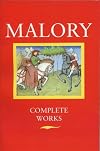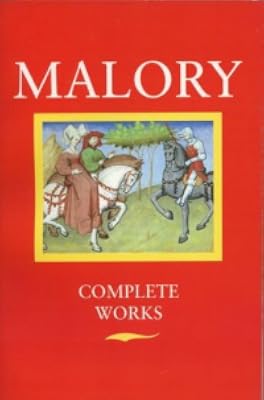
Malory: Complete Works
by Thomas Malory
On This Page
Description
This single-volume edition of the complete works of Sirhe Thomas Malory retains his 15th-century English while providing an introduction, glossary, and fifty pages of explanatory notes on each romance.Tags
Recommendations



















Member Reviews
As far as I'm concerned this is the edition of Malory's _Le Morte D'Arthur_ to read. The Middle English is really not so foreign that it requires 'translation' and even modernizing the spelling seems a bit superfluous to me as I felt the archaic spelling added to my immersion in the stories.
Malory is certainly not an easy read however, and his repetitions and digressions can become a bit tiring to the modern reader at times. That said, if you approach the text as a series of linked tales as opposed to one monumental novel (though there is indeed an overall story arc) it is much more easily digested. Many of the greatest moments for me were those that 'strayed' from this overarching narrative and simply told of interesting characters and show more wonderful scenes. These included the tragic brothers Balin & Balan, Gawain's courteous younger brother Gareth, and Sir Tristram's unlucky rival Palomides.
An enjoyable read and certainly required for any serious student or aficionado of Arthuriana. show less
Malory is certainly not an easy read however, and his repetitions and digressions can become a bit tiring to the modern reader at times. That said, if you approach the text as a series of linked tales as opposed to one monumental novel (though there is indeed an overall story arc) it is much more easily digested. Many of the greatest moments for me were those that 'strayed' from this overarching narrative and simply told of interesting characters and show more wonderful scenes. These included the tragic brothers Balin & Balan, Gawain's courteous younger brother Gareth, and Sir Tristram's unlucky rival Palomides.
An enjoyable read and certainly required for any serious student or aficionado of Arthuriana. show less
This book had me saying, "I will slee thee!" It was boring at first, but after reading 726 pages during much of my free time for two weeks sophomore year at Mount Holyoke, I lived and breathed Malory. Read it all and become one with King Arthur. The best part is The Book of Sir Tristram De Lyones. Basically you should just plan to read the whole thing.
Come on, you don't need to read Malory in translation. Only some of the vocab is different, and the grammar. The rest of it is just archaic, and perfectly understandable once you get used to the rhythms. Forget a translation and go straight to the source.
Le Morte d'Arthur is one of my top 5 books -- if I could take only 5 books with me to a desert island, this would be one of them.
I must push on and finish this as I must be over 80% through it.
Ratings
Members
- Recently Added By
Lists

Best Arthurian Fiction
104 works; 33 members

Books We'd Want on a Desert Island
203 works; 131 members

Fiction With Familiar Settings
280 works; 93 members
Author Information

234+ Works 17,784 Members
Sir Thomas Malory, 1405 - 1471 Sir Thomas Malory's works (consisting of the legends of Sir Lancelot, Sir Gareth, Sir Tristram, and the Holy Grail, as well as the stories of King Arthur's coming to the throne, his wars with the Emperor Lucius, and his death) are the most influential expression of Arthurian material in English. The author's sources show more are principally French romances; his own contributions are substantial, however, and the result is a vigorous and resonant prose. "Le Morte d'Arthur," finished between March 1469 and March 1470, was first printed in 1485 by William Caxton, the earliest English printer. Malory is presumed to have been a knight from an old Warwickshire family, who inherited his father's estates about 1433 and spent 20 years of his later life in jail accused of various crimes. The discovery of a manuscript version of "Le Morte d'Arthur" in 1934 in the library of Winchester College, supported the identification of Malory the author with Malory the traitor, burglar, and rapist. It showed that many of the inconsistencies in the printed text were traceable to the printing house rather than to the author. The most reliable modern version, therefore, is one like Eugene Vinaver's that is based on the Winchester manuscript. (Bowker Author Biography) show less
All Editions
Some Editions
Awards and Honors
Awards
Series
Belongs to Publisher Series
Work Relationships
Is abridged in
Common Knowledge
- Original title
- The Works of Sir Thomas Malory
- Original publication date
- 1485
- People/Characters
- King Arthur; Sir Gawain; Lancelot du Lac; Emperor Lucius Tiberius; Merlin (Merlin Ambrosius); King Uther Pendragon (show all 28); Sir Kay; Sir Lucian de Butler; Sir Bedivere; Sir Gareth of Orkney; Sir Agravaine of Orkney; Sir Gaheris of Orkney; King Lot of Orkney; Queen Morgause; Morgan le Fay; Duke Gorlois of Cornwall; Lady Igraine; Sir Perceval (Percival); Sir Tor; Sir Lamorak; Sir Palomides; Sir Balin le Savage; Sir Balan le Savage; Sir Tristram; Iseult the Fair; King Mark of Cornwall; Iseult of the White Hands; Guinevere
- Important places
- Camelot; Logres; Carbonek; Camellard; Lothian; Cornwall, England, UK (show all 7); France
- Important events
- Quest for the Holy Grail; Pentecost
- First words
- Hit befel in the dayes of Uther Pendragon, when he was kynge of Englond and so regned, that there was a myghty duke in Cornewaill that helde werre ageynst hym long tyme, and the duke was called the Duke of Tyntagil.
- Original language
- Middle English
Classifications
Statistics
- Members
- 684
- Popularity
- 41,912
- Reviews
- 6
- Rating
- (4.24)
- Languages
- English, English (Middle)
- Media
- Paper
- ISBNs
- 3
- ASINs
- 15