On This Page
Description
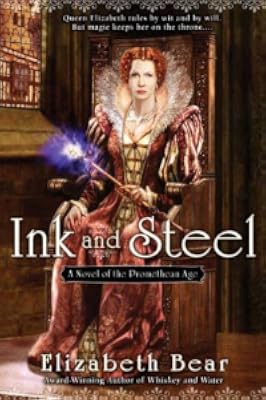
Kit Marley, playwright and spy in the service of Queen Elizabeth, has been murdered. His true gift to Her Majesty was his way with words, crafting plays infused with a subtle magic that maintained her rule. He performed this task on behalf of the Prometheus Club, a secret society of nobles engaged in battle against sorcerers determined to destroy England. Assuming Marley's role is William Shakespeare--but he is unable to create the magic needed to hold the Queen's enemies at bay. Resurrected show more by enchantment in Faerie, Marley is England's only hope. But before he can assist Will in the art of magic, he must uncover the traitor among the Prometheans responsible for his death.--From publisher description. show lessTags
Recommendations









Member Reviews
Bear, Elizabeth. Ink and Steel. 2008. Gateway, 2019. Promethean Age, 2019.
The Promethean Age is a loosely connected series of fantasies in historical settings. Ink and Steel, the first of two books featuring Will Shakespeare and Christopher Marlowe, offers a sly romp through Elizabethan England with a side trip or two to visit the Faerie Queen. Elizabeth Bear has done her research and is honest with the liberties she takes with Early Modern English. She takes even more liberties with the many historical figures we meet along the way. The Earl of Oxford says he taught Marlowe all he knew about magic. Marlowe and Shakespeare have an off-again-on-again affair that is more than just a bromance. Marlowe, for example, is given several show more nicknames: Kit, Kitten, and Puss. Like a Shakespearean play, the tone swings from comic to tragic as the plot demands. Like Tom Stoppard in Shakespeare in Love (1998), Bear delights in the language: “Poetry,” she has Marlowe say, “was how we got here. Who would have thought poetry so dangerous?” Ink and Steel was clearly a labor of love, and I am glad it didn’t get lost. 4 stars. show less
The Promethean Age is a loosely connected series of fantasies in historical settings. Ink and Steel, the first of two books featuring Will Shakespeare and Christopher Marlowe, offers a sly romp through Elizabethan England with a side trip or two to visit the Faerie Queen. Elizabeth Bear has done her research and is honest with the liberties she takes with Early Modern English. She takes even more liberties with the many historical figures we meet along the way. The Earl of Oxford says he taught Marlowe all he knew about magic. Marlowe and Shakespeare have an off-again-on-again affair that is more than just a bromance. Marlowe, for example, is given several show more nicknames: Kit, Kitten, and Puss. Like a Shakespearean play, the tone swings from comic to tragic as the plot demands. Like Tom Stoppard in Shakespeare in Love (1998), Bear delights in the language: “Poetry,” she has Marlowe say, “was how we got here. Who would have thought poetry so dangerous?” Ink and Steel was clearly a labor of love, and I am glad it didn’t get lost. 4 stars. show less
With the acclaimed (yet bawdy) poet and playwright Christofer Marley deceased, the members of the Prometheus Club turn to the heir apparent: Kit's roommate, friend, and rival, William Shakespeare. Will Isn't quite so sure about his new role in navigating the political intrigues of court, especially when magic is involved. Nor can he forget the loss of his friend Kit.
Kit, however, isn't quite as dead as the mortal world believes. Absconded by the Fae, he becomes a prisoner of Queen Mebd and her court. Even as he is bound by immortals, Kit can't let go of his old life and continues to worry about Queen Elizabeth, Will, and the foul persons who maimed and almost murdered him. And as the author of Faustus, Marley knows better than anyone show more what is at stake.
I am extremely torn about this book. Bear did a masterful job. It's beautifully researched. Unlike most books set in the Elizabethan period, she captured the very dialogue of the age, complete with wit and meter. Magic aside, it feels accurate and real. The characters are fully-rounded and complex. Will and Kit are very different men, driven by very different motivations, and both are geniuses in their own way.
However, the negative. Yes, I'm probably a prude, but geez there was a lot of sex in this book. Graphic sex - gay, straight, incest, and more. Sure, it was well-written, but it became excessive and aggravating, especially toward the ending. Some of it was part of character development, but not all, and some of it could be well implied without such detail. Even though I'm curious about the second book in this duology, I won't be picking it up because I fear it will include more of the same.
In summary: an artfully-rendered historical/urban fantasy, but not for prudes. show less
Kit, however, isn't quite as dead as the mortal world believes. Absconded by the Fae, he becomes a prisoner of Queen Mebd and her court. Even as he is bound by immortals, Kit can't let go of his old life and continues to worry about Queen Elizabeth, Will, and the foul persons who maimed and almost murdered him. And as the author of Faustus, Marley knows better than anyone show more what is at stake.
I am extremely torn about this book. Bear did a masterful job. It's beautifully researched. Unlike most books set in the Elizabethan period, she captured the very dialogue of the age, complete with wit and meter. Magic aside, it feels accurate and real. The characters are fully-rounded and complex. Will and Kit are very different men, driven by very different motivations, and both are geniuses in their own way.
However, the negative. Yes, I'm probably a prude, but geez there was a lot of sex in this book. Graphic sex - gay, straight, incest, and more. Sure, it was well-written, but it became excessive and aggravating, especially toward the ending. Some of it was part of character development, but not all, and some of it could be well implied without such detail. Even though I'm curious about the second book in this duology, I won't be picking it up because I fear it will include more of the same.
In summary: an artfully-rendered historical/urban fantasy, but not for prudes. show less
The Elizabethan period is a popular setting for many historicals--whether alternate history/fantasy or not, but few can carry it off and make it seems as right and real as Bear, particularly choosing as her heroes two such prominent figures as Marlowe (or Marley, here), and Shakespeare.
That Marley is indeed working for Francis Walsingham and the Queen is a given, and it is natural that he doesn't actually die in that small room in Deptford (wild speculation has continued over the hundreds of years since, after all). That he's spirited off by fairies to the Court of Queen Mab (or Mebd, here), just fits right in. It seems there has been an ongoing war fought by poets, a magic and power in words that helps keep Elizabeth on the throne and show more which is mirrored in Faerie as well. Of course there is a power in the plays! How else are Shakespeare--and so many others--explained?
Shakespeare is, of course, recruited after Marley is taken out of the picture. He must deal with conspiracies and danger as well as write... and worry about his separation from his wife and family up at Stratford. And Marley needs to negotiate the even more arcane plots and intrigues of the faerie court, and continue to think about those he left behind.
There is a deep magic at work here, in this book, in the recreating of this time and place that resonates so strongly even centuries later. And the alien magic of the faerie, so rich and strange, is also captured so well that there is no question of disbelief. I was instantly caught up, in this amazing period of time, with these larger-than-life people (where even the bit players are important), during events both momentous and mundane.
This is one of the best books out of literally hundreds that I've read over the past few years. A convincing Shakespeare and Marley and the addition of intrigue, adventure, magic and Faerie is just a combination I can't resist. I'm ordering the sequel--and I would buy these books in hardcover if I could. show less
That Marley is indeed working for Francis Walsingham and the Queen is a given, and it is natural that he doesn't actually die in that small room in Deptford (wild speculation has continued over the hundreds of years since, after all). That he's spirited off by fairies to the Court of Queen Mab (or Mebd, here), just fits right in. It seems there has been an ongoing war fought by poets, a magic and power in words that helps keep Elizabeth on the throne and show more which is mirrored in Faerie as well. Of course there is a power in the plays! How else are Shakespeare--and so many others--explained?
Shakespeare is, of course, recruited after Marley is taken out of the picture. He must deal with conspiracies and danger as well as write... and worry about his separation from his wife and family up at Stratford. And Marley needs to negotiate the even more arcane plots and intrigues of the faerie court, and continue to think about those he left behind.
There is a deep magic at work here, in this book, in the recreating of this time and place that resonates so strongly even centuries later. And the alien magic of the faerie, so rich and strange, is also captured so well that there is no question of disbelief. I was instantly caught up, in this amazing period of time, with these larger-than-life people (where even the bit players are important), during events both momentous and mundane.
This is one of the best books out of literally hundreds that I've read over the past few years. A convincing Shakespeare and Marley and the addition of intrigue, adventure, magic and Faerie is just a combination I can't resist. I'm ordering the sequel--and I would buy these books in hardcover if I could. show less
Ink and Steel was one of the rare books where I realized halfway through that I was not at all sure what the plot was or if there was one and I didn't care. Kit Marley is a delightful character, witty and broken in interesting ways, and while Will Shakespeare himself is a bit flatter, the situations the two find themselves in - together and in parallel - carry the book admirably.
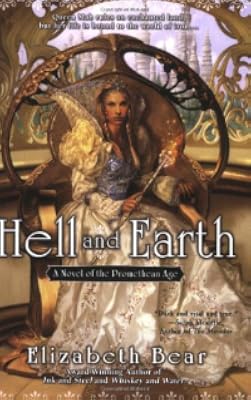
It is a bit of a slow burn, plotwise, and does not come to anything like a resolution - it is the first half of a single book, in my opinion. By the end of it, there are many dominoes standing and they are laid out in patterns that imply all sorts of fascinating things, but they haven't fallen yet. Don't pick this one up without also laying hands on Hell and show more Earth, is what I'm saying. show less
It is a bit of a slow burn, plotwise, and does not come to anything like a resolution - it is the first half of a single book, in my opinion. By the end of it, there are many dominoes standing and they are laid out in patterns that imply all sorts of fascinating things, but they haven't fallen yet. Don't pick this one up without also laying hands on Hell and show more Earth, is what I'm saying. show less
History says that Christopher Marlowe was killed in 1593... but in Ink and Steel, he was spirited away by the Fair Folk and entered into the court of the Faerie Queen. Even presumed dead, he is still entangled among the spies and covert operatives supporting the reign of Queen Elizabeth, and the Prometheus Club who back her with magic. But without Marlowe as an active playwright to serve their sorcerous ends, they need another-- Marlowe's good friend William Shakespeare. In both Earth and Faerie, the words of poets have power.
Bear delivers us a tale of intrigue and secret history playing out in Elizabethan London and the realm of Faerie, with vivid detail of the daily life of the era. The court of Queen Medb is just as convoluted as the show more court of Queen Elizabeth, though the latter is seen more from the sidelines. I'm glad I waited until the sequel, Hell and Earth, was published; I wouldn't have wanted to wait to find out what comes next.
This pair of books, comprising the tale of the Stratford Man, are part of Bear's larger series of the Promethean Age; Ink and Steel stands on its own quite well, and reading the Stratford Man before picking up the books set in the modern era would give more background to some of the characters in Whiskey and Water. show less
Bear delivers us a tale of intrigue and secret history playing out in Elizabethan London and the realm of Faerie, with vivid detail of the daily life of the era. The court of Queen Medb is just as convoluted as the show more court of Queen Elizabeth, though the latter is seen more from the sidelines. I'm glad I waited until the sequel, Hell and Earth, was published; I wouldn't have wanted to wait to find out what comes next.
This pair of books, comprising the tale of the Stratford Man, are part of Bear's larger series of the Promethean Age; Ink and Steel stands on its own quite well, and reading the Stratford Man before picking up the books set in the modern era would give more background to some of the characters in Whiskey and Water. show less
I tried in earnest to read this - but while it had a great premise (Renaissance playwrights get ensnared in Faerie! Magic intersects with real life history! Christopher Marlowe with an eyepatch!) and strong characterization, the plot was too slow and dense to hold my interest. Might appeal to a Renaissance history buff, but it failed to capture me.
So I skipped ahead to the Renaissance playwright snogging scenes and then called it quits. I hardly ever skim when I read fiction, so I suppose it's a backhanded compliment to Elizabeth Bear that I bothered.
So I skipped ahead to the Renaissance playwright snogging scenes and then called it quits. I hardly ever skim when I read fiction, so I suppose it's a backhanded compliment to Elizabeth Bear that I bothered.
It isn't that Blood and Iron and Whiskey and Water make more sense after reading Ink & Steel, because they didn't not make sense the first time; it's more that bits of them make a different kind of sense, knowing what you learn here about who some of these people are and where they might be coming from. Things echo. Oh, and now I'm going to have to spend the month waiting forHell and Earth reading the Complete Marlowe. And Shakespeare's sonnets, again. And probably As You Like It...
Members
- Recently Added By
Lists

Best Urban Fantasy
634 works; 79 members


ALA The Reading List
490 works; 28 members
Author Information

176+ Works 16,502 Members

Elizabeth Bear is a LibraryThing Author, an author who lists their personal library on LibraryThing.
Some Editions
Awards and Honors
Awards
Distinctions
Series


Common Knowledge
- Canonical title
- Ink and Steel
- Original publication date
- 2008-07
- People/Characters
- Edward Alleyn; Amaranth (a lamia); King Arthur; Richard Baines (Elizabethan double agent); Emilia Lanier (Aemilia Bassano Lanyer); Augustine Bassano (show all 108); William Bradley; Tycho Brahe; William Brooke, 10th Baron Cobham; Cuthbert Burbage; James Burbage; Richard Burbage; Cairbre; George Carey, 2nd Baron Hunsdon; Robert Carey, 1st Earl of Monmouth; Robert Catesby; Anne Cecil, Countess of Oxford; Robert Cecil, 1st Earl of Salisbury; William Cecil, 1st Baron Burghley; George Chapman; Oratio Coquo; Corinna; Jenet Shepherd Davenant; John Davenant; John Dee; Robert Devereux, 2nd Earl of Essex; Sir Francis Drake; Edward II, King of England (Edward Plantagenet); Elizabeth I, Queen of England; Faustus; Guido Fawkes; Findabair; John Fletcher; Simon Forman; Ingrim Frazier; William Gardner; Piers Gaveston (as Sir Piers Gaveston); Geoffrey (a Faerie [sic] with the head of a stag); Robin Goodfellow; Robert Green; Henry VIII, King of England; Philip Henslowe; Raphael Holinshed; Charles Howard, 1st Earl of Nottingham, 2nd Baron Howard of Effingham; Henry Howard, 1st Earl of Northampton (as Earl of Northampton); James VI and I, King of Scots and King of England; John the carriageman; Ben Jonson; Will Kemp; Thomas Kyd; Francis Langley; Alfonso Lanyer; Lavinia (a character in Titus Andronicus); Roderigo Lopez (doctor); Lucifer Morningstar; Christopher Marlowe (as Christopher Marley); John Marlowe (as John Marley); Thomas Marlowe (as Thomas Marley); Mary, Queen of Scots; Mistress Mathews; the Mebd (a queen of Faerie); Mehiel (an angel of the Lord); Mephistophilis; Merlin - a legendary bard; Morgan le Fay; Murchaud; Thomas Nashe (as Tom Nashe); Orpheus; Fray Xalbadore de Parma; Peaseblossom; Mary Poley; Robert Poley; Robin Poley; Sir Walter Raleigh; Rosalind (a character in As You Like It); Sackerson (a bear); Anne Shakespeare (William Shakespeare's wife); Edmund Shakespeare (William Shakespeare's brother); Gilbert Shakespeare; Hamnet Shakespeare (William Shakespeare's son); Joan Shakespeare (Joan Hart, William Shakespeare's sister); John Shakespeare (William Shakespeare's father); Judith Shakespeare (William Shakespeare's daughter); Mary Shakespeare (William Shakespeare's mother); Richard Shakespeare (William Shakespeare's brother); Susanna Shakespeare (William Shakespeare's daughter); William Shakespeare; Sir Philip Sidney; Nicholas Skeres; Will Sly; Gabriel Spencer; Edmund Spenser; Ferdinando Stanley, 5th Earl of Derby (as Lord Strange); Philip Stubbs; Taliesin; Henry Wriothesley, 3rd Earl of Southampton; Tam Lin; Thomas the Rhymer; Richard Topcliffe; Francis Tresham; Edward de Vere, 17th Earl of Oxford; Elizabeth de Vere; William Wade; Ethelreda Walsingham (Audrey); Frances Walsingham (Frances Sidney, Frances Devereaux); Sir Francis Walsingham; Thomas Walsingham; Thomas Watson
- Important places
- Faerie; London, England, UK; Hell
- Epigraph
- And since we all have suck'd one wholesome air
And with the same proportion of Elements
Resolve, I hope we are resembled,
Vowing our loves to equal death and life.
--Christopher Marlowe, - First words
- Christofer Marley died as he was born: on the bank of a river, within the sound and stench of slaughterhouses. The news reached London before the red sun ebbed, while alleys fell into straitened darkness under rooftops still ... (show all)stained bright.
- Last words
- (Click to show. Warning: May contain spoilers.)"Witches have spells for causing barrenness, my love."
Classifications
Statistics
- Members
- 454
- Popularity
- 67,644
- Reviews
- 15
- Rating
- (4.04)
- Languages
- English
- Media
- Paper, Ebook
- ISBNs
- 5
- ASINs
- 2