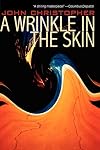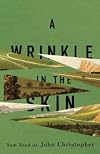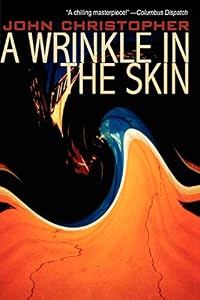
A Wrinkle in the Skin
by John Christopher
On This Page
Description
One night, the island of Guernsey convulsed. As shock followed shock, the landscape tilted violently in defiance of gravity. When dawn came and the quakes had stilled to tremblings, Matthew Cotter gazed out in disbelief at the pile of rubble that had been his home. The greenhouses which had provided his livelihood were a lake of shattered glass, the tomato plants a crush of drowned vegetation spotted and splodged with red. Wandering in a daze of bewilderment through the devastation, he came show more to the coast, looked out towards the sea ... There was no sea: simply a sunken alien land, now drying in the early summer sun. Gradually, a handful of isolated survivors drifted together. But where were the rescue missions from the mainland? How far did the destruction actually extend? For Matthew, whose beloved daughter Jane had recently moved to England, finding the answer was all he had left to live for. show lessTags
Recommendations
















Member Recommendations

Member Reviews
https://fromtheheartofeurope.eu/a-wrinkle-in-the-skin-by-john-christopher/
I feel it’s an overlooked classic, probably due to the success of the same author’s more optimistic The Death of Grass from a few years earlier.
The premise is that massive global earthquakes destroy civilisation; our protagonist finds himself one of the few survivors on Guernsey, and sets off on a quest to find his daughter in Sussex, made easier by the fact that the English Channel is now dry.
The depiction of the devastated landscape is vivid, but even more so the portrayal of a human society which has degenerated into straggling groups of survivors perpetrating rape and pillage on each other. It does take us some time before we meet a convincing woman show more character, and there’s a bit of a sense that the worst of the disaster is that the comfortable middle classes have been eradicated, leaving the world to the yobs, but all the same it’s a memorable picture. There were lines that I remembered well from thirty-plus years ago, and there are striking images that will linger with me for a long time. show less
I feel it’s an overlooked classic, probably due to the success of the same author’s more optimistic The Death of Grass from a few years earlier.
The premise is that massive global earthquakes destroy civilisation; our protagonist finds himself one of the few survivors on Guernsey, and sets off on a quest to find his daughter in Sussex, made easier by the fact that the English Channel is now dry.
The depiction of the devastated landscape is vivid, but even more so the portrayal of a human society which has degenerated into straggling groups of survivors perpetrating rape and pillage on each other. It does take us some time before we meet a convincing woman show more character, and there’s a bit of a sense that the worst of the disaster is that the comfortable middle classes have been eradicated, leaving the world to the yobs, but all the same it’s a memorable picture. There were lines that I remembered well from thirty-plus years ago, and there are striking images that will linger with me for a long time. show less
At first I thought this one wasn't as good as his other post-apocalypse novels--it follows the same pattern of introducing you to a character then having the bottom drop out of the world. But this one seemed more by rote, as if made with leftover pieces of the other books. It got better as it went along, and I got caught up in it as I have with his others. It ending is very abrupt--and more than a little far fetched, but it's a well told story, with characters that are a cut above in terms of development. If it doesn't quite seem to all hold together, it's still an enjoyable read and a worthwhile entry in the genre.
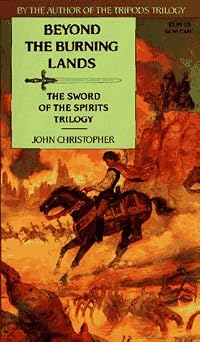
As a kid, I very much enjoyed John Christopher's books: the Tripods Trilogy ("The White Mountains", "The City of Gold and Lead", and "The Pool of Fire") as well as the related book "When The Tripods Came"; and also his Sword of the Spirits Trilogy - "The Prince is Waiting", "Beyond the Burning Lands" and "The Sword of the Spirits".
The first trilogy is a sort of "War of the Worlds" scenario where human survivalists struggle against the alien Tripods that have taken over Earth. The second trilogy is a post-apocalyptic scenario where after nuclear holocaust, England has reverted to a medieval feudal society.
I also liked "Dom and Va," a prehistoric story about a boy and a girl, one from a hunting society, the other from a more agrarian show more background...
But I never knew that Christopher, (real name Christoper Samuel Youd) had written over 70 books, many of them adult novels.
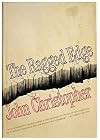
The 1965 book "The Ragged Edge" (also published under the title "A Wrinkle in the Skin") is in the post-apocalyptic vein he is known for. However, it is definitely not a teen novel.
In this case, the apocalypse comes in the form of massive, world-wide earthquakes. It's not believable - I'm not sure if the problems stem from Christopher's lack of knowledge of plate tectonics, or the state of geological knowledge in the 60's - but hey, just ignore that and get on with it. Big earthquakes strike.
Our protagonist, a somewhat reclusive man named Cotter, living on the British island of Guernsey, survives.
After meeting up with some other survivors, and forming a father-son type bond with a young, orphaned boy, he goes on a somewhat obsessive quest to try to find his teenage daughter, who had been away at college.
The book gives a very negative and rather sexist(?) viewpoint on humanity. The positive aspects and outcomes feel sort of tacked-on - like, after the other things that have been shown, they don't ring true.
On the island, the first group of survivors fall instantly under the sway of a "strong" man named Miller, who seems to have gained control simply by bossing people around. OK, I can hang with the breakdown of society & all that - but within TWO DAYS, this guy has appointed himself leader, and demanded sexual control of the surviving women, and is talking about founding a dynasty. I can't imagine people, even in the face of disaster, going along with something like that. The first survivor-woman, who goes along with it, is really just referred to as a "slut," as if that explains it. Seriously, I think after losing all your family, friends, belongings, etc, it would take most people a while to even start WORRYING about sex.
Anyway, when, on his quest to the mainland, Cotter falls in with another group of survivors, this group seems a lot better. The main woman in the group seems strong and intelligent, and they have a civilized attitude, and an educated doctor in the group, etc. But soon Cotter discovers that his assumptions have been a sham, that the woman have simply learned to accept repeated violent rapes from marauding looters, and to acquiesce to the lusts of even the most civilized-seeming men in the group.
I don't know. I don't actually think of myself as having a very high opinion of people in general, but on the other hand, there seems to be this weird urge to think of people as being worse than they are. Or maybe it's that we want to believe that people NEED structure and authority in order to behave well, and without it, things will fall apart instantly?
It reminds me a lot of the reportage of the aftermath of Hurricane Katrina in New Orleans - the news was talking about how aid couldn't even get in because it was chaos, people were being raped and murdered left and right, wild looters were shooting at aid helicopters, etc...
But when the actual facts came out, one person had fired a blank into the air to try to attract the attention of the aid helicopter - because they needed aid! And the rapes and murders for that time period were actually MUCH LOWER than the number of rapes and murders that usually happened in New Orleans on an AVERAGE day!
In my perception of things, I really think that, for many people, disaster can bring out the best in them, rather than the worst. I think many people will find themselves capable of banding together, cooperating and helping one another to an extent that in normal, day-to-day life, they would not.
So, that's my positive, pro-humanity statement for today! show less
The first trilogy is a sort of "War of the Worlds" scenario where human survivalists struggle against the alien Tripods that have taken over Earth. The second trilogy is a post-apocalyptic scenario where after nuclear holocaust, England has reverted to a medieval feudal society.
I also liked "Dom and Va," a prehistoric story about a boy and a girl, one from a hunting society, the other from a more agrarian show more background...
But I never knew that Christopher, (real name Christoper Samuel Youd) had written over 70 books, many of them adult novels.
The 1965 book "The Ragged Edge" (also published under the title "A Wrinkle in the Skin") is in the post-apocalyptic vein he is known for. However, it is definitely not a teen novel.
In this case, the apocalypse comes in the form of massive, world-wide earthquakes. It's not believable - I'm not sure if the problems stem from Christopher's lack of knowledge of plate tectonics, or the state of geological knowledge in the 60's - but hey, just ignore that and get on with it. Big earthquakes strike.
Our protagonist, a somewhat reclusive man named Cotter, living on the British island of Guernsey, survives.
After meeting up with some other survivors, and forming a father-son type bond with a young, orphaned boy, he goes on a somewhat obsessive quest to try to find his teenage daughter, who had been away at college.
The book gives a very negative and rather sexist(?) viewpoint on humanity. The positive aspects and outcomes feel sort of tacked-on - like, after the other things that have been shown, they don't ring true.
On the island, the first group of survivors fall instantly under the sway of a "strong" man named Miller, who seems to have gained control simply by bossing people around. OK, I can hang with the breakdown of society & all that - but within TWO DAYS, this guy has appointed himself leader, and demanded sexual control of the surviving women, and is talking about founding a dynasty. I can't imagine people, even in the face of disaster, going along with something like that. The first survivor-woman, who goes along with it, is really just referred to as a "slut," as if that explains it. Seriously, I think after losing all your family, friends, belongings, etc, it would take most people a while to even start WORRYING about sex.
Anyway, when, on his quest to the mainland, Cotter falls in with another group of survivors, this group seems a lot better. The main woman in the group seems strong and intelligent, and they have a civilized attitude, and an educated doctor in the group, etc. But soon Cotter discovers that his assumptions have been a sham, that the woman have simply learned to accept repeated violent rapes from marauding looters, and to acquiesce to the lusts of even the most civilized-seeming men in the group.
I don't know. I don't actually think of myself as having a very high opinion of people in general, but on the other hand, there seems to be this weird urge to think of people as being worse than they are. Or maybe it's that we want to believe that people NEED structure and authority in order to behave well, and without it, things will fall apart instantly?
It reminds me a lot of the reportage of the aftermath of Hurricane Katrina in New Orleans - the news was talking about how aid couldn't even get in because it was chaos, people were being raped and murdered left and right, wild looters were shooting at aid helicopters, etc...
But when the actual facts came out, one person had fired a blank into the air to try to attract the attention of the aid helicopter - because they needed aid! And the rapes and murders for that time period were actually MUCH LOWER than the number of rapes and murders that usually happened in New Orleans on an AVERAGE day!
In my perception of things, I really think that, for many people, disaster can bring out the best in them, rather than the worst. I think many people will find themselves capable of banding together, cooperating and helping one another to an extent that in normal, day-to-day life, they would not.
So, that's my positive, pro-humanity statement for today! show less
I really enjoyed this book. I thought it was very vivid and had a good ending.
Ratings
Members
- Recently Added By
Lists

Best Horror Mega-List
342 works; 6 members

Jones and Newman's Horror: Another 100 Best Books
100 works; 7 members

Books Read in 2021
5,361 works; 114 members
Author Information

55+ Works 13,337 Members
Awards and Honors
Notable Lists
Series
Belongs to Publisher Series
Common Knowledge
- Alternate titles
- A Wrinkle in the Skin; The Ragged Edge
- Original publication date
- 1965
- First words
- A popular newspaper called it the Quaking Spring.
- Last words
- (Click to show. Warning: May contain spoilers.)"Yes," he said, "it's a good place"
- Canonical DDC/MDS
- 823.91
- Canonical LCC
- PZ4.C5559
- Disambiguation notice
- The Ragged Edge and A Wrinkle in the Skin are the same book.
Classifications
Statistics
- Members
- 276
- Popularity
- 116,455
- Reviews
- 4
- Rating
- (3.75)
- Languages
- English, Finnish, Italian, Swedish
- Media
- Paper, Ebook
- ISBNs
- 12
- ASINs
- 9