On This Page
Description
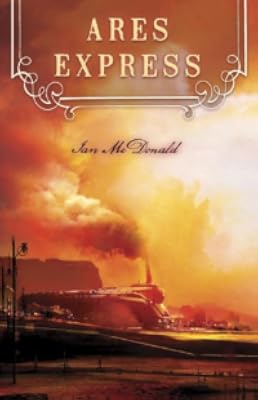
Fiction. Science Fiction. HTML:Taking place in the kaleidoscopic future of Ian McDonald's Desolation Road, this novel is set on a terraformed Mars where fusion-powered locomotives run along the network of rails that is the planet's circulatory system and artificial intelligences reconfigure reality billions of times each second. One young woman, Sweetness Octave Glorious-Honeybun Asiim 12th, becomes the person upon whom the future - or futures - of Mars depends. Big, picaresque, funny; show more taking the Mars of Ray Bradbury and the more recent, terraformed Marses of authors such as Kim Stanley Robinson and Greg Bear, Ares Express is a wild and woolly magic-realist SF novel, featuring lots of bizarre philosophies, strange, mind-stretching ideas and trains as big as city blocks.From the Trade Paperback edition.. show less
Tags
Recommendations














Member Reviews
Ares Express is classed as a sequel to the author's wonderful far-future Mars story Desolation Road. As I anticipated, the continuous characters from Desolation Road are few and somewhat peripheral. It would be a fine stand-alone read, and no one should avoid it for lack of familiarity with the previous volume.
Unlike his first Martian book with its sprawling ensemble, McDonald really focuses this one on the single heroine Sweetness Octave Glorious Honey-Bun Asiim Engineer 12th, and the time-frame of the story is much briefer, so McDonald doesn't pull off the same astonishing combination of little stories adding up to a big one. Although he still manages to avoid the word Mars throughout the novel, he also furnishes a lot of additional show more information about the fourth planet and its history, religions, and relations to "Motherworld," in ways that are more direct than those of Desolation Road.
"Naked to our lens, human imagination had engineered its surface. Whether watered by slow canals, galloped across by green or red barbarians; contemplated by a wistful autumn people; the little world next one out, unlike the other globes in the system, rocky or smothered with steam, had always possessed a geography. Names were written on its skin." (251-2)
Ares Express is full of thematic and iconic connections to Peter Pan. Sweetness kicks off the events of the book by fleeing her arranged wedding: she doesn't want to grow up, at least not in the way dictated by her family -- part of the engineer caste perpetually living on the massive nuclear-powered trains that serve as the principal long-distance transport on Mars. The Captain Hook role is occupied by Devastation Harx, a cult leader attempting to incite planetary cataclysm from his airship cathedral. The book is chock-full of urchins and micro-societies of voluntary castaways.
While the central course of events in Ares Express make up a coming-of-age novel, the most significant secondary plot-line features the adventures of Sweetness' Grandmother Taal in her efforts to rescue the girl (and the planet). As a counterpoint to the rollicking cinematic action of Sweetness' journey, Grandmother Taal's story is more literary and episodic.
It's no wonder to me that McDonald took about thirteen years to finish a second Mars story -- his vision is too fine to waste on a rush job, and it's clear that he had the necessary inspiration to continue here. Maybe there'll be a third someday! show less
Unlike his first Martian book with its sprawling ensemble, McDonald really focuses this one on the single heroine Sweetness Octave Glorious Honey-Bun Asiim Engineer 12th, and the time-frame of the story is much briefer, so McDonald doesn't pull off the same astonishing combination of little stories adding up to a big one. Although he still manages to avoid the word Mars throughout the novel, he also furnishes a lot of additional show more information about the fourth planet and its history, religions, and relations to "Motherworld," in ways that are more direct than those of Desolation Road.
"Naked to our lens, human imagination had engineered its surface. Whether watered by slow canals, galloped across by green or red barbarians; contemplated by a wistful autumn people; the little world next one out, unlike the other globes in the system, rocky or smothered with steam, had always possessed a geography. Names were written on its skin." (251-2)
Ares Express is full of thematic and iconic connections to Peter Pan. Sweetness kicks off the events of the book by fleeing her arranged wedding: she doesn't want to grow up, at least not in the way dictated by her family -- part of the engineer caste perpetually living on the massive nuclear-powered trains that serve as the principal long-distance transport on Mars. The Captain Hook role is occupied by Devastation Harx, a cult leader attempting to incite planetary cataclysm from his airship cathedral. The book is chock-full of urchins and micro-societies of voluntary castaways.
While the central course of events in Ares Express make up a coming-of-age novel, the most significant secondary plot-line features the adventures of Sweetness' Grandmother Taal in her efforts to rescue the girl (and the planet). As a counterpoint to the rollicking cinematic action of Sweetness' journey, Grandmother Taal's story is more literary and episodic.
It's no wonder to me that McDonald took about thirteen years to finish a second Mars story -- his vision is too fine to waste on a rush job, and it's clear that he had the necessary inspiration to continue here. Maybe there'll be a third someday! show less
Desolation Road was about a town. Ares Express is about a person. I hate to talk about another book too much in a review, but these books are very similar, and Ares is a quasi-sequel. It’s not necessary to read Desolation Road first, but you will catch a few cameos and other things in this book with that background.. They’re both very beautiful, both very lyrical. However Ares Express is just better. It doesn’t suffer from the sudden jarring of character, it doesn’t (excuse the term) go off the rails.
This book is all about Sweetness Octave Glorious Honey-Bun Asiim Engineer 12th. A 9 year old (in Mars years) girl who wants to run a train. But she can’t, because the controls of the train (which generations live on), will go to show more her brother, because the controls are passed father to son. Then her train/family tries to marry her off to a Stuard on another train and she leaves, making her own destiny rather than being subjected to what her mini-society expects.
Our plucky hero has a story with zombie-like towns, a cult-personality (and, well, the cult itself), mad politicians, angels, slavers, and free-children. It’s a great story with lots of vibrant imagery, great characters, and wonderful action.
This has everything I loved reading in Desolation Road, and none of the things I didn’t. Great story. Great ride. show less
This book is all about Sweetness Octave Glorious Honey-Bun Asiim Engineer 12th. A 9 year old (in Mars years) girl who wants to run a train. But she can’t, because the controls of the train (which generations live on), will go to show more her brother, because the controls are passed father to son. Then her train/family tries to marry her off to a Stuard on another train and she leaves, making her own destiny rather than being subjected to what her mini-society expects.
Our plucky hero has a story with zombie-like towns, a cult-personality (and, well, the cult itself), mad politicians, angels, slavers, and free-children. It’s a great story with lots of vibrant imagery, great characters, and wonderful action.
This has everything I loved reading in Desolation Road, and none of the things I didn’t. Great story. Great ride. show less
A few brief thoughts:
-This book is very, very funny. The jokes are very well integrated into the characterization and plot, in such a way that it is difficult to quote them out of context. I tried to repeat the jokes to people, because they are so thoroughly excellent, only to find that they required too much set-up to be funny second hand. I have decided this 'not funny second hand' will be a virtue.
-There are metafictional elements to the novel which are quite weak, and are the only thing which stopped me from giving 5 stars. The problem (I have only just now realized) is that metafiction is necessarily expository, rather than descriptive. In a science fictional context, this kind of exposition produces the fatal 'Old Man Explaining show more to Young Person What's Going On' thing which is a boredom unto death.
-Also, the metafiction reads as if the author felt guilty about writing what might be seen as a conventional picaresque adventure story and so he felt the need to have the characters nod and wink at the reader, to let us know that he knew this was all a bit silly and fun. I'm of a different opinion: if you are going to be silly, be silly. Narratively speaking, once you chose your path, never apologize for it. Ever.
-I could go into more detail on these points, but I've got stuff to do. If you like well-wrought, imaginary worlds populated with clever ideas and fully realized characters and unrepeatable jokes about such things as two thirds of a posh frock or a half eaten romance novel, then *Ares Express* is for you. show less
-This book is very, very funny. The jokes are very well integrated into the characterization and plot, in such a way that it is difficult to quote them out of context. I tried to repeat the jokes to people, because they are so thoroughly excellent, only to find that they required too much set-up to be funny second hand. I have decided this 'not funny second hand' will be a virtue.
-There are metafictional elements to the novel which are quite weak, and are the only thing which stopped me from giving 5 stars. The problem (I have only just now realized) is that metafiction is necessarily expository, rather than descriptive. In a science fictional context, this kind of exposition produces the fatal 'Old Man Explaining show more to Young Person What's Going On' thing which is a boredom unto death.
-Also, the metafiction reads as if the author felt guilty about writing what might be seen as a conventional picaresque adventure story and so he felt the need to have the characters nod and wink at the reader, to let us know that he knew this was all a bit silly and fun. I'm of a different opinion: if you are going to be silly, be silly. Narratively speaking, once you chose your path, never apologize for it. Ever.
-I could go into more detail on these points, but I've got stuff to do. If you like well-wrought, imaginary worlds populated with clever ideas and fully realized characters and unrepeatable jokes about such things as two thirds of a posh frock or a half eaten romance novel, then *Ares Express* is for you. show less
Desolation Road was about a town. Ares Express is about a person. I hate to talk about another book too much in a review, but these books are very similar, and Ares is a quasi-sequel. It’s not necessary to read Desolation Road first, but you will catch a few cameos and other things in this book with that background.. They’re both very beautiful, both very lyrical. However Ares Express is just better. It doesn’t suffer from the sudden jarring of character, it doesn’t (excuse the term) go off the rails.
This book is all about Sweetness Octave Glorious Honey-Bun Asiim Engineer 12th. A 9 year old (in Mars years) girl who wants to run a train. But she can’t, because the controls of the train (which generations live on), will go to show more her brother, because the controls are passed father to son. Then her train/family tries to marry her off to a Stuard on another train and she leaves, making her own destiny rather than being subjected to what her mini-society expects.
Our plucky hero has a story with zombie-like towns, a cult-personality (and, well, the cult itself), mad politicians, angels, slavers, and free-children. It’s a great story with lots of vibrant imagery, great characters, and wonderful action.
This has everything I loved reading in Desolation Road, and none of the things I didn’t. Great story. Great ride. show less
This book is all about Sweetness Octave Glorious Honey-Bun Asiim Engineer 12th. A 9 year old (in Mars years) girl who wants to run a train. But she can’t, because the controls of the train (which generations live on), will go to show more her brother, because the controls are passed father to son. Then her train/family tries to marry her off to a Stuard on another train and she leaves, making her own destiny rather than being subjected to what her mini-society expects.
Our plucky hero has a story with zombie-like towns, a cult-personality (and, well, the cult itself), mad politicians, angels, slavers, and free-children. It’s a great story with lots of vibrant imagery, great characters, and wonderful action.
This has everything I loved reading in Desolation Road, and none of the things I didn’t. Great story. Great ride. show less
(Reprinted from the Chicago Center for Literature and Photography [cclapcenter.com]. I am the original author of this essay, as well as the owner of CCLaP; it is not being reprinted illegally.)
(This is being published today in honor of "Ian McDonald Week" at CCLaP. For an overview of all the content regarding McDonald being posted here this week, you can click here.)
One of the things I like most about British science-fiction author Ian McDonald is that, unlike a lot of writers in his genre, he's able to slip effortlessly between different styles and themes in his work; so even though, for example, he's mostly known here in the 2000s for his more mainstream developing-world day-after-tomorrow tales (think "third-world cyberpunk" if you show more will, stories that feel like William Gibson or Neal Stephenson but set in such places as India, Brazil and Turkey), he's also loved by a generation of '90s fans for his urban fantasy tales set in Ireland, which much like many of the projects by Neil Gaiman or Joss Whedon posit a sort of hidden world of magic and fairies and demons that exists in the shadowy corners of our own real world. And so too is he also loved by a third group for his Charles-Strossian far-future "hard SF" stories, many of which play out almost like complex linguistic experiments, combining the expansive visions of such Silver Age authors as Isaac Asimov and Ray Bradbury with the literary style of such academic favorites as Thomas Pynchon, James Joyce and Gabriel Garcia Marquez; and indeed, his very first novel, 1988's Desolation Road which I've also reviewed here in the past, is a rather literal homage to the latter's 100 Years of Solitude, only in McDonald's case set on a terraformed Mars a thousand years in the future, where such Marquez-inspired magic-realism touches as ghosts and angels have actual scientific explanations for their existence, while still being just as poetic nonetheless.
It turns out, in fact, that McDonald actually revisited this terraformed Mars in 2001, penning a "companion volume" of sorts called Ares Express, which is only coming out now in the US for the first time this month, thanks to our friends at genre upstart Pyr, and which I finally got my own hands on a few weeks ago. And indeed, it's important to point out that this isn't a traditional sequel, not only in plot terms but even its overall scope; becuase that was one of my few complaints about the original, actually, for those who have read that older review, that it limits itself by adhering too closely to the structure of Solitude, making it for the most part a beautiful but sometimes frustrating look at merely one tiny village within this utterly fascinating speculative world, with many scenes that contain literally no speculative elements at all, and which could be reset in the Mexican desert in the 20th century with no one being the wiser. Ares is instead a much greater look at this entire environment, which while referencing the dusty small town of the original actually concerns itself with a lot more than just that, taking us finally all the way around the planet to explore not just different geographical environments but the wealth of different urban societies that exist there; and unlike the more limited writing style of the twenty-something newbie McDonald of Desolation, the forty-something veteran McDonald of Ares delivers a knockout of an actual text, the kind of sophisticated manuscript that can be enjoyed not just by fanboys but those who usually stay far away from science-fiction, whose very idea of "speculative" is to pick up a title by Margaret Atwood or Cormac McCarthy. Everybody wins! Everybody wins!
And in fact this is probably the first important thing to know about Ares, that it's not just the typical terraforming story of grubby domed colonies out on a distant barren world, but instead enfolds far-future ideas into a lush vision of the mechanical meeting the biological, a world where nearly omniscient artificially intelligent weather-generating satellites have the capacity to go insane and wreak havoc on an unsuspecting population (and in fact have a bad history of doing exactly that), a world where nerds with body-image issues can simply digitize their consciousness and upload their "souls" into the literal ring of orbiting devices necessary to keep Mars habitable for humans, using quantum mechanics and a type of science that sometimes seems more like magic. And indeed, I found myself thinking a lot about that famous quote by Arthur C. Clarke while reading this book, how any sufficiently advanced technology is indistinguishable from magic; and in fact McDonald gets a lot of play out of this idea in Ares, that in another millennium science will have become so sophisticated to once again start resembling the Medieval idea of wizards and alchemy, of self-flagellating wise men in the desert conjuring up unstoppable forces of both good and evil.
Like Desolation, the Mars of Ares Express is conceptually held together through the massive railroad track making a complete circle around the planet, the only thing holding these far-flung communities together; this time, though, we actually get on one of the trains using this track, following the fates of the various, again Medieval-sounding, hereditary families making up the various technicians needed to make those oversized train-cities run, the multi-generational groups of "Royal Engineers" and "Royal Cabin Stewards" who devote their entire lives to the time-honored traditions of those who came before them. And in good cyberpunk style as well, the actual plot revolves mostly around the exploits of a teenage girl in one of these families, one Sweetness Octave Glorious Honey-Bun Asiim Engineer 12th, who starts the novel learning that she's been promised in an arranged marriage she is against, so "runs away from home" in a manner that will have her family paying penance in this deeply caste-run society for years to come.
This then gives McDonald the perfect excuse to explore all kinds of different environments within this profoundly strange world of a partly green and completely breathable Mars, as Sweetness hops her way from one random place to another in a constant flight from both her family and others who wish her harm, taking her from a floating religious compound to the planet's largest city (scattered with the non-eroding "giants' skeletons" of a grand rocket program that hasn't been needed for centuries), a visit to a sleepy suburb whose citizens have lost the ability to have dreams, a jaunt across the desert with a mad genius in a dune buggy powered by floating box kites, and all kinds of other flabbergasting concepts from this utterly original, utterly addictive world. Along the way, then, McDonald also takes the opportunity to add a good amount of historical backstory to this environment, and even something resembling a three-act actioner plot, both of which were missing from Desolation, including an intriguing thread about the natural symbiosis and thus disdain between the humans who live on the planet's surface and the haughty AI society out in orbit who are needed to keep it all running, and the complicated way this relationship would play itself out after a thousand years of both groups now being there and relying on the other. And that of course is probably the last important thing to know about this book before reading it, that there is a real sense of gravitas to it, a sense of vast amounts of time passing, which is what makes it feel so much weightier than many other so-called "hard SF" tales.
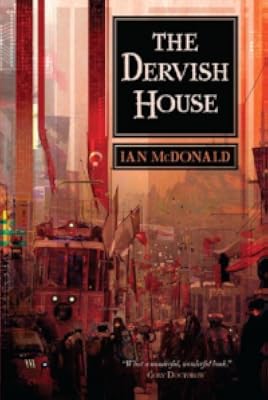
As I often seem to be saying with McDonald's work, Ares Express has turned out to be one of my favorite reads of the year so far, and the only reason it's not receiving a higher score is becuase of a standing policy here at CCLaP, that genre books aren't allowed to score in the 9s unless they're able to transcend their genre, and become a book that even non-fans of that genre will have a chance of obsessively loving. (For example, McDonald's other new novel, The Dervish House, whose write-up is being published here tomorrow, expressly did get a score in the 9s, which should give you a good idea what the main difference is in their subject matter.) Nonetheless, it definitely is the kind of genre novel that usual non-fans of the genre would be wise to take a chance on, the kind of infamous "hey, this sci-fi stuff ain't so bad" title perfect to give your pretentious friend who likes Boing Boing and Lost but scoffs at your "Dragonriders of Pern" collection. Although they may end up scoffing at this too, it's at least worth the effort, a book that will show many for the first time just how artistically savvy science-fiction can be at its best.
Out of 10: 8.9, or 9.9 for science-fiction fans show less
(This is being published today in honor of "Ian McDonald Week" at CCLaP. For an overview of all the content regarding McDonald being posted here this week, you can click here.)
One of the things I like most about British science-fiction author Ian McDonald is that, unlike a lot of writers in his genre, he's able to slip effortlessly between different styles and themes in his work; so even though, for example, he's mostly known here in the 2000s for his more mainstream developing-world day-after-tomorrow tales (think "third-world cyberpunk" if you show more will, stories that feel like William Gibson or Neal Stephenson but set in such places as India, Brazil and Turkey), he's also loved by a generation of '90s fans for his urban fantasy tales set in Ireland, which much like many of the projects by Neil Gaiman or Joss Whedon posit a sort of hidden world of magic and fairies and demons that exists in the shadowy corners of our own real world. And so too is he also loved by a third group for his Charles-Strossian far-future "hard SF" stories, many of which play out almost like complex linguistic experiments, combining the expansive visions of such Silver Age authors as Isaac Asimov and Ray Bradbury with the literary style of such academic favorites as Thomas Pynchon, James Joyce and Gabriel Garcia Marquez; and indeed, his very first novel, 1988's Desolation Road which I've also reviewed here in the past, is a rather literal homage to the latter's 100 Years of Solitude, only in McDonald's case set on a terraformed Mars a thousand years in the future, where such Marquez-inspired magic-realism touches as ghosts and angels have actual scientific explanations for their existence, while still being just as poetic nonetheless.
It turns out, in fact, that McDonald actually revisited this terraformed Mars in 2001, penning a "companion volume" of sorts called Ares Express, which is only coming out now in the US for the first time this month, thanks to our friends at genre upstart Pyr, and which I finally got my own hands on a few weeks ago. And indeed, it's important to point out that this isn't a traditional sequel, not only in plot terms but even its overall scope; becuase that was one of my few complaints about the original, actually, for those who have read that older review, that it limits itself by adhering too closely to the structure of Solitude, making it for the most part a beautiful but sometimes frustrating look at merely one tiny village within this utterly fascinating speculative world, with many scenes that contain literally no speculative elements at all, and which could be reset in the Mexican desert in the 20th century with no one being the wiser. Ares is instead a much greater look at this entire environment, which while referencing the dusty small town of the original actually concerns itself with a lot more than just that, taking us finally all the way around the planet to explore not just different geographical environments but the wealth of different urban societies that exist there; and unlike the more limited writing style of the twenty-something newbie McDonald of Desolation, the forty-something veteran McDonald of Ares delivers a knockout of an actual text, the kind of sophisticated manuscript that can be enjoyed not just by fanboys but those who usually stay far away from science-fiction, whose very idea of "speculative" is to pick up a title by Margaret Atwood or Cormac McCarthy. Everybody wins! Everybody wins!
And in fact this is probably the first important thing to know about Ares, that it's not just the typical terraforming story of grubby domed colonies out on a distant barren world, but instead enfolds far-future ideas into a lush vision of the mechanical meeting the biological, a world where nearly omniscient artificially intelligent weather-generating satellites have the capacity to go insane and wreak havoc on an unsuspecting population (and in fact have a bad history of doing exactly that), a world where nerds with body-image issues can simply digitize their consciousness and upload their "souls" into the literal ring of orbiting devices necessary to keep Mars habitable for humans, using quantum mechanics and a type of science that sometimes seems more like magic. And indeed, I found myself thinking a lot about that famous quote by Arthur C. Clarke while reading this book, how any sufficiently advanced technology is indistinguishable from magic; and in fact McDonald gets a lot of play out of this idea in Ares, that in another millennium science will have become so sophisticated to once again start resembling the Medieval idea of wizards and alchemy, of self-flagellating wise men in the desert conjuring up unstoppable forces of both good and evil.
Like Desolation, the Mars of Ares Express is conceptually held together through the massive railroad track making a complete circle around the planet, the only thing holding these far-flung communities together; this time, though, we actually get on one of the trains using this track, following the fates of the various, again Medieval-sounding, hereditary families making up the various technicians needed to make those oversized train-cities run, the multi-generational groups of "Royal Engineers" and "Royal Cabin Stewards" who devote their entire lives to the time-honored traditions of those who came before them. And in good cyberpunk style as well, the actual plot revolves mostly around the exploits of a teenage girl in one of these families, one Sweetness Octave Glorious Honey-Bun Asiim Engineer 12th, who starts the novel learning that she's been promised in an arranged marriage she is against, so "runs away from home" in a manner that will have her family paying penance in this deeply caste-run society for years to come.
This then gives McDonald the perfect excuse to explore all kinds of different environments within this profoundly strange world of a partly green and completely breathable Mars, as Sweetness hops her way from one random place to another in a constant flight from both her family and others who wish her harm, taking her from a floating religious compound to the planet's largest city (scattered with the non-eroding "giants' skeletons" of a grand rocket program that hasn't been needed for centuries), a visit to a sleepy suburb whose citizens have lost the ability to have dreams, a jaunt across the desert with a mad genius in a dune buggy powered by floating box kites, and all kinds of other flabbergasting concepts from this utterly original, utterly addictive world. Along the way, then, McDonald also takes the opportunity to add a good amount of historical backstory to this environment, and even something resembling a three-act actioner plot, both of which were missing from Desolation, including an intriguing thread about the natural symbiosis and thus disdain between the humans who live on the planet's surface and the haughty AI society out in orbit who are needed to keep it all running, and the complicated way this relationship would play itself out after a thousand years of both groups now being there and relying on the other. And that of course is probably the last important thing to know about this book before reading it, that there is a real sense of gravitas to it, a sense of vast amounts of time passing, which is what makes it feel so much weightier than many other so-called "hard SF" tales.
As I often seem to be saying with McDonald's work, Ares Express has turned out to be one of my favorite reads of the year so far, and the only reason it's not receiving a higher score is becuase of a standing policy here at CCLaP, that genre books aren't allowed to score in the 9s unless they're able to transcend their genre, and become a book that even non-fans of that genre will have a chance of obsessively loving. (For example, McDonald's other new novel, The Dervish House, whose write-up is being published here tomorrow, expressly did get a score in the 9s, which should give you a good idea what the main difference is in their subject matter.) Nonetheless, it definitely is the kind of genre novel that usual non-fans of the genre would be wise to take a chance on, the kind of infamous "hey, this sci-fi stuff ain't so bad" title perfect to give your pretentious friend who likes Boing Boing and Lost but scoffs at your "Dragonriders of Pern" collection. Although they may end up scoffing at this too, it's at least worth the effort, a book that will show many for the first time just how artistically savvy science-fiction can be at its best.
Out of 10: 8.9, or 9.9 for science-fiction fans show less
We're in big trouble, Sweetness thought, face lit by the heat-death of falling angels. What's happening, why, who's doing it? The questions answered themselves the moment she shaped them. That man, up there, just a fistful of metres above your head. But was this the big one, the Angels and Devastation Harx, duking it out, mano a mano, or was he merely testing the limits of his powers.
On a terraformed Mars, trains powered by nuclear fusion carry goods and passengers around the world. The families that work the trains spend their whole lives on the trains, and train looks down on track, platform and and even more so on passenger. Eight-year-old Sweetness Octave Glorious-Honeybun Asiim Engineer 12th of the great train Catherine of Tharsis show more resents the fact that Engineer girls don't get to drive trains, and runs away rather than submit to an arranged marriage to a Stuard and spend the rest of her life working in a train kitchen. Grandmother Taal goes in search of her wayward granddaughter and both women end up involved in a battle to save the planet, as one man tries to bring an end to the Angels, the machines that terraformed the planet and are keep it stable.
This is set in the same reality as "Desolation Road", which I loved and could really do with re-reading, and a couple of characters from the earlier book turn up in "Ares Express".
NB: Google helped me to find a site that let me translate the ages of the Martian characters into Earth years. show less
On a terraformed Mars, trains powered by nuclear fusion carry goods and passengers around the world. The families that work the trains spend their whole lives on the trains, and train looks down on track, platform and and even more so on passenger. Eight-year-old Sweetness Octave Glorious-Honeybun Asiim Engineer 12th of the great train Catherine of Tharsis show more resents the fact that Engineer girls don't get to drive trains, and runs away rather than submit to an arranged marriage to a Stuard and spend the rest of her life working in a train kitchen. Grandmother Taal goes in search of her wayward granddaughter and both women end up involved in a battle to save the planet, as one man tries to bring an end to the Angels, the machines that terraformed the planet and are keep it stable.
This is set in the same reality as "Desolation Road", which I loved and could really do with re-reading, and a couple of characters from the earlier book turn up in "Ares Express".
NB: Google helped me to find a site that let me translate the ages of the Martian characters into Earth years. show less
Not really impressed. Steampunk is a bit difficult to take seriously as it is, adding a farce comic layer over the top doesn't work very well. The basic set-up was interesting, but it quickly descended into try and failing to be far too clever, and lost itself along the way. Some flashes of interest, but otherwise only recommended for dedicated steampunk fans. This is nominally the 2nd of a series, but reads as well as it's going to as a standalone.
Some girl with a silly name - Sweetness et al, - is an Engineer on a nuclear powered steam train. No they didn't explain why a nuclear power plant was needed to create steam, it appeared to be an excuse to market the novel as steampunk, when it isn't really. This steam train runs on a show more terraformed Mars. The terraforming has been conducted by various AI and nano-tech robotics which now lie dormant. Girl refuses an arranged marriage with the Stuards (stewards?) and runs off into the desert. Here she discovers that her ghost/imaginary childhood friend is actually an almost embodied/awake AI. However in the course of this discovery the spirit gets stolen by a high Priest intent on using the spirit to invoke Armageddon and remove/destroy all the other AIs that have been keeping Mars habitable. Again why he wants this is never explained, nor is any link between the AIs and religion. Various pointless coincidences and spare characters turn up to save the heroine from various fates, before they pootle back off to whatever lives (unexplained) they had before they were needed.
Could have been a lot better. The world was well imagined, and it is a decent premise for a novel. But I really didn't enjoy the execution that much. The self absorbed heroine grated a lot of the way through, especially once she realised she was in a Story and could rely on various dramatic narratives to get her our of situations. That works once as joke at best. It doesn't succeed in sustaining the remaining two thirds of the novel. MacDonalds' writing was generally quite enjoyable. The entire paragraph consisting of nothing but cursing was inventive and deserves to be spread wider as an internet meme. The following page listing the various targets and nouns of the cursing was overdone and became boring - this works quite well as a metaphor for the entire book, one decent paragraph followed by an overlong page of dross.
Not to my taste. Macdonald has many fans and I could be persuaded to try some more of his work, but only if the farcical elements are removed. show less
Some girl with a silly name - Sweetness et al, - is an Engineer on a nuclear powered steam train. No they didn't explain why a nuclear power plant was needed to create steam, it appeared to be an excuse to market the novel as steampunk, when it isn't really. This steam train runs on a show more terraformed Mars. The terraforming has been conducted by various AI and nano-tech robotics which now lie dormant. Girl refuses an arranged marriage with the Stuards (stewards?) and runs off into the desert. Here she discovers that her ghost/imaginary childhood friend is actually an almost embodied/awake AI. However in the course of this discovery the spirit gets stolen by a high Priest intent on using the spirit to invoke Armageddon and remove/destroy all the other AIs that have been keeping Mars habitable. Again why he wants this is never explained, nor is any link between the AIs and religion. Various pointless coincidences and spare characters turn up to save the heroine from various fates, before they pootle back off to whatever lives (unexplained) they had before they were needed.
Could have been a lot better. The world was well imagined, and it is a decent premise for a novel. But I really didn't enjoy the execution that much. The self absorbed heroine grated a lot of the way through, especially once she realised she was in a Story and could rely on various dramatic narratives to get her our of situations. That works once as joke at best. It doesn't succeed in sustaining the remaining two thirds of the novel. MacDonalds' writing was generally quite enjoyable. The entire paragraph consisting of nothing but cursing was inventive and deserves to be spread wider as an internet meme. The following page listing the various targets and nouns of the cursing was overdone and became boring - this works quite well as a metaphor for the entire book, one decent paragraph followed by an overlong page of dross.
Not to my taste. Macdonald has many fans and I could be persuaded to try some more of his work, but only if the farcical elements are removed. show less
Members
- Recently Added By
Published Reviews
ThingScore 100
Artificial intelligences manipulate mortals with the casual power of gods; prophecies come true; quantum realities erase railroad tracks with a slice of terrain from an alternate Mars—and that’s just for starters. ... McDonald gingerbreads the all-important locomotives with steampunk detailing. These metafictional devices are enjoyable for readers who are in the know, and not disruptive show more for readers who aren’t. show less
added by paradoxosalpha
Lists

Books Set on Mars
22 works; 7 members
Author Information

98+ Works 11,076 Members
Some Editions
Awards and Honors
Awards
Series

Work Relationships
Is contained in
Common Knowledge
- Original publication date
- 2001
- Important places
- Mars
- First words
- Here comes Sweetness Octave Glorious Honey-Bun Asiim Engineer 12th.
Classifications
Statistics
- Members
- 254
- Popularity
- 128,240
- Reviews
- 11
- Rating
- (3.78)
- Languages
- English
- Media
- Paper, Audiobook, Ebook
- ISBNs
- 5
- ASINs
- 5