On This Page
Description
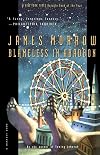
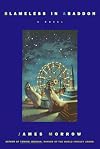
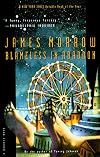
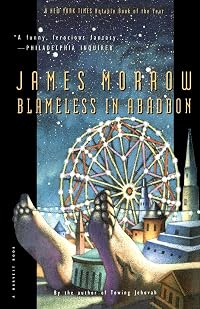
In this "funny, ferocious fantasy" (Philadelphia Inquirer), God is a comatose, two-mile-long tourist attraction at a Florida theme park-until a conniving judge decides to put Him on trial in The Hague for crimes against humanity. A New York Times Notable Book of the Year.Tags
Recommendations







Member Reviews
It has been almost a decade since I read and enjoyed James Morrow's Towing Jehovah, the novel to which Blameless in Abaddon is a sequel. So it's hard for me to know whether to attribute perceived differences in quality to changes in the writing or changes in myself as a reader. Be that as it may, I liked this second book a good deal better.
While the first volume accounted for the recovery of the gigantic corporeal form of the Biblical God from the ocean, this one is concerned with an effort to put that body on trial for the world's evils. Accordingly, its literary grounding explicitly combines Moby Dick and Job, while its theological speculation is intensely focused on the matter of theodicy. Consistent with the framing of the story in show more Job, Morrow has Satan himself (an Idea in the mind of God) serve as the book's narrator, although this conceit slips a little when the protagonist Martin Candle actually encounters Satan.
There is a parallel in the narrative development here with the later Well-Built City Trilogy of Jeffrey Ford, to the point where I wonder if they share some prior literary paradigm which is eluding my attention. In both series, the second book concerns itself crucially with an entry into and objective experience of the mind of the first book's great bugbear (Jehovah for Morrow, Drachton Below for Ford), who is now in an incapacitated state of decline.
I aim not to let another decade intervene before I read Morrow's third volume The Eternal Footman. show less
While the first volume accounted for the recovery of the gigantic corporeal form of the Biblical God from the ocean, this one is concerned with an effort to put that body on trial for the world's evils. Accordingly, its literary grounding explicitly combines Moby Dick and Job, while its theological speculation is intensely focused on the matter of theodicy. Consistent with the framing of the story in show more Job, Morrow has Satan himself (an Idea in the mind of God) serve as the book's narrator, although this conceit slips a little when the protagonist Martin Candle actually encounters Satan.
There is a parallel in the narrative development here with the later Well-Built City Trilogy of Jeffrey Ford, to the point where I wonder if they share some prior literary paradigm which is eluding my attention. In both series, the second book concerns itself crucially with an entry into and objective experience of the mind of the first book's great bugbear (Jehovah for Morrow, Drachton Below for Ford), who is now in an incapacitated state of decline.
I aim not to let another decade intervene before I read Morrow's third volume The Eternal Footman. show less
Blameless in Abaddon is technically the sequel to Morrow's Towing Jehovah, but it works perfectly fine on its own. Following a series of tragedies in his life, a small town magistrate named Martin Candle seeks to put God on trial for the suffering He has allowed in his world. God's comatose form (previously the attraction of a Florida theme park) is transported to the Hague and Martin and his opponent Lovett hold a trial before the UN. The stakes: if Martin wins his case, he would disconnect God's life support as revenge for His crimes.
The premise certainly could have been led to absurdity, but Blameless in Abaddon never feels that way. The book takes the issue of theodicy seriously and comprehensively, explaining and breaking down the show more best defenses. It's a thought-provoking book, which offers no easy answers but forces readers into their own examination of evil in the world. show less
The premise certainly could have been led to absurdity, but Blameless in Abaddon never feels that way. The book takes the issue of theodicy seriously and comprehensively, explaining and breaking down the show more best defenses. It's a thought-provoking book, which offers no easy answers but forces readers into their own examination of evil in the world. show less
"Blameless in Abaddon" is a good and useful book in a lot of ways, but I don't think it works as well as some of the other James Morrow I've read. It focuses on Martin Candle, a justice of the peace and small claims court judge in rural Pennsylvania who also serves as a modern stand-in for Job. Once he loses everything he has, he decides to bring a suit against God himself in the International Court of Justice in the Hague (I suppose this novel takes place in some far-out world in which the United States has actually recognized the court's authority). Having previously visited God in his Florida theme park home, the Almighty is shipped to Holland and put on the dock. Theme parks in general and religiously oriented theme parks in show more particular are pretty soft satirical targets, but Morrow's take on them is amusing enough. More successful is his description to Martin Canlde's expedition to Jehovah's brain, a sort of theme-park conglomeration of Platonic ideals and Biblical characters. It's in this stimulatingly strange Pee-Wee's Playhouse of the mind that the book's best scenes are set: Martin and his fellow travelers, including a demon and St. Augustine, discuss the ins and outs of theodicy with an assortment of Biblical notables and other residents of God's own thinkin' meats. Morrow's got a wonderful gift for satire, and both enlightening amusing to hear theology discussed by comically deadpan Holy Land notables. "Blameless in Abbadon" is a good book for people who are interested in philosophical ideas but have trouble with philosophical language: the sort -- and I'll include myself -- who understand an argument better if it's portrayed in a fictional frame.
Unfortunately, the book drags elsewhere. Martin's courtroom strategy involves putting all of God's misdeeds and omissions before the court, and, as you'd expect, it's a pretty long list. Both Morrow and Martin would have done best to keep short but representative: Martin's catalog of horrors can be downright depressing. I also get the feeling that "Blameless in Abbadon" didn't have to be as long as it is: while it's characters are well formed and the book is well written it takes a long time to get where it's going and stays there a long time. And while this may just be a lead-in to the book's final chapter, the end is something of a deus ex machina that seems to throw a lot of the argument that preceded it right out the window. Even so, Morrow frames his characters' arguments both skillfully and humorously, there are parts of the book, especially Martin's encounters with the deceased, that are genuinely affecting. But this certainly isn't where I'd start with Morrow. And that's my review. "The Eternal Footman" awaits. show less
Unfortunately, the book drags elsewhere. Martin's courtroom strategy involves putting all of God's misdeeds and omissions before the court, and, as you'd expect, it's a pretty long list. Both Morrow and Martin would have done best to keep short but representative: Martin's catalog of horrors can be downright depressing. I also get the feeling that "Blameless in Abbadon" didn't have to be as long as it is: while it's characters are well formed and the book is well written it takes a long time to get where it's going and stays there a long time. And while this may just be a lead-in to the book's final chapter, the end is something of a deus ex machina that seems to throw a lot of the argument that preceded it right out the window. Even so, Morrow frames his characters' arguments both skillfully and humorously, there are parts of the book, especially Martin's encounters with the deceased, that are genuinely affecting. But this certainly isn't where I'd start with Morrow. And that's my review. "The Eternal Footman" awaits. show less
I'd never heard of James Morrow until 2003, when I audited a "Modern Science Fiction and Fantasy" course at Maryville College. We ended the term with Morrow's Towing Jehovah, which was the first taste of modern fantasy I'd ever read, let alone religious satire of a modern sort. I loved the book, but every time I'd go to the bookstore, I could never find the subsequent volumes, and I was too lazy to go to Amazon.
Enter the 2005 Odyssey Fantasy Writer's Workshop. One of the "signs" that convinced me to apply was the fact that James Morrow was going to be one of the guest lecturers. When I got in, I wasn't able to score a private or even an in-class critique with him, but his Q&A session was great, and while I remember very little of his show more lecture in class, I do remember that my experience with the man left me THISCLOSE to buying ALL of his books on Amazon and having them shipped home. I didn't, because I didn't have the disposable income, and that's just as well, because otherwise, my friend Sherry wouldn't have known what to get my for my SHU graduation.
I was thrilled to get my hands on this book. I'd always known the rather rough arc of Morrow's Godhead Trilogy, so it was really neat to see that arc played out. What's cool is that even though it's been five years since I read Towing Jehovah, it wasn't necessary to have that book fresh on the brain to thoroughly enjoy this one, the independent sequel.
As far as reviews go, I'll be honest, to truly "review" this book would require--for me--such an in-depth analysis that I'd never finish, so I'm not going to bother with a cut. Instead, I'll give you a brief summary, a couple of brief details, and be done with it.
Towing Jehovah centers on one basic premise: God is LITERALLY dead, and it's up to a small-group of people to tow His body to Its final resting place in the Arctic.
But in Blameless in Abaddon, God's body has been discovered and has made world-wide news. There's all kinds of theories revolving around the body, including whether or not God is REALLY dead or simply in a coma. Turns out the latter is true, and our protagonist, Judge Martin Candle, wants to hold God accountable for all the ills of the Earth.
At first glance, it seems a rather silly premise, but it's pulled off with magnificence and subtlety that makes for a very good, intellectual, and entertaining read. Martin's is actually a modern-day Job, a man who's lost everything. Prior to those losses, he was known as one of the most fair judges around Abaddon, Pennsylvania, which makes him a likely candidate for his Herculean task.
The book is divided into three parts: the first introduces us to Martin and his life and reveals how the shit hit the fan. Part two details Martin's journey into God's brain, and oh, what an entertaining journey that is. We meet the "Ideas of" -- essentially, the prototypes of everything of Earth, but living in God's comatose brain. Enter dinosaurs playing Scramble, a guilt-ridden Noah, a know-it-all Saint Augustine, and of course, Adam and Eve, whose appearance might make more traditional Christians flip out. Me, I grinned. The final part of the book is, of course, the trial, and what's more to be said about that?
There's a wealth of fascinating debate and perspective concerning the problem of evil in this book, and of course, it's all anchored to the fact that in this world, God DOES (or did, before for the coma) exist. It's a solid, satisfying read, though Morrow did have me wondering just how much of this book, if any of it, would be different had it been written post-9/11. Maybe I'll get a chance to ask the author myself sometime.
Oh, and one more detail: did I mention that the Devil himself helps narrate the book? He does, and trust me, this particular vision of Lucifer, aka Satan, aka Jonathan Sarkos (as he's named in this text) is more than worth a reader's while, especially by the end.
My Rating
Must Have: I'll always recommend reading books in order, so really, if you haven't yet read Towing Jehovah and you're interested in Blameless in Abaddon, you really should. However, you don't have to. It's a great read with lots of interesting, thought-provoking questions to chew on, worth reading no matter what your religious stance or lack there-of is. Me, I'm once more tempted to go on Amazon and buy the rest of Morrow's backlist. We'll see what happens. :) show less
Enter the 2005 Odyssey Fantasy Writer's Workshop. One of the "signs" that convinced me to apply was the fact that James Morrow was going to be one of the guest lecturers. When I got in, I wasn't able to score a private or even an in-class critique with him, but his Q&A session was great, and while I remember very little of his show more lecture in class, I do remember that my experience with the man left me THISCLOSE to buying ALL of his books on Amazon and having them shipped home. I didn't, because I didn't have the disposable income, and that's just as well, because otherwise, my friend Sherry wouldn't have known what to get my for my SHU graduation.
I was thrilled to get my hands on this book. I'd always known the rather rough arc of Morrow's Godhead Trilogy, so it was really neat to see that arc played out. What's cool is that even though it's been five years since I read Towing Jehovah, it wasn't necessary to have that book fresh on the brain to thoroughly enjoy this one, the independent sequel.
As far as reviews go, I'll be honest, to truly "review" this book would require--for me--such an in-depth analysis that I'd never finish, so I'm not going to bother with a cut. Instead, I'll give you a brief summary, a couple of brief details, and be done with it.
Towing Jehovah centers on one basic premise: God is LITERALLY dead, and it's up to a small-group of people to tow His body to Its final resting place in the Arctic.
But in Blameless in Abaddon, God's body has been discovered and has made world-wide news. There's all kinds of theories revolving around the body, including whether or not God is REALLY dead or simply in a coma. Turns out the latter is true, and our protagonist, Judge Martin Candle, wants to hold God accountable for all the ills of the Earth.
At first glance, it seems a rather silly premise, but it's pulled off with magnificence and subtlety that makes for a very good, intellectual, and entertaining read. Martin's is actually a modern-day Job, a man who's lost everything. Prior to those losses, he was known as one of the most fair judges around Abaddon, Pennsylvania, which makes him a likely candidate for his Herculean task.
The book is divided into three parts: the first introduces us to Martin and his life and reveals how the shit hit the fan. Part two details Martin's journey into God's brain, and oh, what an entertaining journey that is. We meet the "Ideas of" -- essentially, the prototypes of everything of Earth, but living in God's comatose brain. Enter dinosaurs playing Scramble, a guilt-ridden Noah, a know-it-all Saint Augustine, and of course, Adam and Eve, whose appearance might make more traditional Christians flip out. Me, I grinned. The final part of the book is, of course, the trial, and what's more to be said about that?
There's a wealth of fascinating debate and perspective concerning the problem of evil in this book, and of course, it's all anchored to the fact that in this world, God DOES (or did, before for the coma) exist. It's a solid, satisfying read, though Morrow did have me wondering just how much of this book, if any of it, would be different had it been written post-9/11. Maybe I'll get a chance to ask the author myself sometime.
Oh, and one more detail: did I mention that the Devil himself helps narrate the book? He does, and trust me, this particular vision of Lucifer, aka Satan, aka Jonathan Sarkos (as he's named in this text) is more than worth a reader's while, especially by the end.
My Rating
Must Have: I'll always recommend reading books in order, so really, if you haven't yet read Towing Jehovah and you're interested in Blameless in Abaddon, you really should. However, you don't have to. It's a great read with lots of interesting, thought-provoking questions to chew on, worth reading no matter what your religious stance or lack there-of is. Me, I'm once more tempted to go on Amazon and buy the rest of Morrow's backlist. We'll see what happens. :) show less
From suburban Philadelphia (with references both to TLA on South Street and to Lower Merion (I lived 3 blocks from the border at City Line when I lived in Phila)) to The Hague for a "Trial of all Existence" (also noted: a Hostetler farm in central PA (the author lives in State College), and Olean NY (only 70 miles from where I live now)), the author pulls few punches in this novelized analysis of theodicy and the intellectual gymnastics undertaken to support the innocence or guilt of Jehovah in the question of aspects of evil or negative events befalling humanity throughout history.
As a satire, Abaddon did not let me down... this novel sits well within some of my views of society and theistic (or a-theistic) sentiment.
I bought this show more book prior to attending a book-signing back in January 2015 in State College PA for Morrow's newest novel Galapagos Regained. I was able to speak with the Mr. Morrow, and relayed that I'd enjoyed two other of his novels (The Philospher's Apprentice, and The Last Witchfinder), had just purchased his God-head trilogy (and read the first, Towing Jehovah, the week before), and was anxiously looking forward to Galapagos. I'll be following this in a few weeks and will read The Eternal Footman. show less
As a satire, Abaddon did not let me down... this novel sits well within some of my views of society and theistic (or a-theistic) sentiment.
I bought this show more book prior to attending a book-signing back in January 2015 in State College PA for Morrow's newest novel Galapagos Regained. I was able to speak with the Mr. Morrow, and relayed that I'd enjoyed two other of his novels (The Philospher's Apprentice, and The Last Witchfinder), had just purchased his God-head trilogy (and read the first, Towing Jehovah, the week before), and was anxiously looking forward to Galapagos. I'll be following this in a few weeks and will read The Eternal Footman. show less
(Amy) Not content to leave God's corpse at the North Pole, humanity has dragged it out to Orlando, FL to serve as a tourist attraction. Unfortunately for humanity, God may not be quite as dead as they think.
Ratings
Members
- Recently Added By
Author Information

68+ Works 7,964 Members
Some Editions
Series

Work Relationships
Common Knowledge
- Canonical title*
- Le jugement de Jéhovah
- Original publication date
- 1996
- People/Characters
- Martin Candle
- Epigraph
- In the underworld the shades writhe with fear, the waters and all that live in them are struck with terror. Sheol is laid bare, and Abaddon uncovered before God. --The Book of Job,26:5-6
The conservative has but little to fear from the man whose reason is the servant of his passions, but let him beware of him in whom reason has become the greatest and most terrible of the passions. These are the wreckers of ... (show all)outworn empires, disintegrators, deicides. --J. B. S. HaldaneDaedalus - First words
- Of all the newsworthy objects torn loose from the ice by the great Arctic earthquake of 1998, among them an intact Viking ship and the frozen carcass of a wooly mammoth, the most controversial by far was the two-mile-long bod... (show all)y of God.
- Last words
- (Click to show. Warning: May contain spoilers.)Crumpet notices as, darting and swerving, she brings the flock safely home ... all of them are doing exactly what she wants.
*Some information comes from Common Knowledge in other languages. Click "Edit" for more information.
Classifications
- Genres
- Fiction and Literature, Science Fiction, General Fiction, Fantasy
- DDC/MDS
- 813.54 — Literature & rhetoric American literature in English American fiction in English 1900-1999 1945-1999
- LCC
- PS3563 .O876 .B57 — Language and Literature American literature American literature Individual authors 1961-
- BISAC
Statistics
- Members
- 507
- Popularity
- 59,134
- Reviews
- 6
- Rating
- (3.71)
- Languages
- English, French, Italian
- Media
- Paper, Audiobook, Ebook
- ISBNs
- 10
- ASINs
- 4