Cold Print
by Ramsey Campbell
On This Page
Description
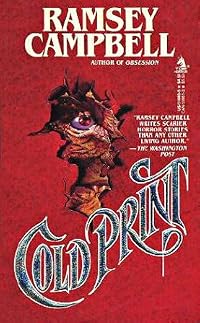
When Sam Strutt strode into a sleazy bookshop in search of exotic porn, a macabre many-mouthed creature made an occult propostition that cooled his blood. This is just one of the horrifying visions spelled out in black and white in 'Cold Print', tales written with a quill of fire - to make your blood run cold.Tags
Recommendations
















Member Reviews
Impressão Fria é um conto de terror e fantasia urbana pertencente ao mythos do Lovecraft, porém, escrito e floreado com características narrativas e ambientação própria de seu autor: Ramsey Campbell.
Pode-se dizer que Campbell joga em casa, escreve um personagem fastidioso, com segredos sujos, em sua própria cidade-ficticia-suja-e-fastidiosa, Gloucerstershire; cheia de becos estreitos que dão em ruas ocultas, bares auspiciosos com personas enigmáticas e bibliotecas obscuras que não são o que parecem ser.
No entanto, mesmo que com um setting praticamente perfeito, — o que não deixa de ser méritos do autor, é claro — o conto é razoável para bom, não mais que isso. O interessante foi observar sua abordagem, onde o show more protagonista e sua perversidade — observada nos livros que ele procura, e que adianto, não são de ocultismo — tornam-se cruciais para o desfecho do conto.
É diferente de muitos outros autores que já li e que abordam o Mythos; não há o excesso de horrores indescritíveis do Lovecraft aqui, e em vez do horror cósmico, o que corta a história é um taciturno niilismo, como diz uma outra resenha; é mais Thomas Liggoti do que Lovecraft.
A ambientação também difere de um Ashton Clark Smith, das raízes em cultos antigos do Howard e até da abordagem cíclica mais recente feita pelo Alan Moore do Ciclo (como o próprio H.P chamava inicialmente)
Apesar do terror praticamente nulo, o que eu trato como um ligeiro ponto negativo quando leio qualquer obra nesse molde, não há como negar que o Campbell ao menos tenta colocar seu tempero próprio na abordagem desse universo. Ele se afasta do pastiche e ruma ambientes e narrativas mais modernas.
Uma história de horror, um protagonista com preferências estranhas, um cenário bem escrito e o desfecho dentro de uma livraria. Não lhe tiro o ponto de que ele fez um conto extremamente "gostável"; para mim foi bom, só bom.
Veremos os próximos. show less
Pode-se dizer que Campbell joga em casa, escreve um personagem fastidioso, com segredos sujos, em sua própria cidade-ficticia-suja-e-fastidiosa, Gloucerstershire; cheia de becos estreitos que dão em ruas ocultas, bares auspiciosos com personas enigmáticas e bibliotecas obscuras que não são o que parecem ser.
No entanto, mesmo que com um setting praticamente perfeito, — o que não deixa de ser méritos do autor, é claro — o conto é razoável para bom, não mais que isso. O interessante foi observar sua abordagem, onde o show more protagonista e sua perversidade — observada nos livros que ele procura, e que adianto, não são de ocultismo — tornam-se cruciais para o desfecho do conto.
É diferente de muitos outros autores que já li e que abordam o Mythos; não há o excesso de horrores indescritíveis do Lovecraft aqui, e em vez do horror cósmico, o que corta a história é um taciturno niilismo, como diz uma outra resenha; é mais Thomas Liggoti do que Lovecraft.
A ambientação também difere de um Ashton Clark Smith, das raízes em cultos antigos do Howard e até da abordagem cíclica mais recente feita pelo Alan Moore do Ciclo (como o próprio H.P chamava inicialmente)
Apesar do terror praticamente nulo, o que eu trato como um ligeiro ponto negativo quando leio qualquer obra nesse molde, não há como negar que o Campbell ao menos tenta colocar seu tempero próprio na abordagem desse universo. Ele se afasta do pastiche e ruma ambientes e narrativas mais modernas.
Uma história de horror, um protagonista com preferências estranhas, um cenário bem escrito e o desfecho dentro de uma livraria. Não lhe tiro o ponto de que ele fez um conto extremamente "gostável"; para mim foi bom, só bom.
Veremos os próximos. show less
A collection of the author's short fiction ranging from his early efforts in the early 1960s to mature work of the early 1980s when this collection was published. The earlier, very Lovecraft influenced, stories are rather clumsy pastiches and didn't really hold my interest, but the later work where the name checking of standard Lovecraft entities recedes into the background and only minor references are made, such as to books from the Mythos which people come across, are much more successful.
The final story in the book, 'The Voice of the Beach', is influenced by Algernon Blackwood's 'The Willows' as Campbell acknowledges in his introduction to the collection where he says that he attempted in it to return to the aims of Lovecraft who show more was a great admirer of Blackwood's story. As in the best of Campbell's fiction, it is unsettling and disturbing, with things only half seen or sensed providing the chills. Mainly due to such later tales, my rating is raised to a respectable 3 stars. show less
The final story in the book, 'The Voice of the Beach', is influenced by Algernon Blackwood's 'The Willows' as Campbell acknowledges in his introduction to the collection where he says that he attempted in it to return to the aims of Lovecraft who show more was a great admirer of Blackwood's story. As in the best of Campbell's fiction, it is unsettling and disturbing, with things only half seen or sensed providing the chills. Mainly due to such later tales, my rating is raised to a respectable 3 stars. show less
Quality Mythos work in places, too Lovecraftian Pastiche in others, but some real, truly unmissable gems in here for all those with an interest in the Cthulhu Mythos or Britains Horror scene. Worth a look and for those with a Mythos bent, unmissabl
This book was not an enjoyable read for me.
Ratings
Members
- Recently Added By
Author Information

315+ Works 9,826 Members
John Ramsey Campbell was born January 4, 1946 in Liverpool, England. He is a horror fiction author and editor. At the age of 11 he wrote a collection called Ghostly Tales which was published as a special issue of Crypt of Cthulhu magazine titled- Ghostly Tales- Crypt of Cthulhu 6. He continued to write and later published his collection called The show more Inhabitant of the Lake and Less Welcome Tenants. At the suggestion of August Derleth, he rewrote many of his earliest stories, which he had originally set in the Massachusetts locales of Arkham, Dunwich and Innsmouth, and relocated them to English settings in and around the fictional Gloucestershire city of Brichester. The invented locale of Brichester was deeply influenced by Campbell's native Liverpool, and much of his later work is set in the real locales of Liverpool. In particular, his 2005 novel Secret Stories both exemplifies and satirizes Liverpoolian speech, characters and humor. John Campbell's titles include The Doll Who Ate His Mother, The One Safe Place , The Seven Days of Cain and The Last Revelation of Gla'aki. (Bowker Author Biography) show less
Work Relationships
Is contained in
Common Knowledge
- Canonical title*
- Cold Print
- Original title
- Cold Print
- Original publication date
- 1985; 1993 (revised) (revised)
- Important places
- Severn Valley, UK
- Dedication
- for Fritz Leiber and Bob Bloch
who were there before me, and did it better - First words
- If I had not been a victim of circumstances, I would never have gone to ancient Temphill.
- Last words
- (Click to show. Warning: May contain spoilers.)I have understood enough to know that it would absorb me in time, when it becomes the world.
*Some information comes from Common Knowledge in other languages. Click "Edit" for more information.
Classifications
Statistics
- Members
- 314
- Popularity
- 101,165
- Reviews
- 4
- Rating
- (3.74)
- Languages
- English, French
- Media
- Paper
- ISBNs
- 6
- ASINs
- 5