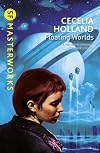
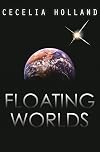
Floating Worlds
by Cecelia Holland
On This Page
Description
In the far future, an Earth-born woman must negotiate with a fearsome mutant race: "On a par with Ursula LeGuin or Arthur C. Clarke" (Chicago Tribune). Two thousand years into the future, runaway pollution has made the earth uninhabitable except in giant biodomes. The society is an anarchy, with disputes mediated through the Machiavellian Committee for the Revolution. Mars, Venus, and the moon support flourishing colonies of various political stripes. On the fringes of the solar system, in show more the gas planets, a strange, new, violent kind of human has evolved. In this unstable system, the anarchist Paula Mendoza, an agent of the Committee, works to make peace and ultimately protect her people in a catastrophic clash of worlds that destroys the order she knows. show lessTags
Recommendations






















Member Recommendations
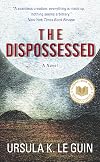
themulhern Two anarchist societies are imagined and then examined. In Floating Worlds, the anarchist society, Earth, is embroiled in inter-planetary politics, and thus far more vulnerable than Annares.
Member Reviews
This is a rough and at times even grating read. There's a female protagonist that makes no concessions to likeability. There's a solar system populated by hedonists, fascists and people so committed to anarchy that operating without laws is a point of pride as well as principle. Then at the far edge of the system there are the mutated humans, the Styths: violent, misogynistic, racist slavers out to build an empire. Paula Mendoza is an anarchist from a badly polluted Earth. Anarchists seem to thrive on badly polluted Earth - their individualism means that communal cleanliness is haphazard at best, so personal slovenliness is represented by global environmental collapse on the macro level - basically why should anyone bother to clean up show more if they don't have to and there's nothing in it for them?) Nonetheless her hard-nosed pragmatism and personal recklessness cause her to become the one link between the Styth and the inner worlds. Despite their obvious flaws, the Styth are curiously attractive. They're intelligent and driven and energetic even as they' re murderous pirates and slavers - basically a Mongol horde. She builds a life for herself in their Floating Worlds while maintaining a treaty that keeps trade and peace viable, but inner world xenophobia and Styth ambition mean that conflict is inevitable.
Though there is much to admire about them, the Styth are horrible and only Paula's anarchist beliefs allow her to set aside any sense of personal safety, dignity, honour, freedom and autonomy to work her way through the maze of Styth society. The rest of the societies in the solar system aren't much better despite their pretensions at civilisation, especially when it comes to dealing with the Syth. So it's hard to be sure exactly what Paula should be doing and who or what she should be trying to save, if indeed she is capable of saving anything, even herself. So a bracing read with a heroine who is uncompromising in her willingness to do anything to to achieve her goals, including survival, but who ultimately reamins true to herself in the face of devastating loss. show less
Though there is much to admire about them, the Styth are horrible and only Paula's anarchist beliefs allow her to set aside any sense of personal safety, dignity, honour, freedom and autonomy to work her way through the maze of Styth society. The rest of the societies in the solar system aren't much better despite their pretensions at civilisation, especially when it comes to dealing with the Syth. So it's hard to be sure exactly what Paula should be doing and who or what she should be trying to save, if indeed she is capable of saving anything, even herself. So a bracing read with a heroine who is uncompromising in her willingness to do anything to to achieve her goals, including survival, but who ultimately reamins true to herself in the face of devastating loss. show less
(Original Review, 1980-08-05)
"Floating Worlds" by Cecilia Holland is a terrific book, and I'm surprised it hasn't gotten more attention. Maybe the reason a lot of people don't like it is that the world and the characters it portrays aren't at all nice; the book isn't for kids, because it's full of the grime, confusion, and unpleasantness of real life. That's what I liked so much about it: it seemed very realistic -- not the technology (although it seems to me that Holland handles that very well) but the human interactions. As I read, I kept being happily surprised at how deep the characters were. They kept doing things I didn't predict that were both perfectly consistent for them in that universe, and realistically complex. I sure show more wouldn't want to live in that world, but then, some of what I found so unattractive about it I also find unpleasant in real life.
I read "Floating Worlds" because of a review in SFReview in 1978 or 1977, can't remember which. Dick Geis and I agree that a work of art should pick you up by the throat and shake you. "Floating Worlds" did that to me, and I loved it.
[2018 EDIT: This review was written at the time as I was running my own personal BBS server. Much of the language of this and other reviews written in 1980 reflect a very particular kind of language: what I call now in retrospect a “BBS language”.] show less
"Floating Worlds" by Cecilia Holland is a terrific book, and I'm surprised it hasn't gotten more attention. Maybe the reason a lot of people don't like it is that the world and the characters it portrays aren't at all nice; the book isn't for kids, because it's full of the grime, confusion, and unpleasantness of real life. That's what I liked so much about it: it seemed very realistic -- not the technology (although it seems to me that Holland handles that very well) but the human interactions. As I read, I kept being happily surprised at how deep the characters were. They kept doing things I didn't predict that were both perfectly consistent for them in that universe, and realistically complex. I sure show more wouldn't want to live in that world, but then, some of what I found so unattractive about it I also find unpleasant in real life.
I read "Floating Worlds" because of a review in SFReview in 1978 or 1977, can't remember which. Dick Geis and I agree that a work of art should pick you up by the throat and shake you. "Floating Worlds" did that to me, and I loved it.
[2018 EDIT: This review was written at the time as I was running my own personal BBS server. Much of the language of this and other reviews written in 1980 reflect a very particular kind of language: what I call now in retrospect a “BBS language”.] show less
This is an old favorite of mine. On page 1, Paula and her boyfriend are sight-seeing outside the ruins of the New York Public Library.
"These people were giants," Tony said. He waved up at the towering ruin before them. 'They built on such a scale, their ideas were so absolute and universal--'
"Paula said, 'They were Fascists.'
"'You can't have everything.'"
This is Cecelia Holland's only Science Fiction novel, set in a world of space travel. Anarchists have become legitimate and are the dominant political force. The society they have created is not absolutely without government, but requires a council to handle a basic infrastructure, foreign relations, and other such matters that don't lend themselves to individual initiative.
The novel show more doesn't linger on Earth. Keenly intelligent and practical Paula becomes a diplomat and spends most of her life on an alien planet, an anarchist in a world of medieval-like splendor and repression. show less
"These people were giants," Tony said. He waved up at the towering ruin before them. 'They built on such a scale, their ideas were so absolute and universal--'
"Paula said, 'They were Fascists.'
"'You can't have everything.'"
This is Cecelia Holland's only Science Fiction novel, set in a world of space travel. Anarchists have become legitimate and are the dominant political force. The society they have created is not absolutely without government, but requires a council to handle a basic infrastructure, foreign relations, and other such matters that don't lend themselves to individual initiative.
The novel show more doesn't linger on Earth. Keenly intelligent and practical Paula becomes a diplomat and spends most of her life on an alien planet, an anarchist in a world of medieval-like splendor and repression. show less
Well. I was tempted to give it one star since most of the other women are terrible (really everyone is terrible, so I guess there's that) besides the heroine, there's at least two unnecessary instances of the heroine being raped by the main hero, and the n-word is said by everyone about everyone else approximately one million times, but I guess I'll give it an extra star due to some originality and creativity. I really doubt I'd be recommending it to anyone trying to catch up in terms of woman-written vintage sci-fi.
Do you want well-written, obscure vintage lady sci-fi that messes with gender/sexuality norms and explores the intersections of alien cultures in a creative fashion? Read Memoirs of a Spacewoman. She was mostly a writer of show more historic fiction too! show less
Do you want well-written, obscure vintage lady sci-fi that messes with gender/sexuality norms and explores the intersections of alien cultures in a creative fashion? Read Memoirs of a Spacewoman. She was mostly a writer of show more historic fiction too! show less
A solar system epic which follows the adventures of Earth anarchist Paula Mendoza from Earth to Luna, Mars, the Styth worlds of Saturn and Uranus and back again. Mendoza negotiates with the warlike Styths (who are giant, black, clawed humans from the outer planets) and becomes embroiled in their politics. Mendoza is a terrific female protagonist, but all of the characterisations are good. The cultures of the various planets are noticeably different from each other -- some radically so. Written in 1976 but like Dune, this one has not dated.
It took me quite a while to finish this, but overall I thought it was interesting. It reminded me of "The Expanse" series, but with less action and more philosophy. Definitely, not hard SI-FI.
I really liked the interactions between the Earth, Martian, and Lunar societies, but found the gas giant societies incredibly boring. I got over halfway through this before I started skipping 50 pages at a time and finally gave up.
Members
- Recently Added By
Lists

Favorite Science Fiction by Women Authors
741 works; 203 members

Science fiction novels with a female protagonist
105 works; 30 members

S.F. Masterworks (Complete)
229 works; 15 members

Solar System
12 works; 3 members

SF Masterworks
193 works; 8 members

Singleton Science Fiction
10 works; 3 members

Top Five Books of 2024
795 works; 264 members

Favorite Science Fiction
457 works; 221 members
Author Information

53+ Works 3,333 Members
Born in Henderson, Nevada, Cecelia Holland was educated at Pennsylvania State University and Connecticut College, where she received her B.A. degree. She has served as a visiting professor of English at Connecticut College since 1979. Holland's historical novels have received broad critical acclaim. According to one critic, she "proves that there show more can be more to historical thrillers than swordplay and seduction." (Time) Among her novels is City of God (1979), which is set in Rome during the period of the Borgia family. Told from the point of view of Nicolas, a secretary to the Florentine ambassador to Rome, this novel brings to life the period of the Renaissance, including the political intrigue that characterized Rome at the time. Other works include Until the Sun Falls (1969), a story of the ancient Mongols and their empire, The Firedrake (1966), her first published novel, Great Maria (1974), The Bear Flag (1990), and Pacific Street (1991). Holland is very adept at capturing the period she writes about, including the clothing, furnishings, and customs of the time. One critic has noted that Holland "is never guilty of the fatuity which plagues most historical fiction: she never nudges the reader into agreeing that folks way back then were really just like you and me, only they bathed less often." (Bowker Author Biography) show less
Some Editions
Series
Belongs to Publisher Series
VGSF Classics (26)
SF Masterworks (New design)
Common Knowledge
- Original publication date
- 1976
- People/Characters
- Paula Mendoza
- Important places
- Earth; New York, New York, USA; Los Angeles, California, USA
- Dedication
- for my sisters,
Deborah and Jennifer
minds like music, and
hearts of glass - First words
- 'These people were giants,' Tony said.
- Quotations
- "Nobody can take anybody else's freedom away," Paula said. ... "Not unless you give it up." (p.10, Knopf 1976 edition)
- Last words
- (Click to show. Warning: May contain spoilers.)He would not look at her. Perhaps he could not. She turned and went on her way.
Classifications
Statistics
- Members
- 476
- Popularity
- 64,150
- Reviews
- 8
- Rating
- (3.39)
- Languages
- English, German
- Media
- Paper, Audiobook, Ebook
- ISBNs
- 18
- ASINs
- 6