
Desiring God: Meditations of a Christian Hedonist
by John Piper
On This Page
Description
John Piper Explores the Ultimate Source of Pleasure, Satisfaction, and Lasting Joy "God is most glorified in us when we are most satisfied in him." This simple but powerful statement has been a cornerstone of John Piper's ministry for nearly 40 years. Laying out the principles behind this "Christian Hedonism," Desiring God has proved to be a source of rich theological insight for countless readers through the years, guiding them to the fullness of joy found in Christ, even through suffering. show more In this foundational work, John Piper addresses profound questions about the purpose of life and the human pursuit of pleasure. Drawing wisdom from Scripture and insights from church history, Piper challenges the belief that believers must sacrifice joy in order to glorify God. It is the other way around; we glorify God by finding our greatest joy in him. Delighting in God does not diminish his glory; it magnifies it and fulfills the deepest desires of our souls. - Explains Christian Hedonism: Human life should be a pursuit of godly pleasure - Written by John Piper: Desiring God, first published in 1986, became a cornerstone of Piper's teaching and ministry - Wise Theological Insights: Delves into Piper's famous statement that "God is most glorified in us when we are most satisfied in him". show lessTags
Recommendations










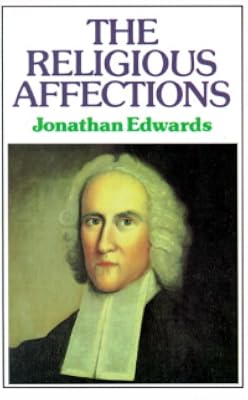



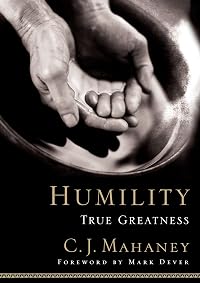
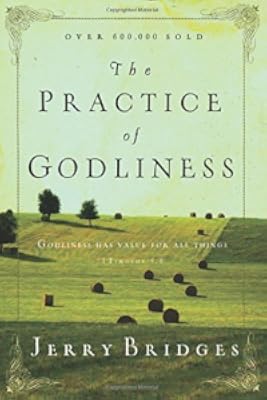
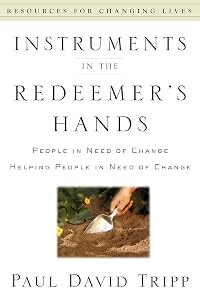













Member Recommendations

mhelfrich It's the application of Desiring God or how to go about finding the Joy in God.

atimco "The Weight of Glory" is Lewis's sermon that sparked the whole idea of Christian hedonism in John Piper. Piper quotes it extensively in Desiring God, but it's good to read Lewis's thoughts in their full context.
Member Reviews
Desiring God, John Piper's best-loved work on the joy to be found in God, is one of those rare theological works that actually live up to the hype. As a good Calvinist and a member of what has been termed the "young, restless, and reformed" crowd, I decided it was time to find out what all the fuss was about. And I found it to be far more than just a fad and a blog, because the principles Piper expounds are not along the lines of positive thinking or self-help. Nor is he teaching a selfish gospel that relegates God to the role of our cosmic servant. Oh no—the reality is far more exciting than that.
Piper has a very specific goal in this book: to share with other believers why it is okay—and not just okay, but actually show more commanded—that we seek our own personal joy. (Sounds self centered, doesn't it? But read on.) Real biblical Christianity is not about plowing dutifully through and withstanding temptation as an act of heroic self-denial. Indeed, Piper turns the whole notion of self-denial on its head, arguing that we always renounce a lesser pleasure for a greater. Even in the deepest acts of self-sacrifice, there is some greater joy in view. Our model for this is, of course, Christ Himself, "who, for the joy set before Him, endured the cross, scorning its shame, and sat down at the right hand of the throne of God" (Hebrews 12:2).
To be sure, Piper is just one in a long line of Christian preachers and thinkers who have taught some facet of this overarching philosophy. To support his contentions, Piper calls on a whole host of authors from all periods of church history—Augustine, Luther, George Mueller, Jonathan Edwards, and David Livingstone, as well as more contemporary authors like Flannery O'Connor and C. S. Lewis. Indeed, Lewis is credited with sparking the philosophy of Christian hedonism in Piper through his sermon "The Weight of Glory," in which he says our desires are not too strong, but too weak; we are far too easily satisfied with temporal pleasures when all the riches of God are spread before us.
As Lewis points out, the New Testament offers "unblushing promises of reward" to those who are faithful, and it's understood that we will seek righteousness not as an end in itself (for that is legalism), but as a means to real joy, which is in God alone. God insists on being the Giver; we bring nothing to Him, and He gives everything to us. And so He remains in the position that brings Him the most glory and us the greatest joy—He is the benefactor, we are the recipients. When we try to take the joy out of our service, it becomes a dead ritual that brings no happiness either to us or the One to whom we offer it.
As much as I appreciate all the other authors Piper quotes (and this was one of the chief pleasures of the book to me, seeing how these authors intersect with this pervasive idea), Piper's primary source is the Bible, and he soaks his text in it. You can hardly go two sentences before he's quoting more Scripture or supporting a previous point with a list of Scripture references in parentheses. I just love it! Though at times it gets a little ponderous in an audiobook (as I'm sure the narrator would attest), I really appreciate the supremacy of Scripture in this book. This is the reason it's going to endure—not because Piper is a great writer and communicator (though he is), but because the truths presented here are truly biblical.
Of course there are objections to the notion of Christian hedonism (and to the term itself). Readers have pointed out examples of self-chosen, apparent misery in the Bible and in Christian biographies, and Piper includes a chapter on suffering and sacrifice, focusing mostly on martyrs, ancient and modern, who seemed to choose pain instead of joy. But there is a distinction to be made: joy does not equate with fun. Gethsemane was not a fun place, but it was a necessary step in Jesus's pursuit of joy through the cross and ultimately the redemption of God's people. Joy and fun aren't the same.
Initially, I found myself rather resistant to the idea that God created me to seek my own joy. Baldly stated like that, it sounds really selfish. Other readers may have had a similar experience going into this book, even those of us who trust Piper as a preacher and are prepared to seriously consider his words. Lewis, again, diagnoses our problem when he argues that it is the influence of Kant and the Stoics that has taught Christians to think that if we get pleasure out of something, it is not moral or pleasing to God. Lewis is emphatic that "this is no part of Christian doctrine." Why would the Bible hold out promises of incredible eternal rewards if those rewards aren't meant to motivate us? Isn't motivation the whole point of reward?
Piper is very aware that he has to break down his reader's resistance to the idea that pleasure (the real thing, not the substitutes) is good and should be sought. So he repeats himself quite a bit and the material in the appendices is basically covered in the book already. But I see why the repetition is needed. I needed it. Sometimes we don't even realize we are looking at our theology through a particular lens; it takes a lot of pointing for us to notice we have something in front of our noses coloring the world for us.
It was fascinating to see the pieces come together as I walked through this book. Once the idea was planted, I started seeing "the language of hedonism" everywhere in Scripture. It's one thing to listen to someone expound the Bible and make a convincing argument for a particular interpretation, but quite another when you find that truth lurking in passages you've read a hundred times before. For a Christian, there is nothing more convincing than the testimony of Scripture. And this, ultimately, is why I can praise Desiring God so highly.
I listened to this on audiobook read by Grover Gardner. Gardner's voice grated on me somewhat in the beginning, but as I continued to listen, the things I disliked about his tonal quality and enunciation became less noticeable.
I have already been blessed by the biblical principles of this book, and I foresee deeper joy to come as I learn to seek it in God and as He remains what He always has been—the real Joy-Giver who is glorified in the giving. Highly recommended. show less
Piper has a very specific goal in this book: to share with other believers why it is okay—and not just okay, but actually show more commanded—that we seek our own personal joy. (Sounds self centered, doesn't it? But read on.) Real biblical Christianity is not about plowing dutifully through and withstanding temptation as an act of heroic self-denial. Indeed, Piper turns the whole notion of self-denial on its head, arguing that we always renounce a lesser pleasure for a greater. Even in the deepest acts of self-sacrifice, there is some greater joy in view. Our model for this is, of course, Christ Himself, "who, for the joy set before Him, endured the cross, scorning its shame, and sat down at the right hand of the throne of God" (Hebrews 12:2).
To be sure, Piper is just one in a long line of Christian preachers and thinkers who have taught some facet of this overarching philosophy. To support his contentions, Piper calls on a whole host of authors from all periods of church history—Augustine, Luther, George Mueller, Jonathan Edwards, and David Livingstone, as well as more contemporary authors like Flannery O'Connor and C. S. Lewis. Indeed, Lewis is credited with sparking the philosophy of Christian hedonism in Piper through his sermon "The Weight of Glory," in which he says our desires are not too strong, but too weak; we are far too easily satisfied with temporal pleasures when all the riches of God are spread before us.
As Lewis points out, the New Testament offers "unblushing promises of reward" to those who are faithful, and it's understood that we will seek righteousness not as an end in itself (for that is legalism), but as a means to real joy, which is in God alone. God insists on being the Giver; we bring nothing to Him, and He gives everything to us. And so He remains in the position that brings Him the most glory and us the greatest joy—He is the benefactor, we are the recipients. When we try to take the joy out of our service, it becomes a dead ritual that brings no happiness either to us or the One to whom we offer it.
As much as I appreciate all the other authors Piper quotes (and this was one of the chief pleasures of the book to me, seeing how these authors intersect with this pervasive idea), Piper's primary source is the Bible, and he soaks his text in it. You can hardly go two sentences before he's quoting more Scripture or supporting a previous point with a list of Scripture references in parentheses. I just love it! Though at times it gets a little ponderous in an audiobook (as I'm sure the narrator would attest), I really appreciate the supremacy of Scripture in this book. This is the reason it's going to endure—not because Piper is a great writer and communicator (though he is), but because the truths presented here are truly biblical.
Of course there are objections to the notion of Christian hedonism (and to the term itself). Readers have pointed out examples of self-chosen, apparent misery in the Bible and in Christian biographies, and Piper includes a chapter on suffering and sacrifice, focusing mostly on martyrs, ancient and modern, who seemed to choose pain instead of joy. But there is a distinction to be made: joy does not equate with fun. Gethsemane was not a fun place, but it was a necessary step in Jesus's pursuit of joy through the cross and ultimately the redemption of God's people. Joy and fun aren't the same.
Initially, I found myself rather resistant to the idea that God created me to seek my own joy. Baldly stated like that, it sounds really selfish. Other readers may have had a similar experience going into this book, even those of us who trust Piper as a preacher and are prepared to seriously consider his words. Lewis, again, diagnoses our problem when he argues that it is the influence of Kant and the Stoics that has taught Christians to think that if we get pleasure out of something, it is not moral or pleasing to God. Lewis is emphatic that "this is no part of Christian doctrine." Why would the Bible hold out promises of incredible eternal rewards if those rewards aren't meant to motivate us? Isn't motivation the whole point of reward?
Piper is very aware that he has to break down his reader's resistance to the idea that pleasure (the real thing, not the substitutes) is good and should be sought. So he repeats himself quite a bit and the material in the appendices is basically covered in the book already. But I see why the repetition is needed. I needed it. Sometimes we don't even realize we are looking at our theology through a particular lens; it takes a lot of pointing for us to notice we have something in front of our noses coloring the world for us.
It was fascinating to see the pieces come together as I walked through this book. Once the idea was planted, I started seeing "the language of hedonism" everywhere in Scripture. It's one thing to listen to someone expound the Bible and make a convincing argument for a particular interpretation, but quite another when you find that truth lurking in passages you've read a hundred times before. For a Christian, there is nothing more convincing than the testimony of Scripture. And this, ultimately, is why I can praise Desiring God so highly.
I listened to this on audiobook read by Grover Gardner. Gardner's voice grated on me somewhat in the beginning, but as I continued to listen, the things I disliked about his tonal quality and enunciation became less noticeable.
I have already been blessed by the biblical principles of this book, and I foresee deeper joy to come as I learn to seek it in God and as He remains what He always has been—the real Joy-Giver who is glorified in the giving. Highly recommended. show less
Once in a while, a privileged person happens to read a magnificent book at just the right point in their life, and it permanently changes them for the better. In 2005, I was that person, and Desiring God was that book.
In it, Piper plumbs the Bible to find the purpose for which the universe and in particular mankind was created, concluding that "the chief end of man is to glorify God *by* enjoying Him forever," paraphrasing the old Westminster confession. He then develops the philosophical, theological, and practical implications of this stunning phrase.
I cannot recommend any non-canonical book more highly.
In it, Piper plumbs the Bible to find the purpose for which the universe and in particular mankind was created, concluding that "the chief end of man is to glorify God *by* enjoying Him forever," paraphrasing the old Westminster confession. He then develops the philosophical, theological, and practical implications of this stunning phrase.
I cannot recommend any non-canonical book more highly.
"This book aims to persuade you that The chief end of man is to glorify God by enjoying Him forever" (pg. 18).
Piper explains how he came to this realization and the foundation upon which it stands. He then seeks to demonstrate how various aspects of the Christian life are entwined with our pursuit of pleasure beginning with conversion and covering worship, love for others, Scripture, prayer, money, marriage, missions, and suffering. This Twenty-fifth Edition also includes a helpful group study guide.
It typically takes me a long time to read books by John Piper, and Desiring God was no exception. I think half of what John Piper communicates may "go over my head". However, I find that wading through the portions of Piper which elude me in show more order to glean the nuggets of wisdom which God uses to transform my life is beneficial. Piper's work is extremely thought-provoking; one must not read it lightly.
Piper is poetic. He paints helpful word pictures. For example: "If the pump of love runs dry, it is because the pipe of prayer isn't deep enough" and "So we see repeatedly in Scripture that prayer is a walkie-talkie for warfare, not a domestic intercom for increasing our conveniences" (pg. 178). I love how Piper writes with a sense of urgency, reminding us that we are engaged in a life and death war.
Again and again, God uses John Piper's writing to stir my passions afresh to pursue the spiritual disciplines, not out of a sense of duty, but for the sake of my joy and the joy of others. Read Piper carefully, with your Bible in hand, and consider what he has to say. You may not agree with it all, but you will likely come away with some valuable insights as a result.
*Many thanks to WaterBrook Multnomah for sending me a free copy of this book in exchange for my honest opinion! show less
Piper explains how he came to this realization and the foundation upon which it stands. He then seeks to demonstrate how various aspects of the Christian life are entwined with our pursuit of pleasure beginning with conversion and covering worship, love for others, Scripture, prayer, money, marriage, missions, and suffering. This Twenty-fifth Edition also includes a helpful group study guide.
It typically takes me a long time to read books by John Piper, and Desiring God was no exception. I think half of what John Piper communicates may "go over my head". However, I find that wading through the portions of Piper which elude me in show more order to glean the nuggets of wisdom which God uses to transform my life is beneficial. Piper's work is extremely thought-provoking; one must not read it lightly.
Piper is poetic. He paints helpful word pictures. For example: "If the pump of love runs dry, it is because the pipe of prayer isn't deep enough" and "So we see repeatedly in Scripture that prayer is a walkie-talkie for warfare, not a domestic intercom for increasing our conveniences" (pg. 178). I love how Piper writes with a sense of urgency, reminding us that we are engaged in a life and death war.
Again and again, God uses John Piper's writing to stir my passions afresh to pursue the spiritual disciplines, not out of a sense of duty, but for the sake of my joy and the joy of others. Read Piper carefully, with your Bible in hand, and consider what he has to say. You may not agree with it all, but you will likely come away with some valuable insights as a result.
*Many thanks to WaterBrook Multnomah for sending me a free copy of this book in exchange for my honest opinion! show less
I really like Piper’s focus on Christian hedonism. It’s because of this ideal, which infuses itself in almost all of Piper’s work, that I’ve found this theme come to the fore of my favorite writers: Luther, Bonheoffer, and Augustine. So, the exploration of this idea was something that I was really looking forward to.
The chapter on conversion, however, really disheartened me. Here it became clear that for Piper conversion using traditional Evangelical paradigms is more important to Piper than biblical fidelity. Piper says, “There are other straightforward commands other than “Believe in the Lord, and you will be saved” (Acts 16:31).
The reason for introducing the idea of Christian hedonism is to force these commands to our show more attention” revealing that a large part of his focus on Christian hedonism is not to get people to simply delight in our Creator’s goodness, but rather to get people to raise the level of commitment needed to be present before they can rest on God’s saving goodness.
For Piper, "Until your heart is hit on this pursuit [of joy], your faith cannot please God. It is not saving faith." This puts the person on an impossible track. For saving faith is a gift that people cannot muster on their own; yet because of the law of undulation (see Screwtape Letters #10), a person's pursuit will never be constant. With the level of holy pursuit in flux, how then, can a person ever know with certainty that they are saved? They couldn't.
For Piper, “a non-treasured Christ is a non-saving Christ.” Even the true believer will someday experience a trough when they don’t feel as though they treasure Christ, and then according to Piper’s logic, must be suspect as potentially someone who never had saving faith—since, for Piper, assurance cannot be built on an objective reality, but on a subjective feeling.
When anything replaces a mustard seed worth of faith--whether it be the law of circumcision (e.g., Galatians) or something as the holy pursuit of joy in God--the Gospel is undercut. God’s faithfulness to our salvation is not dependant on our attitude towards Him, lest we forget God’s to the Hebrews, who continued to be his people and receive his forgiveness even though they were in active rebellion (e.g., Num 14, Rom 11). show less
The chapter on conversion, however, really disheartened me. Here it became clear that for Piper conversion using traditional Evangelical paradigms is more important to Piper than biblical fidelity. Piper says, “There are other straightforward commands other than “Believe in the Lord, and you will be saved” (Acts 16:31).
The reason for introducing the idea of Christian hedonism is to force these commands to our show more attention” revealing that a large part of his focus on Christian hedonism is not to get people to simply delight in our Creator’s goodness, but rather to get people to raise the level of commitment needed to be present before they can rest on God’s saving goodness.
For Piper, "Until your heart is hit on this pursuit [of joy], your faith cannot please God. It is not saving faith." This puts the person on an impossible track. For saving faith is a gift that people cannot muster on their own; yet because of the law of undulation (see Screwtape Letters #10), a person's pursuit will never be constant. With the level of holy pursuit in flux, how then, can a person ever know with certainty that they are saved? They couldn't.
For Piper, “a non-treasured Christ is a non-saving Christ.” Even the true believer will someday experience a trough when they don’t feel as though they treasure Christ, and then according to Piper’s logic, must be suspect as potentially someone who never had saving faith—since, for Piper, assurance cannot be built on an objective reality, but on a subjective feeling.
When anything replaces a mustard seed worth of faith--whether it be the law of circumcision (e.g., Galatians) or something as the holy pursuit of joy in God--the Gospel is undercut. God’s faithfulness to our salvation is not dependant on our attitude towards Him, lest we forget God’s to the Hebrews, who continued to be his people and receive his forgiveness even though they were in active rebellion (e.g., Num 14, Rom 11). show less
Frankly ... this is one of the best books I've read aside from the Bible. I wish I'd read it earlier in life, if only to have gleaned more from it earlier on--but at least it wasn't any later (so thanks to Core 52: A Fifteen-Minute Daily Guide to Build Your Bible IQ in a Year for the impetus to read it)!
This is a book I don't feel many can walk away from unchanged in some fashion. It's thrilling, compelling, challenging, confronting, blunt, honest, and frank! Absolutely one to shake things up in my walk with Christ, in a very necessary way.
This is a book I don't feel many can walk away from unchanged in some fashion. It's thrilling, compelling, challenging, confronting, blunt, honest, and frank! Absolutely one to shake things up in my walk with Christ, in a very necessary way.
"We will go far beyond mere happiness in our Christian life, but our true purpose on this earth is obedience and sanctification, not personal gratification." Contrast this statement from Charles Colson's Lies That Go Unchallenged in Popular Culture with Piper's statement that "The pursuit of pleasure is not optional. It is essential."
I reject the concept of Christian hedonism which is most likely the reason why I didn't get very far with this book. It represents popular culture's obsession with ourselves and our personal satisfaction and fulfillment. I appreciate that Piper is suggesting that we should seek to find this only in God but I believe it is the wrong focus in the first place.
I actually gave up on the book after the first few show more chapters. I read it because Christian's all around me on Logos Hope (a missionary ship) were raving about it and saying how great it was. After a few chapters I came across a description of a "Christian hedonist." I had never heard the term used before. The author suggests we should all be aiming for this higher state and that unless we reach it we are not fulfilling God's true potential for us. How do we reach it? By aiming to be 100% satisfied personally in our Christian walk. I found this concept difficult...is OUR OWN personal satisfaction something we should really have as our ultimate goal...seems a bit selfish. What about when we don't feel satisfied ....does that mean we are not fulfilling God's potential for us? Does it mean we aren't saved? Should we base anything on how we feel on a daily basis? It is surely dangerous to rely on certain feelings in connection with our salvation--our hearts are deceitful above all things and desperately wicked and our feelings subjective and changeable.
What is the evidence that we love/desire God "If you love me, you will OBEY my commands" (John 14 vs 15.) The Bible doesn't give other requirements and I don't believe Christian hedonism is a healthy pursuit. I stopped reading the book as it could lead to the conclusion that if one doesn't have certain experiences they are not saved, which is clearly wrong thinking.
I would warn Christian readers to be careful with this book... show less
I reject the concept of Christian hedonism which is most likely the reason why I didn't get very far with this book. It represents popular culture's obsession with ourselves and our personal satisfaction and fulfillment. I appreciate that Piper is suggesting that we should seek to find this only in God but I believe it is the wrong focus in the first place.
I actually gave up on the book after the first few show more chapters. I read it because Christian's all around me on Logos Hope (a missionary ship) were raving about it and saying how great it was. After a few chapters I came across a description of a "Christian hedonist." I had never heard the term used before. The author suggests we should all be aiming for this higher state and that unless we reach it we are not fulfilling God's true potential for us. How do we reach it? By aiming to be 100% satisfied personally in our Christian walk. I found this concept difficult...is OUR OWN personal satisfaction something we should really have as our ultimate goal...seems a bit selfish. What about when we don't feel satisfied ....does that mean we are not fulfilling God's potential for us? Does it mean we aren't saved? Should we base anything on how we feel on a daily basis? It is surely dangerous to rely on certain feelings in connection with our salvation--our hearts are deceitful above all things and desperately wicked and our feelings subjective and changeable.
What is the evidence that we love/desire God "If you love me, you will OBEY my commands" (John 14 vs 15.) The Bible doesn't give other requirements and I don't believe Christian hedonism is a healthy pursuit. I stopped reading the book as it could lead to the conclusion that if one doesn't have certain experiences they are not saved, which is clearly wrong thinking.
I would warn Christian readers to be careful with this book... show less
The opening question of the Westminster Shorter Catechism asks: "What is the chief end of man?" The answer is: "Man's chief end is to glorify God, and to enjoy Him forever." This question-and-answer frames the central thesis that John Piper makes in Desiring God, which is that an essential facet of Christian living is to delight in God, exuberantly so, throughout our walk with him. Piper maintains that one of the core messages of the Bible is that God's people should know His glory and should magnify it as they live for Him in the world. God's glory and the happiness of His people go hand-in-hand with each other.
I have read several of Piper's other books and was familiar with his oft-repeated saying, "God is most glorified in me when I show more am most satisfied in Him." Desiring God is a meditation on God-saturated and God-glorifying living from one who calls himself a Christian Hedonist. He writes "If God were not infinitely devoted to the preservation , display, and enjoyment of His own glory, we could have no hope of finding happiness in Him." (31) I believe that what Piper lays out in this book forms the foundation for everything else that he has done in ministry. In this book he writes most extensively about that which is most dear to him, the glory of God, as seen in God and experienced in those who know Christ Jesus as their Lord and Savior.
Piper addresses the delight of God's presence in chapters on conversion, worship, scripture, love, prayer, money, marriage, missions and suffering. There is an introduction, epilogue and several very helpful appendices. His writing is saturated with relevant scripture passages and heavily influenced by his study of the work of Jonathan Edwards, C.S. Lewis and others. This is an excellent and engaging discussion of experiencing God's glory in all of life, and worshipping God as the only proper response. I highly commend it. show less
I have read several of Piper's other books and was familiar with his oft-repeated saying, "God is most glorified in me when I show more am most satisfied in Him." Desiring God is a meditation on God-saturated and God-glorifying living from one who calls himself a Christian Hedonist. He writes "If God were not infinitely devoted to the preservation , display, and enjoyment of His own glory, we could have no hope of finding happiness in Him." (31) I believe that what Piper lays out in this book forms the foundation for everything else that he has done in ministry. In this book he writes most extensively about that which is most dear to him, the glory of God, as seen in God and experienced in those who know Christ Jesus as their Lord and Savior.
Piper addresses the delight of God's presence in chapters on conversion, worship, scripture, love, prayer, money, marriage, missions and suffering. There is an introduction, epilogue and several very helpful appendices. His writing is saturated with relevant scripture passages and heavily influenced by his study of the work of Jonathan Edwards, C.S. Lewis and others. This is an excellent and engaging discussion of experiencing God's glory in all of life, and worshipping God as the only proper response. I highly commend it. show less
Members
- Recently Added By
Lists

Develop Your Personal Christian Library
101 works; 15 members

Top 50 Books That Have Shaped Evangelical Christians
49 works; 6 members
Trinity Norman Recommended Christian Readings
170 works; 5 members

Xenos Christian Fellowship Book Suggestions
102 works; 2 members
Sycamore Baptist Church Book Study Reading List
156 works; 5 members

Suggested by Professors
15 works; 1 member
Author Information

396+ Works 98,047 Members
Awards and Honors
Work Relationships
Is contained in
Is abridged in
Common Knowledge
- Canonical title
- Desiring God: Meditations of a Christian Hedonist
- Original publication date
- 1986
- People/Characters
- Augustine of Hippo (saint 354-430); Jonathan Edwards; C. S. Lewis; Blaise Pascal
- Dedication
- To William Solomon Hottle Piper, my father, in whom I have seen the holiness and happiness of God.
- First words
- This is a serious book about being happy in God.
- Last words
- (Click to show. Warning: May contain spoilers.)To magnify His name and multiply your joy is the reason I have written this book, for: The chief end of man is to glorify God by enjoying Him forever.
Classifications
- Genres
- Religion & Spirituality, Nonfiction, General Nonfiction
- DDC/MDS
- 248.4 — Religion Christian practice & observance Christian experience, practice, life Christian Living
- LCC
- BV4817 .P56 — Philosophy, Psychology and Religion Practical Theology Practical Theology Practical religion. The Christian life Works of meditation and devotion
- BISAC
Statistics
- Members
- 7,214
- Popularity
- 1,613
- Reviews
- 40
- Rating
- (4.35)
- Languages
- 6 — Dutch, English, French, German, Spanish, Portuguese (Portugal)
- Media
- Paper, Audiobook, Ebook
- ISBNs
- 27
- ASINs
- 20