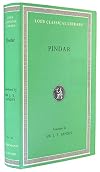
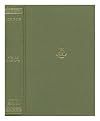
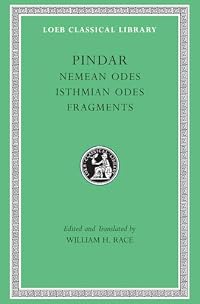
Odes of Pindar Including the Principal Fragments (Loeb Classical Library, No 56)
by Pindar
On This Page
Tags
Recommendations

























Member Reviews
Pindar earned his bread by comparing champion athletes with mythical heroes. Much of our knowledge of these heroes come from their being recorded in his odes. Interesting read. Not for everyone, especially not for those who do not appreciate Greek poetry.
Ratings
Members
- Recently Added By
Author Information

174+ Works 1,934 Members
The Greek poet Pindar, a Boeotian aristocrat who wrote for aristocrats, lived at Thebes, studied at Athens, and stayed in Sicily at the court of Hieron at Syracuse. His epinicians, choral odes in honor of victors at athletic games, survive almost complete and are divided into four groups, depending upon whether they celebrate victory at the show more Olympian, Pythian, Nemean, or Isthmian games. Scholars surmise that these are representative of his other poetry, such as hymns, processional songs, and dirges, extant in fragments. The 44 surviving odes joyfully praise beautiful, brilliant athletes who are like the gods in their moment of triumph. Bold mythological metaphor, dazzling intricacy of language, and metrical complexity together create sublimity of thought and of style. Pindar was famous in his lifetime and later throughout the Hellenistic world, as is attested by the story that Alexander the Great in 335 B.C. ordered the poet's house spared when his army sacked Thebes. The "Pindaric ode" form used in England in the seventeenth and early eighteenth centuries was based on an incorrect understanding of Pindar's metrical schemes and was characterized by grandiose diction. Pindar is considered to be the greatest of the Greek lyric poets. (Bowker Author Biography) show less
Some Editions
Awards and Honors
Notable Lists
Classifications
Statistics
- Members
- 74
- Popularity
- 424,092
- Reviews
- 1
- Rating
- (3.88)
- Languages
- English, Greek (Ancient)
- Media
- Paper
- ISBNs
- 3
- ASINs
- 6