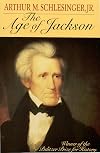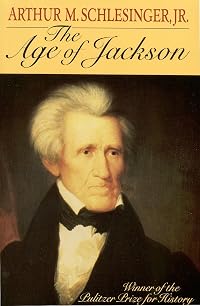
The Age of Jackson
by Arthur M. Schlesinger
On This Page
Description
This volume by the great American historian Arthur M. Schlesinger embraces the Age of Andrew Jackson from its inception to its influence upon the history of our country. It captures the historical, cultural, economic and political life of the United States as it grew from Jefferson's day to the violent early eruptions of financial and industrial forces that threatened the basic principles of our constitutional democracy. -- from http://www.amazon.com (Sep. 6, 2011).Tags
Recommendations












Member Reviews
This abridged work leads with the perceptive quote of George Bancroft that typifies the question of Jacksonians and their antebellum age: "The feud between the capitalist and the laborer, the house of Have and the house of Want, is as old as social union, and can never be entirely quieted; but he who will act with moderation, prefer facts to theories, and remember that every thing in this world is relative and not absolute, will see that the violence of the contest may be stilled, if the unreasonable demands of personal interests are subjected to the decisions of even-handed justice....
George Bancroft, 1834"
Author Arthur Schlesinger Jr. distills the age of Jackson in the larger context of American history in his own sage summation as, show more "American history has been marked by recurrent swings of conservatism and liberalism. During the periods of inaction, unsolved social problems pile up till the demand for reform becomes overwhelming. Then a liberal government comes to power, the dam breaks and aflood of change sweeps away a great deal in a short time."
It seems the "party politics" so familiar now really root back to the rise of Jackson and the echoes of his administration, or more so the popular upswell that made it and Van Buren's possible. Schlesinger excellenty encapsulates this in the final chapter to this important work:
“The Jacksonian attitude presumes a perpetual tension in society, a doubtful equilibrium, constantly breeding strife and struggle: it is, in essence, a rejection of easy solutions, and for this reason it is not always popular. One of the strongest pressures toward the extremes, whether of socialism or of conservatism, is the security from conflict they are supposed to insure (ed. note a good example of this is outlined here in a review of a book by conservative theorist Russell Kirk). But one may wonder whether a society which eliminated struggle would possess much liberty (or even much stability). Freedom does not last long when bestowed above. It lasts only when it is arrived at competitively, out of the determination of groups which demand it as a general rule in order to increase the opportunities for themselves. To some the picture may not be consoling. But world without conflict is the world of fantasy; and practical attempts to realize society without conflict by confiding power to a single authority have generally resulted in producing a society where the means of suppressing conflict are rapid and efficient.
“‘Sometimes it is said that man can not be trusted with the government of himself,’ said Jefferson. ‘Can he, then, be trusted with the government of others? Or have we found angels in the forms of kings to govern him?’ ‘The unfortunate thing,’ adds Pascal, ‘is that he who would act the angel acts the brute.’ The great tradition of American liberalism regards man as neither brute nor angel.” show less
George Bancroft, 1834"
Author Arthur Schlesinger Jr. distills the age of Jackson in the larger context of American history in his own sage summation as, show more "American history has been marked by recurrent swings of conservatism and liberalism. During the periods of inaction, unsolved social problems pile up till the demand for reform becomes overwhelming. Then a liberal government comes to power, the dam breaks and aflood of change sweeps away a great deal in a short time."
It seems the "party politics" so familiar now really root back to the rise of Jackson and the echoes of his administration, or more so the popular upswell that made it and Van Buren's possible. Schlesinger excellenty encapsulates this in the final chapter to this important work:
“The Jacksonian attitude presumes a perpetual tension in society, a doubtful equilibrium, constantly breeding strife and struggle: it is, in essence, a rejection of easy solutions, and for this reason it is not always popular. One of the strongest pressures toward the extremes, whether of socialism or of conservatism, is the security from conflict they are supposed to insure (ed. note a good example of this is outlined here in a review of a book by conservative theorist Russell Kirk). But one may wonder whether a society which eliminated struggle would possess much liberty (or even much stability). Freedom does not last long when bestowed above. It lasts only when it is arrived at competitively, out of the determination of groups which demand it as a general rule in order to increase the opportunities for themselves. To some the picture may not be consoling. But world without conflict is the world of fantasy; and practical attempts to realize society without conflict by confiding power to a single authority have generally resulted in producing a society where the means of suppressing conflict are rapid and efficient.
“‘Sometimes it is said that man can not be trusted with the government of himself,’ said Jefferson. ‘Can he, then, be trusted with the government of others? Or have we found angels in the forms of kings to govern him?’ ‘The unfortunate thing,’ adds Pascal, ‘is that he who would act the angel acts the brute.’ The great tradition of American liberalism regards man as neither brute nor angel.” show less
This book replaces a long section of American history left blank by all the school books I had. I had already read a bio of Jackson years ago, but this book is not about Jackson. It is about that blank period between the War of 1812 and the Civil War. It is primarily a political history of that era which was defined to a large extent by the rise of Andrew Jackson and the Democratic party. It is a hard read, about 10% of which is contained in the footnotes. Sheds a lot of light on how America got from an innocent, largely aristocratic republic to a popular (if not completely enfranchised) democracy ultimately driven into the Civil War.
Witness the progression of Democracy in the formative years of the United States. The era of the Founders is just about over. Some remnants still live and the attitude of the affluent minority tries to influence a government that is truly of the people. Jackson's struggle against Biddle is here in fine detail. The early secession movement of John C. Calhoun is established in Southern political beliefs. The growth westward... All these struggles are explored in wonderful detail, but not so detailed that the reader becomes bored. A terrific history book for the era.
Excellent first-rate work on the age of Jackson which is a classic. Jackson was a genuine reformer who defended the interests of the people against the bankers who sought to take advantage of them.
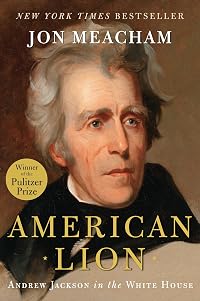
Meacham's book should be compared to one of the standard references to Jackson, i.e., Schlesinger's important work, The Age of Jackson. There is no question that Meacham has written a very readable and lively account of Jackson, the person, and highlights Andrew's life throughout. Less sure-footed though in Meacham is where Schlesinger excels, Jackson as the exemplar of his age. The Bank War is not as prominent a feature in Meacham as it is in Schlesinger, and more emphasis is placed by Meacham in the political incorrectness of Jackson. The show more contrast and value between the two will rest therefore on where the reader's sympathies lie most, in the culture wars or in the importance of Jackson for demonstrating how the little man, the small farmer, and the rural non-elite may prosper in Jacksonian America. Of the two, I would tip a hat towards Schlesinger though Meacham is well worth reading. show less
Meacham's book should be compared to one of the standard references to Jackson, i.e., Schlesinger's important work, The Age of Jackson. There is no question that Meacham has written a very readable and lively account of Jackson, the person, and highlights Andrew's life throughout. Less sure-footed though in Meacham is where Schlesinger excels, Jackson as the exemplar of his age. The Bank War is not as prominent a feature in Meacham as it is in Schlesinger, and more emphasis is placed by Meacham in the political incorrectness of Jackson. The show more contrast and value between the two will rest therefore on where the reader's sympathies lie most, in the culture wars or in the importance of Jackson for demonstrating how the little man, the small farmer, and the rural non-elite may prosper in Jacksonian America. Of the two, I would tip a hat towards Schlesinger though Meacham is well worth reading. show less
2103 The Age of Jackson, by Arthur M. Schlesinger, Jr. (read 15 Oct 1987) (Book of the Year) (Pulitzer History prize in 1946) This is a great, great book, very well done. Really marvelous--it covers the period from 1828 till the Civil War. His thesis is that Jackson and Van Buren were liberal Democrats. Schlesinger did yeoman work on the period--one of my favorite periods in U.S. history. This is one of the best books I have read in a long time.
Compelling History of the Evolution of Conservative versus Working Class politics in the first half of the 19th century. Applies to our era as well.
Still the standard work on on the first irruption of populism in the U.S.
Members
- Recently Added By
Lists

Modern Library 100 Best Nonfiction Books
100 works; 8 members

Best Biographies of U.S. Presidents
61 works; 6 members
Author Information

21+ Works 2,262 Members
Awards and Honors
Awards
Distinctions
Notable Lists
Common Knowledge
- Original publication date
- 1945
- People/Characters
- Charles Francis Adams; Henry Adams (quoted on Whig Party); John Quincy Adams; Bronson Alcott; Ethan Allen; Samuel Clesson Allen (show all 415); Samuel Clesson Allen, Jr.; William Allen; Fisher Ames; Nathan Appleton; William Appleton; Caleb Atwater; John W. Baer; George Bancroft; Philip P. Barbour; Joel Barlow; Daniel D. Barnard; William T. Barry; Samuel Beardsley; Lyman Beecher; John Bell; Jeremy Bentham; Jessie Benton Frémont; Thomas Hart Benton; Hobart Berrian; John M. Berrien; Nicholas Biddle; John Bigelow; Kingsley Bingham; Horace Binney; James G. Birney; Francis Preston Blair; Francis Preston Blair, Jr.; Montgomery Blair; John A. Bolles; George Bond; Luther Borden; William C. Bouck; Jacob Brinkerhoff; Albert Brisbane; Peter C. Brooks; Preston Brooks; Thomas Brothers; O. B. Brown; Orestes A. Brownson; William Cullen Bryant; James Buchanan; James Silk Buckingham; Joseph T. Buckingham; Tristram Burges; Aaron Burr (mentioned); Benjamin F. Butler; William Allen Butler; William O. Butler; L. Byllesby; Jesse A. Bynum; Fitzwilliam Byrdsall; John C. Calhoun; Churchill C. Cambreleng; Henry C. Carey; Mathew Carey; William Carroll; Lewis Cass; John Catron; W. H. Channing; William Ellery Channing; Salmon P. Chase; Michel Chevalier; Julia Chinn; Rufus Choate; Henry Clay; Lucretia Hart Clay; A. S. Clayton; T. L. Clingman; DeWitt Clinton; William Cobbett; William Coleman; Calvin Colton; John Commerford; James Fenimore Cooper; Thomas Cooper; Tom Corwin; Victor Cousin; William H. Crawford; Davy Crockett; Edwin Croswell; George Ticknor Curtis; Joel Curtis; Caleb Cushing; David Daggett; G. M. Dallas; Charles A. Dana; Richard Henry Dana; Peter Vivian Daniel; Charles A. Davis; Jefferson Davis; John Davis; Matthew L. Davis; Moses Dawson; Samuel S. Dickinson; John Adams Dix (as John A. Dix); George Washington Dixon; Andrew Jackson Donelson; Thomas W. Dorr; Stephen A. Douglas; William Duane; William J. Duane; Andrew Dunlap; Warren Dutton; Jonathan Dwight; Theodore Dwight; Ralph Earl; John H. Eaton; Margaret O'Neale Timberlake Eaton; John Worth Edmonds; Thomas Elder; John B. Eldredge; Richard S. Elliott; William Rufus Elliott; Fanny Elssler; Ralph Waldo Emerson; William Emmons; William English; W. P. Eustis; George H. Evans; Alexander H. Everett; Edward Everett; L. S. Everett; John Ferral; Charles G. Ferris; Cyrus W. Field; David Dudley Field; Henry Field; Stephen Field; Millard Fillmore; Clara Fisher; Theophilus Fisk; Azariah C. Flagg; John Floyd (1783 - 1837, mentioned as runner-up); Edwin Forrest; John Forsyth; William Foster; Theodore Frelinghuysen; John Charles Frémont; Margaret Fuller; Albert Gallatin; Roger L. Gamble; James W. Gerard; Henry D. Gilpin; Stephen Girard; Parke Godwin; William F. Gourdon; William M. Gouge; Jay Gould; Horace Greeley; Duff Green; Charles Gordon Greene; Nathaniel Greene; William B. Greene; Horatio Greenough; Moses H. Grinnell; Galusha A. Grow; Felix Grundy; John P. Hale; William H. Hale; Benjamin F. Hallett; Alexander Hamilton; James A. Hamilton; Hannibal Hamlin; J. H. Hammond; Judge Hammond; Mark Hanna; J. G. Harris; William Henry Harrison; Eli Hart; Stephen Hasbrouck; Richard Haughton; Nathaniel Hawthorne; Isaac Hecker; John Hecker; David Henshaw; Sir John Herschel; Thomas Herttell; Richard Hildreth; Isaac Hill; Michael Hoffman; Thomas Hogan; William M. Holland; Oliver Wendell Holmes, Sr.; Philip Hone; George Houston; Sam Houston; John H. Hunt; Robert M. T. Hunter; Charles Jared Ingersoll; Washington Irving; Andrew Jackson; Sarah Yorke Jackson; Moses Jaques; Samuel Jaudon; Thomas Jefferson; Andrew Johnson; Cave Johnson; Richard M. Johnson; George W. Julian; Fanny Kemble; Amos Kendall; William Kendall; James Kent; Charles King; James G. King; Preston King; Rufus King; Abner Kneeland; Charles Knowlton (Dr); H. F. R. de Lamennais; Walter Savage Landor; S. D. Langtree; Abbott Lawrence; Amos Lawrence; Cornelius Lawrence; Joshua Leavitt; Gideon Lee; Henry Lee; William Leggett; Benjamin W. Leigh; Elder John Leland; Dixon H. Lewis; Taylor Lewis; William B. Lewis; Francis Lieber; Abraham Lincoln; Levi Lincoln; George Lippard; Edward Livingston; John Locke; Richard Adams Locke; Henry Wadsworth Longfellow; S. K. Lothrop; Elijah P. Lovejoy; James Russell Lowell; Seth Luther; G. W. Lyman; Theodore Lyman; George McDuffie; Louis McLane; Nathaniel Macon; James Madison; Horace Mann; William L. Marcy; John Marshall; Harriet Martineau; Jeremiah Mason; Robert Mayo; Alexander Ming; Alexander Ming, Jr.; James Monroe; Ely Moore; Thomas Morris; Samuel F. B. Morse; Marcus Morton; Marcus Morton, Jr.; Henry A. Muhlenberg; Thomas Low Nichols; Hezekiah Niles; John M. Niles; Charles Ogle; John L. O'Sullivan; John Overton; Robert Dale Owen; Thomas Paine; Elihu Palmer; Isaac Parker; Theodore Parker; Theophilus Parsons; James Kirke Paulding; Andrew Preston Peabody; S. C. Philips; Francis Pickens; John Pickering; Franklin Pierce; Franklin Plummer; Edgar Allan Poe; James Knox Polk; Alonzo Potter; Hiram Powers; William Hickling Prescott; William Preston; Josiah Quincy; Josiah Quincy, Jr.; Condy Raguet; Edmund Randolph; John Randolph; Robert Rantoul, Jr.; Henry J. Raymond; Tapping Reeve; Robert Barnwell Rhett, Sr. (as R. B. Rhett); George Ripley; Thomas Ritchie; Joseph Ritner; John C. Rives; William Cabell Rives; William H. Roane; Frederick Robinson; James Ronaldson; Clinton Roosevelt; Theron Rudd; Benjamin Rush; Richard Rush; L. W. Ryckman; John Savage (as Chief Justice Savage of the New York Supreme Court); J. B. Say; Winfield Scott (nominated by Whigs); Joseph A. Scoville; Arthur G. Sedgwick; Catharine Maria Sedgwick (quoted on Jackson); Theodore Sedgwick; Theodore Sedgwick, Jr.; John Sergeant; William Henry Seward; Horatio Seymour; Henry Shaw; Lemuel Shaw; E. M. Shepard; Michael Shiner; William Gilmore Simms; John K. Simpson; Stephen Simpson; Thomas Skidmore, Sr.; Levi D. Slamm; Adam Smith; Isaac S. Smith; Joseph Smith; Ambrose Spencer; Edwin M. Stanton; Alexander H. Stephens (as A. H. Stephens); John L. Stephens; Thaddeus Stevens; William L. Stone; Joseph Story; William Sullivan; Charles Sumner; William Graham Sumner; Samuel Swartwout; Nathaniel P. Tallmadge; Roger Brooke Taney; Arthur Tappan; Benjamin Tappan; John Taylor; Nathaniel W. Taylor; William P. Taylor; Zachary Taylor; Tecumseh; Peter Oxenbridge Thacher (sic); Francis Thomas; Waddy Thompson; William W. Thompson; Henry David Thoreau; Samuel J. Tilden; Alexis de Tocqueville; Robert Toombs; Robert Townsend, Jr.; Nicholas P. Trist; Beverley Tucker; Joseph Tuckerman; Boss Tweed; John Tyler; Abel P. Upshur; Gilbert Vale (Dr); John van Buren; Martin van Buren; Peter van Ness; Roberts Vaux; G. C. Verplanck; James S. Wadsworth; Jonathan M. Wainwright; William S. Wait; Amasa Walker; James Walker; Robert J. Walker (Secretary of the Treasury); Mike Walsh; Samuel Ward; Josiah Warren; Tobias Watkins; J. G. Watmough; Francis Wayland; James Watson Webb; Daniel Webster; Noah Webster; Thurlow Weed; Gideon Welles; John Wentworth; Prosper P. Wetmore; Samuel Whitcomb; Hugh Lawson White; Walt Whitman; Walter Whitman; Reuben M. Whitney; John Greenleaf Whittier; George Wilkes; N. P. Willis (quoted on Benton); David Wilmot; Henry Wilson; John Windt; Hubbard Winslow (Rev.); Robert C. Winthrop; William Wirt; Henry A. Wise; George Wolf; A. H. Wood; Fernando Wood; Levi Woodbury; Frances Wright; Silas Wright; Samuel Young
- Important places
- USA; Baltimore, Maryland, USA; Boston, Massachusetts, USA; Buffalo, New York, USA; California, USA; Herkimer, New York, USA (show all 21); Kansas, USA; Lowell, Massachusetts, USA; Maryland, USA; Massachusetts, USA; New York, USA; Oregon, USA; Pennsylvania, USA; Philadelphia, Pennsylvania, USA; Philadelphia County, Pennsylvania, USA; Rhode Island, USA; South Carolina, USA; Syracuse, New York, USA; Utica, New York, USA; Washington, D.C., USA; White House, Washington, D.C., USA
- Important events
- Bank War (1832 | 1841); Andrew Jackson Vetos renewal of Bank of the United States charter (1932-07-10); Panic of 1837; Supreme Court decision on Charles River Bridge vs. Warren Bridge (1837-02-14); Death of Andrew Jackson (1845-06-08); Compromise of 1850 (1850) (show all 8); Kansas-Nebraska Act (1854); Dred Scott Decision (1857)
- Epigraph
- The feud between the capitalist and laborer, the house of Have and the house of Want, is as old as social union, and can never be entirely quieted; but he who will act with moderation, prefer fact to theory, and remember that... (show all) every thing in this world is relative and not absolute, will see that the violence of the contest may be stilled.
--George Bancroft - Dedication
- To Marian
- First words
- For the White House the new year began in gloom.
Foreword: The world crisis has given new urgency to the question of the "meaning" of democracy.
Classifications
- Genres
- History, Nonfiction, General Nonfiction, Biography & Memoir
- DDC/MDS
- 973.56 — History & geography History of North America United States Jacksonian Era (1809-1837) Tariff of 1828 bet. the North and South, Panama Congress
- LCC
- E381 .S38 — History of the United States United States Revolution to the Civil War, 1775/1783-1861 By period Early nineteenth century, 1801/1809-1845 Jackson's administrations, 1829-1837
- BISAC
Statistics
- Members
- 982
- Popularity
- 26,732
- Reviews
- 12
- Rating
- (3.94)
- Languages
- English
- Media
- Paper
- ISBNs
- 4
- ASINs
- 25