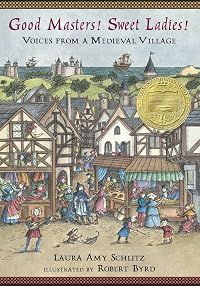
Good Masters! Sweet Ladies! Voices from a Medieval Village
by Laura Amy Schlitz
On This Page
Description
A collection of short one-person plays featuring characters, between ten and fifteen years old, who live in or near a thirteenth-century English manor.Tags
Recommendations
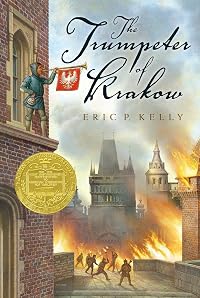
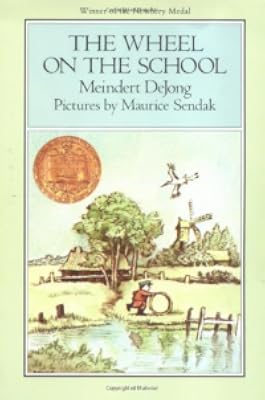
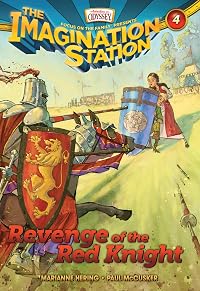
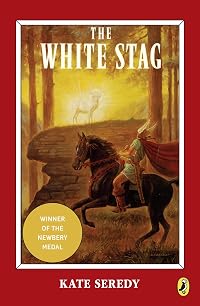






Member Recommendations
Member Reviews
I feared this would be a dry and boring bit of historical fiction, but a series of monologues and dialogues weave interconnected vignettes that give an engaging cross-section portrait of life for children in a medieval village.
We're not only educated as to what types of jobs and roles the kids would have in their village, but drawn into the drama of how they might have felt about their lot in life and what they did when they were unhappy about it.
We're not only educated as to what types of jobs and roles the kids would have in their village, but drawn into the drama of how they might have felt about their lot in life and what they did when they were unhappy about it.
Winner of the 2008 Newbery Medal, “Good Masters! Sweet Ladies!” is a middle-grade collection of 21 short monologues and dialogues -- poetry and prose -- written in the voices of kids in and around a 1255 English manor.
Each child is tagged with a role in the manor’s society or trades (for example, the Lord’s daughter, the miller’s son), but each also illustrates what it’s like to conquer a fear, or lose a parent, or be an outcast, or be heavy with responsibility ... or feel the first stirrings of romance. The stories pulse with tension and emotion, and build beautifully as the various characters sometimes echo one other, sometimes contrast. Robert Byrd's illustrations enhance the narratives, and the author uses footnotes and show more intermissions to supply bits of medieval history; she also provides a 54-item bibliography.
A terrific book, highly recommended. I read a library copy but wish I’d bought it so I could re-read these tender vignettes. show less
Each child is tagged with a role in the manor’s society or trades (for example, the Lord’s daughter, the miller’s son), but each also illustrates what it’s like to conquer a fear, or lose a parent, or be an outcast, or be heavy with responsibility ... or feel the first stirrings of romance. The stories pulse with tension and emotion, and build beautifully as the various characters sometimes echo one other, sometimes contrast. Robert Byrd's illustrations enhance the narratives, and the author uses footnotes and show more intermissions to supply bits of medieval history; she also provides a 54-item bibliography.
A terrific book, highly recommended. I read a library copy but wish I’d bought it so I could re-read these tender vignettes. show less
A collection of short one-person plays featuring characters between ten and fifteen years old, who live in or near a thirteenth-century English manor.
Maidens, monks, and millers' sons -- in these pages, readers will meet them all. There's Hugo, the lord's nephew, forced to prove his manhood by hunting a wild boar; sharp-tongued Nelly, who supports her family by selling live eels; and the peasant's daughter, Mogg, who gets a clever lesson in how to save a cow from a greedy landlord. There's also mud-slinging Barbary (and her noble victim); Jack, the compassionate half-wit; Alice, the singing shepherdess; and many more.
Maidens, monks, and millers' sons -- in these pages, readers will meet them all. There's Hugo, the lord's nephew, forced to prove his manhood by hunting a wild boar; sharp-tongued Nelly, who supports her family by selling live eels; and the peasant's daughter, Mogg, who gets a clever lesson in how to save a cow from a greedy landlord. There's also mud-slinging Barbary (and her noble victim); Jack, the compassionate half-wit; Alice, the singing shepherdess; and many more.
I realized recently that I've gotten out of touch with children's books in recent years, so I decided my new project would be reading the Newbery Medal and Honor Books in reverse order, starting with this year's winners. After just the first book, I knew this had been a good idea.
The author teaches in what sounds like a really neat school, where the kids were studying the Middle Ages. She wrote these dramatic monologues (a few are parallel monologues for two actors) featuring the young inhabitants of a medieval village, so that each child could be the star of a playlet. The book also includes sidenotes and occasional two-page essays on aspects of medieval life. Schlitz doesn't sugarcoat some of the more repellent features of the Middle show more Ages, but her characters have a universality that would help young readers and actors see what they and the medieval young people have in common. This was a really good choice for the medal, and different when compared to the usual novel or occasional non-fiction title. Although, in theory, illustrations are not considered as part of the judging process (there's the Caldecott Medal for that), Robert Byrd's illustrations are an integral part of this book and have a lovely medieval feel to them. I would recommend this for teachers, home-schoolers, and anyone old or young who's interested in the period. show less
The author teaches in what sounds like a really neat school, where the kids were studying the Middle Ages. She wrote these dramatic monologues (a few are parallel monologues for two actors) featuring the young inhabitants of a medieval village, so that each child could be the star of a playlet. The book also includes sidenotes and occasional two-page essays on aspects of medieval life. Schlitz doesn't sugarcoat some of the more repellent features of the Middle show more Ages, but her characters have a universality that would help young readers and actors see what they and the medieval young people have in common. This was a really good choice for the medal, and different when compared to the usual novel or occasional non-fiction title. Although, in theory, illustrations are not considered as part of the judging process (there's the Caldecott Medal for that), Robert Byrd's illustrations are an integral part of this book and have a lovely medieval feel to them. I would recommend this for teachers, home-schoolers, and anyone old or young who's interested in the period. show less
This collection of monologues (and a couple of dialogues) introduces readers to medieval life, from the son of a knight, to the daughter of a villein who tends his hounds. It's a fantastic educational tool, meant to be used in a classroom setting. I can see why it won the Newbery when it first came out -- the writing is terrific, and the last line of the last monologue is just perfection. I'd love to direct a group of children presenting this. Recommended to those who have an interest in the medieval, particularly if they enjoy books like The Inquisitor's Tale or The Midwife's Apprentice.
Written for a group of middle school students with both verse and expository passages, these Canterbury Tales for ‘tweens beg to be read aloud! Schlitz’s characters, from all social strata, exude personality as well as reflect their station in medieval society. Chaucer would approve!
The book opens with Byrd’s illustration of the Medieval manor and places the characters in the scene. Byrd’s illustrations strengthen the setting and add humor to the story.
The book opens with Byrd’s illustration of the Medieval manor and places the characters in the scene. Byrd’s illustrations strengthen the setting and add humor to the story.
What do you do if every child wants to have a starring role in the school play? If you are Laura Schlitz, you write nineteen monologues and two dialogues set in a medieval village, so that everyone gets a strong character to develop. The series of miniature plays is historically accurate and effective read silently or aloud. The voices of the characters, aged eleven to fifteen, come through clearly, as does the time period, without overly ornate language. Byrd’s manuscript-like illustrations add to the historical feel, while helpful side notes explain words and concepts that readers may be unfamiliar with. Short historical notes (one to two pages) are interspersed with the plays and give readers further information about topics within show more the plays, such as the three-field crop rotation system and falconry. A valuable addition to school and public libraries, stronger readers might want to read the entire book, while less able readers could be given single monologues to develop. Class plays could be performed from the book, but students might also write their own medieval monologue, or continue the story of a character from the book. A strong bibliography is given at the end of the book, though some sources may be better for teachers than for students. Strongly recommended. show less
Members
- Recently Added By
Published Reviews
Schlitz (The Hero Schliemann) wrote these 22 brief monologues to be performed by students at the school where she is a librarian; here, bolstered by lively asides and unobtrusive notes, and illuminated by Byrd's (Leonard, Beautiful Dreamer) stunningly atmospheric watercolors, they bring to life a prototypical English village in 1255. Adopting both prose and verse, the speakers, all young, show more range from the half-wit to the lord's daughter, who explains her privileged status as the will of God. The doctor's son shows off his skills ("Ordinary sores/ Will heal with comfrey, or the white of an egg,/ An eel skin takes the cramping from a leg"); a runaway villein (whose life belongs to the lord of his manor) hopes for freedom after a year and a day in the village, if only he can calculate the passage of time; an eel-catcher describes her rough infancy: her "starving poor [father] took me up to drown in a bucket of water." (He relents at the sight of her "wee fingers" grasping at the sides of the bucket.) Byrd, basing his work on a 13th-century German manuscript, supplies the first page of each speaker's text with a tone-on-tone patterned border overset with a square miniature. Larger watercolors, some with more intricate borders, accompany explanatory text for added verve. The artist does not channel a medieval style; rather, he mutes his palette and angles some lines to hint at the period, but his use of cross-hatching and his mostly realistic renderings specifically welcome a contemporary readership. Ages 10-up. (Aug.)
Copyright 2007 Reed Business Information show less
Copyright 2007 Reed Business Information show less
added by sriches
Good Readers! Sweet Librarians! This delightfully unusual collection of monologues, dialogues, and poems presents the voices of various inhabitants of an English village in 1255—but this description does not begin to convey the life, humor, empathy, and drama that imbue every page. Not so slowly, but oh so surely (and slyly), the characters—Thomas, the doctor's son; Mogg, the villein's show more daughter; Lowdy, the varlet's child; Nelly, the sniggler; and eighteen more—mesmerize the reader with their stories and observations. Even Schlitz's marginal notes, in which she explains unfamiliar words and imparts fascinating tidbits, are written with panache. (A varlet, by the way, means scoundrel today, but was a word used for a man who looked after animals in the Middle Ages; a sniggler is a person who fished for eels by dangling bait in their riverbank holes.) Schlitz packs more plot in these interconnected vignettes than can be found in many novels. Sometimes she does it with rhyme that is sophisticated yet accessible (Thomas the doctor's son begins, "My father is the noble lord's physician/And I am bound to carry on tradition"). Sometimes she does it in prose (Nelly the sniggler describes eels as "Fresher than the day they were born—and fat as priests"). She presents, in tandem, the musings of Jacob ben Salomon, the moneylender's son, and Petronella, the merchant's daughter, as they breach the divide between Jews and Christians by skipping stones with each other across a stream. The vignettes are supplemented by several two-page sidebars on issues such as Jews in medieval society, falconry, medieval pilgrims, and more. Byrd's colorful pen-and-ink drawingsreflect the style of a thirteenth-century illuminated manuscript, greatly enhancing the reader's experience of this remarkable book. show less
added by sriches
Schlitz takes the breath away with unabashed excellence in every direction. This wonderfully designed and produced volume contains 17 monologues for readers ten to 15, each in the voice of a character from an English town in 1255. Some are in verse; some in prose; all are interconnected. The language is rich, sinewy, romantic and plainspoken. Readers will immediately cotton to Taggot, the show more blacksmith's daughter, who is big and strong and plain, and is undone by the sprig of hawthorn a lord's nephew leaves on her anvil. Isobel the lord's daughter doesn't understand why the peasants throw mud at her silks, but readers will: Barbary, exhausted from caring for the baby twins with her stepmother who is pregnant again, flings the muck in frustration. Two sisters speak in tandem, as do a Jew and a Christian, who marvel in parallel at their joy in skipping stones on water. Double-page spreads called "A little background" offer lively information about falconry, The Crusades, pilgrimages and the like. Byrd's watercolor-and-ink pictures add lovely texture and evoke medieval illustration without aping it. Brilliant in every way. (foreword, bibliography) (Nonfiction. 10-15) show less
added by sriches
Lists

Best Newbery Medal Winners
97 works; 54 members

Sonlight Books
1,487 works; 25 members

4th Grade Books
312 works; 5 members

Newbery Medal Winners - By Year
105 works; 7 members

Books Read in 2021
5,361 works; 113 members

Medieval History
19 works; 1 member
Author Information

16 Works 6,104 Members
Laura Amy Schlitz is the writer of the 2008 Newbery Medal-winning Good Masters! Sweet Ladies!: Voices from the Medieval Village and the 2013 Newbery Medal-winning Spendors and Glooms. (Bowker Author Biography)
Some Editions
Awards and Honors
Awards
Distinctions
Work Relationships
Has as a student's study guide
Common Knowledge
- Canonical title
- Good Masters! Sweet Ladies! Voices from a Medieval Village
- Original publication date
- 2007
- People/Characters
- Hugo, Sir Stephen's nephew; Taggot, the blacksmith's daughter; Will, the ploughboy; Alice, the shepherdess; Thomas, the doctor's son; Constance, the hunchbacked pilgrim (show all 23); Mogg, the villein's daughter; Otho, the miller's son; Jack the half-wit | Mogg's brother; Simon, Sir Stephen's son; Edgar, the falconer's son; Isobel, Sir Stephen's daughter; Barbary, the muck slinger; Jacob Ben Solomon, the moneylender's son; Petronella, the merchant's daughter; Lowdy, the varlet's son; Pask, the runaway; Piers, the glassblower's apprentice; Mariot, the glassblower's daughter; Maud, the glassblower's daughter; Nelly the sniggler; Drogo, the tanner's apprentice; Giles, the beggar
- Important places
- England, UK
- First words
- Hugo: The Lord's Nephew: The feast of All Souls, I ran from my tutor—Latin and grammar—no wonder!
- Last words
- (Click to show. Warning: May contain spoilers.)We sup by the road,
ask Our Lord to look after us:
"Send us more fools
for our food and our keep.
Forgive us our trespasses,
pardon our lies;
look after your foxes
as well as your sheep." - Original language
- English
Classifications
Statistics
- Members
- 2,020
- Popularity
- 10,422
- Reviews
- 94
- Rating
- (3.92)
- Languages
- Chinese, English
- Media
- Paper, Audiobook, Ebook
- ISBNs
- 28
- UPCs
- 1
- ASINs
- 12