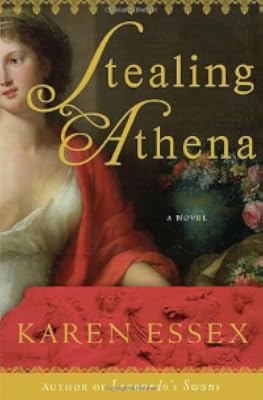
Stealing Athena
by Karen Essex 
On This Page
Description
Fiction. Literature. HTML:The author of the bestselling Leonardo’s Swans traverses the centuries into the hearts of two extraordinary women to reveal the passions, ambitions, and controversies surrounding the Elgin Marbles.The Elgin Marbles have been displayed in the British Museum for nearly two hundred years, and for just as long they have been the center of a raging controversy. In Stealing Athena, Karen Essex chronicles the Marbles’ amazing journey through the dynamic narratives of show more Mary Nisbet, wife of the Earl of Elgin, the British ambassador to Constantinople, and Aspasia, the mistress of Perikles, the most powerful man in Athens during that city’s Golden Age.
At the height of the Napoleonic Wars, the twenty-one-year-old, newly wed Countess of Elgin, a Scottish heiress and celebrated beauty, enchanted the power brokers of the Ottoman Empire, using her charms to obtain their permission for her husband’s audacious plan to deconstruct the Parthenon and bring its magnificent sculptures to England. Two millennia earlier, Aspasia, a female philosopher and courtesan, and a central figure in Athenian life, plied her wits, allure, and influence with equal determination, standing with Perikles at the center of vehement opposition to his vision of building the most exquisite monuments the world had ever seen.
Rich in romance and intrigue, greed and glory, Stealing Athena is an enthralling work of historical fiction and a window into the intimate lives of some of history’s most influential and fascinating women. show less
Tags
Recommendations






















Member Reviews
Very enjoyable novel shifts between Mary, wife of Lord Elgin (you know, the one who nabbed the Elgin Marbles) and Aspasia, companion to Pericles, who built the Parthenon.
I wanted more of both stories -- which I think is a good sign, and there were a few details that didn't really hang together for me, but there are two really interesting women here, treated with thought and compassion in two spots of history that haven't come across my radar much.
I wanted more of both stories -- which I think is a good sign, and there were a few details that didn't really hang together for me, but there are two really interesting women here, treated with thought and compassion in two spots of history that haven't come across my radar much.
Stealing Athena by Karen Essex is a well-researched and well-written fictionalized account of Mary Nisbet, Countess of Elgin. It starts in 1799 with the story of her marriage to Thomas Bruce, 7th Earl of Elgin, who brought back to England what are called The Elgin Marbles – friezes, metopes, and statues from the Parthenon and Acropolis. It ends in 1816, when she visits the Elgin Marbles at the British Museum.
Mary loves Elgin when she marries him but is disillusioned by his spending of her fortune, his jealousy of other men which she feels is unfounded and 5 pregnancies in the first 7 years of their marriage that sap her strength and put her through more pain than she is ultimately willing to bear. Elgin divorces her for adultery, an show more almost unheard of action in the early 1800s; taking her children and turning her into an outcast. She eventually marries Robert Ferguson, the man sued by Elgin for seducing her.
It is also the story of Aspasia, concubine to Pericles, prominent Athenian statesman and military leader in Greece’s Golden Age. Pericles sponsored Pheidias in his work on the Parthenon and the Acropolis, especially in the sculpting of the great statue of Athena Promachos.
In Aspasia’s portions of the book we learn of her love for Pericles and the irony of his establishing a law that no Athenian can marry an alien. This law prevents him from marrying her. Her story is filled with references to Pheidias and his work on the Athena and the friezes of the Parthenon. Aspasia is put on trial for corrupting the women of Athens to satisfy the perversions of Pericles and posing for Pheidias and allowing him to use her face for the face of Athena, considered a sacrilege. Pheidias is put on trial for embezzling gold from the Athena statue and impiety for putting images of himself and Pericles on Athena’s shield.
The book alternates their stories. The historical references are beautifully integrated into the stories. The language is appropriate to the time periods, the actions and motivations of both women make sense according to their world views, and I appreciated their strength of character. I cared for Mary and Aspasia. Both women tried to carve a place for themselves in a man’s world. Mary’s trial for divorce, although a very small part of her story, and Aspasia’s for corruption and impiety, a much larger part of her story, are detailed and vivid.
I really enjoyed this book. It flowed nicely and was very interesting. I appreciated the descriptions of Constantinople, Athens, Scotland, and England and how the greater context of the Napoleonic Wars and the Golden Age of Greece were so much a part of the stories of these women.
The Fates of the Characters and Author’s Notes at the end of the book are a welcome addition to the book and make me want to research both these women and the men in their lives. I consider this book historical fiction at its best. show less
Mary loves Elgin when she marries him but is disillusioned by his spending of her fortune, his jealousy of other men which she feels is unfounded and 5 pregnancies in the first 7 years of their marriage that sap her strength and put her through more pain than she is ultimately willing to bear. Elgin divorces her for adultery, an show more almost unheard of action in the early 1800s; taking her children and turning her into an outcast. She eventually marries Robert Ferguson, the man sued by Elgin for seducing her.
It is also the story of Aspasia, concubine to Pericles, prominent Athenian statesman and military leader in Greece’s Golden Age. Pericles sponsored Pheidias in his work on the Parthenon and the Acropolis, especially in the sculpting of the great statue of Athena Promachos.
In Aspasia’s portions of the book we learn of her love for Pericles and the irony of his establishing a law that no Athenian can marry an alien. This law prevents him from marrying her. Her story is filled with references to Pheidias and his work on the Athena and the friezes of the Parthenon. Aspasia is put on trial for corrupting the women of Athens to satisfy the perversions of Pericles and posing for Pheidias and allowing him to use her face for the face of Athena, considered a sacrilege. Pheidias is put on trial for embezzling gold from the Athena statue and impiety for putting images of himself and Pericles on Athena’s shield.
The book alternates their stories. The historical references are beautifully integrated into the stories. The language is appropriate to the time periods, the actions and motivations of both women make sense according to their world views, and I appreciated their strength of character. I cared for Mary and Aspasia. Both women tried to carve a place for themselves in a man’s world. Mary’s trial for divorce, although a very small part of her story, and Aspasia’s for corruption and impiety, a much larger part of her story, are detailed and vivid.
I really enjoyed this book. It flowed nicely and was very interesting. I appreciated the descriptions of Constantinople, Athens, Scotland, and England and how the greater context of the Napoleonic Wars and the Golden Age of Greece were so much a part of the stories of these women.
The Fates of the Characters and Author’s Notes at the end of the book are a welcome addition to the book and make me want to research both these women and the men in their lives. I consider this book historical fiction at its best. show less
When Mary Nisbit, a beautiful and vivacious young woman, marries the handsome Thomas Bruce, Earl of Elgin and British Ambassador to Constantinople, their future together looks bright. Soon they begin a journey traversing the globe that will culminate in Athens, where Elgin has plans to excavate and transport the ruins of the Parthenon to England. Although Elgin is ostensibly in Constantinople to smooth foreign relations between Britain and the Ottoman Empire, his passion lies with the exportation of the ancient Grecian ruins of the temple of Athena. Throughout their travels, Mary flourishes in the exotic locales and befriends many important and influential people, but she longs for the comforts of home, and struggles through many show more difficult pregnancies and political upheavals. As the years pass, Elgin becomes more and more insistent in removing and shipping vast quantities of the relics, to the severe detriment of his wife's fortune and the stability of their marriage. Meanwhile, separated by thousands of years, the story of Aspasia is told. Aspasia is the philosopher and lover of Pericles, the statesman who is responsible for the construction of the Parthenon. As Aspasia's story unfolds, we are privy to her ordeals and victories, as well as receiving an enlightening picture of ancient Greece, from the segregation and subjugation of it's women, to the intricacies of it's religious ideology. Through the weaving of these two tales, we get to know these two extraordinary women and chronicle the beginning and ending of this great monument, from it's design and construction to it's deterioration and removal from it's homeland.
As a historical novel, this book really excels. The level of research that went into the book made the story very full and engaging without making it dry and flavorless, and the execution of the story was quite adept. Mary and Elgin's story was the main focus of the book, and I would say that Mary's chapters outweighed Aspasia's about six to one. Mary was a very likable heroine, who was skilfully portrayed as a woman that was easy to relate to, and embodied many of the emotions that a woman of today's time might feel. She was a very credible character who sacrificed much for the love of her husband and children, while still being independent and knowledgeable. I felt more connected to her character than any other in the book, and admired her efficient diplomacy and kindness. It almost seemed that Mary was the foreign ambassador, maintaining the goodwill between the two nations all on her own, while Elgin traipsed around collecting artifacts. I especially enjoyed the sections devoted to Mary's meetings with the Captain Pasha of the Ottoman empire. Their unlikely friendship made Mary's stay in Constantinople much more bearable. His generosity and goodwill seemed to know no bounds, and it was monumental that he allowed Mary to visit the inner sanctum of the Harem and to meet the Sultan's mother, the Valida. Although the sections on the life of Aspasia were interesting and involving, I believe the limited exposure to her character made her less a focal point to the reader. This is not to say that her story was less compelling, only less detailed. One particularly interesting aspect of Aspasia's story were the details regarding Pheidias, lead artist of many of the great sculptures and friezes.
Elgin, however, was a completely disgusting fellow. He was very manipulative and not shrewd with his spending habits at all. Many times throughout the book, he displayed a shocking amount of arrogance and sense of entitlement to the relics that he wished to possess. From the outset, I found Elgin to be almost insufferable and egotistical. There were times when he seemed proud of the work Mary was doing on behalf of the embassy, but even then his wheedling for more money overshadowed the more pleasant aspects of his character. There seemed to be no bounds to his collecting, regardless of the cost or hardship that he created for everyone else. He was single minded in his pursuits, not taking Mary's feelings into consideration, and constantly placing her in undesirable situations. As he was based on a real person, I can only say that I would not like to have met Elgin in reality. The author's ability to capture Elgin's flaws was incredible; he was a fully realized unpleasant ass. Many will argue the merits of Elgin's cause, perhaps stating that the artifacts are better off having been deconstructed and preserved rather that destroyed in their natural setting, and though I somewhat agree with that sentiment, it way the way that the collecting was undertaken that was particularly irksome. There is no way to tell if the artifacts would have been lost had this pillaging not taken place. One of the more heinous opinions that Elgin expressed was the sentiment that the people of Greece were heathens who didn't deserve to keep their temple. The grandiosity of his thinking and his subsequent actions towards the end of the book made me realize that I had not judged Elgin too harshly at all.
Before reading this book, I had not been exposed to any information regarding the Elgin Marbles or the controversy that still swirls about them today. This insight to the history of some of the most important pieces of artwork in history was both unsettling and revealing. It was a testament to the author's capability that I was able to see and understand the historical importance of these valuable relics, while still being appalled at the ravaging of the stones from their origins. The story was extremely involving and intricate, with characters that were well fleshed out and believable. This story inspired many emotions in me, from disgust and incredulity, to admiration and wonderment. Never was the plot dragging or soft. I would recommend this book to lovers of historical fiction as well as those who just want a good character driven story. show less
As a historical novel, this book really excels. The level of research that went into the book made the story very full and engaging without making it dry and flavorless, and the execution of the story was quite adept. Mary and Elgin's story was the main focus of the book, and I would say that Mary's chapters outweighed Aspasia's about six to one. Mary was a very likable heroine, who was skilfully portrayed as a woman that was easy to relate to, and embodied many of the emotions that a woman of today's time might feel. She was a very credible character who sacrificed much for the love of her husband and children, while still being independent and knowledgeable. I felt more connected to her character than any other in the book, and admired her efficient diplomacy and kindness. It almost seemed that Mary was the foreign ambassador, maintaining the goodwill between the two nations all on her own, while Elgin traipsed around collecting artifacts. I especially enjoyed the sections devoted to Mary's meetings with the Captain Pasha of the Ottoman empire. Their unlikely friendship made Mary's stay in Constantinople much more bearable. His generosity and goodwill seemed to know no bounds, and it was monumental that he allowed Mary to visit the inner sanctum of the Harem and to meet the Sultan's mother, the Valida. Although the sections on the life of Aspasia were interesting and involving, I believe the limited exposure to her character made her less a focal point to the reader. This is not to say that her story was less compelling, only less detailed. One particularly interesting aspect of Aspasia's story were the details regarding Pheidias, lead artist of many of the great sculptures and friezes.
Elgin, however, was a completely disgusting fellow. He was very manipulative and not shrewd with his spending habits at all. Many times throughout the book, he displayed a shocking amount of arrogance and sense of entitlement to the relics that he wished to possess. From the outset, I found Elgin to be almost insufferable and egotistical. There were times when he seemed proud of the work Mary was doing on behalf of the embassy, but even then his wheedling for more money overshadowed the more pleasant aspects of his character. There seemed to be no bounds to his collecting, regardless of the cost or hardship that he created for everyone else. He was single minded in his pursuits, not taking Mary's feelings into consideration, and constantly placing her in undesirable situations. As he was based on a real person, I can only say that I would not like to have met Elgin in reality. The author's ability to capture Elgin's flaws was incredible; he was a fully realized unpleasant ass. Many will argue the merits of Elgin's cause, perhaps stating that the artifacts are better off having been deconstructed and preserved rather that destroyed in their natural setting, and though I somewhat agree with that sentiment, it way the way that the collecting was undertaken that was particularly irksome. There is no way to tell if the artifacts would have been lost had this pillaging not taken place. One of the more heinous opinions that Elgin expressed was the sentiment that the people of Greece were heathens who didn't deserve to keep their temple. The grandiosity of his thinking and his subsequent actions towards the end of the book made me realize that I had not judged Elgin too harshly at all.
Before reading this book, I had not been exposed to any information regarding the Elgin Marbles or the controversy that still swirls about them today. This insight to the history of some of the most important pieces of artwork in history was both unsettling and revealing. It was a testament to the author's capability that I was able to see and understand the historical importance of these valuable relics, while still being appalled at the ravaging of the stones from their origins. The story was extremely involving and intricate, with characters that were well fleshed out and believable. This story inspired many emotions in me, from disgust and incredulity, to admiration and wonderment. Never was the plot dragging or soft. I would recommend this book to lovers of historical fiction as well as those who just want a good character driven story. show less
Lady Mary Elgin, recently married, is swept along by her husband on his quest to claim priceless Greek art from the Ottoman Empire for the British, under the guise of Ambassador, while relying on her fortune to pay the bills. Centuries before, Aspasia is neatly given by her brother-in-law to Greece’s ruler, Perikles. In Stealing Athena, the stories of these two oddly similar women intertwine to form one powerful narrative about women’s struggles in the face of never-ending male oppression, while the great marble statues of Greece are both built and taken apart.
This is how historical fiction narratives should be combined. Both stories are compelling and each time they switched, I regretted the change, only to be happy that the other show more woman was now featured. I did prefer Mary, in all honesty, but I agree with other reviewers because it seems that the book is more hers than Aspasia’s. She gets a bit more time and it’s easy to feel frustration and sympathy for her. It is also for Aspasia, but Mary’s dilemmas are more numerous and almost more modern day. The stories complemented each other beautifully. In Aspasia’s tale, the Parthenon is being raised, as well as many other great temples. In Mary’s, they are being torn down, supposedly to save them.
In fact, therein lies my biggest problem with the book. It’s a difficult tale to hear. I have issues with British pillaging of ancient treasures, despite the fact that I have only been able to enjoy them in England because of this. It’s hard, as someone who loves history so much, to hear about how these priceless and completely irreplaceable marbles were carelessly handled and damaged by the British. Yes, it would have been horrible if they had been destroyed, but they could have been handled better, and treated better later at the British Museum. (No offense to the British of today, obviously, they’re trying to make up for it.)
The book is well written, and each woman has her own distinctive voice. At times, they echo each other, and they show the universality of female existence; largely, that women have historically had few rights and been totally subservient to men. Each woman thwarts this in her own way, and it shows us that their condition did not actually improve. Stealing Athena is also extremely well-plotted and never drags or gets boring. I never wished for the other woman’s chapter to start. With some expansion, either story could have functioned perfectly well on its own. Instead, they fit together and the book benefits from their shared experiences and the complete circle of the story, from construction to destruction.
I’d highly recommend this book, especially to historical fiction readers, but I think I’d recommend it to others as well.
http://chikune.com/blog/?p=149 show less
This is how historical fiction narratives should be combined. Both stories are compelling and each time they switched, I regretted the change, only to be happy that the other show more woman was now featured. I did prefer Mary, in all honesty, but I agree with other reviewers because it seems that the book is more hers than Aspasia’s. She gets a bit more time and it’s easy to feel frustration and sympathy for her. It is also for Aspasia, but Mary’s dilemmas are more numerous and almost more modern day. The stories complemented each other beautifully. In Aspasia’s tale, the Parthenon is being raised, as well as many other great temples. In Mary’s, they are being torn down, supposedly to save them.
In fact, therein lies my biggest problem with the book. It’s a difficult tale to hear. I have issues with British pillaging of ancient treasures, despite the fact that I have only been able to enjoy them in England because of this. It’s hard, as someone who loves history so much, to hear about how these priceless and completely irreplaceable marbles were carelessly handled and damaged by the British. Yes, it would have been horrible if they had been destroyed, but they could have been handled better, and treated better later at the British Museum. (No offense to the British of today, obviously, they’re trying to make up for it.)
The book is well written, and each woman has her own distinctive voice. At times, they echo each other, and they show the universality of female existence; largely, that women have historically had few rights and been totally subservient to men. Each woman thwarts this in her own way, and it shows us that their condition did not actually improve. Stealing Athena is also extremely well-plotted and never drags or gets boring. I never wished for the other woman’s chapter to start. With some expansion, either story could have functioned perfectly well on its own. Instead, they fit together and the book benefits from their shared experiences and the complete circle of the story, from construction to destruction.
I’d highly recommend this book, especially to historical fiction readers, but I think I’d recommend it to others as well.
http://chikune.com/blog/?p=149 show less
If you have been to the British Museum in London you could not have missed the Elgin Marbles, those lovely white carvings taken from the Parthenon in Athens. What you might not have done is imagined the arduous task it was to move them there. In this historical novel Karen Essex has painted the picture for us of the personal lives of the people involved.
In 1799 Lord Elgin was appointed ambassador to Constantinople. He was a newlywed and took his wife, Mary, with him to his post. He was glad to have been given the position because he was an architecture buff and believed that what the Ancient Greeks built was the pinnacle of architectural perfection. At the time, Athens was occupied by the Ottoman Turks. They were camped at the Acropolis show more and were smashing the marbles to use for building materials, using the core metal to make ammunition. He wanted to make moldings and have drawings done so that those historical buildings would not be lost forever.
Mary was only twenty one and pregnant at the start of this odyssey. But she was a lovely, smart and charming young woman. She won the admiration of the Sultan and other high ranking Turks. The Turks put no value on the ancient buildings in Greece and, as a favor to Mary, ended up allowing the Elgins to remove whatever ancient item they desired from the country.
Removal of the priceless ancient sculptures became an obsession for Lord Elgin. He spent an enormous amount of money extracting the artifacts, becoming deep in debt, causing transportation nightmares, ruining his health and his marriage. All the while competing with Napoleon and the French for artifacts in between the Napoleonic Wars.
While we see the destruction of the Parthenon through Mary's eyes, the author also gives us a glimpse of it's construction through the eyes of Aspasia. She was the mistress of the man behind the building of the Parthenon, Perikles, and a philosopher in her own right. Through her the reader is given a window into the society of ancient Athens and their political structure, which shows us the roots of our own.
Since that time the debate has raged: where do the marbles belong? The Greeks would like them back and have even built a new museum to house them when they return. The British Museum shows no sign of letting them go. It is questionable whether the marbles would even still exist now if they had not been removed when they were.
This is a great historical novel with it's basis in fact. The author did extensive historical research and it shows in the story line. It is a fascinating story of two strong women who had the courage to take control of their own lives. show less
In 1799 Lord Elgin was appointed ambassador to Constantinople. He was a newlywed and took his wife, Mary, with him to his post. He was glad to have been given the position because he was an architecture buff and believed that what the Ancient Greeks built was the pinnacle of architectural perfection. At the time, Athens was occupied by the Ottoman Turks. They were camped at the Acropolis show more and were smashing the marbles to use for building materials, using the core metal to make ammunition. He wanted to make moldings and have drawings done so that those historical buildings would not be lost forever.
Mary was only twenty one and pregnant at the start of this odyssey. But she was a lovely, smart and charming young woman. She won the admiration of the Sultan and other high ranking Turks. The Turks put no value on the ancient buildings in Greece and, as a favor to Mary, ended up allowing the Elgins to remove whatever ancient item they desired from the country.
Removal of the priceless ancient sculptures became an obsession for Lord Elgin. He spent an enormous amount of money extracting the artifacts, becoming deep in debt, causing transportation nightmares, ruining his health and his marriage. All the while competing with Napoleon and the French for artifacts in between the Napoleonic Wars.
While we see the destruction of the Parthenon through Mary's eyes, the author also gives us a glimpse of it's construction through the eyes of Aspasia. She was the mistress of the man behind the building of the Parthenon, Perikles, and a philosopher in her own right. Through her the reader is given a window into the society of ancient Athens and their political structure, which shows us the roots of our own.
Since that time the debate has raged: where do the marbles belong? The Greeks would like them back and have even built a new museum to house them when they return. The British Museum shows no sign of letting them go. It is questionable whether the marbles would even still exist now if they had not been removed when they were.
This is a great historical novel with it's basis in fact. The author did extensive historical research and it shows in the story line. It is a fascinating story of two strong women who had the courage to take control of their own lives. show less
An engrossing read featuring two strong women at opposite ends of the Elgin Marbles – one the wife of a diplomat, determined to bring them to England, and the other a philosopher-courtesan. The book follows the lives of Lord Elgin and his wife Mary, in their procurement of the Parthenon sculptures, or what would be known as the Elgin Marbles, and the life of Aspasia, companion to Pericles in Athens when those same structures were coming to fruition two thousand years earlier. I thought that the alternating narration worked well; both Mary and Aspasia’s lives were compelling to follow, and the trial and effort put into building and dismantling the structures were contrasted through the eyes of these two women.
I stopped worrying about historical accuracy or purple prose writing @ p.100 and gave myself over to the book which was just good, old-fashioned fun. Spoiler: Lord Elgin was a shit.
Members
- Recently Added By
Author Information

8 Works 1,986 Members
Karen Essex lives in Beverly Hills, California. (Bowker Author Biography)
Karen Essex is a LibraryThing Author, an author who lists their personal library on LibraryThing.
Common Knowledge
- Canonical title
- Stealing Athena
- People/Characters
- Aspasia; Thomas Bruce, Lord Elgin; Mary Nisbet, Countess of Elgin; Pericles
- Important places
- Ottoman Empire; Constantinople; Turkey; Athens, Greece
- Dedication
- For Amy Williams
Classifications
Statistics
- Members
- 374
- Popularity
- 83,525
- Reviews
- 20
- Rating
- (3.46)
- Languages
- English, Italian, Lithuanian
- Media
- Paper, Audiobook, Ebook
- ISBNs
- 9
- ASINs
- 4