
On This Page
Description
From author Frank Herbert, creator of the Dune series, comes this classic science fiction of a sadistic experiment created by a interstellar civilization ... THE DOSADI EXPERIMENT Beyond the God Wall Generations of a tormented human-alien people, caged on a toxic planet, conditioned by constant hunger and war-this is the Dosadi Experiment, and it has succeeded too well. For the Dosadi have bred for Vengeance as well as cunning, and they have learned how to pass through the shimmering God show more Wall to exact their dreadful revenge on the Universe that created them... At the Publisher's request, this title is being sold without Digital Rights Management Software (DRM) applied. show lessTags
Recommendations



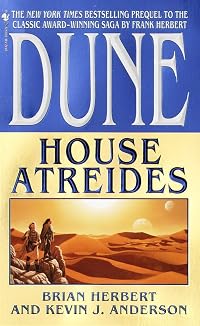
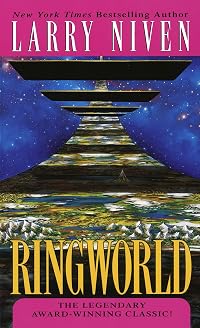
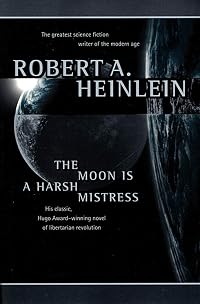
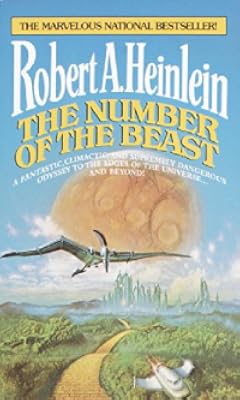
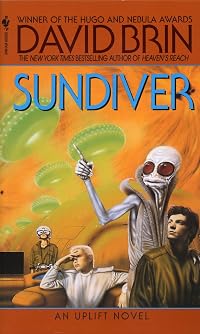
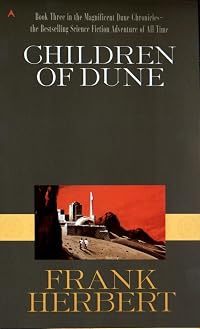
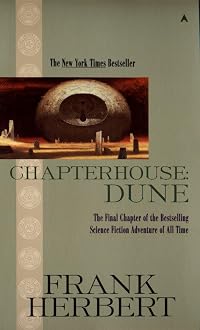
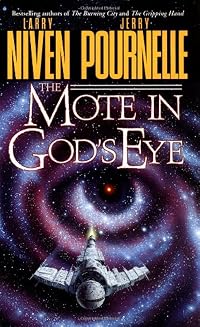


















Member Recommendations

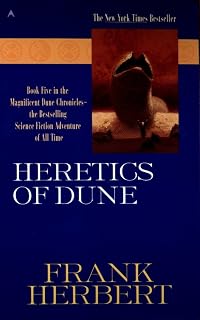
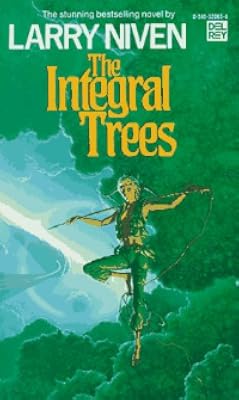
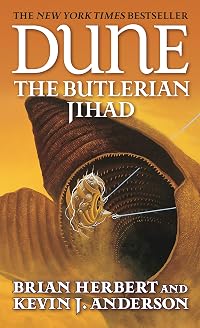
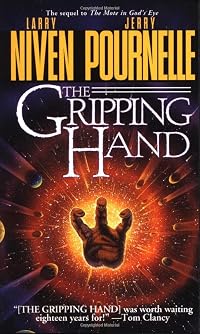
santhony Philosophical Science Fiction

paradoxosalpha far future espionage stories where the protagonist must infiltrate an experimental world in an effort to discover its true purpose, knowing only that there is some great culpability involved
Member Reviews
Saboteur Extraordinary McKie is back, in a much better sequel that focuses on a more interesting part of the ConSentiency universe. The planet of Dosadi has been locked away for generations, an experiment in applied social science that has gone tremendously wrong. McKei has been sent in to clean it up, though the ultimate motive behind his mission is a mystery.
Dosadi as a planet is like Dune on steroids, a punishingly deadly environment where simple survival has attuned its inhabitants to superhuman levels of competence. Keila Jedrik is the most Machiavellian of its inhabitants, and she leads an organization to break free and get revenge on whoever put her on Dosadi at any cost. Keila suborns McKie almost instantaneously, outplans her show more opponents with a mental facility which would put an Mentat to shame, and engineers an escape with McKie, who she merges egos with.
Then it's up to McKie to reveal the truth in a mortal courtroom drama. The toadlike Gowachins have an attitude of 'respectful disrespect' towards the law, and McKie is the only human ever admitted to their ranks of Legums. In the Gowachin court-arena, failure is punished with death, and the knife can be turned on defendant, plaintiff, witness, legum, and/or judge. The crime of Dosadi is not the intensive prison-planet environment, but that it serves as the raw material for a body-swapping immortality ring that is the real secret power in politics. The courtroom drama is quite tense, but the whole thing exists to make Herbert's points about power, and how it is too dangerous to put in the hands of mere humans, but also disastrous to hand over to any bureaucratic entity or superhuman. The whole thing feels like a cartoonish first draft of the ideas in God Emperor of Dune, and let's be real; if you're reading this book, you've already read all of the Dune books, and even some of the KJA ones. show less
Dosadi as a planet is like Dune on steroids, a punishingly deadly environment where simple survival has attuned its inhabitants to superhuman levels of competence. Keila Jedrik is the most Machiavellian of its inhabitants, and she leads an organization to break free and get revenge on whoever put her on Dosadi at any cost. Keila suborns McKie almost instantaneously, outplans her show more opponents with a mental facility which would put an Mentat to shame, and engineers an escape with McKie, who she merges egos with.
Then it's up to McKie to reveal the truth in a mortal courtroom drama. The toadlike Gowachins have an attitude of 'respectful disrespect' towards the law, and McKie is the only human ever admitted to their ranks of Legums. In the Gowachin court-arena, failure is punished with death, and the knife can be turned on defendant, plaintiff, witness, legum, and/or judge. The crime of Dosadi is not the intensive prison-planet environment, but that it serves as the raw material for a body-swapping immortality ring that is the real secret power in politics. The courtroom drama is quite tense, but the whole thing exists to make Herbert's points about power, and how it is too dangerous to put in the hands of mere humans, but also disastrous to hand over to any bureaucratic entity or superhuman. The whole thing feels like a cartoonish first draft of the ideas in God Emperor of Dune, and let's be real; if you're reading this book, you've already read all of the Dune books, and even some of the KJA ones. show less
This is a very difficult novel for me to review. It is brilliantly written and extremely deep in a philosophical sense. Too deep, in fact, for me to simply read and enjoy. I read for pleasure and this book requires either extreme intelligence or more effort than I'm willing to expend strictly for pleasure reading.
I read and enjoyed Dune very much. One of my favorite novels of all time. This novel is very similar to some of the sequels to Dune (God Emperor of Dune, Chapterhouse Dune) which I felt got too bogged down in deep philosphical discussions that quite simply lost me.
I am a very well educated person and no idiot, however I'm definitely not smart enough to fully appreciate this novel. I read the book and followed the story line, show more but feel like I missed so much of the underlying meaning that it was a waste of my time. I could probably read, reread and ponder many sections and ultimately gain a greater appreciation, but I'm challenged sufficiently at work. I read to relax and decompress. This is not relaxing reading.
Bottom line: If you are very intelligent and/or a deep thinker who reads in order to broaden your mind or challenge yourself, this novel will certainly do the trick. If you read strictly for pleasure and want science fiction, read Asimov instead. This book is Dune on steroids. show less
I read and enjoyed Dune very much. One of my favorite novels of all time. This novel is very similar to some of the sequels to Dune (God Emperor of Dune, Chapterhouse Dune) which I felt got too bogged down in deep philosphical discussions that quite simply lost me.
I am a very well educated person and no idiot, however I'm definitely not smart enough to fully appreciate this novel. I read the book and followed the story line, show more but feel like I missed so much of the underlying meaning that it was a waste of my time. I could probably read, reread and ponder many sections and ultimately gain a greater appreciation, but I'm challenged sufficiently at work. I read to relax and decompress. This is not relaxing reading.
Bottom line: If you are very intelligent and/or a deep thinker who reads in order to broaden your mind or challenge yourself, this novel will certainly do the trick. If you read strictly for pleasure and want science fiction, read Asimov instead. This book is Dune on steroids. show less
Here's a book I looked at with interest when I was a teenager who had read and enjoyed Herbert's Dune. I believe I passed it over then because it was the sequel to a book I hadn't read (Whipping Star), and which wasn't in the public library collection where I found The Dosadi Experiment. Since then, Dosadi has gone from being the second of a series to being the fourth, in the narrative chronology of Herbert's ConSentiency novels. Still not having read the others all these decades later, I went ahead and tackled this one, inspired by praise I had read for it on LibraryThing.
It may be that I would have enjoyed it more if I had been already acquainted with the ConSentiency milieu and the protagonist (Jorj X. McKie, Saboteur Extraordinary) show more established in Whipping Star, but I did like it all the same. It certainly has a number of themes in common with the original Dune books, most especially the idea of a eugenic program transforming humanity. But even more it reminded me of the later Charles Stross novel Glasshouse. Both are far future espionage stories where the protagonist must infiltrate an experimental world in an effort to discover its true purpose, knowing only that there is some great culpability involved. In both cases, the world being investigated is more like the reader's world than the somewhat utopian future of the novel's larger scenario. In Dosadi, "The whole thing reminded McKie of stories told about behavior in Human bureaucracies of the classical period before deep space travel" (222). There are other interesting similarities between the books that would be spoilers to detail.
Unique to Herbert's tale is the focus on the exotic legal system of the frog-like Gowachin aliens, an important peer-race of humanity within the ConSentiency. McKie is the only human credentialed as a "legum" in the jurisprudence of their "courtarena," where both lawyers and litigants are routinely exposed to mortal hazard. Far from a crude gladiator's brawl, however, the operations of this system depend on great subtlety and creativity, demanding both a reverence for tradition and the power to upend precedents and conventions.
This book read quickly, even though there were passages that were written with such verbal economy that they became ambiguous to the reader. That style is thematically consistent with the book, which attributes it to the inhabitants of Dosadi themselves. I don't know how far in our future The Dosadi Experiment is supposed to be set, and it glances lightly over many technological details, but it has aged pretty well for forty-year-old science fiction. I'm glad to have finally read it, and I appreciate the recommendations that got me to do so. show less
It may be that I would have enjoyed it more if I had been already acquainted with the ConSentiency milieu and the protagonist (Jorj X. McKie, Saboteur Extraordinary) show more established in Whipping Star, but I did like it all the same. It certainly has a number of themes in common with the original Dune books, most especially the idea of a eugenic program transforming humanity. But even more it reminded me of the later Charles Stross novel Glasshouse. Both are far future espionage stories where the protagonist must infiltrate an experimental world in an effort to discover its true purpose, knowing only that there is some great culpability involved. In both cases, the world being investigated is more like the reader's world than the somewhat utopian future of the novel's larger scenario. In Dosadi, "The whole thing reminded McKie of stories told about behavior in Human bureaucracies of the classical period before deep space travel" (222). There are other interesting similarities between the books that would be spoilers to detail.
Unique to Herbert's tale is the focus on the exotic legal system of the frog-like Gowachin aliens, an important peer-race of humanity within the ConSentiency. McKie is the only human credentialed as a "legum" in the jurisprudence of their "courtarena," where both lawyers and litigants are routinely exposed to mortal hazard. Far from a crude gladiator's brawl, however, the operations of this system depend on great subtlety and creativity, demanding both a reverence for tradition and the power to upend precedents and conventions.
This book read quickly, even though there were passages that were written with such verbal economy that they became ambiguous to the reader. That style is thematically consistent with the book, which attributes it to the inhabitants of Dosadi themselves. I don't know how far in our future The Dosadi Experiment is supposed to be set, and it glances lightly over many technological details, but it has aged pretty well for forty-year-old science fiction. I'm glad to have finally read it, and I appreciate the recommendations that got me to do so. show less
...My opinion that The Dosadi Experiment is Herbert's best non-Dune book has remained unchanged. It is a novel that summarizes many of the themes that can be found in his works but also highlights some of the problems with his writing. The lack of character development, the constantly changing viewpoints and the cognitive leaps that characterize the novel keep it from being a great work. Herbert's grasp of the ideas he wants to discuss is unrivaled in science fiction but the way he translates them to the plot is less so. Personally, I can live with Herbert's shortcomings as a writer though. I wouldn't recommend anybody new to Herbert to start here, but if you like his style this is certainly a novel you'll not want to miss.
Full Random show more Comments review show less
Full Random show more Comments review show less
This is definitely one of Herbert's better non-Dune books. The idea is intriguing, and the story is well-done. The idea in itself is not entirely new (the subjects of an experiment revolting against the creators/controllers of the experiment) but Herbert does a really nice job here, and the ending has a nice little surprise twist. You can see echoes of Dune in here, with the multilayered story. Definitely recommended if you're a Herbert fan.
I have read this book many, many times but this time came to it after a break of maybe 20 years. In my opinion this is by far and away the best of Frank Herbert's non-Dune books. The plot is complex and clever and the writing extraordinary.
Jorj X. McKie, while lesser known than Paul Maud'Dib, could have been just as popular had Herbert dedicated more writing to tell McKie's stories.
His title is "saboteur extraordinary", working for the Bureau of Sabotage. Though, "working" isn't exactly the right word to describe what he does for BuSab, as McKie loves doing his job.
As part of a plot to uncover nefarious uses of the jump gate technology (that is, technology that allows instantaneous travel from one point in the universe to another), McKie discovers Dosadi, a world cut off from the rest of ConSentiency via a practically impenetrable barrier called the God Wall.
McKie befriends Dosadi's Senior Liator, Keila Jedrik, and the two do what McKie does best: sabotage, sabotage, show more sabotage, in hopes of liberating the people trapped on Dosadi, and to prevent the other bureaus from gaining too much power.
Not as great as Dune, but still definitely Herbert's excellent prose. Recommended for true fans of Frank Herbert. show less
His title is "saboteur extraordinary", working for the Bureau of Sabotage. Though, "working" isn't exactly the right word to describe what he does for BuSab, as McKie loves doing his job.
As part of a plot to uncover nefarious uses of the jump gate technology (that is, technology that allows instantaneous travel from one point in the universe to another), McKie discovers Dosadi, a world cut off from the rest of ConSentiency via a practically impenetrable barrier called the God Wall.
McKie befriends Dosadi's Senior Liator, Keila Jedrik, and the two do what McKie does best: sabotage, sabotage, show more sabotage, in hopes of liberating the people trapped on Dosadi, and to prevent the other bureaus from gaining too much power.
Not as great as Dune, but still definitely Herbert's excellent prose. Recommended for true fans of Frank Herbert. show less
Members
- Recently Added By
Lists

Life on the Prison Planet
18 works; 10 members

Books Read in 2025
4,091 works; 97 members
Author Information

258+ Works 148,237 Members
Frank Herbert was born Franklin Patrick Herbert, Jr. in Tacoma, Washington on October 8, 1920. He worked originally as a journalist, but then turned to science fiction. His Dune series has had a major impact on that genre. Some critics assert that Herbert is responsible for bringing in a new branch of ecological science fiction. He had a personal show more interest in world ecology, and consulted with the governments of Vietnam and Pakistan about ecological issues. The length of some of Herbert's novels also helped make it acceptable for science fiction authors to write longer books. It is clear that, if the reader is engaged by the story---and Herbert certainly has the ability to engage his readers---length is not important. As is usually the case with popular fiction, it comes down to whether or not the reader is entertained, and Herbert is, above all, an entertaining and often compelling writer. His greatest talent is his ability to create new worlds that are plausible to readers, in spite of their alien nature, such as the planet Arrakis in the Dune series. Frank Herbert died of complications from pancreatic cancer on February, 11, 1986, in Madison, Wisconsin. He was 65. (Bowker Author Biography) show less
Some Editions
Awards and Honors
Awards
Series

Belongs to Publisher Series
Work Relationships
Common Knowledge
- Canonical title
- The Dosadi Experiment
- Original title
- The Dosadi Experiment
- Original publication date
- 1977 (Galaxy May, June, Jul, Aug) (Galaxy May, June, Jul, Aug); 1977-09
- People/Characters
- Magister Aritch; Bildoon (Bureau Chief of BuSab - the Bureau of Sabotage, a Pan Spechi); Broey; Ceylang (a Wreave); Keila Jedrik; Fannie Mae (a Caleban) (show all 7); Jorj X. McKie (Saboteur Extraordinary)
- Important places
- Dosadi; Tandaloor; ConSentiency; Thyone; Chu, Dosadi
- Dedication
- In memory of Babe
because she knew how to enjoy life - First words
- Preface: When the Calebans first sent us one of their giant metal ‘beachballs,' communicating through this device to offer the use of jumpdoors for interstellar travel, many in the ConSentiency covertly began to exploit thi... (show all)s gift of the stars for their own questionable purposes.
Chapter 1: ‘Why are you so cold and mechanical in your Human relationships?' - Last words
- (Click to show. Warning: May contain spoilers.)And all the time, Jedrik-within was planning . . . plotting . . . planning . . .
- Original language
- English
Classifications
Statistics
- Members
- 2,155
- Popularity
- 9,452
- Reviews
- 23
- Rating
- (3.72)
- Languages
- 10 — Czech, Dutch, English, French, German, Hungarian, Italian, Norwegian, Romanian, Spanish
- Media
- Paper, Audiobook, Ebook
- ISBNs
- 38
- ASINs
- 20