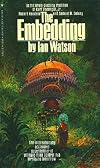
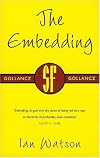
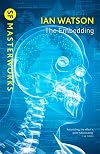
The Embedding
by Ian Watson
On This Page
Description
Ian Watson¿s brilliant debut novel was one of the most significant publications in British sf in the 1970s. Intellectually bracing and grippingly written, it is the story of three experiments in linguistics, and is driven by a searching analysis of the nature of communication. Fiercely intelligent, energetic and challenging, it immediately established Watson as a writer of rare power and vision, and is now recognized as a modern classic.Tags
Recommendations



























Member Recommendations

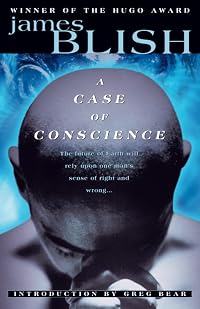
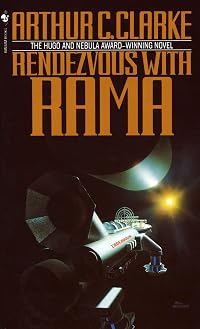
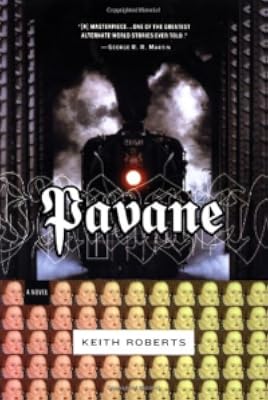
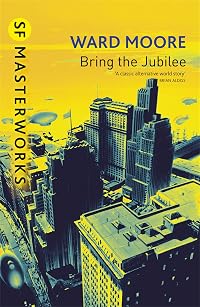
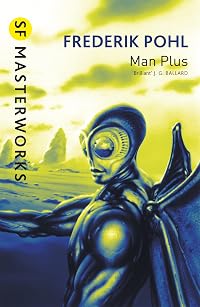
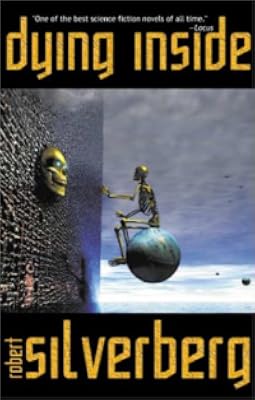
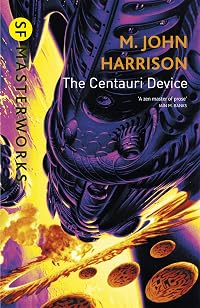
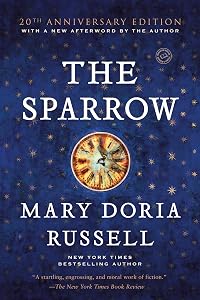
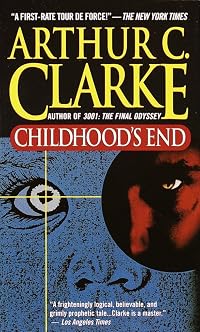
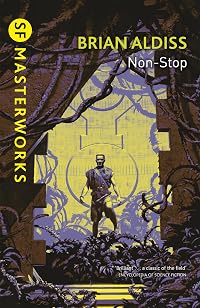
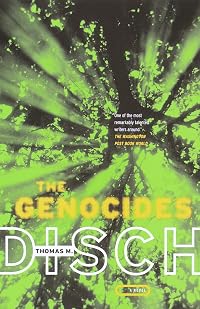
AlanPoulter Both are strong first novels featuring first contact with very alien 'aliens'.
Member Reviews
A promising book that felt like it never quite decided what it wanted to be, or wasn't willing to commit to any of the premises it brought up. Everything peters out, even when it technically doesn't - the culmination of the tribe's prophecies and dreams falls flat, as does the military stuff towards the end. The throwaway introduction of induced telepathy in the last few pages felt like a suitable stamp of authorial confusion. The embedded language thing doesn't actually go anywhere. I don't understand why this is considered a masterpiece.
I discovered [b:The Embedding|941146|The Embedding|Ian Watson|https://i.gr-assets.com/images/S/compressed.photo.goodreads.com/books/1305136769l/941146._SY75_.jpg|926101] while searching through the list of SF masterworks for books I hadn't read. It is Ian Watson's debut novel, first published in 1973. As soon as I began reading, it reminded me that there's nothing quite like the particular cynicism of 1970s mid-Cold War sci-fi. The legacy of the sixties is chewed over in fascinating ways by seventies sci-fi; I think the seventies were one of the strongest decades for the genre. [b:The Embedding|941146|The Embedding|Ian Watson|https://i.gr-assets.com/images/S/compressed.photo.goodreads.com/books/1305136769l/941146._SY75_.jpg|926101] show more contains a lot of what can only only be described as really bleak shit about US war crimes in Vietnam, violent interventions in South America, and utter disregard for human rights or ethics in pursuit of 'progress'. Specifically, one of the protagonists is conducting totally unethical linguistic experiments on children. This reminded me of [b:Native Tongue|285563|Native Tongue (Native Tongue, #1)|Suzette Haden Elgin|https://i.gr-assets.com/images/S/compressed.photo.goodreads.com/books/1348446358l/285563._SY75_.jpg|2866090], although the experiments are not as immediately deadly.
The narrative is largely preoccupied by ideas of how language shapes reality and whether human languages could be restructured to bring us closer to the Real. There's a lot going on in 250 pages, more than I expected. At first I assumed the plot would revolve around linguistic experimentation on children, but it shifted to the Brazilian rainforest where an anthropologist is investigating the extraordinary Xemahoa language of an indigenous tribe. Their community is being inundated as a huge dam floods the rainforest, a concept that I found viscerally horrifying. There is clearly a link between the experiments and the Xemahoa language, and then an unexpected twist:aliens show up! The protagonists, all morally compromised white men, respond like this:
I found the aliens' mercenary approach to first contact original, interesting, and witty; their concept of free trade makes America look altruistic. Their opening gambit is iconic: "Nice planet you have here. How many languages are spoken?" They proceed to bargain hard for a set of human brains encoded with various languages and are willing to offer interstellar travel in return for a brain that speaks Xemahoa, a so-called 'self-embedding' language. I will not pretend to totally understand what Watson is getting at with this embedding stuff. The way the aliens talk about it is deliberately mysterious. I think the reader gets closest to it at the very end, via the description of total boundary collapse between the self and sensory reality.
The chaos unleashed by attempts to secretly bargain with aliens nearly results in a third world war, after the US government is caught using nuclear weapons to blow up the Brazilian dam. This culminates in a very depressing ending: after handing over human brains to the aliens, their spaceship is then blown up. The US and USSR have agreed to publicly announce that the aliens are hostile in order to divert attention from their failures. So Earth gets no alien technology and it's hard to see the language experiments improving anything at all. The morally compromised white men all complain about the stupid wastefulness of this, but the people who've actually suffered are not white and/or women. [b:The Embedding|941146|The Embedding|Ian Watson|https://i.gr-assets.com/images/S/compressed.photo.goodreads.com/books/1305136769l/941146._SY75_.jpg|926101] is definitely more interesting than enjoyable to read, as there's a lot of brutal violence (notably a horrific cannibalism scene). I found it a striking contribution to linguistics-focused sci-fi, as well as revealing of early 1970s anxieties. show less
The narrative is largely preoccupied by ideas of how language shapes reality and whether human languages could be restructured to bring us closer to the Real. There's a lot going on in 250 pages, more than I expected. At first I assumed the plot would revolve around linguistic experimentation on children, but it shifted to the Brazilian rainforest where an anthropologist is investigating the extraordinary Xemahoa language of an indigenous tribe. Their community is being inundated as a huge dam floods the rainforest, a concept that I found viscerally horrifying. There is clearly a link between the experiments and the Xemahoa language, and then an unexpected twist:
Now that he'd partially absorbed it, the news exhilarated Sole rather than scared him. It seemed to absolve him from his petty worries about Pierre and Eileen and his guilt in the face of Dorothy. His experiments with the children took on a purer, clearer complexion, the sort of exhilarated mood he imagined the realisation of the 'Death of God' had filled Nietzsche with. Anything was possible in a world where God was dead; likewise with a worldabout to be visited from the Stars . Then he realised that he was using the news as an anaesthetic - and the pain returned.
The chaos unleashed by attempts to secretly bargain with aliens nearly results in a third world war, after the US government is caught using nuclear weapons to blow up the Brazilian dam. This culminates in a very depressing ending: after handing over human brains to the aliens, their spaceship is then blown up. The US and USSR have agreed to publicly announce that the aliens are hostile in order to divert attention from their failures. So Earth gets no alien technology and it's hard to see the language experiments improving anything at all. The morally compromised white men all complain about the stupid wastefulness of this, but the people who've actually suffered are not white and/or women.
I got this because it sounded like it had interesting ideas about language, but I think I didn't finish it because it seemed really dated.
As a feminist, it's kind of hard to read older SF sometimes. It was what it was, we stand on the shoulders of giants and all that, but sometimes I just can't.
As a feminist, it's kind of hard to read older SF sometimes. It was what it was, we stand on the shoulders of giants and all that, but sometimes I just can't.
This is a book about language and thought interface. I did not find it accessible with my limited knowledge of Computers and my limited knowledge of linguistics. If you have the background, this might be a fun book.
This was an odd and somewhat interesting book. I remember reading it when I was a youngster. I thought is was powerful then. In my attempt to re-read the book now 30 years later, I had a hard time finishing it.
The
The
Great ending saved a somewhat monotonousness read.
In 1973, Ian Watson's remarkable first novel, The Embedding, brought Chomsky's theories about embedded languages into science fiction speculation. The novel featured artificial languages taught to isolated children, a recursive language used by Amazonian Indians that may reflect "reality," and a visit from aliens pursuing languages as if they were artifacts or art forms. -- Masterpieces of Science Fiction
Members
- Recently Added By
Lists

Best Science Fiction Novels
816 works; 426 members

S.F. Masterworks (Complete)
229 works; 15 members

BingoDOG - Language in Fiction
35 works; 12 members

David Pringle's Science Fiction: The 100 Best Novels
101 works; 9 members

SF Masterworks
193 works; 8 members

Linguistics in Science Fiction
27 works; 4 members
Author Information

British science fiction author Ian Watson was born in 1943. He received a first class Honors degree in English Literature in 1963 and a research degree in English and French 19th Century literature in 1965 from Balliol College, Oxford. After lecturing in literature and Futures Studies, he became a full-time author in 1976. His first novel, The show more Embedding, won the John W. Campbell Memorial Award and the French Prix Apollo. His novel The Jonah Kit won the British Science Fiction Association Award and the Orbit Award. He worked with Stanley Kubrick on story development for the movie A.I. Artificial Intelligence from 1990 to 1991. His poem True Love won the 2002 Rhysling Award from the Science Fiction Poetry Association. (Bowker Author Biography) show less
Some Editions
Awards and Honors
Awards
Notable Lists
Series
Belongs to Publisher Series
未来の文学 (第I期)
Galaxy Scifi (10)
Common Knowledge
- Canonical title*
- Das Babel-Syndrom
- Original title
- The Embedding
- Alternate titles*
- Riflusso
- Original publication date
- 1973
- Blurbers
- Cooper, Edmund; Amis, Martin
- Original language*
- Englisch
*Some information comes from Common Knowledge in other languages. Click "Edit" for more information.
Classifications
Statistics
- Members
- 499
- Popularity
- 59,810
- Reviews
- 10
- Rating
- (3.25)
- Languages
- 8 — Danish, English, Finnish, French, German, Italian, Japanese, Spanish
- Media
- Paper, Ebook
- ISBNs
- 21
- ASINs
- 13