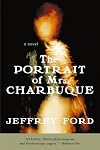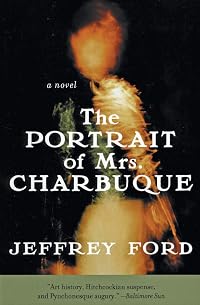
The Portrait of Mrs. Charbuque
by Jeffrey Ford
On This Page
Description
A mysterious and richly evocative novel, The Portrait of Mrs. Charbuque tells the story of portraitist Piero Piambo, who is offered a commission unlike any other. The client is Mrs. Charbuque, a wealthy and elusive woman who asks Piambo to paint her portrait, though with one bizarre twist: he may question her at length on any topic, but he may not, under any circumstances, see her. So begins an astonishing journey into Mrs. Charbuque's world and the world of 1893 New York society in this show more hypnotically compelling literary thriller. show lessTags
Recommendations


Member Reviews
In New York 1893, an accomplished painter, Piambo, is offered a strange commission to paint the portrait of a woman solely based on the stories she tells hidden from view behind a screen. There’s quite a lot of money at stake and from the offset it feels like an extrapolation of the tug of war between the commercial and creative needs of a professional artist. Each tale she tells of her childhood and later history is more fantastical than the next and draws strange parallels with Piambo’s experiences.
One by one even the most unbelievable of her stories is validated or in some mundane way explained, yet the narrative tapestry she weaves and increasingly strange events Piambo witnesses progressively increase the feeling that our show more painter, narrator is doomed. However, Piambo’s desire as painter and his personal philosophy strive to present the truth of a subject, not just their outward appearance. We see this in the opening of the book as he paints an idealized portrait of wealthy donor while none to subtly implying the truth by including in the frame wilting flowers in an expensive vase and goldfish bowl. Another example bookends the novel as Piambo considers a series of landscapes his self portrait.
The particular creative driving force of our protagonist subverts the manipulations of his subject. It’s clear from the beginning that she derives some sense of satisfaction from asking the impossible from a talented individual. As the story progresses it becomes clear that she’s mentally disturbed and has over the years managed her deteriorating mind by dressing it up as creativity and showmanship. The power play she initiates with a truly talented individual in Piambo is a last ditch effort to gain control of her sanity. It may have worked in the past, seemingly transferring the worst of her mental issues to various egotistical artists, but in this case she’s revealed for who she is and is undone.
Ford expertly pieces this story together, each narrative twist, whether part of Piambo’s adventures or Mrs. Charbuque’s stories or the introduction of colorful side characters are all in dialog. The result is a delightfully self referential piece that attempts to answer twin identity related questions raised explicitly by the narrator early in the novel: “What have I become?” and “What am I now to do?”
Complete review: http://mentatjack.com/2015/02/16/review-the-portrait-of-mrs-charbuque/ show less
One by one even the most unbelievable of her stories is validated or in some mundane way explained, yet the narrative tapestry she weaves and increasingly strange events Piambo witnesses progressively increase the feeling that our show more painter, narrator is doomed. However, Piambo’s desire as painter and his personal philosophy strive to present the truth of a subject, not just their outward appearance. We see this in the opening of the book as he paints an idealized portrait of wealthy donor while none to subtly implying the truth by including in the frame wilting flowers in an expensive vase and goldfish bowl. Another example bookends the novel as Piambo considers a series of landscapes his self portrait.
The particular creative driving force of our protagonist subverts the manipulations of his subject. It’s clear from the beginning that she derives some sense of satisfaction from asking the impossible from a talented individual. As the story progresses it becomes clear that she’s mentally disturbed and has over the years managed her deteriorating mind by dressing it up as creativity and showmanship. The power play she initiates with a truly talented individual in Piambo is a last ditch effort to gain control of her sanity. It may have worked in the past, seemingly transferring the worst of her mental issues to various egotistical artists, but in this case she’s revealed for who she is and is undone.
Ford expertly pieces this story together, each narrative twist, whether part of Piambo’s adventures or Mrs. Charbuque’s stories or the introduction of colorful side characters are all in dialog. The result is a delightfully self referential piece that attempts to answer twin identity related questions raised explicitly by the narrator early in the novel: “What have I become?” and “What am I now to do?”
Complete review: http://mentatjack.com/2015/02/16/review-the-portrait-of-mrs-charbuque/ show less
A clever premise -- a bored and unhappy portrait painter is hired by the mysterious Mrs. Charbuque to paint her portrait, with one catch; he can't ever see her. From behind a screen she will answer any question, but no peeking. If he manages to capture her image, he will win enough money to free him from the necessity of portraiture and allow him to be an artist again -- masterfully written. The truly clever part of this is that we as readers are in the same position as the painter--we only know Mrs. Charbuque through the stories she tells, and we make our (badly misguided or flatly wrong, in my case) guesses and assumptions about her along with the main character.
When I picked up this book, I was expecting something along the lines of The Portrait of Dorian Gray. There are a few similarities; in fact the Portrait of Dorian Gray is mentioned at the beginning of the book. Both of them lift questions they don’t really answer but that’s about as far as the similarities go. This book is actually quite hard to define and classify… it’s fiction and fantasy and mystery all at once… and then when you look back on it, there’s no real supernatural explanation…
What I found interesting, more than the plot and the progression of the story towards finding out more about the Charbuques, was the characters: Pambo and Shenz, but also the Man from the Equator and Borne, the turdologist who reads the show more future in your past meals (once digested if I may add). I thought Ford did an amazing at capturing the real essence of those characters as his main character tries to capture Mrs Charbuques. To get back to the Pambo, at first I was surprised by the author’s style and his sometime heavy metaphors and I started wondering whether that was his style in general (this is the first book I’ve read of him) or if he was just portraying Pambo as an artist (the book is a first person narration)… I think the latter comes closer to the truth… in addition to that, there’s Ford’s attempt (and success!) at reproducing the late 19th century writing style.
Overall, I found intriguing and somewhat philosophical in the questions it asks and the paradox it put forward. I’m certainly going to give a try to Ford’s other books. show less
What I found interesting, more than the plot and the progression of the story towards finding out more about the Charbuques, was the characters: Pambo and Shenz, but also the Man from the Equator and Borne, the turdologist who reads the show more future in your past meals (once digested if I may add). I thought Ford did an amazing at capturing the real essence of those characters as his main character tries to capture Mrs Charbuques. To get back to the Pambo, at first I was surprised by the author’s style and his sometime heavy metaphors and I started wondering whether that was his style in general (this is the first book I’ve read of him) or if he was just portraying Pambo as an artist (the book is a first person narration)… I think the latter comes closer to the truth… in addition to that, there’s Ford’s attempt (and success!) at reproducing the late 19th century writing style.
Overall, I found intriguing and somewhat philosophical in the questions it asks and the paradox it put forward. I’m certainly going to give a try to Ford’s other books. show less
This novel got inside of my skin -- I haven't figured out why yet, but it did, and I'm sure I'll be thinking about it for a long time to come. It is the second of Jeffrey Ford's books that I've read (the first being The Girl in the Glass) and he does not disappoint. His writing is excellent, and there is no better way to describe his work. If you want something WAY off the beaten path, and certainly off the path of what's on the bookshelves at your local bookstore, then try this one.
here's the basic story, in a nutshell, but I can't do it justice because it's so incredible:
Set in late 1800s Manhattan, the book's main character is an artist with the name of Piambo. His portraits have gained him fame, because he is gifted at creating the show more illusion of how people want to be seen on canvas. At the unveiling of one portrait where he's painted a philandering man's less-than-perfect wife as a stylish beauty, he realizes that there's more to art than this kind of thing. So when he receives a mysterious commission for a painting for which he'll be paid quite handsomely, he jumps at it. Here's the catch: he must paint a woman, a Mrs. Charbuque, who he cannot see. If he somehow can capture her perfectly, he will have more money than he has ever made in his life. She alone will decide if the painting is accurate, at which point he will make double the money. Piambo now has the opportunity to quit portraiture and focus on art that he wishes to create after this last portrait. At first he thinks this is ridiculous but after he thinks about it, he realizes that he'll make a lot of money whether or not the portrait is correct, so he goes for it. So how is he to do this? He has to conjure her through listening to her stories about herself and her life. As he begins, she starts telling him stories that tend to blow him away, but eventually she and her stories become an obsession with him.
Ford's incredible prose will hit you the moment you start the story, and as you go deeper, the story takes hold of your mind. I can't go into any more detail, but you are truly going to love this one. If you really want something different, give it a try. show less
here's the basic story, in a nutshell, but I can't do it justice because it's so incredible:
Set in late 1800s Manhattan, the book's main character is an artist with the name of Piambo. His portraits have gained him fame, because he is gifted at creating the show more illusion of how people want to be seen on canvas. At the unveiling of one portrait where he's painted a philandering man's less-than-perfect wife as a stylish beauty, he realizes that there's more to art than this kind of thing. So when he receives a mysterious commission for a painting for which he'll be paid quite handsomely, he jumps at it. Here's the catch: he must paint a woman, a Mrs. Charbuque, who he cannot see. If he somehow can capture her perfectly, he will have more money than he has ever made in his life. She alone will decide if the painting is accurate, at which point he will make double the money. Piambo now has the opportunity to quit portraiture and focus on art that he wishes to create after this last portrait. At first he thinks this is ridiculous but after he thinks about it, he realizes that he'll make a lot of money whether or not the portrait is correct, so he goes for it. So how is he to do this? He has to conjure her through listening to her stories about herself and her life. As he begins, she starts telling him stories that tend to blow him away, but eventually she and her stories become an obsession with him.
Ford's incredible prose will hit you the moment you start the story, and as you go deeper, the story takes hold of your mind. I can't go into any more detail, but you are truly going to love this one. If you really want something different, give it a try. show less
The Portrait of Mrs. Charbuque by Jeffrey Ford
Recently I listened to a fantasy podcast called PodCastle. The story was called The Annals of Elin-Ok by Jeffrey Ford. I enjoyed that story so much that it put me on a quest to find other works by the author; consequently I added 5 books by the author to my reading list. After finishing this book, I actually felt lonely because I missed my interaction with the characters! This is certainly a page turning thriller as well as an unusual story. The author is definitely a wordsmith, painting vivid descriptive pictures with his writing.
Piambo is an artist who is feeling he has missed his creative calling because he only paints portraits. He longs to be more creative but knows that the rich show more patrons he paints portraits for keep him living his high society lifestyle. He is approached by a stranger and asked to paint a portrait of the stranger’s employer, he will be wildly rich if he does this commission but the one catch is that he cannot see his subject. He can only talk to her as she sits behind a screen and tells him stories about her life.
Piambo is intrigued by the proposition and lured by the wealth he will have after he finishes the portrait. Mrs. Charbuque, the lady he is to paint without ever seeing, tells Piambo odd stories about her life every day at their appointed meeting time, all the while sitting behind the screen. The setting is turn of the century NYC. You feel like you are really there. All kinds of odd things begin happening around the city, and Piambo’s life is threatened as he struggles to fulfill his commission.
Just the premise of an artist painting a portrait of a subject he never sees was intriguing to me so that is one of the reasons I chose this work by the author. While I was reading it, I could not wait to sit down and read more to find out what unusual story Mrs. Charbuque would tell, or what odd thing would happen to Piambo next. I can’t wait to read the next book by the talented Mr. Ford. show less
Recently I listened to a fantasy podcast called PodCastle. The story was called The Annals of Elin-Ok by Jeffrey Ford. I enjoyed that story so much that it put me on a quest to find other works by the author; consequently I added 5 books by the author to my reading list. After finishing this book, I actually felt lonely because I missed my interaction with the characters! This is certainly a page turning thriller as well as an unusual story. The author is definitely a wordsmith, painting vivid descriptive pictures with his writing.
Piambo is an artist who is feeling he has missed his creative calling because he only paints portraits. He longs to be more creative but knows that the rich show more patrons he paints portraits for keep him living his high society lifestyle. He is approached by a stranger and asked to paint a portrait of the stranger’s employer, he will be wildly rich if he does this commission but the one catch is that he cannot see his subject. He can only talk to her as she sits behind a screen and tells him stories about her life.
Piambo is intrigued by the proposition and lured by the wealth he will have after he finishes the portrait. Mrs. Charbuque, the lady he is to paint without ever seeing, tells Piambo odd stories about her life every day at their appointed meeting time, all the while sitting behind the screen. The setting is turn of the century NYC. You feel like you are really there. All kinds of odd things begin happening around the city, and Piambo’s life is threatened as he struggles to fulfill his commission.
Just the premise of an artist painting a portrait of a subject he never sees was intriguing to me so that is one of the reasons I chose this work by the author. While I was reading it, I could not wait to sit down and read more to find out what unusual story Mrs. Charbuque would tell, or what odd thing would happen to Piambo next. I can’t wait to read the next book by the talented Mr. Ford. show less
A nifty little mystery set in 19th century New York. The artist takes on an impossible commission - painting the portrait of a woman he may not ever see. The conversations with Mrs. Charbuque get stranger as the artist becomes more obsessed with her and his vision of her. A dark fairy tale mixed with the grotesque. (December 07, 2004)
Story: 7 / 10
Characters: 7
Setting: 7
Prose: 8
An absolutely intriguing story about a man trying to fulfill the ridiculous request of a wealthy performer. The book keeps building with a clever story-within-a-story and a spiralling plot structure. The ending doesn't quite satisfy, The Potrait of Mrs. Charbuque is still a worthy read. Nothing in comparison to Well-Built City Trilogy though :)
Characters: 7
Setting: 7
Prose: 8
An absolutely intriguing story about a man trying to fulfill the ridiculous request of a wealthy performer. The book keeps building with a clever story-within-a-story and a spiralling plot structure. The ending doesn't quite satisfy, The Potrait of Mrs. Charbuque is still a worthy read. Nothing in comparison to Well-Built City Trilogy though :)
Members
- Recently Added By
Lists

Gaslamp Fantasy
87 works; 15 members
Author Information

95+ Works 3,689 Members
Jeffrey Ford is the author of nine novels and five short story collections. He has received the World Fantasy, Shirley Jackson, Nebula, and Edgar awards among others. A college English teacher of writing and literature for thirty years, he lives with his wife Lynn in a century-old farm house in a land of slow clouds and endless fields.
Some Editions
Awards and Honors
Awards
Distinctions
Notable Lists
Common Knowledge
- Canonical title
- The Portrait of Mrs. Charbuque
- Original publication date
- 2002
- People/Characters
- Piero Piambo; Mrs. Charbuque
- Dedication
- “For Lynn,
singular, mysterious, and beautiful” - First words
- Much to my unease, Mrs. Reed positioned herself, all evening, beneath or immediately to either side of her new portrait.
- Blurbers
- Carroll, Jonathan
Classifications
- Genres
- Fiction and Literature, Fantasy, General Fiction, Historical Fiction, Mystery, Horror
- DDC/MDS
- 813.54 — Literature & rhetoric American literature in English American fiction in English 1900-1999 1945-1999
- LCC
- PS3556 .O6997 .P67 — Language and Literature American literature American literature Individual authors 1961-
- BISAC
Statistics
- Members
- 446
- Popularity
- 68,418
- Reviews
- 19
- Rating
- (3.70)
- Languages
- English, French, Polish, Spanish
- Media
- Paper, Ebook
- ISBNs
- 10
- ASINs
- 4