On This Page
Description
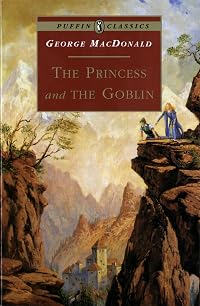
A little princess is protected by her friend Curdie from the goblin miners who live beneath the castle.Tags
Recommendations




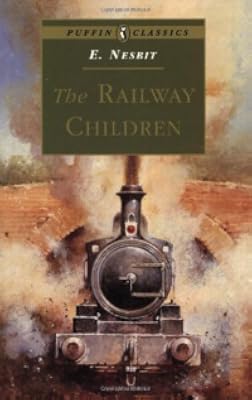
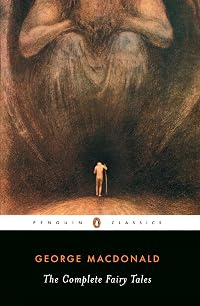
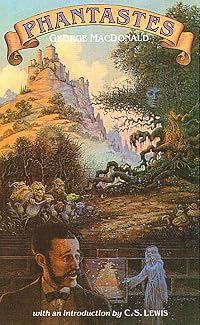
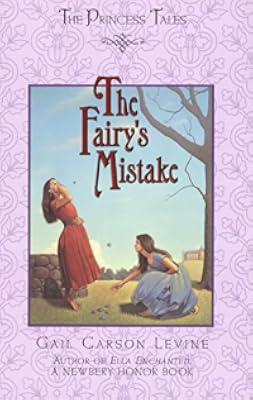





Member Recommendations
Inky_Fingers There might be more than a hundred years separating these two books, but I kept thinking of The Princess and the Goblin as I was reading The Spindlers. There is a bit of plot similarity with both girls lost in a magical underground world, but there are also similarities in the beauty of the language and in taking abstract concepts like dreams and giving them solid form.


Member Reviews
Anything in me that is brave, honest, kind, and honourable is due in great part to the many times I read this book when I was young. I loved the characters and the adventures, and the settings of both mountain and palace (especially the mysterious dove tower).
I had forgotten other appealing aspects: the humor, and the excitingly challenging vocabulary words. And, perhaps most appealing, is a part of the story seldom mentioned in the descriptions here - Princess Irene's amazing courage. At age eight, *she* rescued Curdie from the cave where the goblins lived and plotted against the sun-people.
A couple of quotes: We are all very anxious to be understood, and it is very hard [frustrating] not to be. But there is one thing much more show more necessary.... To understand other people."
and, "If a true princess has done wrong, she is always uneasy until she has had an opportunity of throwing the wrongness away from her by saying, 'I did it, and I wish I had not, and I am sorry for having done it.'"
MacDonald made me feel as if I could be a true princess, as he holds much less stock in titles & lineage than in strength of character. And while he's clearly not subtle about sharing his thoughts, he's not annoyingly didactic, either.
" show less
I had forgotten other appealing aspects: the humor, and the excitingly challenging vocabulary words. And, perhaps most appealing, is a part of the story seldom mentioned in the descriptions here - Princess Irene's amazing courage. At age eight, *she* rescued Curdie from the cave where the goblins lived and plotted against the sun-people.
A couple of quotes: We are all very anxious to be understood, and it is very hard [frustrating] not to be. But there is one thing much more show more necessary.... To understand other people."
and, "If a true princess has done wrong, she is always uneasy until she has had an opportunity of throwing the wrongness away from her by saying, 'I did it, and I wish I had not, and I am sorry for having done it.'"
MacDonald made me feel as if I could be a true princess, as he holds much less stock in titles & lineage than in strength of character. And while he's clearly not subtle about sharing his thoughts, he's not annoyingly didactic, either.
" show less
To be entirely fair, this isn't a book I read as a child (wish I had, though). I saw the film as a kid never knowing there was a book, and even after I was introduced to George MacDonald it wasn't till a nostalgia trip looking for the origins of the movie that I discovered this story. I absolutely love MacDonald's work, just so original and fantastic and imaginative, but what I love most of all about it, and which figures in this, is his apparent belief in the union of two people to reach a solution. There is an inherent power that comes from loving someone else, a theme pervasive in his works that, despite all the learned cynicism of the world, still makes my heart flutter a bit and feel hopeful and happy for the characters. Typical of show more this, Princess Irene and Curdie both have their skills and advantages, but they'll only succeed by joining together.
I have to read books like this in private because I get a ridiculously sappy smile on my face whenever this happens. It cramps my style. show less
I have to read books like this in private because I get a ridiculously sappy smile on my face whenever this happens. It cramps my style. show less
This classic fairy-tale-style story is set in a land where the Goblins and Humans have had a "cold war" for many, many years. Long ago, the Goblins threatened that some day they will steal a princess...and their day finally comes when Princess Irene's nurse accidentally keeps the Princess out after sunset. Luckily, they are rescued by a miner's boy, Curdie - but now the Goblins know where the Princess lives and what she looks like. When the Goblins hatch a devious plot, Curdie and Irene become fast-friends as they act in turn as heroes. First and foremost, this is a fairy-tale. But it is also an allegory about faith. Princess Irene has a great-great-grandmother - a mysterious and heavenly woman that only she can see. Irene's very-great show more grandmother gives the Princess a magical string and tells her to follow the string whenever she's afraid - never doubting it or deviating from it, regardless of where it may take her. Irene must learn to have faith even when she thinks that the string has led her astray. And Curdie must learn to have faith in a very-great grandmother that he has never seen. This is a sweet story, nice for reading aloud to young children. show less
When I was 100 pages in, my wife and I started reading it aloud to each other. She ended up getting sick that night, and we finished the whole book the following day as she rested and recovered. We were both glued to the book as the action started, and we really enjoyed hearing what happened next to the Princess and to Curdie.
George MacDonald is a delightful storyteller, with the same types of insights that mark C. S. Lewis' Chronicles of Narnia--it is no wonder that Lewis regarded MacDonald as "his master."
George MacDonald is a delightful storyteller, with the same types of insights that mark C. S. Lewis' Chronicles of Narnia--it is no wonder that Lewis regarded MacDonald as "his master."
The goblins almost come across as an oppressed minority - or rather the king and his people are clearly oppressors of goblins. Somehow this charming tale doesn't work quite as meant when it has the goblins being taxed underground and redeemed by becoming brownies. All the verbiage of how one must behave when one is a princess (or prince?) is a bit much too. But the brisk story and the steadfastness of Curdie and Irene remain.
A formative favorite from my childhood; I read it several times then. I'm about due for a reread. After all, given that it's MacDonald, I'm sure it will hold up just fine, if not be even better now.
---
And yes it did. At first a bit of hard going, not for me but it must have been for child me and might be for your child. But then I got swept away again and read it in one summer afternoon.
I do not like the copyright page summary, which says Curdie protects the princess. She is at least as brave and inquisitive as he, though more sheltered and four years younger (8 and 12, respectively). And she goes on quite the quest to save *him* at one point, too!
"fear... always sides with the things we are afraid of."
"it is a low and contemptible show more thing to refuse to confess to a fault, or even an error."
(Would that more politicians and internet trolls would have learned that lesson!)
Now, the question is, do I read the sequel? I remember not liking it nearly so much, back then. show less
---
And yes it did. At first a bit of hard going, not for me but it must have been for child me and might be for your child. But then I got swept away again and read it in one summer afternoon.
I do not like the copyright page summary, which says Curdie protects the princess. She is at least as brave and inquisitive as he, though more sheltered and four years younger (8 and 12, respectively). And she goes on quite the quest to save *him* at one point, too!
"fear... always sides with the things we are afraid of."
"it is a low and contemptible show more thing to refuse to confess to a fault, or even an error."
(Would that more politicians and internet trolls would have learned that lesson!)
Now, the question is, do I read the sequel? I remember not liking it nearly so much, back then. show less
3.5
George Macdonald's Phantastes is one of my favourite books. This is a different beast, being one of his later works aimed at a much younger audience. He isn't such a well-known name today but he was a great influence on the likes of Lewis Carol, Tolkien and C. S. Lewis and is owed a lot. His 'fantasy' has much more in common with 'fairy tales', but his work acted as a sort of bridge between the two.
The Princess and the Goblin is a charming and simple tale that quickly betrays itself as a children's story with its endearing simplicity. It is written with care and creative readable prose that conjures magic in the mind. I like how MacDonald still drops allegory in a way that can speak to the child but also challenge the adult to think show more a little deeper, nor does he shy from some subtle blows pertaining to the darker side of life. These are handled with absolute care, to a point that a child would only perceive it should they have the maturity to handle it. That's the kind of writing I can admire, even as an adult. Here's such an example:
The book also houses a touch of Alice in Wonderland, though it doesn't go nearly so deep down the rabbit hole. Carol would have drawn from MacDonald and indeed the latter was instrumental in its publication, but The Princess and the Goblin came after and I dare say he drew a bit from Carol in turn. It's also quite easy to see how this simple story would act as a precursor to the likes of The Hobbit; there's something faintly Tolkien-esque about its rhymes and portrayal of goblins.
A much less likely thing to suggest is the possibility that this influenced H. G. Wells, who was no stranger to fantasy and wrote a couple of stories playing on the tropes himself. The goblin origins described here I thought to be reminiscent of the origins of the Morlocks in The Time Machine (both being a deformed species of human, originating from a lower class that are driven underground and transformed over time by their dark surroundings). The latter was Wells' debut and wouldn't be written until two decades later. That same year Wells penned the lesser known The Wonderful Visit which he wrote of to MacDonald, drawing parallels between his own novella and MacDonald's adult fairie novel, Lilith. show less
George Macdonald's Phantastes is one of my favourite books. This is a different beast, being one of his later works aimed at a much younger audience. He isn't such a well-known name today but he was a great influence on the likes of Lewis Carol, Tolkien and C. S. Lewis and is owed a lot. His 'fantasy' has much more in common with 'fairy tales', but his work acted as a sort of bridge between the two.
The Princess and the Goblin is a charming and simple tale that quickly betrays itself as a children's story with its endearing simplicity. It is written with care and creative readable prose that conjures magic in the mind. I like how MacDonald still drops allegory in a way that can speak to the child but also challenge the adult to think show more a little deeper, nor does he shy from some subtle blows pertaining to the darker side of life. These are handled with absolute care, to a point that a child would only perceive it should they have the maturity to handle it. That's the kind of writing I can admire, even as an adult. Here's such an example:
After they had been alone for a little while, she thought of what she had resolved to ask him.
'Please, king-papa,' she said, 'Will you tell me where I got this pretty ring? I can't remember.'
The king looked at it. A strange beautiful smile spread like sunshine over his face, and an answering smile, but at the same time a questioning one, spread like moonlight over Irene's.
'It was your queen-mamma's once,' he said.
'And why isn't it hers now?' asked Irene.
'She does not want it now,' said the king, looking grave.
'Why doesn't she want it now?'
'Because she's gone where all those rings are made.'
'And when shall I see her?' asked the princess.
'Not for some time yet,' answered the king, and the tears came into his eyes.
The book also houses a touch of Alice in Wonderland, though it doesn't go nearly so deep down the rabbit hole. Carol would have drawn from MacDonald and indeed the latter was instrumental in its publication, but The Princess and the Goblin came after and I dare say he drew a bit from Carol in turn. It's also quite easy to see how this simple story would act as a precursor to the likes of The Hobbit; there's something faintly Tolkien-esque about its rhymes and portrayal of goblins.
A much less likely thing to suggest is the possibility that this influenced H. G. Wells, who was no stranger to fantasy and wrote a couple of stories playing on the tropes himself. The goblin origins described here I thought to be reminiscent of the origins of the Morlocks in The Time Machine (both being a deformed species of human, originating from a lower class that are driven underground and transformed over time by their dark surroundings). The latter was Wells' debut and wouldn't be written until two decades later. That same year Wells penned the lesser known The Wonderful Visit which he wrote of to MacDonald, drawing parallels between his own novella and MacDonald's adult fairie novel, Lilith. show less
Members
- Recently Added By
Lists

Favorite Childhood Books
1,651 works; 519 members
1001 Children's Books You Must Read Before You Grow Up
774 works; 101 members

Survey of Fantasy Classics
111 works; 23 members

Stories About Other Worlds
145 works; 13 members

Books with Noble Titles
179 works; 11 members

Childhood Favorites
427 works; 24 members

Princess Tales
130 works; 4 members

Satori Smiles Children's Book List
262 works; 7 members

Fantastical/Mythological Creatures in the Title
37 works; 2 members

Ambleside Year 3
47 works; 1 member

Recommended Reading List
219 works; 1 member

Books You Read For University
184 works; 3 members

Books Read in 2015
3,299 works; 129 members

Books for Tori
11 works; 1 member

Tagged 19th Century
104 works; 7 members
HMS: Make Your Child a Lover of Books, Ages 7-9
52 works; 2 members

Five star books
1,767 works; 110 members

Before Austen Comes Aesop
318 works; 9 members

Ambleside Y3
36 works; 1 member

Books Read in 2021
5,361 works; 114 members

Books Read in 2014
2,344 works; 89 members

4th Grade Books
312 works; 5 members

1870s
15 works; 2 members

Out of Copyright
244 works; 14 members
al.vick-wishlist-YA
127 works; 3 members

CCE 1000 Good Books List
1,033 works; 12 members

University literature
145 works; 5 members
Honey For a Child's Heart
1,152 works; 25 members
Ambleside Books
459 works; 18 members
19th Century
190 works; 16 members

Victorian Period
113 works; 10 members

Read Aloud Revival
108 works; 4 members
Author Information

384+ Works 38,928 Members
George MacDonald was born on December 10, 1824 in Huntley, Aberdeenshire, Scotland. He attended University in Aberdeen in 1840 and then went on to Highbury College in 1848 where he studied to be a Congregational Minister, receiving his M. A. After being a minister for several years, he became a lecturer in English literature at Kings College in show more London before becoming a full-time writer. He wrote fiction, non-fiction, and poetry. In 1955, he wrote his first important original work, a long religious poem entitled Within and Without. He is best known for his fantasy novels Phantastes, The Princess and the Goblin, At the Back of the North Wind, and Lilith and fairy tales including The Light Princess, The Golden Key, and The Wise Woman. In 1863, he published David Eiginbrod, the first of a dozen novels that were set in Scotland and based on the lives of rural Scots. He died on September 18. 1905. (Bowker Author Biography) show less
Some Editions
Awards and Honors
Series

Belongs to Publisher Series
Airmont Classics (156)
Puffin Story Books (220)
Work Relationships
Is contained in
At the Back of the North Wind, The Princess and the Goblin, The Princess and Curdie by George MacDonald (indirect)
The George McDonald Treasury: Princess and the Goblin, Princess and Curdie, Light Princess, Phantastes, Giant's Heart, At the Back of the North Wind, Golden Key, and Lilith by George MacDonald (indirect)
George MacDonald Fantasy Classics Collection: Phantastes, The Light Princess, The Princess and the Goblin, Lilith by George MacDonald
The Complete Works of George MacDonald (Illustrated Edition): The Princess and the Goblin, Phantastes, At the Back of the North Wind, Lilith, England's ... Princess, The Golden Key and many more by George MacDonald
Has the adaptation
Common Knowledge
- Canonical title
- The Princess and the Goblin
- Original title
- The Princess and the Goblin
- Alternate titles*
- Die Prinzessin und die Kobolde
- Original publication date
- 1872
- People/Characters
- Princess Irene; Curdie Peterson; Lootie; Harelip; The Goblin Queen; The Goblin King (show all 8); Joan Peterson (Curdie's mother); Peter Peterson (Curdie's father)
- First words
- There was once a little princess whose father was king over a great country full of mountains and valleys.
Introduction: A story about goblins is bound to be strange. - Last words
- (Click to show. Warning: May contain spoilers.)The rest of the history of The Princess and Curdie must be kept for another volume.
- Original language
- English
*Some information comes from Common Knowledge in other languages. Click "Edit" for more information.
Classifications
Statistics
- Members
- 6,738
- Popularity
- 1,791
- Reviews
- 73
- Rating
- (4.00)
- Languages
- 12 — English, French, German, Galician, Italian, Norwegian (Bokmål), Polish, Russian, Spanish, Swedish, Turkish, Portuguese (Portugal)
- Media
- Paper, Audiobook, Ebook
- ISBNs
- 284
- UPCs
- 4
- ASINs
- 108