
The Bridge over the River Kwai
by Pierre Boulle
On This Page
Description
1942: Boldly advancing through Asia, the Japanese need a train route from Burma going north. In a prison camp, British POWs are forced into labor. The bridge they build will become a symbol of service and survival to one prisoner, Colonel Nicholson, a proud perfectionist. Pitted against the warden, Colonel Saito, Nicholson will nevertheless, out of a distorted sense of duty, aid his enemy. While on the outside, as the Allies race to destroy the bridge, Nicholson must decide which will be the show more first casualty: his patriotism or his pride. show lessTags
Recommendations

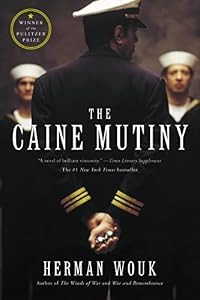
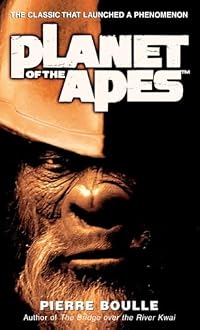

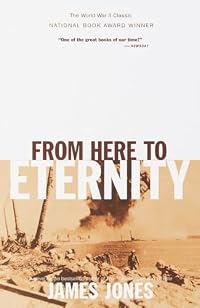
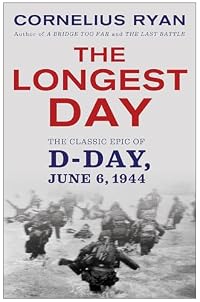

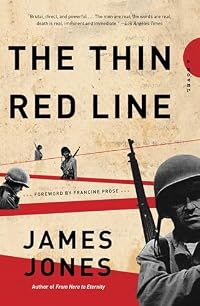
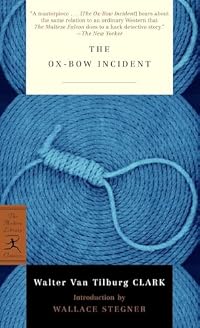
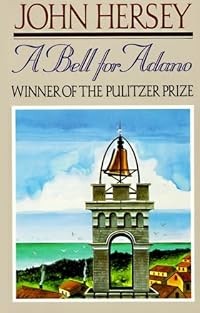

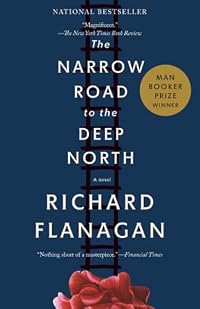












Member Recommendations

Member Reviews
Take The Seed and the Sower (that's Merry Christmas, Mr Lawrence to you visually oriented sorts), remove all the rough trade and fragile beauty and homoeroticism (which basically means removing its spine) and then go further and remove every iota of insight into the human condition or old-hand I-was-thereness or thinly finctionalized historical facts or any of the normal reasons people read books, and you've got the story at the start, of Nicholson and Saito. They build the bridge. Then realize you need to give people a reason not to throw this shit down in dismay and add a plodding, unimaginative special-forces jungle-mission story. They tear the bridge down. It's not enough. Boulle was not there--he was a rubber engineer–cum–Free show more French agent who spent the war cooling his heels in a Vichy prison in Vietnam, and that is a little noble but he doesn't know anything about anything and it shows. He way, way softballs the atrocities of the Burma Road, rendering it a kind of French vision of a British East India Hogan's Heroes (ever watched any French action movies? You're 1/5 of the way to how goofy and unfortunate this is). There is some minor interest in Nicholson, who approaches the world with the rationalizing racist brain of a Victorian engineer--they all do, but for whatever reason he is the one who takes the plunge and agrees to help the enemy and build the bridge harder and faster to show those Japs what real Europeans can do, for his honour, like (this is not how it happened in reality, NB, where honour took a back seat to fucking up the enemy every which way possible took a back seat to self-preservation). A book full of engineer brains is at least potentially a novelty, but then Boulle ruins it by being comically, horribly, ruminate-and-then-suddenly-froth-at-the-mouthly racist agains the Japanese: all the tropes here we've seen before in the bad old style, the bow legs buck teeth little squat stupid slovenly incompetent inscrutable cringing bullying quavering grunting man-apes, the burly brutish Korean gorilla-men, the fact is here though that Boulle really goes that extra mile--he can't get off it for a second, he really wants you to agree with him, like the sweaty guy at the pub or bus stop who won't shut up, that they're subhuman those Asians and that rational Europe (for him, basically, European civilization means bridges and scientific management, the ability to get that little bit of extra productivity out of your employees, this is aaaalmost verging on Nazi-ish stuff here, petty wonder at inhuman efficiency, funny enough). It has that interest as a very pure example of the late-modern late-colonial mentality--"without us these troglodytes couldn't even build a bridge, let's just do it for them so we can get on with spanking them and sending them back to their Emperor"--but in a more meaningful way it is, of course, filthy trash. (It's especially funny because it's the Japanese, who, um, shall we say, know a thing or two about scientific management? Who were turning out aesthetic triumphs and a whole supporting philosophy with their eyes shut while Europe was in training pants and Caesar haircuts? Oh yeah, they're the savages.) show less
Ero convinta di trovarmi davanti a un libro di guerra, e invece la guerra, in particolare la parte asiatica della seconda guerra mondiale, col suo contorno di europei prigionieri dei giapponesi, è solo un pretesto per parlare di uomini, caratteri e di qualità.
Il ponte, la sua costruzione, è l'occasione per uno scontro di volontà tra i conquistatori giapponesi e i prigionieri britannici, che si trasformano in vincitori costruendo per i loro catturatori un ponte secondo le migliori regole qualitative.
Il loro comandante, il colonnello Nicholson, è un ufficiale perfetto, a differenza del colonnello giapponese Saito, che è palesemente un omuncolo.
Ma della partita non sono solo i giapponesi e i loro prigionieri britannici, ci sono altri show more britannici, facenti parte dei servizi segreti, che organizzano la resistenza delle popolazioni oppresse dai giapponesi, e che progettano la distruzione del ponte.
E anche questa distruzione è un progetto che ha a che fare con il carattere delle persone e con la qualità.
E alla fine saranno proprio le due persone più problematiche a giocarsi la partita, il colonnello Nicholson, il cui concetto di onore esula da qualsiasi ordine pratico e sfocia nell'idiozia, e il giovane Joice, che ha un così alto rispetto dell'autorità da non rendersi conto dei propri errori.
E alla fine la missione sarà un disastro: il ponte non verrà distrutto. show less
Il ponte, la sua costruzione, è l'occasione per uno scontro di volontà tra i conquistatori giapponesi e i prigionieri britannici, che si trasformano in vincitori costruendo per i loro catturatori un ponte secondo le migliori regole qualitative.
Il loro comandante, il colonnello Nicholson, è un ufficiale perfetto, a differenza del colonnello giapponese Saito, che è palesemente un omuncolo.
Ma della partita non sono solo i giapponesi e i loro prigionieri britannici, ci sono altri show more britannici, facenti parte dei servizi segreti, che organizzano la resistenza delle popolazioni oppresse dai giapponesi, e che progettano la distruzione del ponte.
E anche questa distruzione è un progetto che ha a che fare con il carattere delle persone e con la qualità.
E alla fine saranno proprio le due persone più problematiche a giocarsi la partita, il colonnello Nicholson, il cui concetto di onore esula da qualsiasi ordine pratico e sfocia nell'idiozia, e il giovane Joice, che ha un così alto rispetto dell'autorità da non rendersi conto dei propri errori.
E alla fine la missione sarà un disastro: il ponte non verrà distrutto. show less
Despite the fact that this reviewer could not rid herself of a constant mental repetition of “The Colonel Bogey March” while reading this book, it is a truly engaging, if staggeringly frustrating, tale. Colonel Nicholson, an even-tempered British leader of the old school, will not ever let go the basic tenets of gentlemen’s rules of conduct in war. Colonel Saito, in the other hand, is a mercurial and violent man, given to fits of deadly rage – but is himself a pawn in the plans of his superior officers. Col. Nicholson and his regiment have been ordered to surrender to the Japanese, who plan to have the prisoners construct a bridge that will connect Bangkok to Rangoon. Col. Saito has no intention of abiding by the rules of show more conduct laid out in the Geneva Convention, and he orders Col. Nicholson and his officers to do menial labor alongside the other soldiers.
This simply will not do.
Col. Nicholson reminds Col. Saito that his job, and the job of his officers, is to lead the men and to keep them focused on a task, and that the Geneva Convention rules state as much – officers are not required to do menial labor. For this, Col. Nicholson is beaten savagely and thrown into a tiny, baking-hot prison cell. His men, fiercely proud of their leader’s moxie, systematically sabotage all attempts to begin the bridge. Colonel Saito is beside himself with impotent rage, knowing that his own job, and possibly his own life, is on the line if the bridge should be a failure.
What follows is a battle of Titans: one man who would nearly rather die than lose face, pitted against one man who would nearly rather die than ignore the rule of international law. And there is another, parallel story running through the book – this bridge, if it ever gets built, must be destroyed, and the same government that instilled in Col. Nicholson such respect for rules is the agent of the bridge’s destruction. show less
This simply will not do.
Col. Nicholson reminds Col. Saito that his job, and the job of his officers, is to lead the men and to keep them focused on a task, and that the Geneva Convention rules state as much – officers are not required to do menial labor. For this, Col. Nicholson is beaten savagely and thrown into a tiny, baking-hot prison cell. His men, fiercely proud of their leader’s moxie, systematically sabotage all attempts to begin the bridge. Colonel Saito is beside himself with impotent rage, knowing that his own job, and possibly his own life, is on the line if the bridge should be a failure.
What follows is a battle of Titans: one man who would nearly rather die than lose face, pitted against one man who would nearly rather die than ignore the rule of international law. And there is another, parallel story running through the book – this bridge, if it ever gets built, must be destroyed, and the same government that instilled in Col. Nicholson such respect for rules is the agent of the bridge’s destruction. show less
The edition I read is part of an omnibus (which doesn't even mention that it's a translation!). I've read this story twice now but I can't say that I enjoyed it. It is so heavily satire that the narration remains cold and distant from the plot and characters. While it is a fairly readable story, it's all about observation and a lot of psychological discussion on how a man's mind works, without ever letting the reader get involved in the actual plot or get to know the characters. Sometimes the prose was very dry and hard going, but I don't know if this is Boulle or the translator at fault. The structure is rather odd, starting off viewing the POWs and their captors from the perspective of the MO Clipton, but then seeming to forget he show more exists and then later becomes almost entirely from the perspective of the commandoes, so we stop getting any insights into how the prisoners are faring. Action is generally told second-hand, with a character describing to another what they did yesterday, rather than straight from the narrator to the reader, which created that distance between the audience and the story that I didn't like. My mind wandered a lot during the dives into psychology. All of the characters are described as figures of ridicule (with the possible exception of Clipton), so you can't really care about any of them. Since Boulle (French) was inspired by his own experiences as a POW, I'm not sure why he chose to make the main characters British, because the whole story only seems to work as a satire on the faults of the British rather than a story about collaboration with the enemy etc. And of course the ending is bleak, so overall there was nothing much to enjoy here. It is readable though and particularly towards the start, quite an interesting story. show less
This book is absolutely not the best World War II story out there, and it is most definitely a product of its time. Themes of nationalism and Western superiority pervade what could have been an engaging character study. I bet Tim O'Brien parodied this when he wrote "How to tell a true war story."
https://nwhyte.livejournal.com/3206553.html
The book is a good book but not as good as the film. I think it's the first case of a straight adaptation where I have been able to say that quite so firmly. There are no women; the English, Americans, Japanese and Thais all play somewhat to national stereotype. On the other hand, the core narrative of Nicholson as English army officer, attached to his duty for entirely recognisable reasons, and Saito as his captor who ends up being effectively captured by his prisoner, is a firmly sound story and well told. As a French author, Boulle is able to keep an ironic detachment from the drama, and perhaps this ends up a bit less manipulative of the reader/viewer. Boulle's ear for dialogue and show more character meant that many of his best lines were preserved for the screenplay (for which he won an Oscar, not entirely on his own merits, as noted above). It's also a really short book. Strongly recommended. show less
The book is a good book but not as good as the film. I think it's the first case of a straight adaptation where I have been able to say that quite so firmly. There are no women; the English, Americans, Japanese and Thais all play somewhat to national stereotype. On the other hand, the core narrative of Nicholson as English army officer, attached to his duty for entirely recognisable reasons, and Saito as his captor who ends up being effectively captured by his prisoner, is a firmly sound story and well told. As a French author, Boulle is able to keep an ironic detachment from the drama, and perhaps this ends up a bit less manipulative of the reader/viewer. Boulle's ear for dialogue and show more character meant that many of his best lines were preserved for the screenplay (for which he won an Oscar, not entirely on his own merits, as noted above). It's also a really short book. Strongly recommended. show less
The book is good. But I'd recommend watching the epic David Lean film instead.
Boulle creates a promising premise. The idea that both the British POWs and the Japanese soldiers have internalized the values of a hellish war is cool. I could see how some people think this book is critical of the UK, as it does ask hard questions about stoicism and other cultural aspects.
But it loses me in a few places. It is written with an almost technical manual approach when it comes to bridge building. And the hopping from one character to another doesn't give you a good enough sense of psychology and drive. Lastly, the pacing is all over the place, with the final chapters building to something that just stops. I would've liked to have seen how these show more characters returned having changed.
Still, it holds up well (outside of some weird racism). But it's another example of a film adaptation that is made stronger by focusing on characters, removing the silly bits, and improving the ending. show less
Boulle creates a promising premise. The idea that both the British POWs and the Japanese soldiers have internalized the values of a hellish war is cool. I could see how some people think this book is critical of the UK, as it does ask hard questions about stoicism and other cultural aspects.
But it loses me in a few places. It is written with an almost technical manual approach when it comes to bridge building. And the hopping from one character to another doesn't give you a good enough sense of psychology and drive. Lastly, the pacing is all over the place, with the final chapters building to something that just stops. I would've liked to have seen how these show more characters returned having changed.
Still, it holds up well (outside of some weird racism). But it's another example of a film adaptation that is made stronger by focusing on characters, removing the silly bits, and improving the ending. show less
Members
- Recently Added By
Lists

Read the book and saw the movie
1,170 works; 195 members

Best War Stories
87 works; 15 members

1950s
340 works; 22 members

Books You Read During High School (For School)
301 works; 52 members

THE WAR ROOM
813 works; 24 members

Junky Paperbacks
15 works; 1 member
Author Information

62+ Works 5,621 Members
Some Editions
Awards and Honors
Series
Belongs to Publisher Series
Work Relationships
Is contained in
Has the adaptation
Is abridged in
Has as a student's study guide
Common Knowledge
- Canonical title
- The Bridge over the River Kwai
- Original title
- Le pont de la rivière Kwaï
- Original publication date
- 1952 (original French) (original French)
- People/Characters
- Colonel Nicholson; Kolonel Saito; Major Clipton
- Important places*
- Myanmar; Oerwoud van Birma en Siam
- Important events
- World War II; World War II, Burma Theater
- Related movies
- The Bridge on the River Kwai (1957 | IMDb)
- Epigraph
- No, it was not funny; it was rather pathetic; he was so representative of all the past victims of the Great Joke. But it is by folly alone that the world moves, and so it is a respectable thing upon the whole. And besides he ... (show all)was what one would call a good man.
Joseph Conrad - First words
- Part One, Chapter 1
The inumerable gap between East and West that exists in some eyes is perhaps nothing more than an optical illusion. Perhaps it is only the conventional way of expressing a popular opinion based on insu... (show all)fficient evidence and masquerading as a universally recognised statement of fact, for which there is no justification at all, not even the plea that it contains an element of truth. During the last war 'saving face' was perhaps as vitally important to the British as it was to the Japanese. Perhaps it dictated the behaviour of the former, without their being aware of it, as forcibly and as fatally as it did that of the latter, and no doubt that of every other race in the world. - Last words
- (Click to show. Warning: May contain spoilers.)'Since then I've often thought about that decision of mine, sir. I'm now convinced I couldn't have done anything else. I took the only line of conduct possible. It was really the only proper action I could have taken.'
'The only proper action,' the Colonel agreed. - Original language*
- French
*Some information comes from Common Knowledge in other languages. Click "Edit" for more information.
Classifications
- Genres
- Fiction and Literature, General Fiction, Historical Fiction
- DDC/MDS
- 843.914 — Literature & rhetoric French Literature French fiction 1900- 20th Century 1945-1999
- LCC
- PQ2603 .O754 .P613 — Language and Literature French, Italian, Spanish and Portuguese literatures French literature Modern literature 1900-1960
- BISAC
Statistics
- Members
- 1,647
- Popularity
- 13,552
- Reviews
- 33
- Rating
- (3.60)
- Languages
- 18 — Czech, Danish, Dutch, English, Estonian, Finnish, French, German, Hungarian, Italian, Magahi, Norwegian (Bokmål), Polish, Russian, Spanish, Swedish, Turkish, Portuguese (Portugal)
- Media
- Paper, Audiobook, Ebook
- ISBNs
- 77
- ASINs
- 74