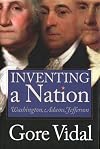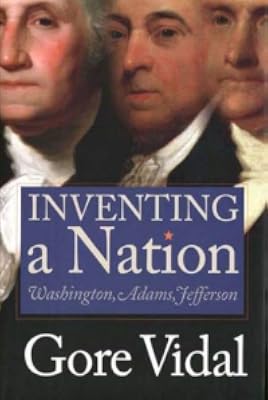
Inventing a Nation: Washington, Adams, Jefferson
by Gore Vidal
On This Page
Description
Gore Vidal, one of the master stylists of American literature and an acute observer of American life and history, turns his literary and historiographic talent to a portrait of the formidable trio of George Washington, John Adams and Thomas Jefferson. In "Inventing a Nation", Vidal transports the reader into the minds, the living rooms (and bedrooms), the convention halls and the salons of Washington, Jefferson, Adams and others. We come to know these men, their opinions of each other, their show more worries about money and their concerns about creating a viable democracy. show lessTags
Recommendations
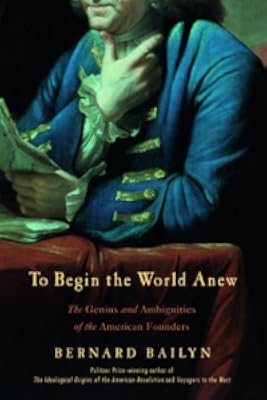
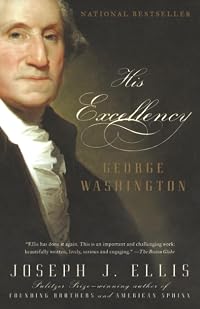
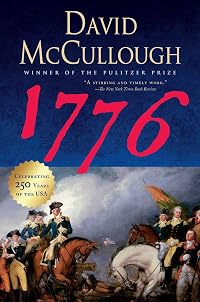
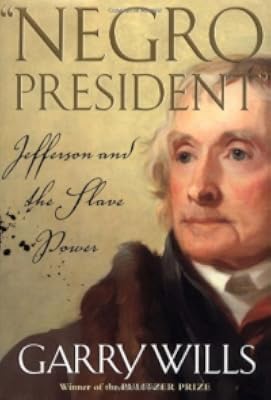

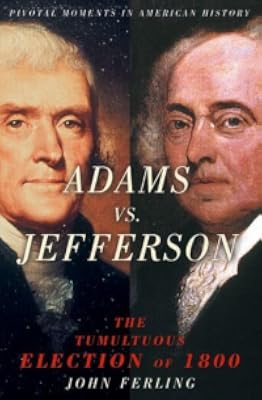
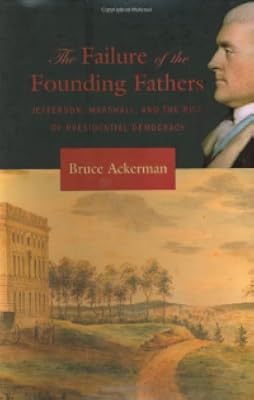
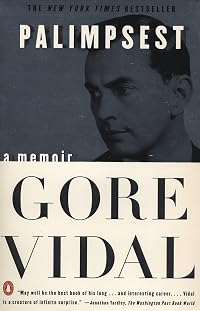
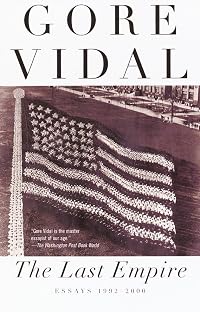
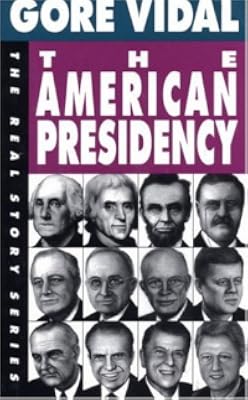
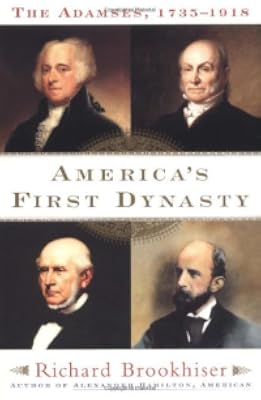
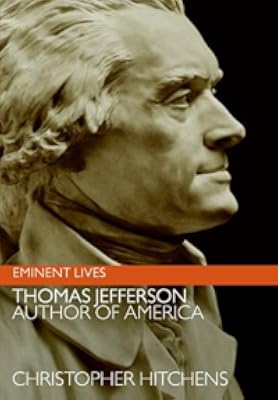
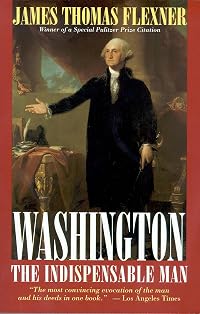
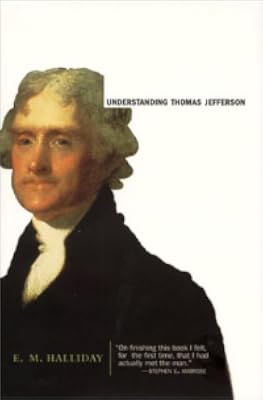
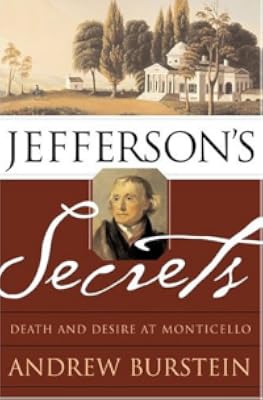
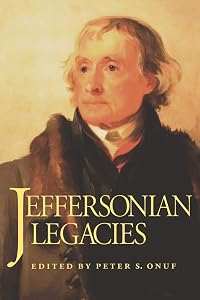
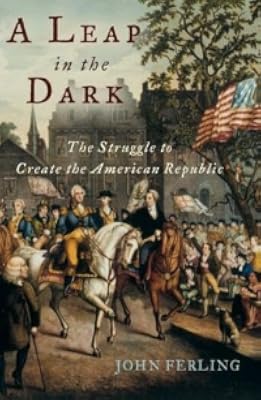
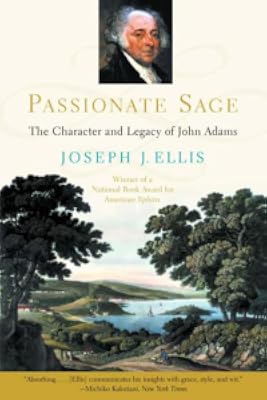
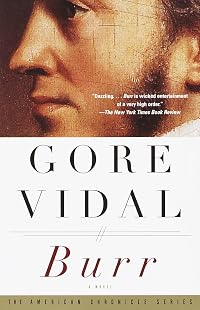
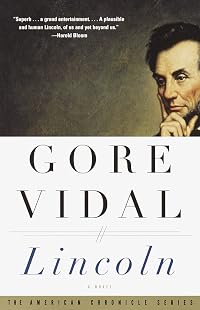
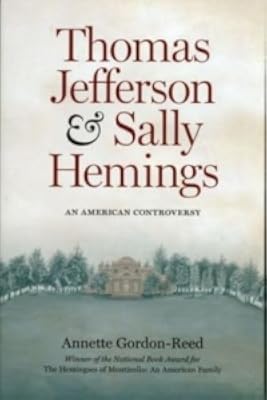
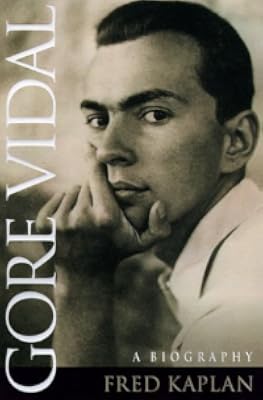
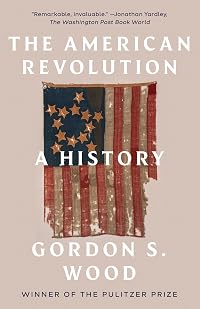
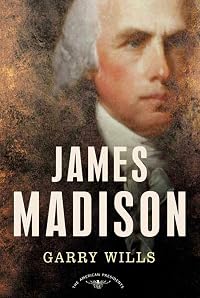
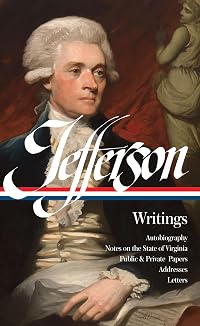
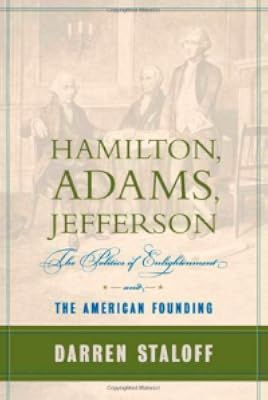

Member Recommendations

The Invention of Air: A Story Of Science, Faith, Revolution, And The Birth Of America by Steven Johnson
themulhern Both are kind of lightweight. "The Invention of Air" is about Joseph Priestley, an English scientist and clergyman who was a good friend of Benjamin Franklin and very well known to Jefferson and Adams.
Member Reviews
If you enjoy your history with a partisan flavor and a good dose of skepticism, you will immensely enjoy Inventing A Nation, Gore Vidal's romp through early American history. Gore begins with 1786 as Washington prepares to lead the constitutional convention.
It's refreshing to go beyond the glowing myths we are fed in high school and see the great men with all their foibles, flaws that somehow make them even a little greater in my estimation. There was a lot of groping going on to find just the right mix. Democracy did not have much in the way of precedence. After the Athenian defeat by Alexander, there was really no democratic example to follow.
Ours is certainly not a democracy in the Athenian sense as Gore, in his inimitable manner show more makes clear: "Much of the significance of December 2000 was that the Electoral College, created to ensure that majority rule be thwarted if unacceptable to what Hamilton thought of as the proper governing elite, threw a bright spotlight on just how undemocratic our republic has become, causing one of the Supreme Court Justices (by many thought to be a visiting alien) to respond to the Gore lawyers who maintained that Florida's skewed voting machines and confused rulings by various interested courts had deprived thousands of Floridians of their vote for president. The American Constitution, said the Justice, mandibles clattering joyously, does not provide any American citizen the right to vote for president. This is absolutely true. One votes for a near-anonymous member of the Electoral College, which explains why so few Americans now bother to 'vote' for president. But then a majority don't know what the Electoral College is."
That's classic. show less
It's refreshing to go beyond the glowing myths we are fed in high school and see the great men with all their foibles, flaws that somehow make them even a little greater in my estimation. There was a lot of groping going on to find just the right mix. Democracy did not have much in the way of precedence. After the Athenian defeat by Alexander, there was really no democratic example to follow.
Ours is certainly not a democracy in the Athenian sense as Gore, in his inimitable manner show more makes clear: "Much of the significance of December 2000 was that the Electoral College, created to ensure that majority rule be thwarted if unacceptable to what Hamilton thought of as the proper governing elite, threw a bright spotlight on just how undemocratic our republic has become, causing one of the Supreme Court Justices (by many thought to be a visiting alien) to respond to the Gore lawyers who maintained that Florida's skewed voting machines and confused rulings by various interested courts had deprived thousands of Floridians of their vote for president. The American Constitution, said the Justice, mandibles clattering joyously, does not provide any American citizen the right to vote for president. This is absolutely true. One votes for a near-anonymous member of the Electoral College, which explains why so few Americans now bother to 'vote' for president. But then a majority don't know what the Electoral College is."
That's classic. show less
This is the first time I have read any of Gore Vidal's works; I find his style interesting and easy to read. A blue-collar nobleman of sorts, conveying a haughty vocabulary of a refined gentleman, yet peppered with a common man's bluntness and disdain for the aristocrat.
While he doesn't front the enmity of say a Franken writing about a Limbaugh or a Coulter discussing the Left, Gore holds no opinion to himself when dissecting politics of the past. It would appear the only man of America's founding he has nary a duplicitous view of is Benjamin Franklin.
After the first chapter, Vidal Gore begins stippling juxtaposition between then and now. When writing about the birth of our nation in comparison to today, he seems to be lightheartedly show more cynical about the past; letting bygones be just what they are. Yet when evaluating events of the foundling government, getting along as it was being invented and retooled, he takes a jaundiced eye, injecting all his modern day sardonicism and taking long dead men to task. Hindsight is 20/20 and documentation and private letters provide a balcony seat to the double dealings and personal afflictions which complicate a burgeoning republic.
This book is indexed but not referenced. I would find it very interesting to learn where Gore Vidal gets his evidence that Alexander Hamilton was a pseudo-double agent, or as he refers to him repeatedly: British Agent Number Seven.
Over all, I found it a fun book to read and simply rolled my eyes at the author's bipolar-like love/hate infatuation with the men who gave birth through invention to the best country in the world. show less
While he doesn't front the enmity of say a Franken writing about a Limbaugh or a Coulter discussing the Left, Gore holds no opinion to himself when dissecting politics of the past. It would appear the only man of America's founding he has nary a duplicitous view of is Benjamin Franklin.
After the first chapter, Vidal Gore begins stippling juxtaposition between then and now. When writing about the birth of our nation in comparison to today, he seems to be lightheartedly show more cynical about the past; letting bygones be just what they are. Yet when evaluating events of the foundling government, getting along as it was being invented and retooled, he takes a jaundiced eye, injecting all his modern day sardonicism and taking long dead men to task. Hindsight is 20/20 and documentation and private letters provide a balcony seat to the double dealings and personal afflictions which complicate a burgeoning republic.
This book is indexed but not referenced. I would find it very interesting to learn where Gore Vidal gets his evidence that Alexander Hamilton was a pseudo-double agent, or as he refers to him repeatedly: British Agent Number Seven.
Over all, I found it a fun book to read and simply rolled my eyes at the author's bipolar-like love/hate infatuation with the men who gave birth through invention to the best country in the world. show less
Vidal is erudite and well read on the intricacies of the founding fathers, having written a series of very good books about them and their era. This is like dipping your toes into a nonfiction version of these stories, the interpersonal conflicts, the differing philosophies, of the revolutionary era to the first presidents. Tangents are frequent and opinions come fast and freely, not just about the past but then (then) present, with many allusions to prescience in the founders being relevant to early 2000s politics.
Enjoyable. Hamilton, for all that he's not the main player in the title, looms large throughout, probably because he had his fingers in a number of apple pies where they didn't belong. Gore Vidal's writing is vibrant, intelligent, and quite broad, as he makes commentary on not only historical matters but also matters which were on going in his life time. It's neat when a historian can do that (not all of them can).
55. Inventing a Nation: Washington, Adams and Jefferson (Audio Book) by Gore Vidal, narrated by Paul Hecht (2003, 208 pages in paper form, listened Oct 29 - Nov 4)
Discursive musings is probably enough of a description. Vidal brings in many curious details. Being who he is, it seems Vidal was simply drawn not to the three icons of his title but to the person he seems to have considered the smartest in room, so so speak. Alexander Hamilton, the main author of the Federalist Papers, somehow crops of everywhere, good and bad. Overall these are entertaining wanderings and there is just something fascinating in any random pieces spoken and written by the characters from this era.
One touching aspect was listening to Gore Vidal, in his own show more voice, discuss an interview he had with then president John F. Kennedy. Kennedy wondered how nascent America could be full of such a rich array of brilliant minds, something so much richer than his impression of the people he had to deal with. He said they were somehow better then. Vidal couldn't really answer, and claims this book is his reply.
Also posted on my LT thread here: http://www.librarything.com/topic/160515#4393489 show less
Discursive musings is probably enough of a description. Vidal brings in many curious details. Being who he is, it seems Vidal was simply drawn not to the three icons of his title but to the person he seems to have considered the smartest in room, so so speak. Alexander Hamilton, the main author of the Federalist Papers, somehow crops of everywhere, good and bad. Overall these are entertaining wanderings and there is just something fascinating in any random pieces spoken and written by the characters from this era.
One touching aspect was listening to Gore Vidal, in his own show more voice, discuss an interview he had with then president John F. Kennedy. Kennedy wondered how nascent America could be full of such a rich array of brilliant minds, something so much richer than his impression of the people he had to deal with. He said they were somehow better then. Vidal couldn't really answer, and claims this book is his reply.
Also posted on my LT thread here: http://www.librarything.com/topic/160515#4393489 show less
An enjoyable read and a fresh take on these figures, the machinations of the times and how they shaped the post 9/11 reality. However, given the mediocre quality of US history that I received in school, had I not by chance happened to have read a book of Adam's letters[b:Dearest Friend: A Life of Abigail Adams|152495|Dearest Friend A Life of Abigail Adams|Lynne Withey|http://photo.goodreads.com/books/1172244026s/152495.jpg|626402] and be in the middle of the [b:The Federalist Papers|721010|The Federalist Papers (Penguin Classics)|Alexander Hamilton|http://photo.goodreads.com/books/1238973527s/721010.jpg|707252] I would have been totally lost most of the time, instead of somewhat lost some of the time.
Very gossipy. Gives a feeling for what these guys might have been like as people. It's fascinating material. It had never occurred to me how much the Founding Fathers were making it up as they went along.
Members
- Recently Added By
Lists

Founding Father
104 works; 11 members

Best U.S. History Books (1754-1828)
363 works; 17 members
Author Information

168+ Works 31,176 Members
Gore Vidal was born Eugene Luther Gore Vidal Jr. on October 3, 1925 at the U.S. Military Academy at West Point, New York. He did not go to college but attended St. Albans School in Washington and graduated from Phillips Exeter Academy in New Hampshire in 1943. He enlisted in the Army, where he became first mate on a freight supply ship in the show more Aleutian Islands. His first novel, Williwaw, was published in 1946 when he was twenty-one years old and working as an associate editor at the publishing company E. P. Dutton. The City and the Pillar was about a handsome, athletic young Virginia man who gradually discovers that he is homosexual, which caused controversy in the publishing world. The New York Times refused to advertise the novel and gave a negative review of it and future novels. He had such trouble getting subsequent novels reviewed that he turned to writing mysteries under the pseudonym Edgar Box and then gave up novel-writing altogether for a time. Once he moved to Hollywood, he wrote television dramas, screenplays, and plays. His films included I Accuse, Suddenly Last Summer with Tennessee Williams, Is Paris Burning? with Francis Ford Coppola, and Ben-Hur. His most successful play was The Best Man, which he also adapted into a film. He started writing novels again in the 1960's including Julian, Washington, D.C., Myra Breckenridge, Burr, Myron, 1876, Lincoln, Hollywood, Live From Golgotha: The Gospel According to Gore Vidal, and The Golden Age. He also published two collections of essays entitled The Second American Revolution, which won the National Book Critics Circle Award for criticism in 1982 and United States: Essays 1952-1992. In 2009, he received the National Book Awards lifetime achievement award. He died from complications of pneumonia on July 31, 2012 at the age of 86. (Bowker Author Biography) show less
Series
Belongs to Publisher Series
Common Knowledge
- Canonical title
- Inventing a Nation: Washington, Adams, Jefferson
- People/Characters
- Thomas Jefferson; John Adams; Thomas Jefferson; Aaron Burr; Alexander Hamilton; John Jay (show all 7); James Madison
- Important places
- Philadelphia, Pennsylvania, USA; Pennsylvania, USA; Virginia, USA; Washington, D.C., USA
- Important events
- American Revolution (1775 | 1783); Signing of the Declaration of Independence
Classifications
- Genres
- History, Nonfiction, General Nonfiction, Biography & Memoir, Politics and Government
- DDC/MDS
- 973.4 — History & geography History of North America United States Constitutional period (1789-1809)
- LCC
- E302.1 .V57 — History of the United States United States Revolution to the Civil War, 1775/1783-1861 Political history
- BISAC
Statistics
- Members
- 725
- Popularity
- 38,955
- Reviews
- 16
- Rating
- (3.40)
- Languages
- English, Italian, Spanish
- Media
- Paper, Audiobook, Ebook
- ISBNs
- 16
- UPCs
- 1
- ASINs
- 9