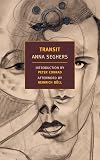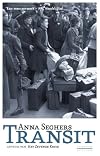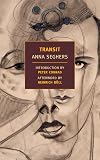
Transit
by Anna Seghers
On This Page
Description
Anna Seghers's Transit is an existential, political, literary thriller that explores the agonies of boredom, the vitality of storytelling, and the plight of the exile with extraordinary compassion and insight. Having escaped from a Nazi concentration camp in Germany in 1937, and later a camp in Rouen, the nameless twenty-seven-year-old German narrator of Seghers's multilayered masterpiece ends up in the dusty seaport of Marseille. Along the way he is asked to deliver a letter to a show more man named Weidel in Paris and discovers Weidel has committed suicide, leaving behind a suitcase containing letters and the manuscript of a novel. As he makes his way to Marseille to find Weidel's widow, the narrator assumes the identity of a refugee named Seidler, though the authorities think he is really Weidel. There in the giant waiting room of Marseille, the narrator converses with the refugees, listening to their stories over pizza and wine, while also gradually piecing together the story of Weidel, whose manuscript has shattered the narrator's "deathly boredom," bringing him to a deeper awareness of the transitory world the refugees inhabit as they wait and wait for that most precious of possessions: transit papers. show lessTags
Recommendations

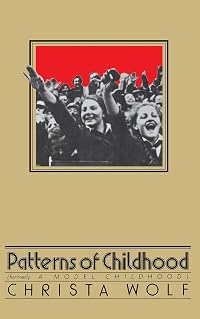



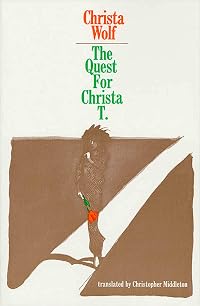



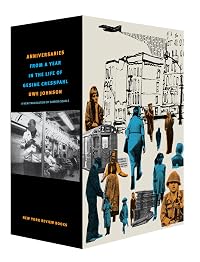










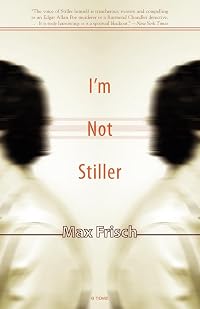






















Member Recommendations

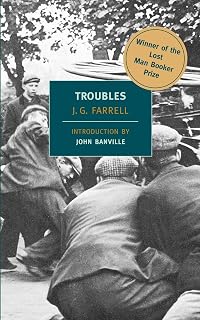
rebeccanyc Anna Seghers fled Nazi Europe through Marseille on a visa provided by Varian Fry, who saved many of the leading intellectuals and artists of Europe. This is his account of how he did it, published originally in 1945.

MeisterPfriem The anti-nazi resistance fighters Lisa and Hans Fittko, in cooperating with Varian Frey, were risking their own lifes guiding refugees over the Pyrenees to Spain.

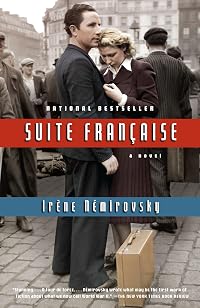
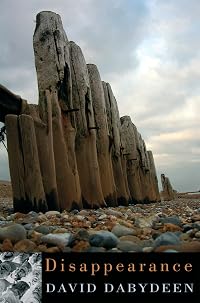
pitjrw Flight's motivation, background, and sacrifices considered.
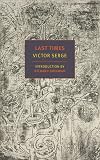
pitjrw Both involve their time in Marseilles after France fell awaiting visas to leave for safety. Seghers & Serge were on the same vessel that ultimately took them to Mexico. Several of their other books involve their flight & exiles.
Member Reviews
I loved this book set in 1940 Marseille, France as refugees attempt to flee Europe to the safety of other countries. The book is narrated by a young German man (we never learn his real name) who has escaped prison camps in Germany, by swimming across the Rhine, and France. While in Paris, he is asked by a friend to deliver a letter to a man named Weidel. He discovers that Weidel has committed suicide and discovers an unfinished manuscript and some letters to Weidel's wife. He makes his way to Marseille to find this wife and when there appropriates the name and papers of Weidel. Once in Marseille, he joins the absurd lifestyle of those waiting for their multiple papers and permissions to allow them to travel abroad, dealing with show more unhelpful, incompetent people and systems that rarely allow things to move along smoothly. The young man enjoys his life in Marseille and the people he meets and doesn't actually want to leave, though he's only allowed to stay if he's trying to leave. He ends up unintentionally finding Weidel's wife and his experiences entwine with hers.
There is obviously a lot of action going on here, but actually the book is just as much about the boredom, inanity, and just waiting of life in Marseille. There is much time spent in cafes, eating pizza and drinking wine, and talking about the transit visa process. People share little about their actual selves but make connections through their shared, even if not talked about, experiences. I loved the tone of this book, the absurdity of the situations, and the subtle insights into this aspect of the war experience.
Anna Seghers herself lived an interesting life. She was a German Jewish Communist who left Germany in the 1930s for France. During the war she left France through Marseille for Mexico, later returning to live in East Germany. She obviously drew on her experiences in Marseille to craft this book as she wrote it upon arriving in Mexico. I would highly recommend this book and will be keeping it to reread sometime in the future. show less
There is obviously a lot of action going on here, but actually the book is just as much about the boredom, inanity, and just waiting of life in Marseille. There is much time spent in cafes, eating pizza and drinking wine, and talking about the transit visa process. People share little about their actual selves but make connections through their shared, even if not talked about, experiences. I loved the tone of this book, the absurdity of the situations, and the subtle insights into this aspect of the war experience.
Anna Seghers herself lived an interesting life. She was a German Jewish Communist who left Germany in the 1930s for France. During the war she left France through Marseille for Mexico, later returning to live in East Germany. She obviously drew on her experiences in Marseille to craft this book as she wrote it upon arriving in Mexico. I would highly recommend this book and will be keeping it to reread sometime in the future. show less
Strange how authors remain in the blind spot for decades, and then suddenly appear in view with a bang. This (East) German writer, Anna Seghers (1900-1983), is one of them. Transit is an allegory ‘pur sang’, a story that is not what it seems to be. The protagonist, the anti-Nazi German Seidler, may wander through the French harbor city Marseille as much as he wants, together with many other refugees in the summer of 1940, Seidler and his ilk represent the average person in general, the man or woman who is permanently in transit, who gets tangled up in the opacity of life, gets stuck in illogical and unjust structures, but nevertheless always keeps hoping for a way out, for a ticket to paradise, against better judgment. In that show more sense, this novel is an existential allegory through and through, coincidentally (or not) set in the labyrinth of Marseille, coincidentally (or not) in wartime, when the need to escape is greatest.
It is wonderful how Seghers continually plays with the multi-layered nature of her story: the Kafkaesque battle with visa regulations and other formal obligations, the ingenious exchange of identities (at regular intervals this novel is a true comedy of errors), the concrete topography of Marseille (you almost imagine yourself in yet another novel by Patrick Modiano), and the subtle references to the tragic fate of Stefan Zweig and Walter Benjamin. And on top of that, the existential layer: aren’t we all in transit, on our way to the only, inevitable certainty: death? This novel (and this author) is a true discovery. A few drawbacks: every now and then the story becomes a bit monotonous, with yet another carousel of visa applications, or with yet another refugee story. And it still requires some 'suspense of disbelief' that an anti-Nazi German could move so freely and unconstrained through France in 1940, after the Blitzkrieg. show less
It is wonderful how Seghers continually plays with the multi-layered nature of her story: the Kafkaesque battle with visa regulations and other formal obligations, the ingenious exchange of identities (at regular intervals this novel is a true comedy of errors), the concrete topography of Marseille (you almost imagine yourself in yet another novel by Patrick Modiano), and the subtle references to the tragic fate of Stefan Zweig and Walter Benjamin. And on top of that, the existential layer: aren’t we all in transit, on our way to the only, inevitable certainty: death? This novel (and this author) is a true discovery. A few drawbacks: every now and then the story becomes a bit monotonous, with yet another carousel of visa applications, or with yet another refugee story. And it still requires some 'suspense of disbelief' that an anti-Nazi German could move so freely and unconstrained through France in 1940, after the Blitzkrieg. show less
"But I knew deep down in my bones—of course I didn’t tell her this—that love sometimes goes along with suffering, that there’s also death, separation, and hardship, and that happiness can overtake you for no reason at all, as can the sadness into which it often imperceptibly turns."
These past two weeks have been terrible for me. A personal crisis that came at the most inopportune of times–as they often do, threatened and disrupted a lot. My reading of course stagnated, and while I still reel from it, the worst seems to have passed. Reading pace in a way has always been an unconscious gauge to how I'm doing, and that I've finally finished this book and gone back to consistently reading others, is a positive sign of the crisis show more abating.
I learnt of Anna Seghers a while ago through an essay by Christa Wolf. Wolf had highly praised her work, written of the influence it had on her and shared how Seghers had been of help to her as a personal friend. Seghers had quite a life, her books were among those burned by the Nazis during that infamous book burning, she had been jailed by the Gestapo and fled to France where she lived in exile until she left for further exile in Mexico.
This book is set in France during the early period of German occupation. The protagonist, like Seghers, is a German who flees to France. Having escaped a concentration camp, he goes to Paris but soon leaves when the city falls to the Germans, and then heads to Marseille. However while still in Paris he discovers the documents of a dead writer named Weidel, among them a manuscript, and begins to adopt the dead man's identity as his own. One dramatic turn after another ensues as the protagonist encounters people that Weidel knew and the dead man's past enjoins his present and moulds his future.
One of the similarities between Wolf and Seghers is the antithesis of the unreliable narrator. A protagonist who is self-aware of their faults, and attempts to be as honest as they can be to the reader even if they're not always honest to themselves or the other characters. A reassuring voice that a reader can almost completely trust, and I enjoy stories with such narrators.
Among the reasons this book will become an unforgettable experience for me, other than the great storytelling, is how eerily familiar it was. Since I was two I've lived in exile and in a place, just like France during the second world war, meant to be transitory. A transitory country is one that has no solid structures for refugee integration. It's a place that harbours refugees with plans for either resettlement or repatriation. The precarity of this situation, the despair and restlessness and listlessness of those caught in this limbo while still unhealed from the violence they've fled, the harassment and police raids and arrests and deportations, the bureaucracy of documentation, the grief of separation among those who leave and those who stay, the physical and spiritual deaths, and the survival of all this were all uncannily familiar to me and so brilliantly captured. The figures in this story could have easily been people I've known since I was a child. All this familiarity meant that a mixture of wonderment and aversion accompanied me as I read this. show less
These past two weeks have been terrible for me. A personal crisis that came at the most inopportune of times–as they often do, threatened and disrupted a lot. My reading of course stagnated, and while I still reel from it, the worst seems to have passed. Reading pace in a way has always been an unconscious gauge to how I'm doing, and that I've finally finished this book and gone back to consistently reading others, is a positive sign of the crisis show more abating.
I learnt of Anna Seghers a while ago through an essay by Christa Wolf. Wolf had highly praised her work, written of the influence it had on her and shared how Seghers had been of help to her as a personal friend. Seghers had quite a life, her books were among those burned by the Nazis during that infamous book burning, she had been jailed by the Gestapo and fled to France where she lived in exile until she left for further exile in Mexico.
This book is set in France during the early period of German occupation. The protagonist, like Seghers, is a German who flees to France. Having escaped a concentration camp, he goes to Paris but soon leaves when the city falls to the Germans, and then heads to Marseille. However while still in Paris he discovers the documents of a dead writer named Weidel, among them a manuscript, and begins to adopt the dead man's identity as his own. One dramatic turn after another ensues as the protagonist encounters people that Weidel knew and the dead man's past enjoins his present and moulds his future.
One of the similarities between Wolf and Seghers is the antithesis of the unreliable narrator. A protagonist who is self-aware of their faults, and attempts to be as honest as they can be to the reader even if they're not always honest to themselves or the other characters. A reassuring voice that a reader can almost completely trust, and I enjoy stories with such narrators.
Among the reasons this book will become an unforgettable experience for me, other than the great storytelling, is how eerily familiar it was. Since I was two I've lived in exile and in a place, just like France during the second world war, meant to be transitory. A transitory country is one that has no solid structures for refugee integration. It's a place that harbours refugees with plans for either resettlement or repatriation. The precarity of this situation, the despair and restlessness and listlessness of those caught in this limbo while still unhealed from the violence they've fled, the harassment and police raids and arrests and deportations, the bureaucracy of documentation, the grief of separation among those who leave and those who stay, the physical and spiritual deaths, and the survival of all this were all uncannily familiar to me and so brilliantly captured. The figures in this story could have easily been people I've known since I was a child. All this familiarity meant that a mixture of wonderment and aversion accompanied me as I read this. show less
The ports of Southern Europe are filling up with desperate refugees. They are residents of bombed-out cities, members of persecuted ethnic groups, people who belong to the wrong political party, people who have fought on the wrong side in earlier conflicts, people who don't know where they live or which country they belong to any more. And they are stuck on the border, trying to jump through the bureaucratic hoops in the right sequence so that they will be allowed to move on to a new life in another country.
But they are all heading south, to Africa, the Americas, anywhere away from the horror of Europe.
If you didn't know better, you might think that this was an elaborate satire on the present refugee crisis. But of course it's show more 1940/1941, we are in Vichy France, and the terror that the refugees are escaping from is that of Nazi Germany.
Seghers wrote this book whilst she was en route into exile in Mexico, and it clearly draws heavily on her own experience of the atmosphere of wartime Marseilles and the absurdities of the visa process, but it isn't a straight autobiographical account. She explores what it means to be a refugee through a narrator who is so alienated that he doesn't even have a name any more, still less a clear idea of where he is going or what he is escaping from. He is just a random ordinary person who got drawn into a fight with an SA man and found himself in a concentration camp, escaped to France by swimming the Rhine, and doesn't want to fall into the hands of the Nazis. He has acquired some false papers in the name of Seidler, and he would be perfectly happy to carry on living on those somewhere in France, but he has also accidentally got entangled with the posthumous existence of a deceased novelist called Weidler, whose friends are trying to get him to Mexico and whose estranged wife can't get out of France without his help.
Things get more and more complicated, and the narrator gets drawn further and further into the complexities of the visa system, where you typically find you can't get document A before you have received document B, but document B depends on document C, which you can't get without A, and so on. As we follow him through the queues and consulates and the chance meetings with fellow-refugees in cafés along the way, we gradually learn more about what it might feel like to be stateless, detached from your identity and background.
(Incidentally, we also learn a good deal more about the intriguing flat bread topped with cheese and tomatoes that is the staple food of the transients in Southern Europe - this must surely be one of the earliest literary explorations of pizza-culture...)
Not an easy or a cheerful read, even if it is often very funny, but definitely still a book we can learn something from today. show less
But they are all heading south, to Africa, the Americas, anywhere away from the horror of Europe.
If you didn't know better, you might think that this was an elaborate satire on the present refugee crisis. But of course it's show more 1940/1941, we are in Vichy France, and the terror that the refugees are escaping from is that of Nazi Germany.
Seghers wrote this book whilst she was en route into exile in Mexico, and it clearly draws heavily on her own experience of the atmosphere of wartime Marseilles and the absurdities of the visa process, but it isn't a straight autobiographical account. She explores what it means to be a refugee through a narrator who is so alienated that he doesn't even have a name any more, still less a clear idea of where he is going or what he is escaping from. He is just a random ordinary person who got drawn into a fight with an SA man and found himself in a concentration camp, escaped to France by swimming the Rhine, and doesn't want to fall into the hands of the Nazis. He has acquired some false papers in the name of Seidler, and he would be perfectly happy to carry on living on those somewhere in France, but he has also accidentally got entangled with the posthumous existence of a deceased novelist called Weidler, whose friends are trying to get him to Mexico and whose estranged wife can't get out of France without his help.
Things get more and more complicated, and the narrator gets drawn further and further into the complexities of the visa system, where you typically find you can't get document A before you have received document B, but document B depends on document C, which you can't get without A, and so on. As we follow him through the queues and consulates and the chance meetings with fellow-refugees in cafés along the way, we gradually learn more about what it might feel like to be stateless, detached from your identity and background.
(Incidentally, we also learn a good deal more about the intriguing flat bread topped with cheese and tomatoes that is the staple food of the transients in Southern Europe - this must surely be one of the earliest literary explorations of pizza-culture...)
Not an easy or a cheerful read, even if it is often very funny, but definitely still a book we can learn something from today. show less
”You know of course what unoccupied France was like in the fall of 1940. The cities’ train stations, their shelters, and even the public squares and churches were full of refugees. They came from the north, the occupied territory and the ‘forbidden zone,’ from the Departments of Alsace, Lorraine, and the Moselle. And even as I was fleeing to Paris I realized these were merely the remnants of those wretched human masses as so many had died on the road or on the trains. But I hadn’t counted on the fact that many would be born on the way. While I was searching for a place to sleep in the Toulouse train station, I had to climb over a woman lying among suitcases, bundles and piles of guns, nursing a baby. How the world has aged in show more this single year! The infant looked old and wrinkled, the nursing mother’s hair was gray, and the faces of the baby’s two little brothers watching over her shoulder seemed shameless, old, and sad. Old also were the eyes of these two boys from whom nothing had been concealed, neither the mystery of death nor the mystery of birth.” (Page 30)
The unnamed narrator in Anna Seghers brilliant WWII novel has escaped from a Nazi concentration camp and has made his way to Marsailles where the city teems with refugees waiting to board a ship, any ship, in order to escape the uncertain fate that awaits them all. The unbelievable bureaucratic red tape that delays, suspends and defers the attainment of the ubiquitous ‘transit papers’ turns the city into a waiting room for refugees where the unlikely narrator hears their stories and shares their experiences while pondering his own tentative future.
The story of refugees of this time or of our present day share many of the same qualities, so this novel offered a lot for the reader to think about in regard to the present day refugees, worldwide. The suffering, uncertainty and hardships are hard to accept without pondering how fortunate we are to not be in their shoes. Seghers novel brilliantly and in beautiful language shows us all we need to know while at the same time reading like a thriller. Very highly recommended. show less
The unnamed narrator in Anna Seghers brilliant WWII novel has escaped from a Nazi concentration camp and has made his way to Marsailles where the city teems with refugees waiting to board a ship, any ship, in order to escape the uncertain fate that awaits them all. The unbelievable bureaucratic red tape that delays, suspends and defers the attainment of the ubiquitous ‘transit papers’ turns the city into a waiting room for refugees where the unlikely narrator hears their stories and shares their experiences while pondering his own tentative future.
The story of refugees of this time or of our present day share many of the same qualities, so this novel offered a lot for the reader to think about in regard to the present day refugees, worldwide. The suffering, uncertainty and hardships are hard to accept without pondering how fortunate we are to not be in their shoes. Seghers novel brilliantly and in beautiful language shows us all we need to know while at the same time reading like a thriller. Very highly recommended. show less
A novel set in the second world war, but with a very turn-of-the-century feel, rather like the novel one might have expected from Stefan Zweig had he carried on in this life a little bit longer, or lived a little later. That is, it's a novel without a lot of sudden revelations or dramatic turns. The development is slow and under the surface, and the reader is continually re-understanding what has been learned before.
No doubt this will bore some readers to tears, but for those with a little patience, it's got a lot to offer.
The story is surprisingly static - if you're expecting leering, sneering Nazi officers and swaggering GIs, you've wandered into the wrong book. Most of the story is set in Marseilles, where would-be exiles are show more trying to arrange to get the paperwork in order to get on a ship headed away from Europe. These are not heroes, they are ordinary people trying to get out of the way of fate. In other words, they are the immigrants who built the Americas in the middle of the last century.
But of course, this is all backdrop - just as a similar sort of plot is all backdrop to Casablanca, which story makes an interesting contrast to this one. The real story is a psychological study in the mold of Zweig or even Fontane. It is a puzzle: we are given the pieces of a story, like an equation, and we are left to solve the problem of the narrator's character. Seghers' artistry is in giving us enough to develop a convincing hypothesis on the first reading, but leaving enough unresolved to welcome a second pass.
I look forward to finding out whether what unfolds on the second reading demands another time through. show less
No doubt this will bore some readers to tears, but for those with a little patience, it's got a lot to offer.
The story is surprisingly static - if you're expecting leering, sneering Nazi officers and swaggering GIs, you've wandered into the wrong book. Most of the story is set in Marseilles, where would-be exiles are show more trying to arrange to get the paperwork in order to get on a ship headed away from Europe. These are not heroes, they are ordinary people trying to get out of the way of fate. In other words, they are the immigrants who built the Americas in the middle of the last century.
But of course, this is all backdrop - just as a similar sort of plot is all backdrop to Casablanca, which story makes an interesting contrast to this one. The real story is a psychological study in the mold of Zweig or even Fontane. It is a puzzle: we are given the pieces of a story, like an equation, and we are left to solve the problem of the narrator's character. Seghers' artistry is in giving us enough to develop a convincing hypothesis on the first reading, but leaving enough unresolved to welcome a second pass.
I look forward to finding out whether what unfolds on the second reading demands another time through. show less
... 'don't you ever feel like going home again?'
… 'A leaf blowing in the wind would have an easier time finding its old twig again.'” p 156
The narrator, who has escaped from a Nazi concentration has been captured and interred in a French camp. As the Nazi's approach, he fears for his life, and escapes a second time to flee to Paris. But once again, the Nazis are advancing, and after attempting to deliver a letter to a writer named Weidel whom he discovers has committed suicide, he flees south once more with Weidel's suitcase in hand.
The French, however, are not fond of refugees and so our narrator winds up with a variety of false identities as he enters Marseilles, France's last open port. He'd like to stay there, but is only show more allowed to be there if he is actively trying to leave, so he begins to half-heartedly play the game of acquiring the proper visas. This is a complicated since visas must be obtained for exiting France, entering the destination country, obtaining transit visas for each port in every country the ship may stop, and booking ship passage. The bureaucracy is almost insurmountable – one can not obtain item 'A' without first having item “D” and each item is only good for thirty days. He is one of a faceless mass, with very few of the overworked officials caring about much but their own safety.
It's also a deadly game as many of the refugees will be imprisoned if they aren't able to leave before the Nazis arrive- Jews, escapees from concentration camps, cripples, gypsies and those who fought against Franco.
The novel's repetitiveness and frustrations leave us feeling those emotions along with the refugees. It's a world where identities are lost and no plans can exist as one can only wait to see what happens next. show less
… 'A leaf blowing in the wind would have an easier time finding its old twig again.'” p 156
The narrator, who has escaped from a Nazi concentration has been captured and interred in a French camp. As the Nazi's approach, he fears for his life, and escapes a second time to flee to Paris. But once again, the Nazis are advancing, and after attempting to deliver a letter to a writer named Weidel whom he discovers has committed suicide, he flees south once more with Weidel's suitcase in hand.
The French, however, are not fond of refugees and so our narrator winds up with a variety of false identities as he enters Marseilles, France's last open port. He'd like to stay there, but is only show more allowed to be there if he is actively trying to leave, so he begins to half-heartedly play the game of acquiring the proper visas. This is a complicated since visas must be obtained for exiting France, entering the destination country, obtaining transit visas for each port in every country the ship may stop, and booking ship passage. The bureaucracy is almost insurmountable – one can not obtain item 'A' without first having item “D” and each item is only good for thirty days. He is one of a faceless mass, with very few of the overworked officials caring about much but their own safety.
It's also a deadly game as many of the refugees will be imprisoned if they aren't able to leave before the Nazis arrive- Jews, escapees from concentration camps, cripples, gypsies and those who fought against Franco.
The novel's repetitiveness and frustrations leave us feeling those emotions along with the refugees. It's a world where identities are lost and no plans can exist as one can only wait to see what happens next. show less
Members
- Recently Added By
Lists

1001 Books You Must Read Before You Die
1,448 works; 1,134 members

Read the book and saw the movie
1,170 works; 193 members

Recommend the 20 best books you've read in the last five years
2,168 works; 602 members

Women in War
148 works; 30 members

German Literature
518 works; 56 members

EU Fiction: 1950-2022
223 works; 70 members

Summer Reads 2014
207 works; 70 members

1,001 BYMRBYD Concensus
723 works; 27 members

Great Book/Great Movie
5 works; 1 member

Books Read in 2023
5,638 works; 147 members

Books Read in 2016
4,666 works; 199 members

Writers at Risk
106 works; 17 members

Best Book and Movie Combos
70 works; 11 members

Die besten Werke der deutschsprachigen Erzählliteratur von 1924 bis 2024
100 works; 2 members
Author Information

149+ Works 2,610 Members
Anna Seghers was born to a wealthy Jewish family in Mainz. During the twenties she established a modest reputation as a writer committed to social reform. In 1933, when Hitler came to power, Seghers went into exile in France. When France capitulated to the Nazis, she proceeded to Mexico, barely escaping the gestapo. In 1942 she published her novel show more The Seventh Cross, which tells of seven prisoners who attempt to leave a Nazi labor camp and elude the police. It was immediately translated into English and became an international best-seller. In 1947 she settled in East Berlin, where she was greeted as a national heroine. Seghers began to publish even more prolifically, producing novels and stories in the style of socialist realism. In 1966 she was named president of the East German Writers' Union, an office in which she had considerable influence on cultural policy. She resigned, for personal reasons, in 1978. Seghers's prose is notable for its epic scope and psychological insight. Her reputation, like that of Brecht, remains somewhat clouded by unresolved questions of complicity with the Stalinist regime in former East Germany. After the unification of Germany in 1990, archivists uncovered a novel of hers entitled Der gerechte Richter (The Just Judge), which was critical of the state and which she had deliberately withheld from publication. (Bowker Author Biography) show less
Some Editions
Awards and Honors
Series
Belongs to Publisher Series
Work Relationships
Is contained in
Has the adaptation
Common Knowledge
- Canonical title
- Transit
- Original title
- Transit
- Alternate titles
- Transit Visa
- Original publication date
- 1944
- Important places
- Marseille, Provence-Alpes-Côte d'Azur, France
- Important events
- World War II
- Related movies
- Transit (1991 | IMDb); Überfahrt (1984 | IMDb); Transit (2018 | IMDb)
- First words
- They're saying that the Montreal went down between Dakar and Martinique.
- Last words*
- (Click to show. Warning: May contain spoilers.)Ich werde eher des Wartens müde als sie des Suchens nach dem unauffindbaren Toten.
- Blurbers
- Wolf, Christa; Boll, Heinrich
- Original language
- German
*Some information comes from Common Knowledge in other languages. Click "Edit" for more information.
Classifications
- Genres
- General Fiction, Fiction and Literature
- DDC/MDS
- 833.912 — Literature & rhetoric German & related literatures German fiction 1900- 1900-1990 1900-1945
- LCC
- PT2635 .A27 .T713 — Language and Literature German, Dutch and Scandinavian literatures German literature Individual authors or works 1860/70-1960
- BISAC
Statistics
- Members
- 789
- Popularity
- 35,357
- Reviews
- 23
- Rating
- (3.86)
- Languages
- 12 — Catalan, Danish, Dutch, English, French, German, Greek, Hungarian, Italian, Russian, Spanish, Swedish
- Media
- Paper, Audiobook, Ebook
- ISBNs
- 45
- ASINs
- 16