On This Page
Description
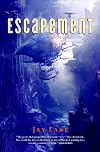
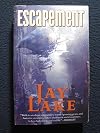
Paolina Barthes is a young woman of remarkable intellectual ability--a genius on the level of Isaac Newton. But she has grown up in isolation, in a small village of shipwreck survivors, on the Wall in the middle of the Atlantic Ocean. She knows little of the world, but she knows that England rules it, and must be the home of people who possess the learning that she so desperately wants. And so she sets off to make her way off the Wall, not knowing that she will bring her astounding, show more unschooled talent for sorcery to the attention of those deadly factions who would use or kill her for it. show lessTags
Recommendations















Member Recommendations
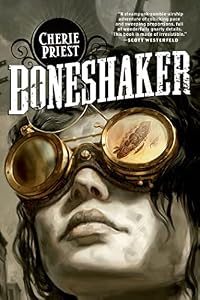
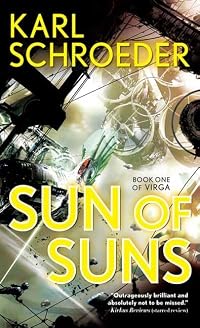
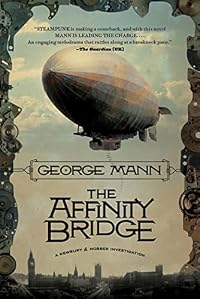
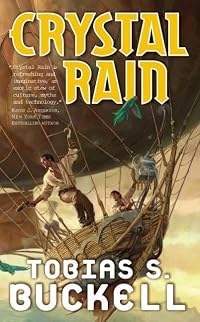
AlanPoulter These are two marvellously retro adventure novels (both parts of series), one set on an Earth powered by clockwork, in which the British and Chinese empires slug it out for hemispheric domination, the other in a solar-system sized oxygenated balloon in space, with 'nations' inhabiting structures heated by 'pocket' suns.
Member Reviews
Rating: 4.4* of five
The Publisher Says: In his novel Mainspring, Lake created an enormous canvas for storytelling with his hundred mile high Equatorial Wall that holds up the great Gears of the Earth. Now in Escapement, he explores more of that territory.
Paolina Barthes is a young woman of remarkable intellectual ability – a genius on the level of Isaac Newton. But she has grown up in isolation, in a small village of shipwreck survivors, on the Wall in the middle of the Atlantic Ocean. She knows little of the world, but she knows that England rules it, and must be the home of people who possess the learning that she so desperately wants. And so she sets off to make her way off the Wall, not knowing that she will bring her astounding, show more unschooled talent for sorcery to the attention of those deadly factions who would use or kill her for it.
My Review: You know an idea is good when the rating for the middle book in a trilogy is this close to the first book. The Clockwork Earth is a fine idea. It can bear the weight of different viewpoints and stories set in its boundaries and constrained by its rules, which means it's about ten times better thought out than most books in any genre.
Hethor's inspiration in Mainspring, the librarian Emily Chambers, shows up here; so does the Basset's Chief Petty Officer al-Wazir the Scot (!); and out third main actor, Paolina Barthes, is met at her native village on a Muralha -- the Wall that the great brass gears of the Universe run atop.
You see, the Universe is a clockwork mechanism, a brass-bound orrery of a place, and the Wall separates for all eternity the halves of God's Creation into Northern and Southern worlds. They are largely unknown to each other, and the Wall that separates them, in addition to being quite dauntingly high, is rife with God's odds-and-sods of Creation: monsters, to the English who rule the Northern Earth.
Paolina, on meeting the shipwrecked loblolly boy from the Bassett when he's brought to her village, receives her summons to greatness. She is a genius, you see, a wasted force in her tiny village. She knows it, the village knows it, but Clarence merely knows he can't go on and can't quit either. He divests himself of his chronometer to Paolina, in thanks for her rescue of him from certain death at the hands of the village elders.
And thus begins the tale of the gleams, the clockwork mechanisms that Paolina (a quick study and a brilliant scientist) creates. They are capable of resonating with the clockwork gears of the Universe, of influencing and controlling them. Of course the avebianco, Emily Childress's order of mystical practictioners and wardens of the balance of the world, wants to know what is going on. As do the Chinese, the enemies of the British. And of course the child's immense giftedness causes problems and creates death and chaos.
And in the end, isn't that where we all are? A giant gap between North and South, an absence of even the possibility communication, and vast power that can change or destroy the entire Universe as we know it, is wielded by a mere child. (Keep in mind this book was written during the Bush presidency.)
As Lake weaves a story of Paolina's voyage in the world beyond the Wall she grew up on, it pays to think a bit about what she is doing. Her immense native talent is sought after by the powers that be in her world. She's never given a moment to think through her actions to create results. She has to move, keep moving, stay one step ahead of people who want to control her and thus her gift for one purpose only: Their own gain. Victory for them. Dress it up how you like, Paolina is expendable so long as her knowledge is secured for Us to use against Them.
Her moral quandary (is it ever right, ever moral, to hand one party to a competition the full and complete means of winning?) is, but by bit, honed into a sharp blade for her defense of herself. Merely asking the questions she's forced into asking herself is an act of fiercest rebellion in a clockwork universe, ordered by God.
Emily and al-Wazir play their roles in moving Paolina from place to place, and face a few difficult moments themselves, but make no mistake: this is Paolina's book. That's it's strength and its weakness. The characters are as fully realized as the authorship of Lake can make them, which is well and truly rounded. That doesn't prevent them from being means to an end. Emily, as a powerful figure in the avebianco (White Birds), is a woman in charge of a huge amount of influence in the world; her interest in Paolina is natural; but the demands of the story leave Emily in a teacher's role again, as with Hethor in Mainspring. It's true that this time she plays a more central and significant teacher's role, but she's still mostly a means to move the story from pillar to post.
Which is what happens a lot. We're on the move at all times. Sometimes that feels more like being on a transcontinental train trip than it does like a walk through a garden. That's a good thing, of course, for interest's sake, but not always comfortable reading. The Chinese don't come in for much development, and the settings can become a bit blurred together because the drama is so high.
Why complain about that? Because the settings are so unbelievably COOL! I want more! More! Each time we're in an airship, I want more. Each port of call, I find out enough to make me want more! I have expositionus interruptus and, like the thing that phrase is modeled on, satiation and satisfaction are not to be had.
Bad Jay Lake! Bad!
So I knocked a few points off the score, so what. It's still a terrific book. And one thing I am sure of, the sequel (Pinion) and me are gonna have some quality time together. Soon. show less
The Publisher Says: In his novel Mainspring, Lake created an enormous canvas for storytelling with his hundred mile high Equatorial Wall that holds up the great Gears of the Earth. Now in Escapement, he explores more of that territory.
Paolina Barthes is a young woman of remarkable intellectual ability – a genius on the level of Isaac Newton. But she has grown up in isolation, in a small village of shipwreck survivors, on the Wall in the middle of the Atlantic Ocean. She knows little of the world, but she knows that England rules it, and must be the home of people who possess the learning that she so desperately wants. And so she sets off to make her way off the Wall, not knowing that she will bring her astounding, show more unschooled talent for sorcery to the attention of those deadly factions who would use or kill her for it.
My Review: You know an idea is good when the rating for the middle book in a trilogy is this close to the first book. The Clockwork Earth is a fine idea. It can bear the weight of different viewpoints and stories set in its boundaries and constrained by its rules, which means it's about ten times better thought out than most books in any genre.
Hethor's inspiration in Mainspring, the librarian Emily Chambers, shows up here; so does the Basset's Chief Petty Officer al-Wazir the Scot (!); and out third main actor, Paolina Barthes, is met at her native village on a Muralha -- the Wall that the great brass gears of the Universe run atop.
You see, the Universe is a clockwork mechanism, a brass-bound orrery of a place, and the Wall separates for all eternity the halves of God's Creation into Northern and Southern worlds. They are largely unknown to each other, and the Wall that separates them, in addition to being quite dauntingly high, is rife with God's odds-and-sods of Creation: monsters, to the English who rule the Northern Earth.
Paolina, on meeting the shipwrecked loblolly boy from the Bassett when he's brought to her village, receives her summons to greatness. She is a genius, you see, a wasted force in her tiny village. She knows it, the village knows it, but Clarence merely knows he can't go on and can't quit either. He divests himself of his chronometer to Paolina, in thanks for her rescue of him from certain death at the hands of the village elders.
And thus begins the tale of the gleams, the clockwork mechanisms that Paolina (a quick study and a brilliant scientist) creates. They are capable of resonating with the clockwork gears of the Universe, of influencing and controlling them. Of course the avebianco, Emily Childress's order of mystical practictioners and wardens of the balance of the world, wants to know what is going on. As do the Chinese, the enemies of the British. And of course the child's immense giftedness causes problems and creates death and chaos.
And in the end, isn't that where we all are? A giant gap between North and South, an absence of even the possibility communication, and vast power that can change or destroy the entire Universe as we know it, is wielded by a mere child. (Keep in mind this book was written during the Bush presidency.)
As Lake weaves a story of Paolina's voyage in the world beyond the Wall she grew up on, it pays to think a bit about what she is doing. Her immense native talent is sought after by the powers that be in her world. She's never given a moment to think through her actions to create results. She has to move, keep moving, stay one step ahead of people who want to control her and thus her gift for one purpose only: Their own gain. Victory for them. Dress it up how you like, Paolina is expendable so long as her knowledge is secured for Us to use against Them.
Her moral quandary (is it ever right, ever moral, to hand one party to a competition the full and complete means of winning?) is, but by bit, honed into a sharp blade for her defense of herself. Merely asking the questions she's forced into asking herself is an act of fiercest rebellion in a clockwork universe, ordered by God.
Emily and al-Wazir play their roles in moving Paolina from place to place, and face a few difficult moments themselves, but make no mistake: this is Paolina's book. That's it's strength and its weakness. The characters are as fully realized as the authorship of Lake can make them, which is well and truly rounded. That doesn't prevent them from being means to an end. Emily, as a powerful figure in the avebianco (White Birds), is a woman in charge of a huge amount of influence in the world; her interest in Paolina is natural; but the demands of the story leave Emily in a teacher's role again, as with Hethor in Mainspring. It's true that this time she plays a more central and significant teacher's role, but she's still mostly a means to move the story from pillar to post.
Which is what happens a lot. We're on the move at all times. Sometimes that feels more like being on a transcontinental train trip than it does like a walk through a garden. That's a good thing, of course, for interest's sake, but not always comfortable reading. The Chinese don't come in for much development, and the settings can become a bit blurred together because the drama is so high.
Why complain about that? Because the settings are so unbelievably COOL! I want more! More! Each time we're in an airship, I want more. Each port of call, I find out enough to make me want more! I have expositionus interruptus and, like the thing that phrase is modeled on, satiation and satisfaction are not to be had.
Bad Jay Lake! Bad!
So I knocked a few points off the score, so what. It's still a terrific book. And one thing I am sure of, the sequel (Pinion) and me are gonna have some quality time together. Soon. show less
Escapement has such potential. Jay Lake's imagining of a world embedded in a clockwork universe is at times stunning. His characters can be moving and his endings are wonderful. Unfortunately, the execution just doesn't live up to the potential here. Both Escapement and the previous Mainspring start and end well, but take a long time to get through the middle - way more than it should. Much of the time, Escapement seems to have characters moving without purpose across the world, and it seriously drags down the story. There's no reason these books couldn't be tighter so the dramatic tension stays high and the reader stays with the story. Will I try a third if Lake continues? At this point, I'm leaning to no.
I’m on the verge of writing that "this really isn’t a bad book". But then I remember that I spent almost seven weeks reading it, and that picking it up didn’t come naturally a single time. Really, I can’t explain why. Lake’s version of steampunk, with a world that in itself is a giant clockwork machine, riding on tracks through the universe, is a really interesting concept. The world is divided into north and mysterious, almost mystical, south, with the giant Wall that connects the planet with it’s skytrack separating them. The wall itself is a strange, vertical world, full of eeire beasts and magic. With a world like this, there can of course not be any question that there has to be a God, a maker. Theological debate – show more and conflict – instead deals with the concept of mankind’s role in creation. Does God need our help in maintaining and winding the world, or doesn’t he? A secret war on ideas is raging the world, besides the obvious conflict between the two super powers: the English and the Chinese.
Paolina grows up in a village on the wall, ruled by cruel ignorant men. She is a genious with an instinctive knowledge of the machinet hat is the world. Without really understanding it herself, she creates a device that tunes into the very beat of the world. It’s destructive potential is beyond belief. Al-Wariz is a petty officer in Her Majesty’s airship navy. After some recent events, he is among the very few with any knowledge of the Wall and is selcted as security officer for a bold and dangerous venture – the attempt of drilling a tunnel thorugh it. And Childress is a librarian and a footsoldier in a secret society fighting for the heretic belief that God needs man, suddenly forced to play the role of a dead woman in a dangerous game with the Chinese. These three people’s fates are about to intertwine.
It’s really a nice setup, an exciting world – and it sholud make for interesting reading. But there’s something about Lake’s style that never seems to grip me. It’s like his focusing on the wrong things all the time, speeding up, brushing over and slowing down in all the wrong places. I constantly find myself losing the sense of plot and urgency and am left with a sense of three people going back and forth across the globe more or less randomly. This is the third Lake I try, and even though I liked ”Mainspring” well enough, it had a bit of the same problem for me. YMMV, but I’ve decided me and Jay just aren’t matiching. I’m letting this author go. show less
Paolina grows up in a village on the wall, ruled by cruel ignorant men. She is a genious with an instinctive knowledge of the machinet hat is the world. Without really understanding it herself, she creates a device that tunes into the very beat of the world. It’s destructive potential is beyond belief. Al-Wariz is a petty officer in Her Majesty’s airship navy. After some recent events, he is among the very few with any knowledge of the Wall and is selcted as security officer for a bold and dangerous venture – the attempt of drilling a tunnel thorugh it. And Childress is a librarian and a footsoldier in a secret society fighting for the heretic belief that God needs man, suddenly forced to play the role of a dead woman in a dangerous game with the Chinese. These three people’s fates are about to intertwine.
It’s really a nice setup, an exciting world – and it sholud make for interesting reading. But there’s something about Lake’s style that never seems to grip me. It’s like his focusing on the wrong things all the time, speeding up, brushing over and slowing down in all the wrong places. I constantly find myself losing the sense of plot and urgency and am left with a sense of three people going back and forth across the globe more or less randomly. This is the third Lake I try, and even though I liked ”Mainspring” well enough, it had a bit of the same problem for me. YMMV, but I’ve decided me and Jay just aren’t matiching. I’m letting this author go. show less
I picked up this novel's predecessor, Mainspring, after enjoying the "50s-style sf alien encounter with added Nazis/gangsters" that was Rocket science and a string of strong short stories (On the human plain, Last plane to heaven: a love story, Human error, The sky that wraps the world round, past the blue and into the black) that were evidence of a highly imaginative writer who could adopt different styles and modes with aplomb.
Imaginative certainly applies in spades to this series. The Earth and the other celestial bodies follow visible geared "tracks" through the solar system, with the connection points being at their equators. On Earth the equatorial track is an enormous uncrossable 'Wall' and divides the north and south show more hemispheres. The northern hemisphere is geographically identical to our Earth, but has a 19th century-level civilisation which is controlled by two mighty empires, British and Chinese, using flying ships and submarines in an alternate-world built around steampunk technologies. What lies in the southern hemisphere is unknown. Because the "machinery of existence" is so obvious, religion is powerful but changed: for Christians, for example, their 'Christ' died on a Wheel, not a Cross.
In Mainspring, Hathor, a lowly apprentice, is given a quest by an angel to find a 'Key' and rewind the 'Mainspring' of the world. Overcoming all sorts of opposition, from jealous, powerful rivals to a potpourri of strange creatures and landscapes, he achieves his quest. Hathor is absent from 'Escapement'. Its main characters are Yale University librarian Emily Childress and Chief Angus al-Wazir from the airship Bassett (both of whom appear in Mainspring), and Boaz the Brass Man (a robot), and Paolina Barthes, a child prodigy, who lives on the Wall itself. All these characters trace paths that eventually cross, and these paths illuminate more of Lake's strange clockwork universe.
As well as the clash of Empires, there is a struggle between two global secret societies who have different views on how to approach their strange world, either to accept it as it is, or try to control it. The two northern Empires, having reached a stalemate, are tring to find a way into the southern hemisphere, the British by means of a giant tunnelling engine, the Chinese via the excavation of old ruins of a city near Singapore, seeking lost knowledge. Paolina is sought by all these factions, as with a device she self-builds called a 'gleam', she can manipulate the workings of the world directly. Originally wanting to escape, she realises how wrong her view of things is: she wants freedom and wisdom but finds both where she least expects. Childress has to impersonate a 'Mask', a high-up in one of the secret societies, but achieves more by being herself. Chief Angus al-Wazir is an agent of the Queen but eventually realises that there are deeper loyalties. The most interesting character is Boaz, who seems to be an emergent AI from a machine civilisation. He is also from the Wall, which seems to house a multitude of races and wonders, like winged people that attack the British drilling expedition and an underground rail system that runs around the equator!
It is the sheer invention displayed that I think makes this novel worth reading. I wonder how all these ideas, threads and characters will converge and work out in 'Pinion' which recently came out in hardback. show less
Imaginative certainly applies in spades to this series. The Earth and the other celestial bodies follow visible geared "tracks" through the solar system, with the connection points being at their equators. On Earth the equatorial track is an enormous uncrossable 'Wall' and divides the north and south show more hemispheres. The northern hemisphere is geographically identical to our Earth, but has a 19th century-level civilisation which is controlled by two mighty empires, British and Chinese, using flying ships and submarines in an alternate-world built around steampunk technologies. What lies in the southern hemisphere is unknown. Because the "machinery of existence" is so obvious, religion is powerful but changed: for Christians, for example, their 'Christ' died on a Wheel, not a Cross.
In Mainspring, Hathor, a lowly apprentice, is given a quest by an angel to find a 'Key' and rewind the 'Mainspring' of the world. Overcoming all sorts of opposition, from jealous, powerful rivals to a potpourri of strange creatures and landscapes, he achieves his quest. Hathor is absent from 'Escapement'. Its main characters are Yale University librarian Emily Childress and Chief Angus al-Wazir from the airship Bassett (both of whom appear in Mainspring), and Boaz the Brass Man (a robot), and Paolina Barthes, a child prodigy, who lives on the Wall itself. All these characters trace paths that eventually cross, and these paths illuminate more of Lake's strange clockwork universe.
As well as the clash of Empires, there is a struggle between two global secret societies who have different views on how to approach their strange world, either to accept it as it is, or try to control it. The two northern Empires, having reached a stalemate, are tring to find a way into the southern hemisphere, the British by means of a giant tunnelling engine, the Chinese via the excavation of old ruins of a city near Singapore, seeking lost knowledge. Paolina is sought by all these factions, as with a device she self-builds called a 'gleam', she can manipulate the workings of the world directly. Originally wanting to escape, she realises how wrong her view of things is: she wants freedom and wisdom but finds both where she least expects. Childress has to impersonate a 'Mask', a high-up in one of the secret societies, but achieves more by being herself. Chief Angus al-Wazir is an agent of the Queen but eventually realises that there are deeper loyalties. The most interesting character is Boaz, who seems to be an emergent AI from a machine civilisation. He is also from the Wall, which seems to house a multitude of races and wonders, like winged people that attack the British drilling expedition and an underground rail system that runs around the equator!
It is the sheer invention displayed that I think makes this novel worth reading. I wonder how all these ideas, threads and characters will converge and work out in 'Pinion' which recently came out in hardback. show less
I’m going to come back to this after I read Mainspring, because I felt like I was missing something about this universe. In the meantime I’ll say that it just didn’t seem like my cup of tea, although I appreciated the high quality of the writing. NB: I’m a total fan of the author, avidly follow his blog, am highly jealous of his amazing productivity, and admire and respect his strength during his recurring struggles with cancer.
To be a librarian was to know everything that is known. Not the entire sum of human knowledge literally at the command of one's thoughts--Newton had perhaps been the last to do that. But to know what could be known, understand the indices and passwords of all the secrets of Creation. The science of libraries was the science of the truths hidden within the world.
I gave up on this when I realized I was reading this just to get to the end. I really didn't care about the characters or the plot. I guess I am not surprised since I hated the first book. I love Jay Lake's short stories so I'm still surprised by this. Ah well.
Members
- Recently Added By
Author Information

220+ Works 3,770 Members
Jay Lake was born in Taiwan on June 6, 1964, and was raised there and in Nigeria. He graduated from the University of Texas in 1986. During his lifetime, he published over 300 short stories and nine novels including Kalimpura, Calamity of So Long a Life, and The Last Plane to Heaven. He received several awards including the John W. Campbell Award show more for Best New Writer in Science Fiction in 2004. He was also the subject of a documentary called Lakeside - A Year with Jay Lake, which follows his fight against cancer, and is scheduled for release in 2014. He died from colon cancer on June 1, 2014 at the age of 49. (Bowker Author Biography) show less
Some Editions
Awards and Honors
Awards
Distinctions
Series

Common Knowledge
- Canonical title
- Escapement
- Original publication date
- 2008-06
- People/Characters
- Emily McHenry Childress; Paolina Barthes; Threadgill Angus al-Wazir; Boaz; William of Ghent
- Dedication
- To Elizabeth Bear and Jeff VanderMeer. In a field overflowing with glorious exemplars, you have also been both spirit guides and dear friends.
- First words
- The boats had been drawn up in the harbor at Praia Nova when the great waves came two years past.
- Last words
- (Click to show. Warning: May contain spoilers.)"Fetch your friend. There is someone you should meet."
- Publisher's editor
- Meacham, Beth
Classifications
Statistics
- Members
- 370
- Popularity
- 84,447
- Reviews
- 10
- Rating
- (3.48)
- Languages
- English, German
- Media
- Paper, Ebook
- ISBNs
- 5
- ASINs
- 3